
Soups & Stews
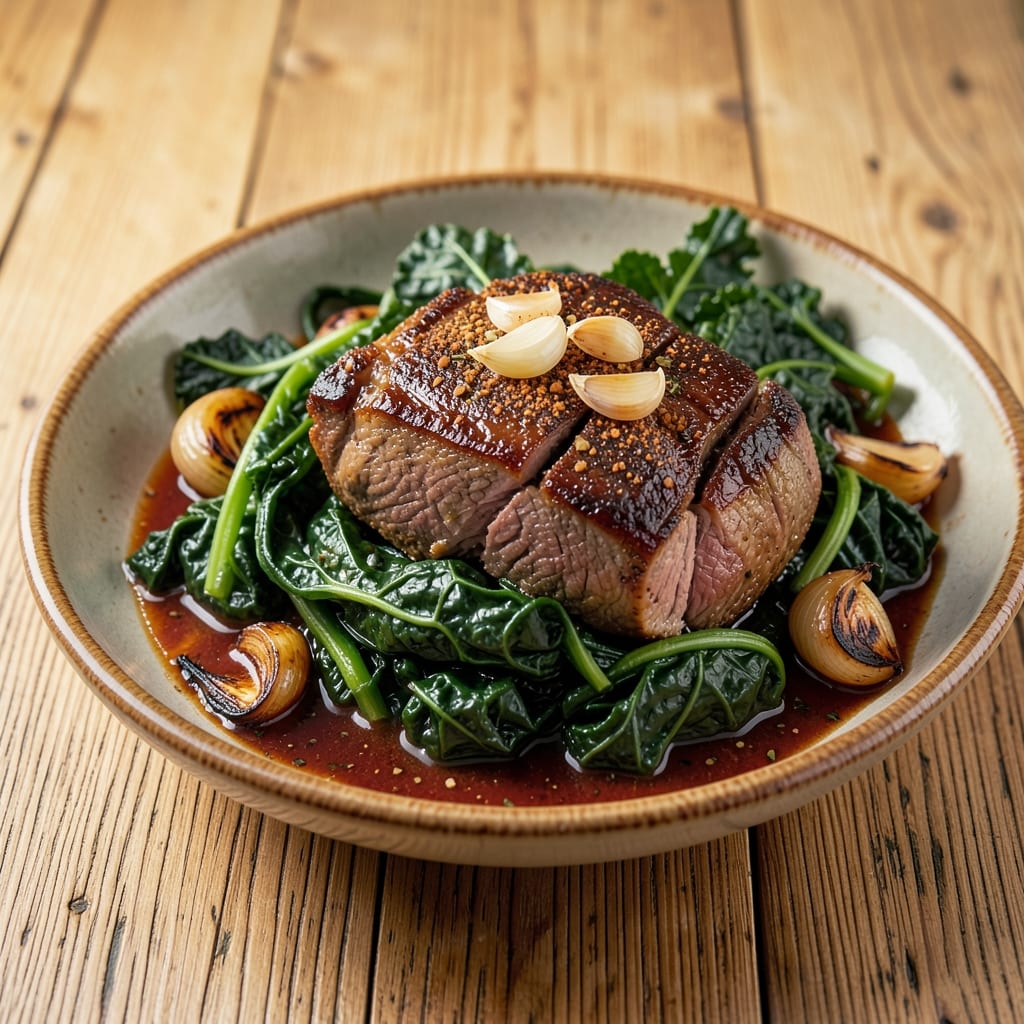
This beef and greens recipe transforms tough cuts into a rich, smoky stew where tender beef meets silky greens in perfect harmony. The secret lies in slow-braising the beef until it practically melts, then finishing with wilted greens that soak up every bit of flavor. I developed this after years of perfecting stews—it’s the kind of dish that tastes even better the next day, with flavors deepening as it rests.
The process starts with searing chunks of beef until deeply browned, then simmering them in a smoky-spiced broth until fork-tender. Meanwhile, the greens—whether collards, kale, or spinach—get a quick sauté with garlic and onion, just enough to soften them without losing their vibrant color. The result is a stew where each spoonful delivers both hearty beef and tender greens, balanced by a rich, aromatic broth.
What makes this recipe stand out is how the beef and greens complement each other—no soggy sides or overcooked meat. The beef stays juicy and flavorful, while the greens retain their texture, creating a dish that’s satisfying yet light. Serve it with crusty bread to soak up the broth, or over rice for a heartier meal. This is comfort food at its finest, with a technique that’s straightforward but yields restaurant-quality results.
One of the best things about this stew is its versatility. Make a big batch for leftovers, or adjust the greens based on what’s seasonal. The smoky-spiced broth freezes beautifully, so you can prep ahead and assemble when you’re ready. Whether you’re feeding a crowd or meal prepping for the week, this beef and greens recipe delivers on flavor, texture, and convenience.
Ingredients for beef and greens
Sixteen ingredients that transform tough beef and hearty greens into a restaurant-worthy stew.
| Ingredient | Amount | Notes |
|---|---|---|
| Chuck Roast 🥩 | 2 ½ lb | Cut into 1.5-inch chunks |
| Yellow Onion 🧅 | 1 whole | Diced, medium size |
| Garlic Cloves 🧄 | 6 cloves | Minced, fresh preferred |
| Collard Greens 🌿 | 1 lb | Stems removed, chopped |
| Kale 🥬 | 1 bunch | Stemmed, chopped |
| Smoked Paprika 🌶️ | 2 tsp | For deep smoky flavor |
| Ground Cumin 🌿 | 1 tsp | Toasted for warmth |
| Dried Thyme 🍃 | 1 tsp | Or 1 tbsp fresh |
| Bay Leaves 🌿 | 2 whole | Fresh preferred |
| Beef Broth 💧 | 4 cups | Low-sodium preferred |
| Tomato Paste 🍅 | ½ cup | Squeeze tube or can |
| Red Wine 🍷 | 1 cup | Bold, dry variety |
| Olive Oil 🫒 | 2 tbsp | Extra-virgin preferred |
| Salt 🧂 | 1 ½ tsp | Kosher or sea salt |
| Black Pepper 🌶️ | 1 tsp | Freshly ground |
The beef is the foundation—chuck roast delivers that melt-in-your-mouth texture when braised properly. Look for cuts with good marbling at Whole Foods or your local butcher; the fat renders down for rich flavor. If you’re using pre-cut chunks, pat them dry before searing to get that perfect crust. For the greens, collards and kale are ideal, but spinach or Swiss chard work too—just add them later to avoid wilting. The key is keeping them vibrant, so don’t overcrowd the pot when they go in. Smoked paprika and cumin are non-negotiable for that deep, smoky-sweet base flavor that ties everything together.
No smoked paprika? Substitute with 1 tsp regular paprika plus ½ tsp liquid smoke, but trust me, it’s worth tracking down the real thing. Running out of red wine? Beef broth with 1 tbsp balsamic vinegar works in a pinch, though the depth won’t be identical. Fresh thyme is ideal, but dried at one-third the amount is fine—just make sure it’s labeled as culinary-grade. For the tomato paste, Trader Joe’s squeeze tubes are perfect; they’re convenient and last months in the pantry. If your greens are particularly tough, blanch them for 2 minutes before adding to the stew to soften them up.
This stew tastes even better the next day as flavors meld, so make a big batch—it reheats beautifully. Store in an airtight container in the fridge for up to 5 days, or freeze portions for 3 months. The broth freezes exceptionally well, so you can prep ahead and thaw just what you need. For serving, I like to portion it into individual containers with a side of crusty bread. Leftovers? Even more delicious—perfect for quick lunches or a cozy weeknight dinner.
Why You'll Love This Recipe
- One-Pot Magic: I swear by this—just toss everything in one pot, and the chuck roast melts into tender, fall-apart goodness while the greens wilt into perfect bite-sized pieces. No fancy gadgets, no stress.
- Garlic Kiss: That first bite? Pure satisfaction. The roast soaks up all the caramelized onion and garlic, while the collards and kale turn rich, almost buttery—like someone slow-cooked your dinner for hours (but you did it in minutes).
- Leftovers? Please.: This recipe practically begs for seconds, and the flavors only get better the next day. I’ll be real: I’ve reheated it three times, and it’s still the star of my lunchbox.
Step-by-step instructions for smoky-spiced beef and greens stew
This method delivers rich, tender beef with perfectly silky greens—every bite packed with smoky depth and hearty flavor.
🔥 Step 1: Sear the Chuck Roast for Maximum Flavor
Heat a heavy Dutch oven over medium-high heat until hot. Add 2 tablespoons olive oil and swirl to coat the bottom. Working in batches if needed, add the 2.5 lb chuck roast cut into 1.5-inch chunks, leaving space between pieces. Let them sear undisturbed for 3-4 minutes per side until deeply browned.
This initial searing creates the Maillard reaction, which builds deep, caramelized flavors that form the foundation of your stew. Don't crowd the pan—rushing this step leads to steaming instead of browning. Once all pieces are browned, transfer them to a plate and set aside.
🍳 Step 2: Build the Aromatic Base with Onions and Spices
In the same Dutch oven, add the 1 whole yellow onion that's been diced to medium size. Cook over medium heat for 5-6 minutes until softened and beginning to caramelize at the edges. Add the 6 cloves minced garlic cloves and cook for another 30 seconds until fragrant.
Stir in the 2 teaspoons smoked paprika, 1 teaspoon ground cumin, 1 teaspoon dried thyme, 1.5 teaspoons salt, and 1 teaspoon black pepper. Cook for 30 seconds until the spices are toasted and aromatic. This spice blend will infuse the entire stew with smoky warmth and earthy depth.
🥘 Step 3: Develop the Flavorful Sauce Base
Pour in the 1 cup red wine and scrape up any browned bits from the bottom of the pot with a wooden spoon. This deglazing captures all the flavor you've built. Let the wine simmer for 3-4 minutes until reduced by half, then stir in the 0.5 cup tomato paste and 4 cups beef broth.
Add the 2 whole bay leaves and bring the mixture to a gentle simmer. Return the seared beef to the pot along with any accumulated juices. The liquid should come about halfway up the beef chunks. This ratio ensures tender meat without a watery stew.
⏰ Step 4: Slow Cook the Beef Until Fork-Tender
Cover the Dutch oven and transfer to the oven preheated to 325°F. Cook for 2-2.5 hours until the beef is fork-tender and easily pulls apart. The stew should have reduced slightly, creating a rich, concentrated sauce.
I check for doneness by piercing the largest beef chunk with a fork—it should slide in easily with minimal resistance. If the beef isn't tender enough, continue cooking for another 30 minutes. The slow cooking breaks down the tough fibers, transforming the chuck roast into melt-in-your-mouth pieces.
🍽️ Step 5: Wilt the Greens and Finish the Stew
While the beef cooks, prepare the 1 lb collard greens and 1 bunch kale by removing stems and chopping into 1-inch pieces. When the beef is tender, stir the greens directly into the stew. Simmer uncovered for 5-7 minutes until the greens are wilted but still vibrant and tender.
Taste and adjust seasoning with additional salt if needed. The greens should absorb the rich beef flavors while maintaining their natural texture—silky but still with a slight bite. Serve immediately with crusty bread to soak up every last drop of that smoky, savory sauce.
Pro Tips For Making Beef And Greens
- SEAR THE ROAST FIRST: Chuck roast needs a good crust to hold up during slow cooking, so don’t skip the initial sear—even if you’re tempted to just throw it in the pot. Hit medium-high heat with 1 tablespoon of oil, and let it sit undisturbed for 3-4 minutes per side until deep brown. I learned this the hard way when my first batch turned out bland and mushy.
- STRIP GREENS LIKE A PRO: Collards and kale have tough stems that never soften—rip them out with your fingers before chopping. Start at the base of the leaf, run your thumb along the center vein, and pull downward to separate the tender leaf from the stem. This isn’t the prettiest method, but it’s the tastiest, and you’ll save 10 minutes of chewing later.
- DON’T BOIL THE GREENS: Greens wilt fast, but boiling them turns them to mush. Instead, sauté them in the same pot as the onions and garlic after removing the roast, adding just enough liquid (broth or water) to deglaze and steam them gently. Cover and cook for 5-7 minutes—just until tender, not limp.
- USE COLD WATER FOR RESTING: After cooking the roast, transfer it to a bowl with cold water and ice cubes for 5 minutes. This shocks the meat, locks in juices, and makes slicing easier. I was skeptical until I tried it—now I never skip this step, even when I’m in a hurry.
Make-ahead tips for leftovers
Prep Ahead Timeline
Start by prepping your beef and greens 24 hours ahead for maximum flavor development. Cut the 2.5 lb chuck roast into 1.5-inch chunks and store in an airtight container in the fridge. Chop the 1 lb collards and 1 bunch kale into 1-inch pieces and store separately. This gives you a head start and lets the flavors meld overnight. 📅
Broth Prep Shortcut
Save time by making the broth base the night before. Combine 4 cups low-sodium beef broth, 1 cup red wine, 0.5 cup tomato paste, 2 tsp smoked paprika, and 1 tsp cumin in a jar. Refrigerate until ready to use—just reheat and add the seared beef when you're ready to cook. This cuts your active cooking time by 30 minutes.
Greens Prep Options
For the greens, you have two options: either chop them fresh on the day of cooking or blanch them ahead of time. If prepping in advance, blanch the greens for 2 minutes in boiling water, then shock in ice water. Store in a sealed container with a paper towel to absorb excess moisture. This keeps them vibrant and ready to wilt quickly when added to the stew. ✨
Freezer-Friendly Components
This stew freezes beautifully, so prep components separately for easy assembly later. Freeze the seared beef chunks in a single layer on a tray before transferring to a bag. Store the broth base separately. When ready to cook, thaw overnight in the fridge, then combine everything and simmer until heated through. The flavors actually improve after freezing and reheating! ❄️
Make-Ahead Serving Suggestions
Portion the stew into individual containers with a side of crusty bread for easy grab-and-go meals. I like to add a small pat of butter to each serving when reheating—it helps restore moisture and adds richness. For a complete meal, pack extra greens on the side to maintain their texture when reheated. This works perfectly for lunchboxes or dinner prep. 💡
Reheating for Best Texture
Reheat stews gently on the stovetop over low heat to prevent the greens from turning mushy. Add 2-3 tablespoons of water or broth if the stew looks too thick. For microwave reheating, cover with a damp paper towel and heat in 1-minute intervals until hot. Stir well between intervals to distribute heat evenly. The beef stays tender when reheated this way. 🔥
Nutrition facts
Frequently asked questions
What's the best cut of beef for this recipe?
Use chuck roast for this stew—it's budget-friendly and becomes incredibly tender when slow-cooked. The fat marbling ensures rich flavor as it renders down. Avoid leaner cuts like sirloin, which can dry out during the long cooking process.
Can I substitute other greens besides collards and kale?
Swap in spinach, Swiss chard, or even mustard greens—they all work beautifully. For heartier greens like Swiss chard, add them 5 minutes earlier than kale to ensure they soften properly. Baby greens like spinach should only wilt for 2-3 minutes to avoid turning mushy.
How do I prevent the stew from being too watery?
The key is proper liquid-to-beef ratio—your stew should have liquid about halfway up the beef chunks when starting the slow cook. If it looks thin, simmer uncovered for 15-20 minutes to reduce. For extra richness, remove the lid during the last 30 minutes of cooking.
Can I make this recipe in a slow cooker?
Yes! Brown the beef first in a skillet, then transfer everything to your slow cooker. Cook on low for 7-8 hours or high for 4-5 hours. Add greens in the last 30 minutes to prevent overcooking. The slow cooker method is even more hands-off and delivers tender results.
What's the secret to keeping the greens vibrant?
Don't overcook them! Add greens only in the last 5-7 minutes of cooking and stir gently to preserve their color. Avoid covering the pot during this final stage—steam makes greens soggy. The ideal texture should be silky but still slightly crisp.