
Soups & Stews
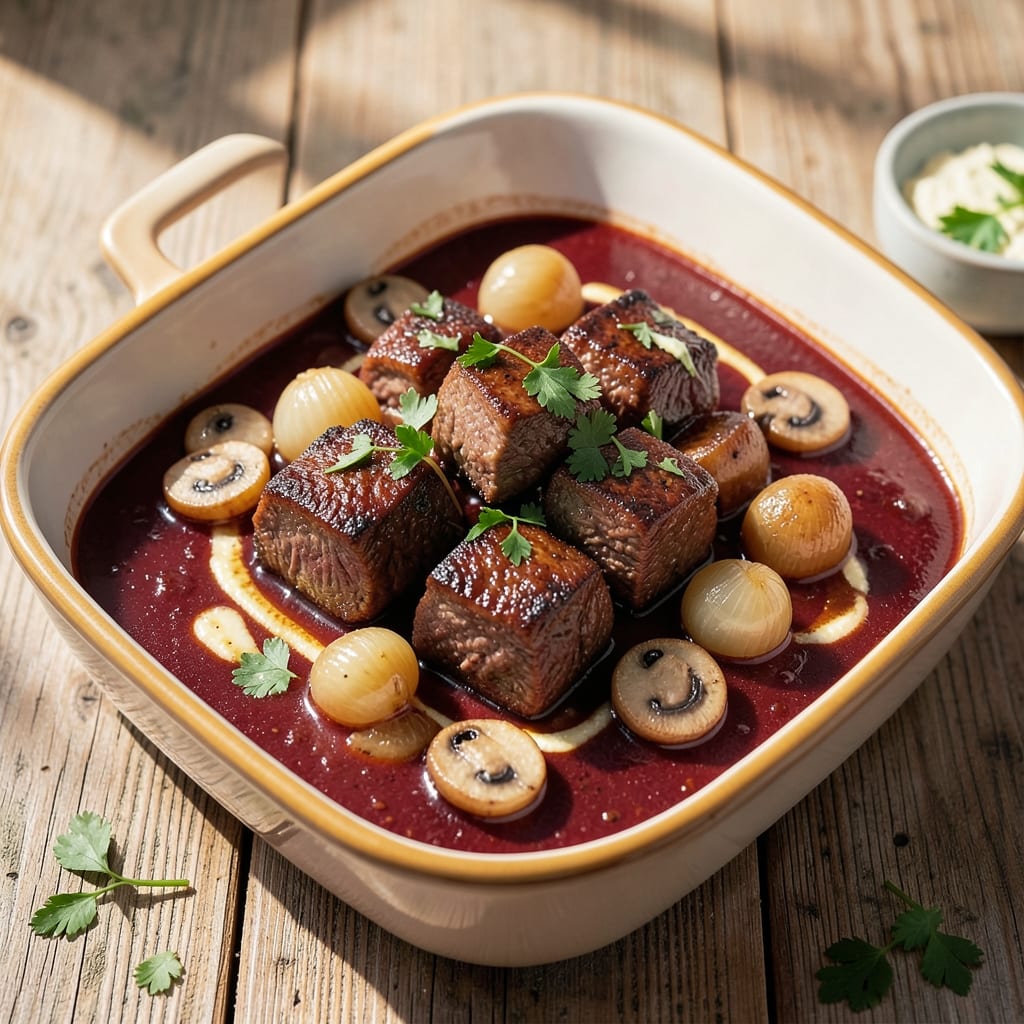
This beef au vin recipe transforms tough cuts into melt-in-your-mouth tenderness through slow wine braising—a technique that elevates humble ingredients into restaurant-worthy depth. The key lies in proper searing and wine reduction, where red wine transforms from acidic to rich, caramelized perfection. I've refined this method over years to ensure every bite delivers that signature balance of tender beef, earthy mushrooms, and velvety sauce.
What sets this recipe apart is the two-stage cooking process: first searing the beef for deep flavor, then braising until fork-tender while the wine reduces into a glossy, aromatic sauce. The addition of mushrooms and pearl onions adds texture and sweetness, while thyme and bay leaves infuse the liquid with classic French aromatics. This isn't just a stew—it's a showstopping centerpiece that pairs beautifully with mashed potatoes or crusty bread.
The result is a dish where rich beef and complex wine flavors harmonize perfectly, creating a sauce that clings to each bite. The beef becomes so tender it practically falls apart, while the mushrooms add meaty depth. This recipe delivers restaurant-quality results at home with just a few hours of hands-off cooking—ideal for special occasions or when you want to impress without stress.
Serve with a glass of the same wine used in cooking to complete the experience. The leftovers actually improve overnight as flavors meld further—proof that this foolproof method delivers both immediate satisfaction and next-day meals. Let's create this timeless classic together.
Ingredients for beef au vin
Transform tough beef into melt-in-your-mouth perfection with these carefully selected ingredients.
| Ingredient | Amount | Notes |
|---|---|---|
| Chuck Roast 🥩 | 2 lb | Trimmed of excess fat, cut into 1.5-inch cubes |
| Dry Red Wine 🍷 | 2 cups | Bold Cabernet Sauvignon or Merlot preferred |
| Beef Broth 💧 | 1 ½ cups | Low-sodium preferred, homemade or high-quality store-bought |
| Pearl Onions 🧅 | 1 lb | Peeled and halved lengthwise |
| Cremini Mushrooms 🍄 | 16 oz | Quartered, stems removed |
| All-Purpose Flour 🌾 | 1 tbsp | For dredging beef |
| Unsalted Butter 🧈 | 3 tbsp | Cold, cut into 1-inch cubes |
| Fresh Thyme 🌿 | 2 sprigs | Stems removed, leaves only |
| Fresh Rosemary 🌿 | 1 sprig | Needles only, chopped |
| Garlic Cloves 🧄 | 4 cloves | Smashed, not minced |
| Bay Leaves 🍃 | 2 whole | Dried, standard size |
| Tomato Paste 🍅 | 1 tbsp | Smooth, not chunky |
| Kosher Salt 🧂 | 1 ½ tsp | Diamond Crystal preferred |
| Freshly Ground Black Pepper 🌶️ | ½ tsp | Coarsely ground |
The chuck roast is non-negotiable here—its marbling ensures rich flavor and tender results. Look for well-marbled cuts at your butcher or grocery store's meat department, ideally with visible fat streaks. If buying pre-cubed, opt for 1.5-inch pieces for even cooking. For wine, Cabernet Sauvignon or Merlot delivers the bold, dry profile needed to braise properly. Avoid sweet or fruity varieties—they won't reduce into that deep, caramelized sauce. The beef broth should be low-sodium to control seasoning balance, and homemade adds depth, though high-quality brands like Kirkland Signature or Pacific Foods work beautifully.
No red wine? Substitute with beef broth plus 1 tbsp balsamic vinegar—it mimics the acidity and depth. Pearl onions can be swapped for regular onions, but they stay intact and add elegant texture. Shiitake mushrooms add umami richness if cremini aren't available, though they require less trimming. The tomato paste is optional but enhances the sauce's complexity—Trader Joe's squeeze tubes are perfect for this. For thyme and rosemary, fresh is ideal, but if using dried, reduce to one-third the amount. The bay leaves should be standard-sized; don't use the tiny dried ones that crumble.
This dish tastes even better the next day as flavors meld. Store in an airtight container in the refrigerator for up to 5 days, or freeze portions for 3 months. The sauce thickens upon reheating, so add a splash of broth if it seems too stiff. For meal prep, double the recipe and freeze half—simply thaw and reheat for a restaurant-quality dinner later in the week. The wine reduction can be made ahead and stored separately for up to 2 weeks, then combined with the braised beef when ready to serve.
Why You'll Love This Recipe
- One-Pot Magic: I swear by this—just sear the roast, toss in onions and mushrooms, then let the wine and broth do the work. No fancy gadgets, no stress, and the house smells like a Parisian bistro by the time it’s done.
- Wine-Infused Richness: That first sip of the deep, velvety sauce? It’s where the chuck roast transforms into something luxurious. The red wine cuts through the richness while the mushrooms and onions add earthy depth—like a hug in a bowl.
- Leftovers That Shine: Between us, the second night is often better. The beef gets even more tender, and the sauce thickens into a glorious glaze. Pack it for lunch or reheat with crusty bread—either way, you’ll be the hero of your week.
- Budget-Friendly Luxury: Chuck roast is affordable, but it feels special. Pearl onions and cremini mushrooms add elegance without breaking the bank, and a bottle of red wine makes it taste like you spent hours (when really, you didn’t). Fancy dinner, zero guilt.
Step-by-step instructions for beef au vin
A rich, deeply flavorful braise where tender beef and mushrooms melt into a velvety wine reduction.
Sear the Beef for Deep Flavor
Pat the 2 lb chuck roast dry with paper towels and season generously with 1.5 tsp kosher salt and 0.5 tsp freshly ground black pepper. Cut into 1.5-inch cubes and dredge lightly in 1 tbsp all-purpose flour, shaking off excess. This creates a golden crust and thickens the sauce.
Heat a 6-quart Dutch oven over medium-high heat until hot. Add 3 tbsp unsalted butter and let it foam, then add the beef in batches without overcrowding. Sear for 3-4 minutes per side until deeply browned—this develops the Maillard reaction that forms the foundation of flavor. Transfer the beef to a plate and set aside.
Build the Aromatic Base
In the same Dutch oven, add the 1 lb halved pearl onions and 16 oz quartered cremini mushrooms. Cook for 5-6 minutes until the onions soften and mushrooms release their moisture, then push them to the sides. Add 4 smashed garlic cloves, 1 tbsp tomato paste, 2 sprigs fresh thyme, 1 sprig chopped rosemary, and 2 whole bay leaves. Stir for 1 minute until fragrant—this infuses the base with layered complexity.
Deglaze the pot immediately with 2 cups dry red wine, scraping up all the browned bits from the bottom. Let the wine reduce by half (3-4 minutes) before adding 1.5 cups beef broth. Bring to a gentle simmer, then return the beef to the pot.
Braise Until Tender
Cover the Dutch oven and transfer to a 325°F oven for 2-2.5 hours, or until the beef is fork-tender. The liquid should reduce to a thick, glossy sauce that coats the back of a spoon. Check at the 2-hour mark—if the beef isn't tender, continue cooking until it pulls apart easily.
Here's the thing—don't peek or stir during cooking. Every time you open the lid, you lose heat and steam, extending the cooking time. The beef will release its own juices as it braises, creating that signature silky texture.
Finish and Rest for Perfect Texture
Once the beef is tender, remove it from the pot and strain the braising liquid through a fine-mesh sieve into a clean saucepan. Skim off any excess fat that rises to the surface. Return the liquid to the stove and simmer over medium heat for 5-7 minutes until it thickens slightly.
Return the beef to the sauce, coating each piece thoroughly. Let the dish rest for 10 minutes before serving—this allows the juices to redistribute, ensuring every bite is moist and flavorful. Serve with crusty bread or mashed potatoes to soak up the rich sauce.
Pro Tips For Making Beef Au Vin
- Sear the Roast Hard: High heat for 3-4 minutes per side until deep brown—this isn’t the time to be gentle. The crust locks in flavor and keeps the meat from drying out later, especially with a tough cut like chuck.
- Peel Those Onions Wrong: Leave the skins on pearl onions until after cooking—they won’t soften as much and stay intact. Peel only after simmering, or they’ll turn to mush faster than you can say "wine reduction."
- Deglaze Immediately: As soon as you remove the roast, pour in the wine hot—scrape every last bit from the pan with a wooden spoon. Cold wine just sits there; hot wine works with the fond to build real depth.
- Save the Broth for Later: Strain the beef broth before adding it to the sauce—you’re not making a soup here. Lumpy broth ruins the silky texture, and no one wants to chew through bits while eating their au vin.
Perfect pairings for this recipe
Classic Wine Pairings
Serve your beef au vin with the same red wine used in cooking—it's the perfect match! A bold Cabernet Sauvignon or Merlot complements the dish's richness, while a Pinot Noir offers lighter acidity that cuts through the sauce. I love opening a bottle of Louis Jadot Beaujolais or Decoy Cabernet—both enhance the meal's depth without overpowering it. 🍷
Bread Pairings
Crusty baguette or sourdough is essential for soaking up that luxurious sauce. Toast your bread lightly before serving to create a perfect textural contrast. For extra indulgence, try focaccia or ciabatta—their airy pockets hold the sauce beautifully. I keep a loaf of Breads Bakery French Baguette on hand specifically for this dish.
Potato Sides
Creamy mashed potatoes elevate beef au vin by balancing the richness. Use Yukon Gold potatoes boiled until tender, then mashed with butter and warm milk. For a twist, add roasted garlic or gruyère cheese to deepen the flavor. I also love serving duchesse potatoes for a more elegant presentation.
Vegetable Accompaniments
Add bright roasted Brussels sprouts with bacon or sautéed green beans to cut through the dish's richness. For a French touch, serve haricots verts with butter and lemon. I find that asparagus spears roasted with olive oil and sea salt add a sophisticated contrast. 🥦
Cheese Course
Finish the meal with a simple cheese board featuring Brie, Comté, and a sharp aged Gouda. The creamy Brie pairs beautifully with the wine's acidity, while the nutty Comté adds complexity. I always include cornichons and walnuts for texture and crunch. This keeps the French theme cohesive while adding variety.
Nutrition facts
Frequently asked questions
Can I use a different cut of beef for this recipe?
While chuck roast is ideal for its marbling and tenderness, you can substitute with stew beef or short ribs. Avoid lean cuts like sirloin—they won't become tender during braising. For ribs, increase cooking time to 3-4 hours and add an extra 1 cup of broth to prevent drying.
What if I don't have red wine? What's the best substitute?
Use 2 cups beef broth plus 1 tbsp balsamic vinegar to mimic the wine's acidity and depth. For extra richness, add 1 tsp soy sauce or 1 tsp red wine vinegar. Avoid sweet wines—they won't reduce properly and may alter the sauce's balance.
How do I know when the beef is fully tender?
Test with a fork or meat thermometer. The beef should be fork-tender (easily pierced with minimal resistance) and register 203°F internally. If it's still slightly firm, return it to the oven for 30-45 minutes longer. Overcooking can make it mushy, so monitor closely after 2 hours.
Can I make this recipe in a slow cooker?
Yes! Sear the beef first, then transfer everything to a 6-quart slow cooker on LOW for 7-8 hours or HIGH for 4-5 hours. The sauce may be thinner—reduce it on the stovetop afterward. Avoid overcrowding the pot to ensure even cooking and tender results.
Why did my wine sauce turn bitter?
Bitterness usually means the wine reduced too long or the heat was too high. For perfect balance, reduce wine over medium heat until it's half its volume (about 3-4 minutes). If it tastes bitter, add 1 tsp sugar or 1 tsp lemon juice to balance the flavors. Always use dry red wine—sweet varieties won't reduce properly.