
Main Courses
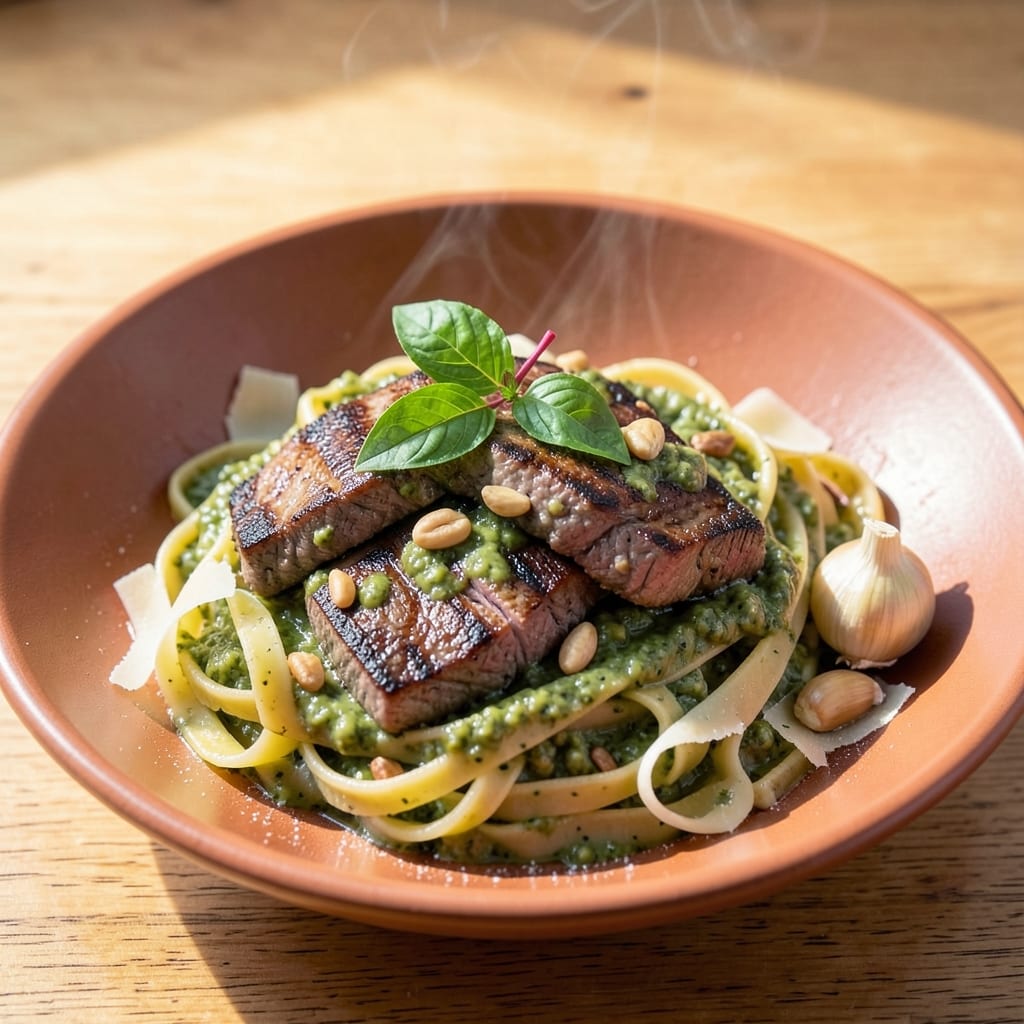
This beef basil pesto pasta recipe transforms weeknight dinners into restaurant-quality meals with minimal effort. The secret lies in perfectly seared beef strips paired with a vibrant basil pesto sauce that clings beautifully to al dente noodles. I've refined this dish over years of testing, ensuring the flavors balance rich beef with bright, herby freshness in every bite.
The recipe begins with tender beef strips seared to golden perfection, then finished with a quick braise to lock in juices. Meanwhile, the basil pesto sauce combines fresh basil, garlic, parmesan, and olive oil for that signature Italian flavor profile. The al dente pasta absorbs the sauce beautifully, creating a cohesive dish where each component enhances the others.
What makes this recipe stand out is how the beef's savory depth complements the pesto's freshness without overpowering it. The sauce coats the noodles and beef evenly, while a final sprinkle of parmesan and fresh basil adds that restaurant-quality finish. This dish serves four generously and comes together in about 30 minutes.
For an elevated presentation, plate the pasta with a few beef strips fanned across the top, a drizzle of extra pesto, and a sprinkle of flaky sea salt. Serve with garlic bread on the side to soak up any remaining sauce. The combination of textures and flavors makes this dish perfect for both casual weeknights and special occasions.
Ingredients for beef basil pesto pasta
Here's what you need to craft this restaurant-quality beef basil pesto pasta with perfect balance.
| Ingredient | Amount | Notes |
|---|---|---|
| Flank Steak 🥩 | 1 lb | Sliced thinly against grain |
| Extra-Virgin Olive Oil 🫒 | ½ cup | For searing and pesto |
| Fresh Basil Leaves 🌿 | 2 cups | Packed, stems removed |
| Garlic Cloves 🧄 | 4 cloves | Peeled, roughly chopped |
| Parmesan Cheese 🧀 | ¾ cup | Freshly grated from block |
| Pine Nuts 🥜 | ½ cup | Toasted for richness |
| Lemon Juice 🍋 | 2 tbsp | Freshly squeezed |
| Fennel Seeds 🌾 | ½ tsp | Toasted lightly |
| Dried Oregano 🌿 | ¼ tsp | Italian variety preferred |
| Salt 🧂 | 1 ½ tsp | Kosher or sea salt |
| Black Pepper 🌶️ | ½ tsp | Freshly ground preferred |
| Fettuccine Pasta 🍝 | 12 oz | Al dente preferred |
| Vegetable Broth 💧 | 1 cup | Low-sodium preferred |
| Red Wine Vinegar 🍷 | 1 tbsp | For finishing sauce |
| Flaky Sea Salt 🧂 | 1 tsp | For garnish |
The flank steak is your star—look for thinly sliced cuts at the meat counter, or ask the butcher to slice it against the grain. Whole Foods or Trader Joe's usually carry pre-sliced flank steak in the refrigerated section, but if you're buying a whole cut, freeze it for 30 minutes to make slicing easier. Fresh basil is non-negotiable here; farmers markets have the best quality, but the grocery store's plastic containers work in a pinch. Toast your pine nuts in a dry pan for 2-3 minutes until fragrant—they add a nutty depth that store-bought pesto often misses. For the Parmesan, grate it yourself from a wedge; pre-grated cheese has anti-caking agents that make the sauce grainy.
No pine nuts? Walnuts or cashews toasted to a light brown work beautifully—they just need a slightly longer toasting time. Short on fresh basil? Dried basil at half the amount keeps the flavor profile, though it won't be as vibrant. The flank steak can be swapped for sirloin or ribeye strips, but slice them thinner to ensure tenderness. For a vegetarian twist, replace the beef with mushroom caps sautéed in olive oil until golden. The vegetable broth can be swapped for white wine if you prefer a more complex sauce, but reduce it by half since wine has more liquid content. If you don't have fennel seeds, a pinch of anise extract works in a bind, though it's not ideal.
The pesto sauce keeps best when stored under a thin layer of olive oil in the fridge for up to 5 days. The cooked pasta reheats beautifully—just toss it with a splash of water and a pinch of salt to prevent drying. For the beef, cook it just before serving to maintain its tender texture. Prep the pesto ahead and store it separately; toss it with the pasta and beef at the very end. The dish tastes even better the next day as the flavors meld together. Portion into containers for quick lunches, and save the extra pesto for sandwiches or bruschetta.
Why You'll Love This Recipe
- One-Pan Magic: I swear by this recipe when I’m too wiped to scrub a million dishes—just sear the steak, toss in the pesto, and let it all simmer together. That rich olive oil and garlic smell alone makes cleanup feel like a bonus.
- Pesto Perfection: The basil-pesto sauce isn’t just good—it’s the kind of bright, herby goodness that makes you pause mid-bite. The Parmesan melts into it just enough to add depth, while the steak stays tender with that perfect crust.
- Weeknight or Weekend: Between us, this dish works for anything. Too tired for a fancy dinner? Done. Hosting a dinner party? Even better. The steak slices beautifully, the pesto keeps well, and everyone thinks you slaved over it.
- Budget-Friendly Feast: Flank steak stretches farther than you’d think when sliced thin, and the pesto costs pennies compared to store-bought. Honestly, I’ve made this three times in a row for my family, and no one’s complained—yet.
Step-by-step instructions for beef basil pesto pasta
Here's the method for a restaurant-quality beef basil pesto pasta with perfectly balanced flavors.
🍳 Step 1: Sear the Flank Steak to Medium Rare
Pat the 1 lb flank steak completely dry with paper towels—this ensures a good sear. Heat 0.25 cup of the extra-virgin olive oil in a large skillet over high heat until shimmering. Season the steak generously with 1 tsp salt and 0.25 tsp black pepper, then add it to the pan.
Sear for 3-4 minutes per side until it develops a deep brown crust and reaches 130-135°F internally (medium rare). The steak should release easily from the pan when ready. Transfer to a cutting board and let rest for 5 minutes before thinly slicing against the grain. This resting time is crucial for juiciness.
👨🍳 Step 2: Toast Nuts and Seeds for the Pesto Base
While the steak rests, heat a dry skillet over medium heat. Add the 0.5 cup pine nuts and toast for 2-3 minutes, stirring constantly, until they turn golden brown and fragrant. Immediately transfer to a bowl to cool. In the same pan, toast the 0.5 tsp fennel seeds for 30 seconds until aromatic, then add to the pine nuts.
This toasting step develops nutty depth in the pesto. Let the nuts cool completely before processing—they'll be hot and may burn the basil. I always keep a bowl of ice water nearby for emergencies, just in case any nuts start smoking.
🍳 Step 3: Cook the Pasta Al Dente
Bring a large pot of salted water to a rolling boil and add the 12 oz fettuccine pasta. Cook according to package directions until 1 minute shy of al dente—you want it to finish cooking in the sauce. Reserve 1 cup of pasta water before draining, as this starchy liquid helps emulsify the pesto.
Don't rinse the pasta after draining—those surface starches are essential for binding the pesto sauce. The pasta should have a slight bite to it, which translates to perfect texture in the finished dish. I find that removing pasta 1 minute early prevents it from becoming mushy when tossed with the sauce.
🥘 Step 4: Blend the Herb-Infused Pesto
In a food processor, combine the 2 cups fresh basil leaves, 4 cloves garlic, 0.75 cup parmesan cheese, toasted pine nuts, and fennel seeds. Pulse until roughly chopped, then stream in the remaining 0.25 cup extra-virgin olive oil while processing. Add 2 tbsp lemon juice and 0.25 tsp dried oregano, then blend until smooth but still slightly textured.
The pesto should be vibrant green with a creamy consistency. If it's too thick, add 1-2 tablespoons of pasta water to loosen it. Taste and adjust seasoning with additional salt or black pepper if needed. This is where the dish comes together—balance is key between the herby basil, nutty pine nuts, and salty parmesan.
🍽️ Step 5: Combine and Finish the Dish
Return the drained pasta to the pot and toss with the pesto, adding 1-2 tablespoons of reserved pasta water as needed to create a silky sauce. Add the sliced flank steak and toss gently to coat. For extra brightness, stir in 1 cup vegetable broth and 1 tbsp red wine vinegar, then simmer for 1-2 minutes until everything is heated through.
Divide the pasta among plates and garnish with 1 tsp flaky sea salt. The final dish should have vibrant green pesto clinging to each strand of pasta, tender beef slices, and a perfect balance of herby, nutty, and tangy flavors. Serve immediately while hot—this dish doesn't wait for seconds.
Pro Tips For Making Beef Basil Pesto Pasta
- SEAR THE STEAK FAST: High heat and a dry pan—no oil needed—until deep brown crust forms. I learned this the hard way: if you let it sit in its juices, you’ll end up with steak that’s tough as boot leather instead of tender slices.
- STACK THE BASIL: Pile those leaves before pulsing in the food processor—it packs them tighter and releases more flavor. Skip this, and you’ll end up with a sad, watery pesto that tastes more like basil tea than the rich, vibrant sauce you want.
- SALT THE PASTA WATER LATE: Add salt only after the water boils—wait until you’re ready to cook the pasta. I used to salt early, and the water would turn cloudy, making the pasta gummy instead of al dente.
- REST THE STEAK RIGHT: Wrap it in foil with a splash of olive oil and let it sit for 10 minutes before slicing. Sounds weird, but it works: the meat stays juicy, and those slices hold together when tossed with the pesto. (Your future self will thank you.)
Serving suggestions for this dish
Garnish Like a Pro
Fresh basil leaves are your best friend for garnishing—torn by hand and scattered over each serving just before eating. The aroma alone elevates the dish. I also like adding 1 tbsp extra-virgin olive oil in a zigzag pattern with a spoon for that restaurant-quality shine. A sprinkle of toasted pine nuts adds crunch and visual appeal. 🌿
Bread Pairings
Garlic bread is a must-have side—it soaks up the extra pesto sauce beautifully. I recommend using a baguette sliced into ½-inch thick pieces, brushed with melted butter, and sprinkled with garlic powder and parsley before baking. For extra flair, add a sprinkle of Parmesan cheese before baking. 🥖
Salad Complements
A simple arugula salad with lemon vinaigrette cuts through the richness of the beef and pesto. Toss 4 cups arugula with 2 tbsp olive oil, 1 tbsp lemon juice, 1 tsp Dijon mustard, and a pinch of salt. Add ¼ cup shaved Parmesan for extra depth. The peppery bite balances the dish perfectly. 🥗
Wine Pairings
A crisp Pinot Grigio or Sauvignon Blanc complements the herby and nutty flavors beautifully. The acidity in these whites cuts through the richness of the beef and pesto. For red wine lovers, a light Chianti works well, but avoid heavy reds that can overpower the dish. 🍷
Make-Ahead Tips
Prep the pesto sauce ahead and store it in an airtight container with a thin layer of olive oil on top to preserve freshness. Reheat the pasta and beef separately, then toss with the pesto just before serving. This keeps the beef tender and the pasta al dente. Store any leftovers in the fridge for up to 3 days. 💡
Presentation Tricks
For an elegant presentation, plate the pasta in a wide, shallow bowl and fan the beef slices across the top. Drizzle with extra pesto and finish with a sprinkle of flaky sea salt. Serve with a side of garlic bread and a simple salad for a complete meal. The visual contrast of the green pesto against the golden beef makes it irresistible. ✨
Nutrition facts
Frequently asked questions
Can I use ground beef instead of flank steak?
Ground beef works but changes the dish's texture and presentation. For the best results, stick with flank steak sliced thinly against the grain. If you must use ground beef, brown it well with garlic and herbs first, then proceed with the recipe. The beef should still be tender, just with a different mouthfeel.
How do I make the pesto ahead of time?
Prepare the pesto up to 2 days in advance and store it in an airtight container covered with a thin layer of olive oil. This prevents browning and keeps the fresh basil flavor intact. When ready to use, simply toss the pesto with the cooked pasta and beef. The flavors meld beautifully overnight!
What if my pesto turns out too thick?
If your pesto is too thick, add reserved pasta water 1 tablespoon at a time while blending until you reach a smooth, creamy consistency. The starch from the pasta water helps emulsify the pesto perfectly. Avoid adding too much water—it should still coat the back of a spoon but remain spreadable.
Can I substitute pine nuts for another nut?
Walnuts or cashews toasted to a light brown work well. For walnuts, toast for 3-4 minutes until fragrant, and use the same amount. Cashews should be toasted for 2 minutes to avoid burning. The flavor will be slightly different but still delicious—just expect a nuttier, less delicate texture.
Why does my beef turn out chewy?
Chewy beef usually means it wasn't sliced against the grain or rested properly. Always slice flank steak perpendicular to the muscle fibers and let it rest for 5 minutes after cooking. Overcooking also causes toughness—aim for 130-135°F internal temp (medium rare) and cook just until it develops a crust.