
Soups & Stews
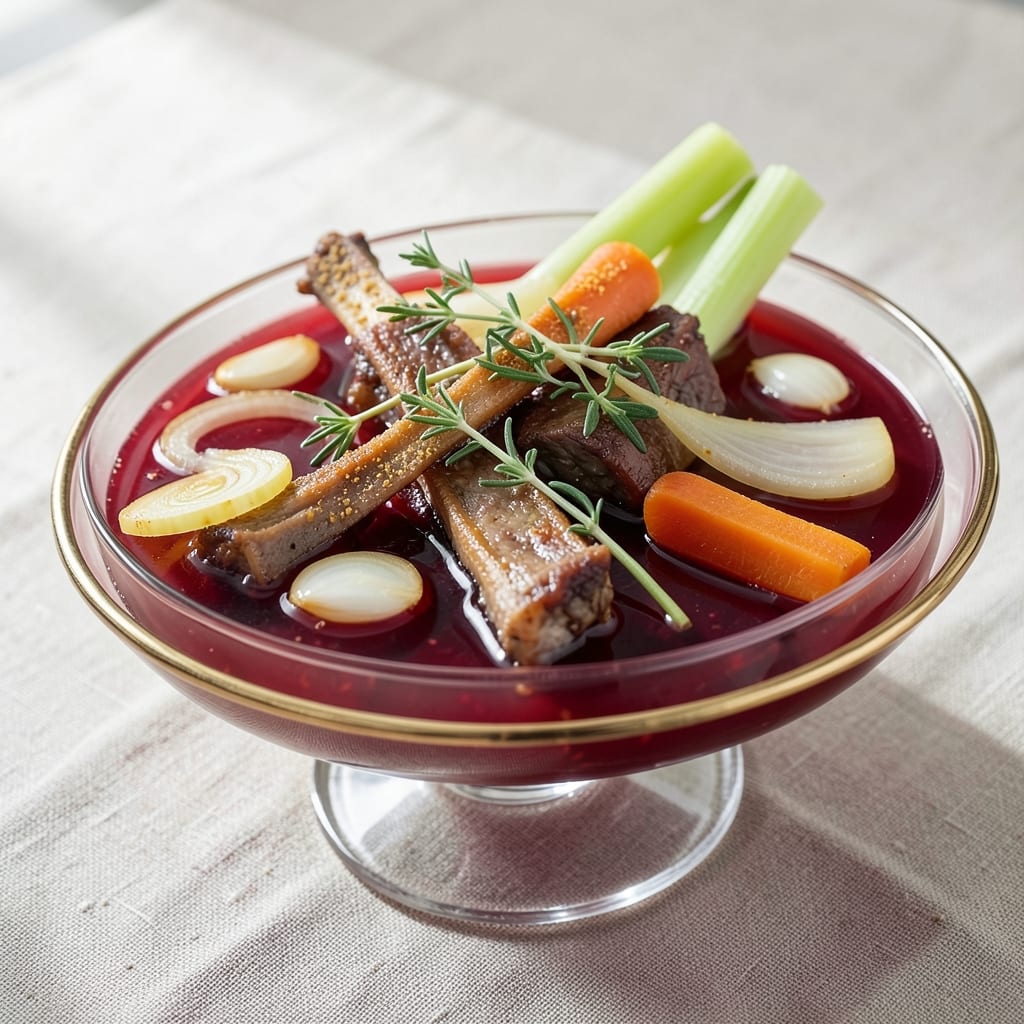
This beef aspic recipe transforms simple ingredients into elegant, gelatinous bites that capture the essence of French classic cuisine. The process begins with simmering beef bones and vegetables to create a deeply flavorful, clear broth infused with aromatic herbs and spices. What makes aspic special is its ability to preserve the rich, savory essence of the meat in a delicate, wobbling texture that's both visually striking and satisfyingly hearty.
The beauty of traditional aspic lies in its simplicity and versatility—it requires just a few key ingredients and a bit of patience for chilling. As the broth cools, it transforms into a firm yet delicate gel, perfectly encasing tender beef and vegetables. This dish was historically used to preserve meat during long voyages or special occasions, but today it remains a sophisticated centerpiece for dinner parties and elegant gatherings.
What you'll achieve is a dish that's equal parts beautiful and delicious—clear, glossy slices revealing tender beef and vegetables within. The result is a meal that feels luxurious yet is surprisingly straightforward to prepare. Serve it chilled with a drizzle of oil and fresh herbs for a touch of brightness, or pair it with crusty bread to soak up every last bit of flavor.
Though aspic may seem intimidating, the process is methodical and rewarding. With careful attention to timing and temperature, you'll create a dish that's both impressive and deeply satisfying—a true testament to the art of French cooking. Let's get started on crafting this timeless classic.
Ingredients for beef aspic
French classic cuisine relies on these precise ingredients to create elegant, wobbling beef aspic bites.
| Ingredient | Amount | Notes |
|---|---|---|
| Beef Bones 🦴 | 2 lb | Knuckle or marrow bones preferred |
| Yellow Onions 🧅 | 1 whole | Medium size, peeled and halved |
| Carrots 🥕 | 2 whole | Medium size, peeled and halved |
| Celery Stalks 🌿 | 3 whole | Fresh, trimmed and cut into 2-inch pieces |
| Garlic Cloves 🧄 | 4 cloves | Peeled and lightly crushed |
| Fresh Thyme Sprigs 🌿 | 2 whole | Or 1 tsp dried thyme |
| Fresh Parsley Sprigs 🌿 | 4 whole | For garnish and flavor |
| Bay Leaves 🍃 | 2 whole | Dried, standard size |
| Black Peppercorns 🌶️ | 10 whole | Freshly cracked preferred |
| White Wine Vinegar 🍷 | ¼ cup | For acidity balance |
| Unflavored Gelatin 🍬 | 2 tbsp | Powdered, high-grade preferred |
| Cold Water 💧 | ½ cup | For blooming gelatin |
| Tender Beef Cubes 🥩 | 1 ½ lb | From knuckle or chuck roast |
| Cold Water 💧 | 1 cup | For final gel consistency |
| Extra-Virgin Olive Oil 🫒 | 2 tbsp | For drizzling before serving |
The foundation of authentic aspic begins with beef bones—knuckle or marrow bones from a quality butcher yield the richest, most flavorful broth. Local butcher shops often carry these, or check the meat department at Whole Foods or Eataly for pre-cut options. The bones should be raw and aromatic, with visible marrow for extra richness. For the vegetables, organic produce ensures clarity in the final gel—avoid bruised carrots or yellowing celery, as these will cloud the broth. Fresh herbs like thyme and parsley should be vibrant green, not wilted. The unflavored gelatin must be high-grade powder (like Great Lakes brand) for optimal setting power, and always store it in a cool, dry place to prevent clumping.
No knuckle bones available? Substitute with beef shank bones—they're slightly more accessible at most grocery stores. For a vegetarian alternative, mushroom stems and kombu seaweed can mimic umami depth, though the texture will differ. The white wine vinegar adds brightness without overpowering; if unavailable, apple cider vinegar works equally well. When blooming the gelatin, cold water is critical—hot water will dissolve it prematurely. For the beef cubes, chuck roast holds up best during cooking, while sirloin may become too dry. If using pre-cut beef, ensure it's center-cut for tenderness—ask your butcher to trim excess fat for cleaner slices. The olive oil should be extra-virgin for drizzling, as its peppery notes complement the delicate aspic.
Store the gelatin mixture in a shallow glass dish at room temperature for 2 hours before refrigerating to prevent cracking. Once set, cover tightly with plastic wrap pressed directly against the surface to maintain moisture. Aspic keeps for up to 5 days in the fridge, though the texture becomes slightly softer after 3 days. For longer storage, wrap individual portions in plastic and freeze for up to 3 months. When reheating, never microwave—opt for a water bath at low heat to preserve the gel structure. Serve chilled with a drizzle of olive oil and fresh herbs for maximum elegance.
Why You'll Love This Recipe
- Minimal Chopping Required: The bones and veggies (onions, carrots, celery—the holy trinity) just need rough chopping. No dicing, no fuss—just toss them in, simmer, and let the stock work its magic while you’re busy with anything else.
- Rich Umami Bomb: That garlic and beef bones? Chef’s kiss. The slow simmer pulls out deep, savory notes that turn plain broth into something you’ll reach for again and again—no fancy seasoning needed.
- Meal Prep MVP: Make a big batch on Sunday, and you’ve got a week’s worth of soups, stews, or even gravy. I freeze it in ice cube trays for easy portions—no wasted effort, just pure convenience.
- Budget-Friendly Goldmine: Beef bones are cheap, and this recipe stretches them into gallons of flavor. Honestly, it’s one of the best ways to turn a cheap cut into something luxurious without breaking the bank.
Step-by-step instructions for beef aspic with savory depth
Mastering aspic requires precision and patience—this method delivers crystal-clear gelatin with rich, layered flavor.
Prepare the Bone Broth Foundation
Place the 2 lb beef bones in a large stockpot and cover with 8 cups cold water (add more if needed to fully submerge). Bring to a boil over high heat, then immediately reduce to a gentle simmer for 3-4 hours, skimming any foam that rises to the surface. This initial rendering extracts deep collagen from the bones, which will later transform into our aspic's structure.
After the initial simmer, add the 1 whole yellow onion, 2 whole carrots, 3 whole celery stalks, 4 cloves garlic, 2 whole thyme sprigs, 2 whole bay leaves, and 10 whole black peppercorns. Return to a simmer and cook uncovered for an additional 2 hours, allowing the aromatics to infuse their flavors while the broth develops a rich, amber hue. The broth should reduce slightly but remain generous—you'll need about 4 cups for the final aspic.
Strain and Acidify the Broth
Strain the broth through a fine-mesh sieve into a clean pot, pressing gently on the solids to extract maximum liquid. Discard the solids. Return the strained broth to the pot and stir in the 0.25 cup white wine vinegar—this subtle acidity prevents the gelatin from becoming too rigid while adding brightness to the final texture. Bring the broth to a gentle simmer and let it reduce by about 25% (approximately 20 minutes) until it reaches 3.5 cups. The broth should coat the back of a spoon but remain pourable.
While the broth reduces, prepare the gelatin by sprinkling the 2 tbsp unflavored gelatin over the 0.5 cup cold water in a small bowl. Let it bloom for 10 minutes—the granules will absorb the water and swell noticeably. This step is critical; blooming ensures even distribution and prevents lumps in your aspic.
Incorporate Gelatin and Beef Cubes
Remove the bloomed gelatin from the bowl and whisk it vigorously into the warm broth until fully dissolved. The mixture should become translucent and slightly thickened. Stir in the 1.5 lb tender beef cubes, ensuring each piece is fully coated in the gelatin mixture. Pour the entire contents into a heatproof container (such as a 9x13-inch baking dish or individual molds) and refrigerate for at least 4 hours, or until fully set.
For a clearer aspic, avoid disturbing the mixture during setting. If using molds, tap them gently on the counter to release air bubbles before refrigerating. The aspic is ready when it achieves a firm, jelly-like consistency that holds its shape when gently shaken.
Serve with Artistic Presentation
Once set, invert the aspic onto a serving platter or carefully unmold individual portions. Drizzle with 2 tbsp extra-virgin olive oil just before serving to enhance the savory depth and add a glossy finish. Garnish with the reserved 4 whole parsley sprigs, finely chopped, for a pop of color and freshness. Serve chilled, accompanied by crusty bread or a simple salad to complement the rich, umami flavors.
This aspic should hold its shape for 2-3 hours at room temperature, making it ideal for appetizers or elegant hors d'oeuvres. For longer storage, wrap tightly in plastic and refrigerate for up to 5 days, or freeze for 3 months. The clarity and texture will diminish slightly upon reheating, so enjoy it best when freshly set.
Pro Tips For Making Beef Aspic
- BLANCH VEGETABLES FIRST: Toss your onions, carrots, and celery in boiling water for 2 minutes before adding them to the pot—this softens them faster and keeps your broth from turning cloudy. I learned this the hard way after staring at a murky aspic wondering why it looked like pond water.
- USE COLD BONES: Start with beef bones straight from the fridge—they’ll sear better and release collagen more evenly than warm bones. I used to pull them straight out of the freezer, and my aspic always had a weird, rubbery texture. Cold bones = cleaner sear, richer broth.
- SKIP THE BOIL: Simmer, don’t boil. A rolling boil breaks down collagen into mush, turning your aspic into glue. Keep it at a gentle simmer (tiny bubbles, occasional skimming) for hours—your future self will thank you when the gel sets properly.
- TOAST THE GARLIC: Sear whole garlic cloves in the pot with the bones until they’re golden and popping—this adds depth without burning. I used to just toss them in raw, and the flavor was always flat. Toasted garlic makes all the difference.
Creative variations of beef aspic
Classic French Terrine
Transform your aspic into a traditional French terrine by shaping the set mixture into a loaf pan lined with plastic wrap. After chilling for 6 hours, unmold onto a platter and slice into ½-inch thick portions. For extra elegance, brush the top with 1 tbsp melted duck fat before serving—this adds a luxurious sheen and depth of flavor. 🍽️
Vegetarian Mushroom Aspic
Swap the beef cubes for 1 lb wild mushrooms (like shiitake or cremini) sautéed with 1 tbsp soy sauce and 1 tsp smoked paprika. Use ½ cup mushroom stems in the broth for extra umami. The texture will be slightly firmer but equally satisfying. Garnish with toasted walnuts and fresh thyme for a vegetarian-friendly version.
Spicy Asian-Inspired Variation
Infuse the broth with 1-inch ginger, 2 star anise pods, and 1 tbsp fish sauce instead of vinegar. Add ½ cup cooked shiitake mushrooms and ½ cup sliced water chestnuts to the gelatin mixture. Serve with a drizzle of chili oil and sesame seeds for a bold, fusion twist that still maintains the aspic's signature wobble.
Herb-Infused Garden Aspic
Stir 1 tbsp chopped tarragon and 1 tbsp chopped chervil into the gelatin mixture before setting. Add ¼ cup diced fennel and ¼ cup diced bell pepper for color and crunch. This lighter variation pairs beautifully with lemon wedges and crusty baguette slices for a refreshing summer dish.
Smoked Paprika Aspic
Enhance the broth with 1 tbsp smoked paprika and ½ tsp cayenne pepper during the simmering phase. Add ½ cup cooked chorizo (crumbled) to the gelatin mixture for a smoky, Spanish-inspired twist. Garnish with pickled jalapeños and crumbled queso fresco for a fiesta-worthy presentation.
Make-Ahead Party Bites
Pour the aspic mixture into silicon mini molds (like those used for truffles) and chill for 4 hours. Pop out and serve as individual appetizers on toothpicks with a side of horseradish cream or spicy mustard. These bite-sized portions are perfect for parties and keep beautifully for 3 days in the fridge. 🎉
Nutrition facts
Frequently asked questions
Why does my aspic turn cloudy instead of clear?
Cloudiness usually means impurities in the broth. Strain through a fine-mesh sieve and then a coffee filter for extra clarity. Avoid overcooking vegetables—bruised or boiled carrots/onions release starches that cloud the gel. For crystal-clear results, use organic produce and skim all foam during the initial bone broth simmer.
Can I use powdered gelatin instead of sheet gelatin?
Yes! Powdered gelatin works perfectly—just follow the package instructions for ratios (typically 2 tbsp powder per cup of liquid). Bloom it in cold water for 10 minutes before whisking into warm broth. The texture will be identical to sheet gelatin, though powdered may require slightly more for firmness.
How do I prevent cracks in the aspic when setting?
Cracks occur from temperature shock. Let the gelatin mixture cool to 110°F (43°C) before pouring into molds, then refrigerate gradually. Tap molds gently on the counter to release air bubbles. For large batches, chill in a room-temperature fridge for 2 hours before moving to cold storage. A thin layer of water in the container also helps create a moisture barrier.
What's the best way to slice aspic without tearing?
Chill aspic for 4+ hours until completely firm. Dip your knife in hot water, wipe dry, and slice at a 45-degree angle for clean cuts. For delicate layers, use a serrated knife. Serve immediately after slicing to maintain texture. Pro tip: Brush slices with olive oil right before serving to prevent drying.
Can I make aspic without a thermometer?
The broth should coat the back of a spoon but remain pourable after reducing (25% reduction). For gelatin blooming, use cold water—the granules should feel spongy after 10 minutes. Test doneness by shaking the set aspic gently—it should hold its shape without flowing. Practice makes perfect for nailing the texture without precise measurements!