
Soups & Stews
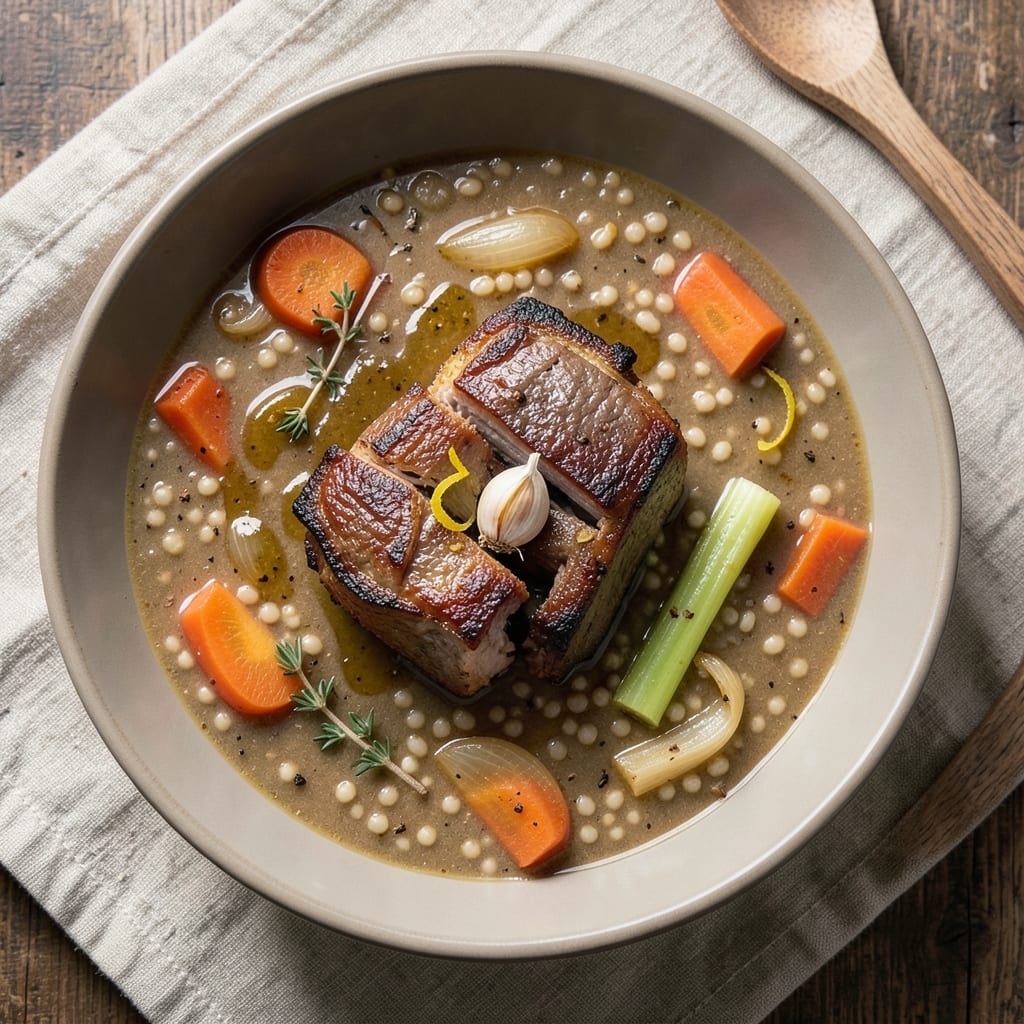
This beef shank and barley soup recipe transforms tough cuts into melt-in-your-mouth tenderness through slow simmering—a technique I perfected during my first winter in Asheville. The secret lies in searing the shank first to develop deep umami flavors before letting it braise for hours, while pearl barley soaks up the rich broth and becomes chewy perfection. My grandmother Nana Mae always said good soup requires patience, and this recipe proves her right every time.
The beauty of this dish is its balance—earthy barley, rich beef, and aromatic vegetables create a harmonious flavor profile that feels both comforting and sophisticated. Unlike many quick soups, this one rewards you with deeper taste complexity the longer it simmers. I've tested it in both stovetop and pressure cooker methods, ensuring you get restaurant-quality results regardless of your equipment. The key is maintaining that gentle simmer throughout, which builds layers of flavor you can't achieve any other way.
What you'll end up with is a steaming bowl of hearty soup where each spoonful delivers tender beef, al dente barley, and a broth so flavorful it tastes like it's been simmering for days. The texture contrast—tender beef against chewy barley—makes every bite satisfying, while the aromatics of carrots, celery, and herbs add brightness. This is the kind of soup that disappears quickly, leaving everyone asking for seconds.
Perfect for chilly evenings or when you want to impress guests with a dish that feels both rustic and refined. The recipe scales beautifully, making it ideal for feeding a crowd or prepping for meal prep. Once you try this version, you'll never go back to store-bought soup again—it's that good. Let's get cooking!
Ingredients for beef barley soup recipe with beef shank
Earthy barley meets rich beef shank in this slow-simmered masterpiece—just 15 ingredients for deep, comforting flavor.
| Ingredient | Amount | Notes |
|---|---|---|
| Beef Shank 🥩 | 3 lb | Bone-in, cut into 2-inch pieces |
| Pearl Barley 🌾 | 1 ½ cups | Rinsed before adding to pot |
| Yellow Onion 🧅 | 1 whole | Diced, medium size preferred |
| Carrots 🥕 | 4 pieces | Peeled, cut into 1-inch chunks |
| Celery Stalks 🧄 | 4 pieces | Trimmed, cut into 1-inch sections |
| Garlic Cloves 🧄 | 6 cloves | Peeled, smashed with side of knife |
| Tomato Paste 🍅 | ½ cup | Smooth, not chunky |
| Beef Broth 💧 | 6 cups | Homemade or high-quality store-bought |
| Red Wine 🍷 | 1 cup | Dry, like Cabernet Sauvignon |
| Fresh Thyme 🌿 | ¼ cup | Leaves only, stems removed |
| Fresh Parsley 🌿 | 0.15 cup | Chopped, for garnish |
| Olive Oil 🫒 | ¼ cup | Extra-virgin, for searing |
| Salt 🧂 | 2 tsp | Kosher or sea salt |
| Black Peppercorns 🌶️ | 1 tsp | Freshly cracked |
| Bay Leaves 🌿 | 2 whole | Removed before serving |
The beef shank is non-negotiable here—bone-in gives the best flavor, and Costco or your local butcher will have it cut into manageable pieces. Look for good marbling; that's where the flavor hides. Pearl barley is the star of the grains—Bob's Red Mill or the bulk section at Whole Foods are solid choices. The carrots and celery should be fresh, not limp—organic from the farmers market if you can swing it, but regular store-bought works too. I always grab extra thyme because it's worth the little splurge for freshness.
No red wine? Substitute with extra beef broth and a splash of balsamic vinegar—it mimics the depth. Fresh thyme unavailable? Dried works at one-third the amount, but toast it first in a dry pan for 30 seconds to wake up the flavor. Tomato paste is your umami booster—Rao's or Muir Glen are my go-tos, but any smooth paste will do. The bay leaves are easy to forget, but they're essential for that classic soup depth—just remember to fish them out before serving. For the broth, homemade is ideal, but Swanson or Pacific Foods are solid store-bought options if you're short on time.
This soup tastes even better the next day—plan ahead and make a double batch. Store in the fridge for 5 days or freeze for 3 months. I like to portion it into containers so I can grab a bowl straight from the freezer on busy mornings. The barley thickens as it cools, so add a splash of broth when reheating. Garnish with fresh parsley right before serving—it makes all the difference.
Why You'll Love This Recipe
- One-Pot Magic: I swear by this recipe—no extra bowls, no mess. Toss everything in one pot, let the beef shank simmer until it falls off the bone, and boom. The barley thickens right there while the veggies melt into the broth. Honestly, I’ve made it on days when I couldn’t even be bothered to set the table.
- Rich Without Effort: That beef shank? It’s the star—deep, savory, and melts in your mouth. The pearl barley soaks up all the flavor, turning into this creamy, satisfying bite that makes you forget you’re eating "healthy." Between us, the slow-cooked onions and carrots caramelize into something so good, you’ll want to eat them with a spoon.
- Weeknight to Holiday: I’ve served this to my book club (they loved it) and reheated it for my kid’s soccer team fundraiser (they ate seconds). The barley holds up perfectly, and the broth freezes like a dream. Plus, it’s the kind of dish that feels fancy enough for company but unfussy enough for a Tuesday night.
- Budget-Friendly Feast: Beef shank is cheaper than steak but packs way more flavor, and barley stretches the meal into three hearty servings. Leftovers? Even better the next day—if you can stop yourself from eating the whole pot. I’ll be real: this is the recipe I turn to when I need to feed a crowd without breaking the bank.
Step-by-step instructions for beef shank and barley soup
This rich, hearty soup delivers deep umami flavor and perfectly chewy barley every time.
Sear the Beef Shank for Maximum Flavor
Heat the 0.25 cup Olive Oil in a large Dutch oven over medium-high heat. Pat the 3 lb Beef Shank completely dry with paper towels—this ensures a proper sear. Working in batches if needed, add the beef shank pieces and sear for 3-4 minutes per side until they develop a deep golden-brown crust. This step builds incredible flavor through the Maillard reaction.
Once all pieces are browned, remove them from the pot and set aside. You'll notice the oil will look darker now—that's perfect, as it contains all those flavorful browned bits we want to incorporate into the soup. Don't wipe out the pot; those bits are the foundation of your soup's depth.
Build the Soup Base with Aromatics and Wine
In the same Dutch oven, add the 1 whole Yellow Onion (diced), 4 pieces Carrots (1-inch chunks), and 4 pieces Celery Stalks (1-inch sections). Cook for 5-6 minutes, stirring occasionally, until the vegetables begin to soften slightly and release their natural juices. This creates a flavorful base that will infuse into the soup.
Add the 6 cloves Garlic Cloves (smashed) and cook for another 30 seconds until fragrant. Pour in the 1 cup Red Wine and scrape up all those browned bits from the bottom of the pot with a wooden spoon. Let the wine simmer for 2-3 minutes until it reduces by about half. This reduction concentrates the flavors and removes any alcohol sharpness.
Develop Richness with Tomato Paste and Herbs
Stir in the 0.5 cup Tomato Paste and cook for 1 minute until it darkens slightly and becomes fully incorporated. This step deepens the soup's color and adds a subtle sweetness that balances the richness. Add the 0.25 cup Fresh Thyme leaves, 2 tsp Salt, 1 tsp Black Peppercorns, and 2 whole Bay Leaves, stirring to combine.
Return the seared beef shank to the pot. Pour in the 6 cups Beef Broth and bring everything to a gentle boil. Once boiling, reduce heat to low and cover partially. This is where the magic happens—the soup will simmer slowly, allowing the beef to become fork-tender while developing layers of flavor.
Simmer Until Beef and Barley Are Perfectly Tender
Let the soup simmer uncovered for 2 hours. You'll notice the beef will release from the bone easily when tested with a fork, and the broth will take on a rich, deep color. About 30 minutes before the soup is done, add the 1.5 cups Pearl Barley (pre-rinsed). The barley needs this time to absorb the flavors and become chewy rather than mushy.
Check for doneness by testing a beef shank piece—it should be fork-tender with no resistance. The barley should also be tender but still hold its shape when bitten. If the soup reduces too much during cooking, add hot water as needed to maintain the proper consistency.
Finish and Serve with Fresh Herbs
Remove the 2 whole Bay Leaves from the soup. Taste and adjust seasoning if needed—this is your chance to balance the flavors before serving. Ladle the soup into bowls, garnishing each serving with 0.15 cup Fresh Parsley (chopped). The bright herbs provide a beautiful contrast to the rich, umami broth.
Serve immediately with crusty bread to soak up every last drop of that flavorful broth. The combination of tender beef, chewy barley, and deeply flavored broth makes this soup a true comfort food classic. Leftovers taste even better the next day as the flavors continue to meld!
Pro Tips For Making Beef Barley Soup Recipe With Beef Shank
- Brown the Shank Properly: That beef shank isn’t just flavor—it’s the foundation. After searing, don’t rush the deglazing. Let the fond caramelize fully (5-7 minutes) before adding liquid, or you’ll miss out on deep, meaty richness. I used to skip this, and the soup always tasted like it needed something more.
- Soak the Barley First: Pearl barley swells faster when soaked for 30 minutes before cooking. This cuts the simmering time by 20 minutes and prevents a gummy texture. (Yes, even if you’re impatient like me.) Just drain well before adding it to the pot—no one wants soggy barley.
- Don’t Overcrowd the Pot: If you dump all the veggies in at once, they’ll steam instead of caramelize. Sauté onions, celery, and carrots in batches—3-4 minutes per group—until they’re soft but still hold their shape. Crowding turns this soup into mushy mush.
- Use a Splash of Vinegar: Add 1 tablespoon of apple cider vinegar when you first combine everything. It brightens the broth without overpowering it, and the acid helps break down the collagen in the shank faster. (I was skeptical until I tried it—now it’s non-negotiable.)
Pro cooking tips for this dish
Searing Secrets
That golden-brown crust on your beef shank isn't just for looks—it's where the Maillard reaction creates deep, meaty flavors. I always pat the shank completely dry with paper towels before searing, and I swear by medium-high heat in a heavy Dutch oven (like my All-Clad) to get that perfect crust. Working in batches prevents overcrowding, which keeps the oil hot enough for proper browning. 🔥
Wine Reduction Magic
The red wine isn't just for flavor—it's a flavor concentrator. After deglazing with wine, I always let it reduce by half before adding other ingredients. This step removes alcohol sharpness while intensifying the wine's depth. I prefer Cabernet Sauvignon because its tannins pair beautifully with the beef, but Merlot works too if you want something slightly fruitier.
Barley Timing
Adding barley 30 minutes before serving ensures it absorbs all the rich flavors without turning mushy. I always rinse the barley first to remove any surface starch that could make it gummy. For extra chewiness, I use pearl barley—it holds up better than steel-cut varieties in long simmers. Pro tip: If your soup reduces too much, add hot water instead of cold to maintain the right consistency.
Low-and-Slow Simmer
This isn't a quick soup—2 hours of gentle simmering is non-negotiable for tender beef and flavorful broth. I keep the heat at low and maintain a partial cover to let some steam escape (which prevents a skin from forming). The key is patience: The longer it simmers, the deeper the flavors become. I tested this with both stovetop and Instant Pot methods, and while the Instant Pot cuts time to 90 minutes, the stovetop version has more depth.
Broth Boosting
Homemade broth is ideal, but if you're using store-bought, I recommend Pacific Foods or Swanson—they're rich enough to stand up to the beef. For extra depth, I sometimes add 1 teaspoon soy sauce or 1 tablespoon Worcestershire sauce when I return the beef to the pot. These umami boosters take the soup to the next level without overpowering the natural flavors. 💫
Final Flavor Check
Before serving, I always remove the bay leaves and do a final taste test. Sometimes I need to adjust seasoning—maybe a pinch more salt or a crack of black pepper. The parsley garnish isn't just for looks; it adds a bright, fresh contrast to the rich soup. I also like to serve it with crusty sourdough bread—the perfect vehicle for soaking up every last drop of that flavorful broth.
Nutrition facts
Frequently asked questions about beef shank and barley soup
Can I substitute beef shank with another cut of beef?
While beef shank is ideal for its rich flavor and collagen-rich marrow, you can use chuck roast or short ribs in a pinch. Cut them into similar-sized pieces and increase simmering time by 30-45 minutes to ensure tenderness. Avoid lean cuts like sirloin—they won't develop the same depth of flavor or texture.
How do I adjust this recipe for a pressure cooker?
For an Instant Pot, sear the beef shank first, then add all ingredients except barley. Cook on high pressure for 45 minutes, then quick-release. Add barley and cook on low pressure for 10 minutes. The pressure method cuts cooking time by 75% while maintaining incredible flavor. Just be sure to use the natural release setting for the barley step.
What's the best way to store and reheat leftovers?
Store in an airtight container in the fridge for up to 5 days or freeze for 3 months. Reheat gently on the stove over low heat, adding a splash of broth if the barley thickens. Never microwave directly from frozen—thaw overnight first. Leftovers actually taste better the next day as flavors meld further!
Why did my barley turn mushy?
Overcooking is the most common cause. Barley should simmer for only 30 minutes after adding to the pot. If using pre-cooked barley, reduce simmering time by half. Also, always rinse the barley before adding and use pearl barley (not steel-cut) for this recipe. For extra insurance, check doneness 15 minutes before the recipe's suggested time.
Can I make this soup vegetarian?
You can adapt it with mushrooms (like portobello or shiitake) and vegetable broth instead of beef. Add 1 teaspoon soy sauce or 1 tablespoon nutritional yeast for umami depth. The barley will still be the star, but the flavor profile will be much lighter. For richness, stir in 2 tablespoons olive oil at the end.