
Soups & Stews
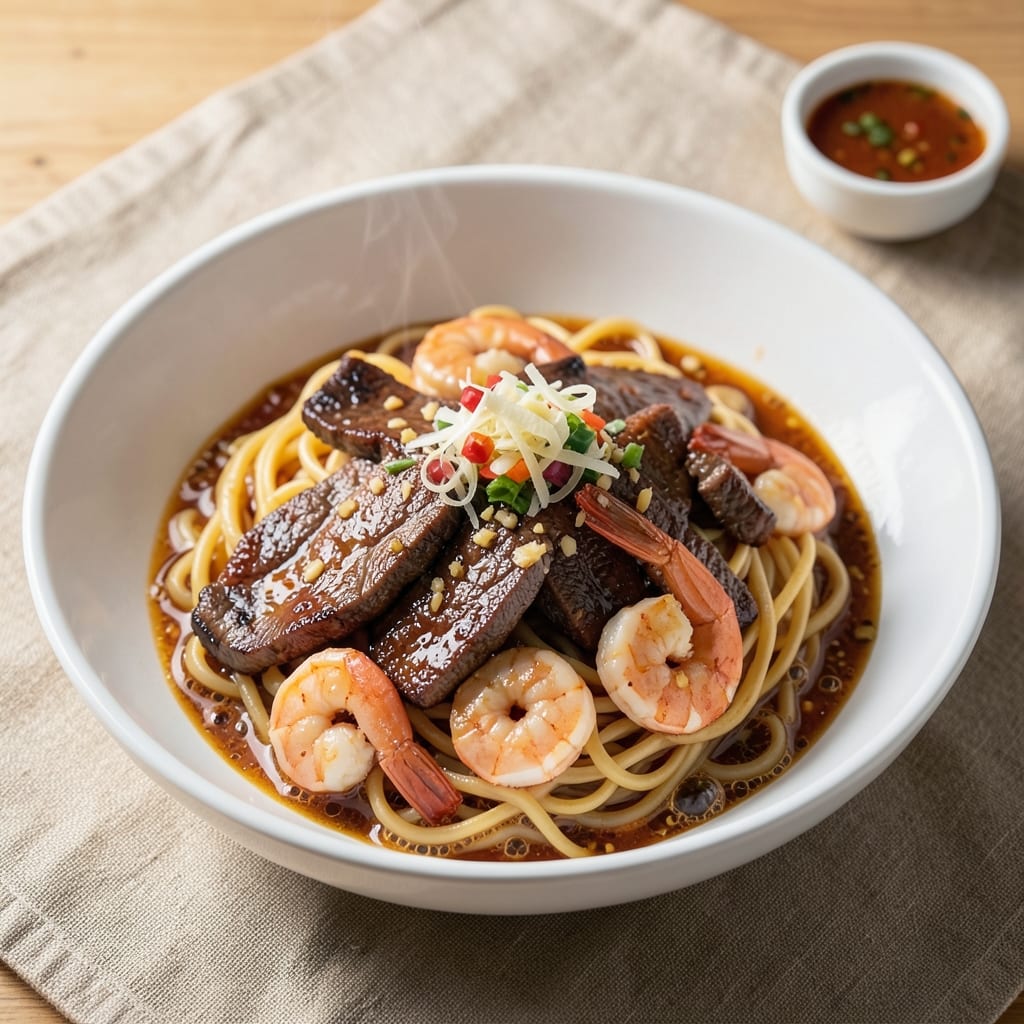
This beef and shrimp yakamein recipe delivers the perfect balance of wok-hei crispy beef and silky noodles in every bite. The secret lies in high-heat searing for the beef and quick stir-frying to lock in texture, while the shrimp cooks just until opaque—no rubbery results here. I’ve refined this recipe over countless weeknight dinners, ensuring the sauce is rich, slightly sweet, and packed with umami from soy, oyster sauce, and a touch of brown sugar.
The dish starts with properly prepped ingredients: thinly sliced beef marinated in cornstarch and soy sauce for that signature crispy texture, and shrimp blanched to keep them tender. Fresh yakamein noodles (or sub with rice noodles) are cooked al dente and tossed with the stir-fry to avoid mushiness. The sauce comes together in minutes with aromatics like garlic, ginger, and chili, creating a glossy finish that coats every strand.
What you’ll end up with is a restaurant-quality bowl of crispy beef, succulent shrimp, and chewy noodles bathed in a savory-sweet sauce. The dish is balanced enough to feel light yet satisfying, with bright green onions and sesame seeds adding freshness. It’s the kind of meal that transforms a simple weeknight into a flavor-packed celebration.
Whether you’re using a wok or a large skillet, the technique remains the same—high heat, quick cooking, and precise timing. Serve with extra chili flakes for heat lovers or lime wedges for brightness. Let’s get cooking!
Ingredients for beef and shrimp yakamein
Fresh noodles, tender beef, and plump shrimp—this wok-hei dish delivers crispy edges and silky textures.
| Ingredient | Amount | Notes |
|---|---|---|
| Yakamein Noodles 🍜 | 8 oz | Fresh or high-quality dried |
| Flank Steak 🥩 | 1 lb | Thinly sliced against grain |
| Large Shrimp 🦐 | 1 lb | Peeled, deveined, tail-on |
| Cornstarch 🌾 | 2 tbsp | For velveting beef |
| Light Soy Sauce 🥄 | ½ cup | For marinade and sauce |
| Oyster Sauce 🍲 | 2 tbsp | High-quality, like Lee Kum Kee |
| Brown Sugar 🍯 | 1 tbsp | Lightly packed |
| Garlic Cloves 🧄 | 6 cloves | Minced for aromatics |
| Fresh Ginger 🌿 | 1 tbsp | Grated, peeled |
| Red Chili Flakes 🌶️ | 1 tsp | Adjust to taste |
| Vegetable Oil 🫒 | ¼ cup | High smoke point |
| Sesame Oil 🫒 | 1 tbsp | For finishing |
| Green Onions 🧅 | ¼ cup | Sliced, white and green parts |
| Toasted Sesame Seeds 🌰 | 1 tbsp | For garnish |
| Lime Wedges 🍋 | 2 whole | For serving |
The flank steak is non-negotiable for that signature crispy texture—thinly sliced against the grain and marinated in cornstarch and soy sauce for 20 minutes. Costco or Whole Foods carry high-quality cuts, but any well-marbled flank steak works. For the shrimp, frozen tail-on shrimp is my go-to (thawed in cold water)—they’re usually pre-peeled and cheaper than fresh. Look for bright, translucent shrimp with no fishy smell. The yakamein noodles should be fresh if possible (they’re sold in Asian markets or the refrigerated section of larger grocery stores), but high-quality dried noodles like Ramen Nagi work in a pinch.
No cornstarch? Arrowroot powder at the same amount works just as well. Swapping soy sauce? Tamari or coconut aminos keep it gluten-free, but the flavor will shift slightly. The oyster sauce is where umami happens—don’t skimp on quality. Lee Kum Kee is the gold standard, but Kikkoman or Hinode are solid backups. For extra heat, add a dash of Sichuan chili bean paste (about 1 tsp) to the sauce. The green onions can be subbed with chives, and if you’re out of sesame seeds, toasted peanuts or cashews add a nice crunch.
Prep the beef and shrimp marinade ahead—it keeps for 2 days in the fridge. The noodles should be cooked al dente and tossed with a little oil to prevent sticking. This dish reheats beautifully—just add a splash of water to the sauce and stir-fry again over high heat. For leftovers, store in airtight containers for 3 days or freeze for 1 month. I always make extra because it’s that good.
Why You'll Love This Recipe
- One-Pan Magic: I swear by this recipe when I’m too tired to wash dishes—just sear the steak and shrimp in the same pan, toss in the noodles, and boom. That light soy sauce and cornstarch slurry turns everything into a sticky, savory hug with zero extra cleanup.
- Umami Bomb: The combo of flank steak’s deep beefiness and shrimp’s briny sweetness, all wrapped in that chewy yakamein noodle hug? It’s the kind of flavor that makes you pause mid-bite. Honestly, the light soy sauce and cornstarch coating on the proteins is where it all comes together—crispy outside, tender inside.
- Leftover Hero: This dish actually improves the next day. The noodles soften just enough to soak up extra flavor, and the proteins stay juicy. I portion it into containers with a sprinkle of sesame seeds—perfect for lunchboxes or a lazy dinner reheated in 2 minutes.
- Budget Flex: Flank steak and shrimp might sound fancy, but they stretch further than you’d think. A single package of yakamein noodles feeds four, and the cornstarch slurry (just water + soy + cornstarch) costs pennies. It’s my go-to when I need a restaurant-worthy meal without breaking the bank.
Step-by-step instructions for beef and shrimp yakamein
Master this wok-hei technique for restaurant-quality yakamein with tender beef and succulent shrimp.
Prepare the Beef and Shrimp for Velveting
Slice the 1 lb flank steak thinly against the grain into ¼-inch strips. Place the beef in a bowl and add the 2 tbsp cornstarch, 0.5 cup light soy sauce, 2 tbsp oyster sauce, 1 tbsp brown sugar, 6 cloves minced garlic, and 1 tbsp grated ginger. Mix thoroughly until the beef is evenly coated. Let it marinate for 15 minutes at room temperature.
Meanwhile, peel and devein the 1 lb large shrimp, leaving the tails intact. Pat them dry with paper towels and set aside. The velveting process for the beef is crucial—it creates that signature tender yet crispy texture when cooked. Don't skip this step or you'll end up with chewy beef instead of the silky result you want.
Cook the Beef to Wok-Hei Perfection
Heat 0.25 cup vegetable oil in a wok or large skillet over high heat until shimmering. Add the marinated beef in a single layer and let it sear undisturbed for 1-2 minutes until the edges turn deep golden brown and slightly crispy. This is where the wok-hei (breath of the wok) comes into play—you want that smoky aroma and caramelized crust.
Stir-fry the beef for another 2-3 minutes until it's 80% cooked through but still retains some moisture. Remove the beef from the wok and set aside. If the shrimp are ready to cook next, you can proceed immediately. The beef will finish cooking when combined with the noodles later, ensuring perfect doneness without overcooking.
Stir-Fry the Shrimp and Aromatics
In the same wok, add a bit more vegetable oil if needed and heat over high heat. Add the shrimp in a single layer and cook for 1-2 minutes per side until they turn pink and opaque. Remove the shrimp and set aside with the beef. The shrimp should cook quickly—overcooking will make them rubbery.
In the same wok, add the remaining 1 tbsp grated ginger, 6 cloves minced garlic, and 1 tsp red chili flakes. Stir-fry for 30 seconds until fragrant. The aromatics should sizzle and release their oils—this builds the flavor foundation for your dish. If the mixture starts to stick, add a splash of water to deglaze the wok.
Combine Noodles and Sauce
Cook the 8 oz yakamein noodles according to package instructions until al dente. Drain and rinse briefly under cold water to stop the cooking process. Add the noodles to the wok with the aromatics and toss to coat evenly. Pour in 1 tbsp sesame oil and toss again to distribute.
Return the beef and shrimp to the wok and combine everything with the noodles. Stir-fry for 1-2 minutes until everything is well-coated and heated through. The noodles should be silky and the beef and shrimp should be fully cooked. If the mixture seems dry, add a splash of hot water to loosen it up.
Finish and Serve with Garnishes
Divide the yakamein into serving bowls and drizzle with any remaining sauce from the wok. Garnish with 0.25 cup sliced green onions and 1 tbsp toasted sesame seeds. Serve immediately with the 2 whole lime wedges on the side for a bright, tangy finish.
This dish is all about balance—crispy yet tender beef, succulent shrimp, and silky noodles all coming together in one perfect bite. The lime wedges add a refreshing contrast to the rich, savory flavors. Serve with a side of steamed vegetables or a simple cucumber salad for a complete meal.
Pro Tips For Making Beef And Shrimp Yakamein
- STIR-FRY IN TWO BATCHES: If you’re cooking flank steak and shrimp together, you’ll end up with uneven doneness—shrimp overcooked, beef underwhelming. Sear the steak first in one pan (3-4 minutes per side), then remove it and cook the shrimp (2-3 minutes max) in the same pan. The residual heat keeps things moving fast without cross-contamination.
- SLICE STEAK AGAINST THE GRAIN: Flank steak’s fibers run long, and if you cut with them, you’ll get chewy yakamein. Angle your knife at 45 degrees and slice perpendicular to the grain—thin strips, not thick chunks. The noodles will thank you, and so will your jaw.
- DON’T OVERMIX THE NOODLES: Once those yakamein hit the pan, resist the urge to toss them like you’re flipping pancakes. Let them sizzle undisturbed for 30 seconds to crisp slightly—this builds flavor. Then stir in the sauce and proteins, but keep it loose. Gloppy noodles ruin the texture.
- USE CORNSTARCH LIKE A SAUCE THICKENER: Light soy sauce alone won’t cling to the noodles—it’ll turn into a sad, watery glaze. Mix 1 teaspoon cornstarch with 2 tablespoons water, then whisk it into the soy sauce before adding it to the pan. The sauce will coat everything evenly, no slimy aftermath.
Storing and reheating this recipe
Refrigerator Storage
Store leftovers in an airtight container for up to 3 days—the flavors actually deepen as the sauce melds with the noodles. I use glass Pyrex containers because they keep the dish fresh longer than plastic. Let the yakamein cool completely before refrigerating to prevent condensation, which can make the noodles soggy. 🥫
Freezer-Friendly Tips
Freeze yakamein for up to 1 month using quart-sized freezer bags—they stack neatly and thaw faster than containers. Lay the noodles flat in a single layer before sealing to prevent clumping. When reheating, add 1-2 tablespoons of water to the sauce and stir-fry over high heat for 2-3 minutes to restore crispiness. 🧊
Reheating for Best Texture
For stovetop reheating, use medium-high heat and add a splash of sesame oil (about ½ teaspoon) to revive the wok-hei aroma. Toss the noodles for 1-2 minutes until everything is piping hot. Microwave reheating works in a pinch, but the texture suffers—cover with a damp paper towel and heat in 30-second bursts, stirring between each. 🔥
Sauce Salvation
If the sauce seems dry after reheating, revive it with 1 tablespoon of water or beef broth. For extra richness, add a dash of oyster sauce (about 1 teaspoon) and a pinch of brown sugar to restore balance. The key is high heat—this prevents the noodles from turning mushy. 💡
Garnish Refresh
Brighten reheated yakamein with fresh green onions and a drizzle of sesame oil (about ½ teaspoon). A squeeze of lime juice cuts through any richness, and a sprinkle of toasted sesame seeds adds crunch. Serve immediately to enjoy that just-cooked flavor. 🍋
Leftovers Hack
Double the recipe and freeze half—this dish reheats better than most stir-fries. When ready to eat, thaw overnight in the fridge, then reheat as directed. The beef and shrimp stay tender, and the noodles maintain their chewiness. Trust me, it’s worth the effort! ✨
Nutrition facts
Frequently asked questions
Can I substitute flank steak with another cut?
Yes, but choose a lean, well-marbled cut that slices thinly. Flank steak is ideal for its tenderness, but sirloin or ribeye work well too. Avoid tougher cuts like chuck—they won’t achieve that signature crispy-yet-tender texture. For extra tenderness, slice against the grain and marinate for 20 minutes instead of 15.
Why is my beef still chewy after cooking? Chewy beef usually means the cornstarch marinade wasn’t applied evenly or the beef wasn’t cooked long enough.
How do I make this recipe gluten-free?
Swap the soy sauce for tamari or coconut aminos (use the same amount) and check your oyster sauce—some brands are gluten-free. For extra umami, add 1 tsp fish sauce to the marinade. Yakamein noodles are typically gluten-free, but verify the package. If using rice noodles, they’ll need 5-7 minutes of soaking before cooking.
Can I use frozen shrimp instead of fresh?
Thaw frozen shrimp in cold water for 10-15 minutes, then pat completely dry. The key is to cook them immediately after thawing—never refreeze. For best texture, add them to the wok 1 minute before serving so they stay plump. Tail-on shrimp are ideal, but if using tail-off, add 30 seconds extra cooking time.
What’s the best way to adjust the spice level?
Start with the 1 tsp red chili flakes as written, then adjust to taste. For mild heat, reduce to ½ tsp or omit entirely. For extra kick, add 1 tsp chili crisp or sambal oelek to the sauce. Garnish with extra chili flakes or a dash of Sichuan chili oil after serving for customizable heat.