
Soups & Stews
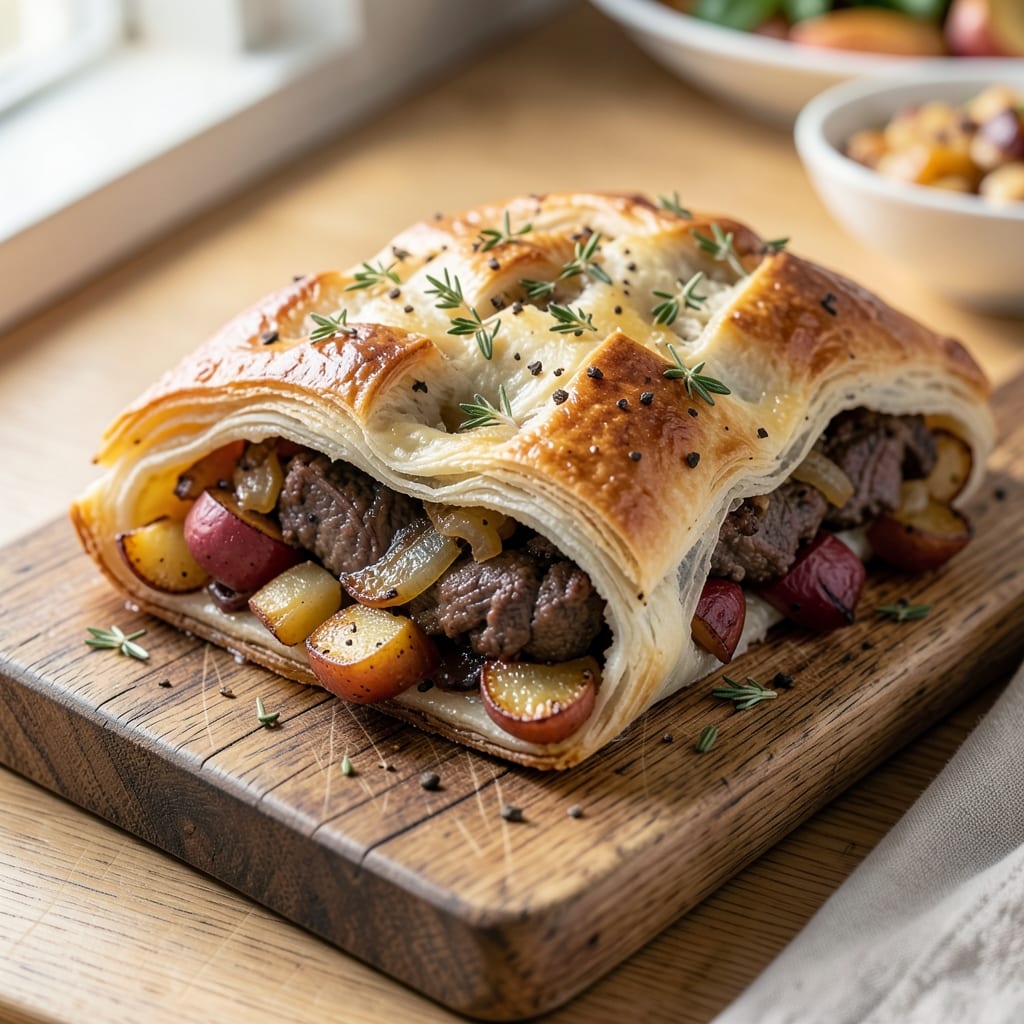
This beef and potato pasty recipe delivers the flaky crust and hearty filling that makes it a beloved comfort food. Inspired by traditional Cornish pasties, this recipe combines tender beef, creamy potatoes, and a golden pastry that seals in every savory bite. The key to success lies in the perfect balance of seasoning the meat, preparing the potatoes just right, and rolling out a pastry so thin it practically melts in your mouth.
The filling starts with ground beef browned to perfection, then simmered with onions, garlic, and a blend of herbs and spices for deep, rich flavor. Meanwhile, the potatoes are boiled until tender and mashed to a smooth consistency, ensuring they blend seamlessly with the meat. The pastry, made from a simple flour and butter dough, is rolled out thin and folded into a half-moon shape, creating that iconic pasty pocket.
Baking at 375°F for 40-45 minutes transforms the pasty into a golden, crispy masterpiece with a flaky crust that flakes apart at the slightest touch. The filling inside stays moist and flavorful, with the potatoes absorbing the savory juices from the beef. The result is a dish that’s as satisfying to make as it is to eat—perfect for a cozy family dinner or a rustic picnic.
Once out of the oven, let the pasty rest for a few minutes before slicing into it. The aroma alone will have everyone gathered around the table, and the first bite—crispy crust giving way to tender, seasoned filling—is pure comfort food magic. Serve with a simple green salad or crusty bread to complete the meal.
Ingredients for beef and potato pasty
These 13 ingredients create the perfect balance of flaky crust and hearty filling for your pasty.
| Ingredient | Amount | Notes |
|---|---|---|
| Ground Beef 🥩 | 1 ½ lb | Lean ground beef for best texture |
| Russet Potatoes 🥔 | 3 medium | Peeled and boiled until tender |
| All-Purpose Flour 🌾 | 3 cups | For pastry dough, plus extra for dusting |
| Unsalted Butter 🧈 | 1 cup | Cold, cubed for pastry |
| Yellow Onion 🧅 | 1 medium | Finely diced for filling |
| Garlic Cloves 🧄 | 4 cloves | Minced for filling flavor |
| Dried Thyme 🌿 | 1 tsp | Or 1 tbsp fresh thyme leaves |
| Ground Black Pepper 🌶️ | 1 tsp | Freshly ground preferred |
| Salt 🧂 | 1 ½ tsp | Kosher or sea salt |
| Beef Broth 💧 | ½ cup | Low-sodium preferred |
| Milk 🥛 | ¼ cup | For creamy potato texture |
| Egg 🥚 | 1 whole | For pastry binding |
| Ice Water 💧 | ½ cup | For pastry dough elasticity |
The Russet potatoes are the foundation of your filling—choose firm, medium-sized ones with no sprouts. Whole Foods or your local grocery store's organic section often carries the best quality. If you can't find Russets, Yukon Golds work too, but they'll be slightly creamier. For the beef, ground chuck gives you the best flavor and texture, though lean ground beef works in a pinch. The butter for the pastry should be cold and cubed—this ensures flaky layers. If you're short on time, Trader Joe's sells pre-cubed butter in the freezer section, which saves chopping.
No thyme? Dried rosemary at half the amount works well, though it has a stronger flavor. Short on milk? Heavy cream at half the quantity makes the potatoes even richer, but whole milk keeps it classic. The pastry dough can be tricky—if it feels too sticky, add 1 tbsp more flour; if too dry, add 1 tsp ice water. For the beef, browning it thoroughly before adding the onions and garlic develops deep flavor. Costco often sells large bags of ground beef at a discount, which is perfect for making multiple pasties. The beef broth should be low-sodium to avoid overpowering the filling.
Store the unbaked pasty dough between layers of parchment paper in the fridge for up to 3 days—just let it sit at room temperature for 30 minutes before rolling. The filling can be prepped ahead and refrigerated for 2 days before assembling. Once baked, pasties reheat beautifully—wrap in foil and warm in a 350°F oven for 10-15 minutes. For a crowd, double the recipe and freeze unbaked pasties on a tray before transferring to a bag. They'll keep for 3 months—just bake straight from frozen, adding 5-10 minutes to the time.
Why You'll Love This Recipe
- The secret’s in the layers: crispy, caramelized potato edges hugging tender beef, all blanketed under that buttery crust. I’ll be real—it’s the kind of dish where you take the first bite, close your eyes, and think, “This is what comfort food should taste like.” The onions add just enough sweetness to tie it all together.
- No Flour Fuss: I swear by this recipe because it’s the kind of dough that forgives mistakes—just mix the butter into the flour until it crumbles, then add water until it holds together. No rolling pins, no stress, and that buttery crust? It’s the kind of golden, flaky magic that makes you forget you didn’t spend hours on it.
- Savory Crunch Play: The secret’s in the layers: crispy, caramelized potato edges hugging tender beef, all blanketed under that buttery crust. I’ll be real—it’s the kind of dish where you take the first bite, close your eyes, and think, “This is what comfort food should taste like.” The onions add just enough sweetness to tie it all together.
- Packable Picnic Hero: Here’s what sold me—this pasty is perfect for lunchboxes or road trips. Wrap it in foil, toss it in a cooler, and it stays warm (or reheats like a dream). My kids beg for it on school days, and honestly? So do I.
Step-by-step instructions for beef and potato pasty
Achieving that signature flaky crust and tender filling comes down to precise technique. Here's how to nail it every time.
Prepare the Filling with Perfect Texture
In a large skillet, combine the 1.5 lb ground beef, 1 medium yellow onion (finely diced), 4 cloves garlic (minced), 1 tsp dried thyme, 1 tsp ground black pepper, and 1.5 tsp salt. Cook over medium-high heat for 8-10 minutes, stirring occasionally, until the beef is fully browned and the onion becomes translucent. This browning develops deep flavor that carries through the pasty.
While the beef cooks, peel and boil the 3 medium russet potatoes until tender (about 15 minutes). Drain well, then mash them with 0.25 cup milk until smooth. Return the beef mixture to the skillet and add the mashed potatoes along with 0.5 cup beef broth. Simmer for 5 minutes until the filling reaches 190°F—this ensures it's hot when sealed in the crust. Let the filling cool slightly before assembling.
Make the Flaky Pastry Dough
In a large bowl, combine the 3 cups all-purpose flour and 1.5 tsp salt. Cut in the 1 cup unsalted butter (cold and cubed) using a pastry cutter or your fingers until the mixture resembles coarse crumbs with pea-sized butter pieces. This cold butter creates the flaky layers when baked.
Add the 1 whole egg and 0.5 cup ice water gradually, mixing just until the dough comes together. Turn it out onto a lightly floured surface and knead gently 4-5 times—just enough to form a smooth ball without developing gluten. Wrap in plastic and refrigerate for 30 minutes while you prepare the filling. This chilling prevents shrinking during baking.
Assemble and Seal the Pasty
Roll out the chilled dough on a lightly floured surface to a 12x16-inch rectangle (about ⅛-inch thick). Spread the cooled beef filling evenly over the dough, leaving a 1-inch border around the edges. This border creates the classic pasty fold that seals in moisture.
Using a sharp knife, cut the dough along one of the long sides, then fold the edge over the filling at a 45-degree angle. Press firmly to seal, then fold the opposite edge over the filling and seal in the same manner. Repeat with the remaining two sides, creating a tight, airtight package. The edges should meet in the center—this is what creates the iconic pasty shape.
Bake Until Golden and Flaky
Preheat your oven to 375°F. Place the assembled pasty on a parchment-lined baking sheet and bake for 45-50 minutes until the crust turns a deep golden brown and the internal temperature reaches 200°F. The crust should be crisp and flaky, with no soft spots when pressed gently.
Let the pasty rest for 10 minutes before slicing—this allows the filling to set slightly and prevents juices from spilling out. Serve hot with a side of fresh garden vegetables or a simple green salad. The contrast between the crisp, flaky crust and tender, savory filling is what makes this dish unforgettable.
Pro Tips For Making Beef And Potato Pasty
- PREHEAT YOUR PAN: I learned this the hard way—skipping a screaming-hot cast-iron skillet for the beef and onions means you’re fighting for flavor instead of building it. Get that pan so hot it smokes when the butter hits, then let the meat sear undisturbed for 3-4 minutes. That’s where the deep, meaty taste comes from, not some sad, gray-brown mush.
- PARBOIL POTATOES UNIFORM: Cut those Russets into even ½-inch chunks—no thick hunks, no thin slivers—and drop them into boiling salted water for exactly 6 minutes. They should be fork-tender but still hold shape when mashed lightly. Overcooking them turns the filling into glue; undercooking means a pasty with a raw center that’ll make you regret life choices.
- SEAL THE EDGES WELL: Don’t just slap dough together and hope for the best—crimp those seams like you’re sealing a treasure chest. Wet your fingers or use a bit of egg wash to help the dough stick, then press firmly. A leaky pasty isn’t just messy; it’s a sad, soggy disaster. (Yes, I’ve made one. Don’t ask how I got flour in my boots.)
- USE COLD BUTTER: Take the unsalted butter straight from the fridge—no softening, no melting. Cut it into small cubes and work it into the dough with your fingers until it’s pea-sized and evenly distributed. Cold butter creates flaky layers; warm butter just makes a greasy, dense mess. Trust me, your pasty’s crust will thank you.
Wine and beer pairings for this dish
Red Wine Classics
A bold Pinot Noir from Oregon or Burgundy is my go-to pairing for this rich, meaty pasty. The earthy notes and moderate tannins complement the beef and thyme beautifully without overpowering the dish. Look for a 2020 or 2021 vintage from Domaine Drouhin or Eyrie Vineyards—their balance of fruit and acidity makes them perfect. Serve slightly chilled (55-60°F) to enhance the wine's structure against the warm pasty. 🍷
Crisp White Options
If you prefer white wine, a dry Chardonnay with subtle oak works surprisingly well. I recommend a California Chardonnay from Kendall-Jackson or a French Burgundy Chardonnay like Louis Latour. The buttery notes in the wine mirror the pastry's flakiness, while its acidity cuts through the richness. For a lighter option, try a Sauvignon Blanc from New Zealand—its citrus notes brighten the dish. Serve at 48-50°F for optimal flavor.
Beer Pairings
A British-style pale ale like Fuller's ESB or Camden Town Brewery's Hells Lager brings out the savory depth of the beef filling. The malty sweetness and hoppy bitterness create a perfect contrast to the flaky crust. For a lighter option, a Belgian witbier like Hoegaarden adds a refreshing citrus note that cleanses your palate between bites. Serve these beers at 45-50°F to preserve their crispness. 🍺
Cider Complements
Don't overlook dry English cider as a pairing—it's often overlooked but works brilliantly. Brands like Thatchers or Strongbow offer crisp, slightly tart flavors that enhance the pasty's savory notes. The tannins in the cider also help balance the richness of the beef and potatoes. Serve at 45°F to let its dryness shine through the dish's hearty flavors.
Non-Alcoholic Choices
For a non-alcoholic option, try a sparkling apple cider like Martinelli's or a ginger beer such as Feather's. The effervescence and slight sweetness complement the pasty's savory filling without overpowering it. For a more sophisticated choice, a sparkling water with a squeeze of lemon adds a refreshing contrast to the rich dish. Serve all non-alcoholic options chilled (38-42°F) for the best experience. 💧
Nutrition facts
Frequently asked questions
Can I make this pasty recipe without a food processor?
The pastry dough only requires cutting cold butter into flour using your fingers or a pastry cutter. For the filling, simply dice the onion finely by hand and mince the garlic with a knife. The texture will be slightly less uniform, but the flavor remains just as delicious.
How do I store leftovers to keep the crust crispy?
Wrap cooled pasties tightly in aluminum foil or place them in an airtight container. Reheat in a 350°F oven for 10-15 minutes—the foil prevents sogginess while the oven maintains crispness. For longer storage, freeze unbaked pasties on a tray before transferring to a bag for up to 3 months.
What's the secret to getting that perfect flaky crust?
Keep the butter cold when mixing it into the flour, and chill the dough for 30 minutes before rolling. Use ice water instead of warm water, and handle the dough as little as possible. The key is maintaining those cold butter pieces throughout the process—this creates the flaky layers when baked.
Can I substitute ground beef with another protein?
Yes! For a lighter option, use ground turkey or chicken, but reduce cooking time by 2-3 minutes to avoid drying out. For a vegetarian version, swap beef for mushrooms or lentils, but add 1 tbsp soy sauce for umami depth. The potato-to-meat ratio should remain 3:1 for proper texture.
Why did my pasty turn out dense instead of flaky?
This usually happens when the butter melts during mixing or the dough warms up before baking. Always use cold butter, avoid overworking the dough, and let it rest in the fridge. If the dough feels too warm, pop it back in the fridge for 10-15 minutes before rolling. The ideal dough should be cool to the touch.