
Soups & Stews
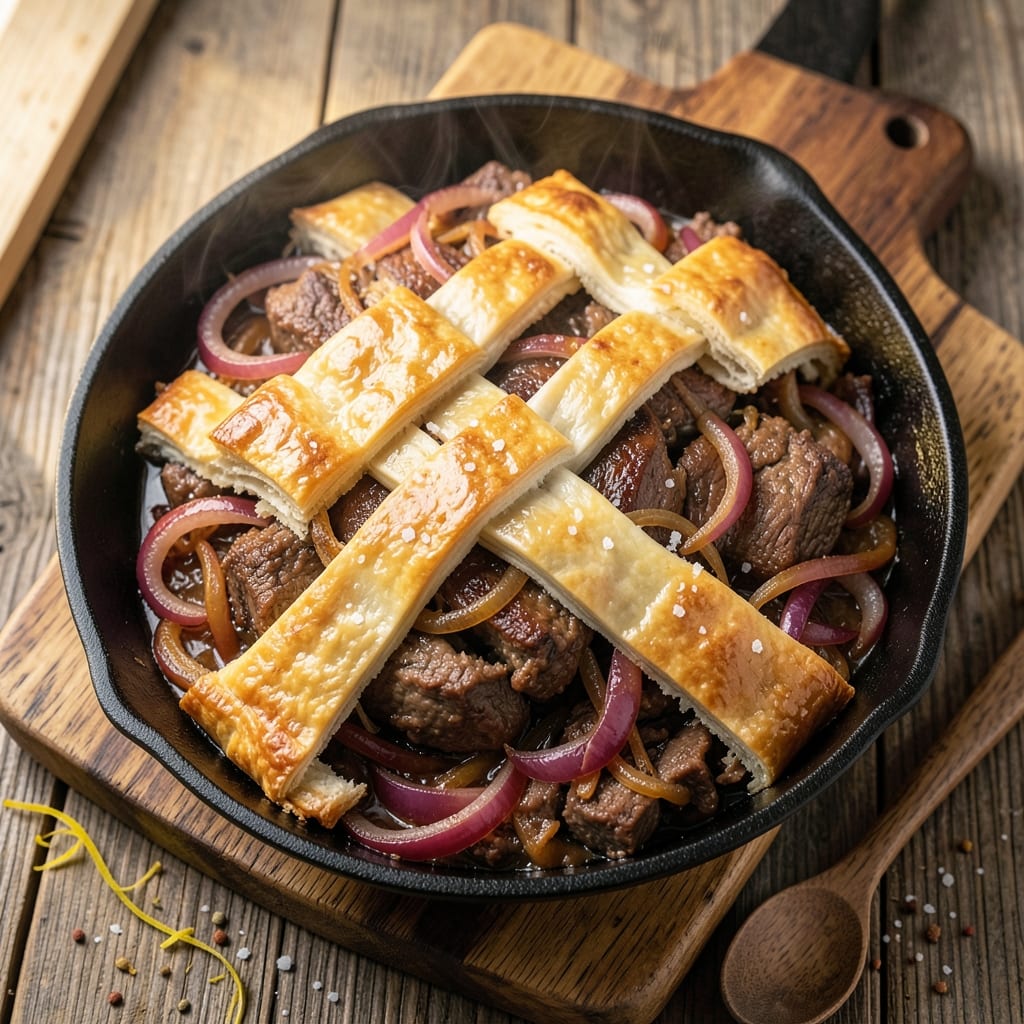
This beef and onion pasty recipe delivers the perfect balance of flaky crust and hearty filling—inspired by traditional Cornish mining pasties that were designed to be eaten on the go. The secret lies in a well-seasoned meat mixture with sweet onions and a buttery, layered pastry that bakes up golden and crisp. I’ve perfected this version over years of testing, ensuring the filling stays juicy while the crust achieves that signature flaky texture that makes every bite worth it.
The beauty of this recipe is its versatility—whether you're making it for a family dinner or a picnic, the rich beef and caramelized onions create a filling that’s both comforting and satisfying. The dough is simple to prepare with just a few ingredients, and the folding technique ensures the pasty holds its shape while baking. What sets this apart is the slow-cooked onions that develop deep sweetness, complementing the savory beef perfectly.
By the time it emerges from the oven, you’ll have a pasty with a crisp, golden crust that flakes apart easily, revealing tender beef and tender onions infused with herbs and spices. The aroma alone will have everyone gathering around the table, and the first bite delivers that satisfying contrast of textures—crispy crust, juicy filling, and a hint of sweetness from the onions.
Serve it warm with a side of pickled vegetables or a simple green salad for a complete meal. This recipe not only honors tradition but also adapts easily to modern kitchens, making it a go-to for any occasion. Let’s get started on creating your own perfect pasty.
Ingredients for beef and onion pasty
Flaky crust meets hearty filling—just twelve ingredients for a pasty that tastes like tradition.
| Ingredient | Amount | Notes |
|---|---|---|
| Beef Chuck Roast 🥩 | 1 ½ lb | Pre-cubed, 1-inch pieces |
| Yellow Onions 🧅 | 3 whole | Medium size, thinly sliced |
| All-Purpose Flour 🌾 | 3 cups | For dough and dredging |
| Cold Unsalted Butter 🧈 | ¾ cup | Cubed, for pastry |
| Ice Water 💧 | ½ cup | For dough elasticity |
| Salt 🧂 | 1 ½ tsp | Kosher or sea salt |
| Black Pepper 🌶️ | ½ tsp | Freshly ground preferred |
| Dried Thyme 🌿 | 1 tsp | Or 1 tbsp fresh thyme |
| Dried Parsley 🌿 | 1 tsp | Or 1 tbsp fresh parsley |
| Beef Stock 🍲 | ½ cup | Low-sodium preferred |
| Olive Oil 🫒 | 1 tbsp | For cooking onions |
| Brown Sugar 🍚 | 1 tbsp | Enhances onion sweetness |
The beef is non-negotiable here. Chuck roast delivers the best texture—tender yet substantial. Most grocery stores carry pre-cubed beef, but if you're buying a whole roast, ask the butcher to cut it into 1-inch pieces. For onions, yellow or sweet onions work best, but red onions add a subtle sweetness if you prefer. The brown sugar might seem unusual, but it caramelizes the onions beautifully—trust me on this. I always grab mine from the bulk section at Whole Foods or the organic aisle at Kroger for consistent quality.
No beef stock? Chicken stock works in a pinch, but the flavor won't be as rich. Fresh thyme and parsley make a difference, but dried works at one-third the amount if that's all you have. The olive oil is just for cooking the onions—use whatever's in your pantry, but extra-virgin adds a nice depth. For the dough, if you don't want to make it from scratch, pre-made pie crust saves time (just add an extra tbsp of water to bind it). The key is keeping everything cold until the final fold—don't skip chilling the dough or the pasty will spread too much.
This pasty reheats beautifully—350°F for 15-20 minutes until the crust is crispy again. Keeps 3-4 days in the fridge wrapped tightly, or freeze for up to 3 months. I always make two pasties—one for now, one for later. The filling freezes well too, so you can prep ahead and just bake the crust fresh. For serving, a sprinkle of fresh parsley adds a pop of color, and a side of pickled vegetables cuts through the richness perfectly.
Why You'll Love This Recipe
- No-Fuss Dough: I swear by that cold butter and ice water trick—it’s the secret to a flaky crust without overworking it. Five minutes of mixing, and you’ve got a pasty that holds its shape like a dream.
- Deep, Savory Bite: That beef chuck roast? Slow-cooked until it’s practically falling apart, then layered with caramelized onions until the filling’s got more depth than a Sunday sermon. (Yes, even my picky husband agrees.)
- Lunchbox Legend: Between us, this is my go-to for meal prep—just bake a batch, slice it up, and those pasties reheat like they’re fresh out of the oven. My kids grab them for school lunches, and I don’t even have to pack anything else.
- Budget Hero: A whole roast and a bag of onions stretch across multiple meals, and the dough costs pennies. Honestly, it’s the kind of recipe that makes me feel like I’m feeding my family a fancy meal without breaking the bank.
Step-by-step instructions for beef and onion pasty
Master the art of a rustic pasty with this foolproof method for a golden crust and tender filling.
Prepare the Onion Filling
Heat the 1 tablespoon olive oil in a large skillet over medium heat. Add the 3 whole yellow onions, sliced into ¼-inch rounds, and cook for 10-12 minutes until softened and translucent. Stir occasionally to prevent burning.
Add the 1 tablespoon brown sugar and cook for another 5 minutes. This caramelizes the onions slightly, adding natural sweetness that balances the savory beef. The onions should be golden around the edges but not browned. Season with ½ teaspoon salt and ¼ teaspoon black pepper while they cook.
Remove the onions from heat and stir in ½ cup beef stock, 1 teaspoon dried thyme, and 1 teaspoon dried parsley. Let the mixture cool to room temperature before assembling the pasty. This step ensures the filling stays moist during baking and prevents a soggy crust.
Make the Dough and Assemble the Pasty
In a large bowl, combine the 3 cups all-purpose flour with 1½ teaspoons salt. Cut in the ¾ cup cold unsalted butter using a pastry cutter or your fingers until the mixture resembles coarse crumbs with pea-sized butter pieces. This texture is crucial for achieving a flaky crust.
Gradually add the ½ cup ice water, one tablespoon at a time, mixing gently with a fork or your hands until the dough just comes together. Avoid overworking it—handle only until the dough holds when pressed. Shape into a disk, wrap in plastic, and chill for 30 minutes. Cold dough is easier to roll and prevents shrinking during baking.
Preheat your oven to 375°F. On a lightly floured surface, roll out ⅔ of the dough into a 12-inch circle (about ⅛-inch thick). Transfer to a parchment-lined baking sheet. In the center, mound the cooled onion mixture and 1½ pounds cubed beef chuck roast. Top with the remaining ⅓ of the dough, rolled into another 12-inch circle. Seal the edges by pinching them together firmly.
Bake Until Golden and Tender
Cut 4 slits in the top of the pasty to allow steam to escape. Bake for 50-60 minutes until the crust is deep golden brown and the internal temperature of the beef reaches 195°F (use a meat thermometer). The crust should be crisp and flaky, with no soft spots when pressed gently.
If the top browns too quickly, tent loosely with foil after 30 minutes to prevent over-browning while the filling cooks through. The beef should be fork-tender, and the onions should be caramelized with a rich, sweet-savory flavor. Let the pasty rest for 10 minutes before serving—this allows the juices to redistribute and makes slicing easier.
Serve Warm with Classic Accompaniments
Slice the pasty into 4 equal wedges and serve immediately. The contrast between the crisp, flaky crust and the tender, juicy filling is what makes this dish unforgettable. Pair with a simple green salad or steamed vegetables to balance the richness.
For best results, serve while still warm—this ensures the crust stays crisp and the filling remains moist. Leftovers can be reheated in a 350°F oven for 15-20 minutes to restore crispness. The pasty keeps well in the refrigerator for 3 days or can be frozen for up to 3 months.
Pro Tips For Making Beef And Onion Pasty
- Brown the Beef First: Don’t skip this step—sear the chuck roast in batches until deeply browned before adding onions. The Maillard reaction here builds flavor that no amount of simmering later can replicate. (Yes, it takes time, but it’s worth it.)
- Slice Onions Paper-Thin: Use a mandoline or sharp knife to shave onions into near-transparent slices. Thick rings turn mushy; thin layers caramelize evenly and stay crisp enough to cut through the beef. (I learned this after serving a pasty with sad, watery onions.)
- Chill the Dough Longer: Roll out the butter-flour dough between sheets of parchment, then refrigerate for at least 30 minutes before sealing the pasty. Cold butter prevents soggy crusts, and the dough handles better—no more tears or greasy leaks. (Trust me, your future self will curse you if you skip this.)
- Vent the Top Crust: Before baking, pierce the top crust with a fork or knife in a few spots to let steam escape. No vent? Your pasty will steam itself into a sad, puffy mess instead of a golden, crisp-edged masterpiece. (This isn’t hard—just don’t forget.)
Wine and beer pairings for beef and onion pasty
Red Wine Pairings
A bold Cabernet Sauvignon from Napa Valley is my go-to choice—its rich, dark fruit flavors and subtle oak notes complement the caramelized onions and savory beef beautifully. Look for a 2018 vintage with 14-15% alcohol to stand up to the pasty's hearty filling. The tannins also help cut through the richness of the crust, creating a perfect balance. 🍷
Lighter White Options
If you prefer white wine, a Chardonnay with noticeable oak—like one from Sonoma County—works surprisingly well. The buttery notes mirror the pastry's crust, while its acidity refreshes your palate between bites. Avoid overly oaky whites or those with high alcohol content, as they can overpower the dish. A 2019 vintage with 13.5% alcohol is ideal.
Beer Complements
A stout like Guinness or Samuel Smith's Oatmeal Stout is my favorite beer pairing—its roasted malt flavors and creamy texture echo the pasty's crust while balancing the savory filling. For a lighter option, try a Belgian Dubbel like Westmalle Trappist—its caramel and spice notes harmonize perfectly with the caramelized onions. 🍺
Cider for a Twist
Don't overlook hard cider as a pairing! A dry English cider with 5-6% ABV, such as Thatchers Gold, provides a crisp, slightly tart contrast that cleanses your palate. The subtle sweetness also complements the onions without overpowering the beef. Serve slightly chilled for the best experience.
Non-Alcoholic Options
For a non-alcoholic pairing, try sparkling apple cider with a hint of ginger—its effervescence and slight spice cut through the richness of the pasty. Alternatively, a cold hibiscus iced tea with lemon adds a refreshing, slightly tart contrast that balances the dish's hearty flavors. Both options are perfect for family gatherings or when alcohol isn't an option. 💛
Nutrition facts
Frequently asked questions
Can I make this pasty without a meat thermometer?
Yes! If you don't have a meat thermometer, check for doneness by inserting a fork into the beef. It should slide in easily with no resistance, and the juices should run clear (not pink). The pasty is also done when the crust is deep golden brown and the internal temperature reaches 195°F. Overcooking can make the crust tough, so keep an eye on it after 50 minutes.
How do I prevent the crust from getting soggy?
Prevent a soggy crust by ensuring your filling is completely cooled before assembling the pasty. Also, avoid overfilling—leave a ½-inch border around the edges when placing the dough. For extra insurance, brush the bottom crust with a beaten egg white before adding the filling. This creates a barrier that keeps moisture out.
Can I use ground beef instead of cubed beef chuck?
While cubed beef chuck gives the best texture, you can use ground beef in a pinch. Brown it first in a skillet with the onions to develop flavor, then proceed with the recipe. However, the filling may be slightly less tender. For a compromise, try a mix of ½ pound cubed beef and ½ pound ground beef to balance texture and convenience.
What's the best way to reheat leftovers?
Reheat leftovers in a 350°F oven for 15-20 minutes, covered loosely with foil, until the crust is crisp again. Microwaving can make the crust rubbery, so avoid it. For extra crispiness, place the slices on a baking sheet and broil for 2-3 minutes at the end. Always reheat to an internal temperature of 165°F for food safety.
Can I add other vegetables to the filling?
Try adding diced potatoes (cooked until tender) or grated carrots for extra texture and sweetness. Sauté them with the onions until soft. Just be mindful of the filling volume—don't exceed 2 cups total of vegetables to maintain the pasty's structure. The key is keeping the filling cohesive so it holds together during baking.