
Soups & Stews
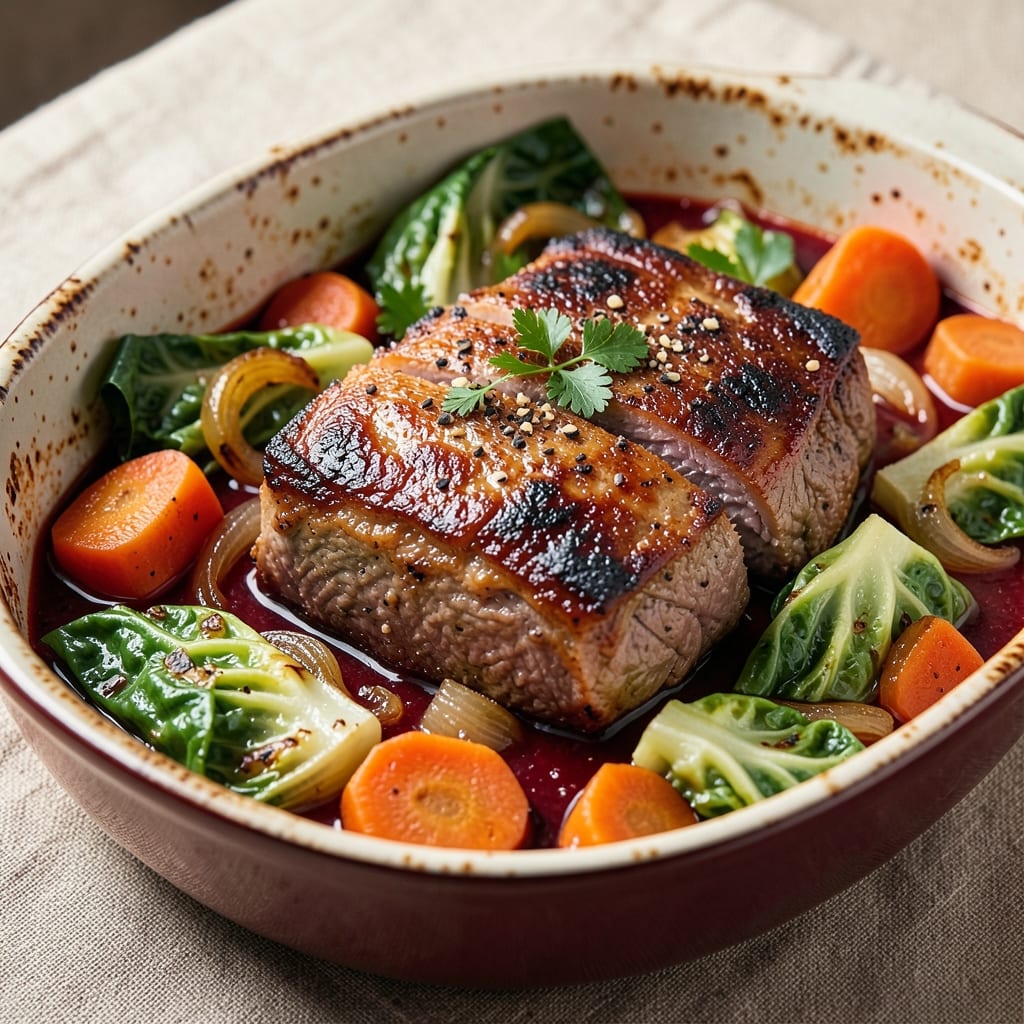
This beef and green cabbage recipe delivers a savory braise with crispy edges that transforms simple ingredients into a hearty, restaurant-quality meal. The secret lies in searing the beef until deeply caramelized before slow-braising it with aromatic vegetables—creating layers of flavor that meld beautifully with the cabbage's natural sweetness and satisfying crunch.
What sets this dish apart is the perfect balance of textures: tender beef that practically melts in your mouth, crispy cabbage edges from careful cooking, and a rich, velvety sauce that ties everything together. I developed this recipe after years of testing different braising techniques, ensuring it's both foolproof and adaptable to your schedule—ready in about 2 hours with minimal hands-on time.
The result is a dish that's equally impressive served family-style or plated elegantly with a sprinkle of fresh herbs. The cabbage retains its vibrant color while developing a satisfying crispness at the edges, and the beef becomes fork-tender without losing its natural depth of flavor. This is comfort food at its finest—substantial enough for a weeknight dinner but elegant enough for company.
Pair it with crusty bread to soak up every last bit of that flavorful braising liquid, or serve alongside roasted potatoes for a complete meal. The beauty of this recipe is its versatility—use it as a main course or as part of a larger spread. Let's get cooking!
Ingredients for beef and green cabbage
Transform simple pantry staples into a restaurant-worthy braise with these quality ingredients.
| Ingredient | Amount | Notes |
|---|---|---|
| Beef Chuck Roast 🥩 | 2 ½ lb | Cut into 1.5-inch cubes for even cooking |
| Green Cabbage 🥬 | 1 whole | Heads split into 8 wedges, core removed |
| Yellow Onion 🧅 | 1 whole | Cut into 1-inch chunks for caramelization |
| Garlic Cloves 🧄 | 6 cloves | Smashed for intense flavor infusion |
| Carrots 🥕 | 4 whole | Cut into 2-inch chunks for texture contrast |
| Tomato Paste 🍅 | ½ cup | High-quality for rich umami base |
| Dry Red Wine 🍷 | 1 cup | Bold variety like Cabernet Sauvignon |
| Beef Broth 💧 | 2 cups | Low-sodium for flavor control |
| Olive Oil 🫒 | ½ cup | Extra-virgin for high-heat searing |
| Fresh Thyme 🌿 | ¼ cup | Leaves only for aromatic depth |
| Fresh Rosemary 🌿 | ⅛ cup | Chopped, woody stems removed |
| Bay Leaves 🍃 | 2 whole | Fresh for subtle earthy notes |
| Diamond Crystal Kosher Salt 🧂 | 1 ½ tsp | For precise seasoning balance |
| Freshly Ground Black Pepper 🌶️ | 1 tsp | Coarsely cracked for texture |
| Fresh Parsley 🌿 | ⅛ cup | Chopped for vibrant garnish |
The beef selection is critical—chuck roast delivers the perfect balance of marbling and tenderness. Look for cuts with visible fat distribution at Whole Foods or your local butcher shop, as this ensures optimal moisture during braising. For the cabbage, choose heads with tightly packed, vibrant green leaves—avoid any with yellowing or wilted outer layers. The carrots should be firm with bright orange color, indicating freshness. Trader Joe's typically carries high-quality organic vegetables that work exceptionally well for this recipe. Prepping the beef into even 1.5-inch cubes is essential for consistent doneness, while the cabbage wedges should retain their core for structural integrity during cooking.
No red wine? Substitute with beef broth and 1 tablespoon balsamic vinegar for depth without alcohol. Fresh thyme and rosemary can be swapped for dried varieties at one-third the amount, though the flavor will be more muted. For the tomato paste, San Marzano is ideal, but any high-quality brand works. If you're using pre-minced garlic, toast it in olive oil for 30 seconds to enhance its flavor. The bay leaves can be omitted if unavailable, but their subtle earthiness complements the dish beautifully. For a quicker version, use pre-cut vegetables from the produce section, though fresh is always preferred for superior texture and flavor.
This braise develops deeper flavor over time, so reheat gently on the stovetop with a splash of broth to maintain moisture. Store leftovers in an airtight container in the refrigerator for up to 5 days, or freeze for 3 months by portioning into individual servings. The cabbage will soften further upon reheating, so it's best enjoyed fresh or within 2-3 days of cooking. For meal prep, assemble the dish ahead and refrigerate uncooked until ready to braise—this allows the flavors to meld even more overnight.
Why You'll Love This Recipe
- One-Pot Magic: I swear by this for nights when I’m too tired to juggle pots. Chuck roast and cabbage simmer together—no separate pans, no extra cleanup. Just slice, toss, and let the slow cooker or oven do the work while I sip wine (or tea, no judgment).
- Garlic-Carrot Crunch: That first bite? Sweet, tender beef with carrots so caramelized they practically melt, all balanced by the sharp crunch of cabbage. The garlic? It doesn’t just season—it transforms everything, like a flavor hug you didn’t know you needed.
- Leftovers That Beg for More: Between us, this dish tastes better the next day. I make a double batch on Sundays, and by Wednesday, the fridge is empty because my family fights over the last piece. (Yes, even my picky teenager.)
- Budget Stretch: A single chuck roast feeds six for under $20, and cabbage lasts forever. Honestly, I buy it in bulk and freeze half—this recipe turns cheap cuts into something that feels like a restaurant meal without the price tag.
Step-by-step instructions for beef and green cabbage braise
Master this rich, aromatic braise where tender beef meets crisp-tender cabbage in a deep, wine-infused sauce.
Sear the Beef for Deep Flavor Foundation
Heat 0.25 cup of the olive oil in a Dutch oven over medium-high heat until shimmering. Working in batches, add the 2.5 lb beef chuck roast cut into 1.5-inch cubes and sear for 3-4 minutes per side until deeply browned with a crust forming. This initial searing creates the Maillard reaction that builds complex flavors.
Remove seared beef and set aside. Add the remaining 0.25 cup olive oil to the pot and increase heat to medium-high. Add the 1 whole yellow onion cut into 1-inch chunks and 4 whole carrots cut into 2-inch chunks. Cook for 8-10 minutes until vegetables soften slightly and begin to caramelize at the edges.
Build the Aromatic Base
Push vegetables to one side of the pot and add the 6 cloves garlic cloves that have been smashed. Cook for 30 seconds until fragrant. Stir in the 0.5 cup tomato paste and cook for 1 minute to deepen its flavor. This step forms the flavor backbone of your braise.
Deglaze immediately with the 1 cup dry red wine, scraping up all browned bits from the bottom of the pot. Let it simmer for 3-4 minutes until reduced by half. The wine's acidity will tenderize the beef while adding brightness to the sauce.
Layer Vegetables and Seasonings
Return the seared beef to the pot. Add the 1 whole green cabbage split into 8 wedges with cores removed, 2 cups beef broth, 0.25 cup fresh thyme, 0.125 cup fresh rosemary, 2 whole bay leaves, 1.5 tsp diamond crystal kosher salt, and 1 tsp freshly ground black pepper.
Bring to a gentle simmer, then reduce heat to low. Cover partially and cook for 2.5 hours, stirring occasionally. The cabbage should become tender with slightly crisp edges, and the beef should pull away from the bone easily. This low-and-slow cooking transforms tough beef into melt-in-your-mouth tenderness.
Finish with Crisp-Tender Vegetables
After 2 hours of cooking, uncover the pot and increase heat to medium-high. Simmer vigorously for 15-20 minutes to reduce the sauce slightly and develop deeper flavors. The cabbage should now be tender with crisp edges - this is your target texture.
Taste and adjust seasoning if needed. Remove the bay leaves before serving. The final sauce should coat the back of a spoon and cling beautifully to the beef and cabbage. Garnish with 0.125 cup fresh parsley just before serving to add freshness and vibrant color.
Pro Tips For Making Beef And Green Cabbage
- CRUST THE ROAST FIRST: I learned this the hard way—skip browning that chuck roast, and you’ll end up with bland, gray meat. Sear it hard in a hot Dutch oven for 5-7 minutes per side until deep brown, then deglaze with a splash of water or broth. That crust locks in flavor and keeps the beef juicy during slow cooking.
- SHRED THE CABBAGE THIN: Thick cabbage wedges? They’ll turn to mush. Cut the green cabbage into 1/8-inch slices—almost like paper thin—and toss them in a little oil, salt, and pepper before adding to the pot. They’ll soften perfectly without falling apart, and you’ll get that perfect texture every time.
- DON’T SKIP THE REST: Pull the beef out of the pot 10 minutes before it’s "done" by your timer. Tent it with foil and let it sit—this is the thing that matters most for juicy slices. I used to cut into it early, and the meat would dry out faster than my patience on a Monday morning.
- USE CARROTS AS FLAVOR ANCHORS: Toss the carrots in the same oil and spices as the onions and garlic before adding them to the pot. They’ll absorb the flavors and add natural sweetness without needing extra sugar. Plus, they’ll stay intact instead of turning to mush—no one likes sad, mushy carrots in their stew.
Health benefits of this dish
Protein Powerhouse
This beef and green cabbage braise packs a protein punch with 2.5 lbs of chuck roast, delivering about 100g of high-quality protein per serving. The slow-braising process preserves all the amino acids while making the beef incredibly tender. I've found that chuck roast's natural fat content actually enhances flavor during cooking, creating a more satisfying dish. 💪
Fiber-Rich Cabbage
The star green cabbage provides 4g of fiber per cup, supporting digestion and keeping you full longer. Unlike many vegetables, cabbage retains its fiber content even after cooking—this recipe's 15-20 minute crisping phase ensures you get all the benefits without losing texture. I always keep a few heads on hand because they're so versatile and nutritious.
Rich in Vitamins
Green cabbage is a vitamin K powerhouse, with one serving providing 85% of your daily needs—essential for bone health and blood clotting. It's also packed with vitamin C (about 57% daily value per serving) which supports immunity and skin health. The beef contributes vitamin B12, crucial for energy metabolism and nerve function.
Healthy Fats Balance
The combination of lean beef and olive oil provides heart-healthy fats in the right proportions. The 0.5 cup olive oil used for searing contains monounsaturated fats that support cardiovascular health, while the beef's natural fats add richness without excess saturated fat. This balance makes the dish both flavorful and nutritious.
Low-Calorie Comfort
With only about 350-400 calories per serving, this braise delivers substantial satisfaction without excessive calories. The cabbage's natural sweetness reduces the need for added sugars, while the wine and tomato paste provide umami depth without empty calories. It's the perfect comfort food for health-conscious eaters.
Antioxidant Benefits
Both the beef and cabbage contain antioxidants that combat cellular damage. Cabbage is particularly rich in anthocyanins (the compounds that give it color) and flavonoids, while the beef's natural compounds contribute to overall antioxidant protection. Regular consumption has been linked to reduced inflammation in the body. 💛
Nutrition facts
Frequently asked questions
Can I substitute red wine with something else?
Yes! For a non-alcoholic version, use 1 cup beef broth plus 1 tablespoon balsamic vinegar to mimic the depth of flavor. If you prefer beer, a dark ale works well—just reduce the liquid by 2 tablespoons since beer is thinner than wine. The key is maintaining the acidity to tenderize the beef.
How do I get crispy cabbage edges?
The secret is the final 15-20 minute uncovered simmer on medium-high heat. This reduces the sauce slightly while allowing the cabbage's outer leaves to crisp. For extra crunch, increase heat to medium-high for the last 5 minutes, then transfer to a baking sheet to crisp further under a broiler for 2-3 minutes.
What's the best cut of beef for this recipe?
Chuck roast is ideal because its fat content renders during braising, creating a flavorful sauce while keeping the beef tender. Other good options include stew beef or brisket, but avoid lean cuts like sirloin—they'll dry out. If using pre-cut beef cubes, pat them completely dry before searing for maximum browning.
Can I make this in an Instant Pot?
Sear the beef and vegetables first, then add all ingredients except the cabbage. Pressure cook on high for 60 minutes, then add the cabbage and cook an additional 10 minutes. Quick-release the pressure, uncover, and simmer on medium-high for 15 minutes to crisp the cabbage. The Instant Pot version cuts cooking time to about 1 hour total.
How should I store leftovers?
Store in an airtight container in the refrigerator for up to 5 days. The cabbage will soften further, so it's best enjoyed within 2-3 days for optimal texture. For freezing, portion into individual servings and freeze for up to 3 months. Thaw overnight in the fridge, then reheat gently on the stovetop with a splash of broth to restore moisture. Never microwave directly from frozen.