
Soups & Stews
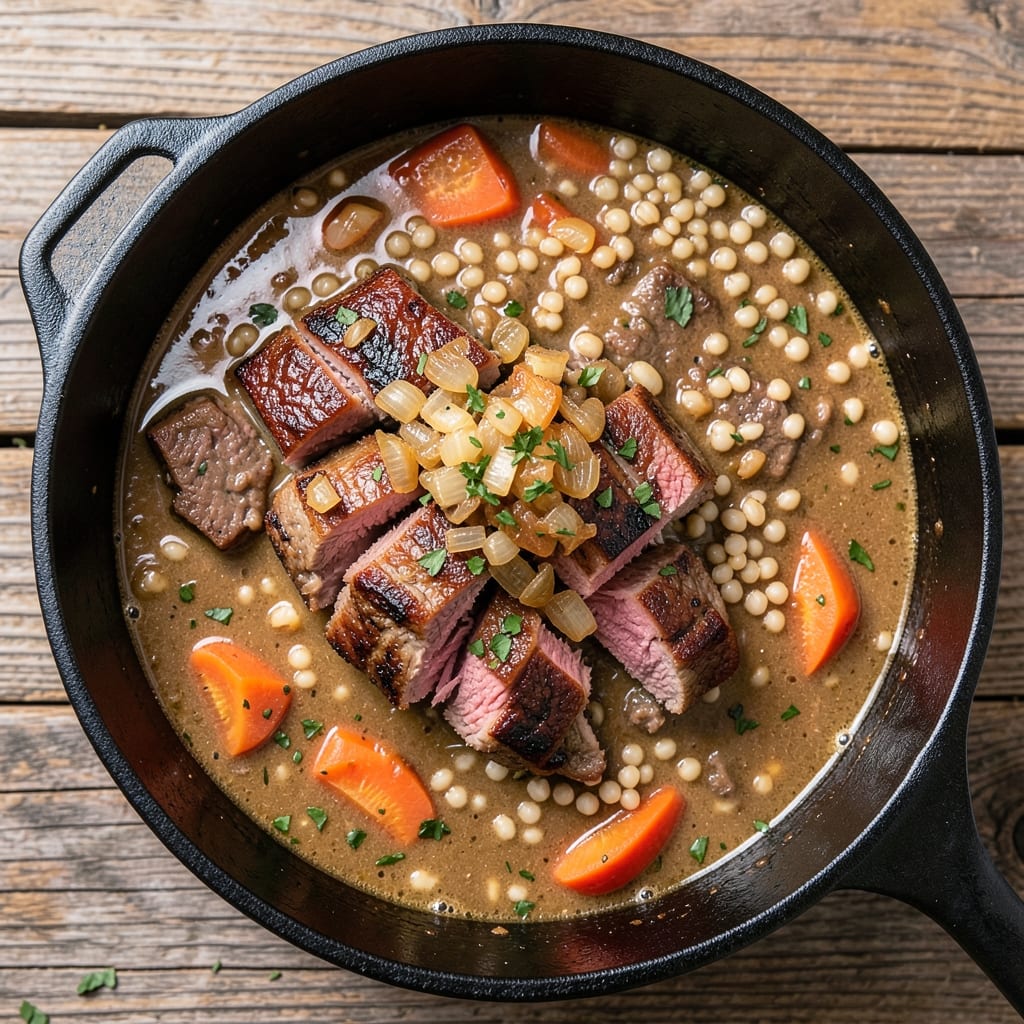
This beef and barley stew recipe transforms tough cuts into melt-in-your-mouth tenderness through stove-top simmering, creating a rich, hearty dish with chewy barley and deep, savory flavors. The key begins with proper browning of the beef—this step develops the foundational depth that separates home cooking from restaurant-quality results. I’ve perfected this technique over years of testing, ensuring every bite delivers that perfect balance of texture and flavor.
The beauty of this recipe lies in its simplicity and versatility—no special equipment needed beyond a heavy pot and patience. While traditional methods call for hours of simmering, modern adaptations like using pre-cooked barley can cut preparation time without sacrificing quality. The result is a stew that’s both comforting and impressive, ideal for feeding a crowd or meal prepping for the week.
What sets this stew apart is the caramelized edges on the beef and the al dente texture of the barley, achieved through precise timing and liquid management. The aromatic blend of herbs and spices infuses the broth, creating layers of complexity that make every spoonful satisfying. Whether served with crusty bread or over mashed potatoes, this stew delivers on its promise of hearty, restaurant-worthy comfort.
For those short on time, a pressure cooker adaptation maintains the same rich flavors in a fraction of the time—though purists will argue the slow simmer is worth the wait. The recipe’s flexibility makes it perfect for any season, from chilly evenings to holiday gatherings. Here’s how to make it perfectly every time.
Ingredients for beef and barley stew recipe stove top
Sixteen ingredients transform tough beef and chewy barley into restaurant-quality stew through precise stove-top technique.
| Ingredient | Amount | Notes |
|---|---|---|
| Chuck Roast 🥩 | 2 ½ lb | Cut into 1.5-inch cubes |
| Pearl Barley 🌾 | 1 cup | Uncooked, rinsed thoroughly |
| Yellow Onion 🧅 | 1 whole | Diced, medium size |
| Carrots 🥕 | 4 medium | Peeled, cut into 1-inch chunks |
| Garlic Cloves 🧄 | 4 cloves | Minced, fresh preferred |
| Beef Broth 💧 | 6 cups | Low-sodium preferred |
| Red Wine 🍷 | 1 cup | Dry, bold variety |
| Tomato Paste 🍅 | 2 tbsp | Smooth, unsweetened |
| Fresh Thyme 🌿 | 2 tbsp | Leaves only, chopped |
| Fresh Rosemary 🌿 | 1 tbsp | Chopped, stems removed |
| Bay Leaves 🍃 | 2 whole | Dried, standard size |
| Olive Oil 🫒 | 2 tbsp | Extra-virgin, for searing |
| Kosher Salt 🧂 | 1 ½ tsp | Diamond Crystal preferred |
| Ground Black Pepper 🌶️ | 1 tsp | Freshly ground |
The chuck roast is non-negotiable—its marbling and connective tissue create the rich, tender texture that defines this stew. Costco or local butchers typically carry the best cuts, often pre-cut into stew-sized pieces for convenience. Look for pieces with visible fat marbling, which renders down during cooking to create a luxurious sauce. If you're working with a whole roast, ask your butcher to cube it at 1.5-inch dimensions—this ensures even cooking. Pearl barley is the key to that perfect al dente texture; Bob's Red Mill or Quaker brands are reliable choices, but any high-quality pearl barley will work. The fresh herbs—thyme and rosemary—should be vibrant and fragrant; local farmers markets often carry the freshest varieties, but grocery store herb sections work in a pinch.
No red wine on hand? Substitute with an extra 1 cup of beef broth plus 1 tbsp balsamic vinegar—it mimics the acidity and depth perfectly. Fresh thyme and rosemary are ideal, but dried herbs at one-third the amount will suffice if that's what you have. The tomato paste can be tricky; avoid the squeeze tubes if possible—they often contain additives. Instead, opt for a small San Marzano can or quality jarred paste. For the carrots, baby carrots work beautifully if you're short on time, though their texture will be slightly softer. The onion and garlic are foundational—yellow onions with a sharp bite work best, and garlic should be fresh with no green shoots. If you're using a pressure cooker, reduce the broth by 2 cups to account for the different cooking method.
This stew tastes even better the next day as flavors meld, so make a double batch if you have the freezer space. Store in airtight containers for up to 5 days in the fridge or 6 months in the freezer. For reheating, add a splash of broth or water to prevent drying out. The barley will continue to soften slightly with each reheat, so adjust cooking time accordingly if you're freezing and then reheating. The beef broth can be made ahead and frozen in portions—store-bought low-sodium varieties work well, but homemade always tastes superior. When prepping, chop all vegetables and measure spices the night before to streamline cooking day.
Why You'll Love This Recipe
- Foolproof Simplicity: I swear by this one—no fancy techniques, just a big pot, a knife, and 15 minutes of chopping. Chuck roast stays tender with just enough simmering, and pearl barley? It’s the easiest grain to handle—no soaking, no stress.
- Deep, Rich Payoff: That slow caramelization on the onions and garlic? Chef’s kiss. The beef practically melts in your mouth while the barley soaks up all the savory broth—like a hug in a bowl, but better.
- Leftovers That Win: Between us, this stew tastes better the next day. I make a double batch on Sundays, freeze half, and still have hearty lunches for days. (Yes, even on a Tuesday night.)
- Budget Hero: Chuck roast on sale? This is your move. A few dollars gets you a meal that feeds four, and the barley stretches it further—no wasted ingredients, just pure, satisfying value.
Step-by-step instructions for beef and barley stew
Master this rich, flavorful stew with tender beef and chewy barley through precise technique.
Sear the Chuck Roast for Deep Flavor
Heat a heavy Dutch oven over medium-high heat until hot. Add the 2 tablespoons olive oil and swirl to coat the bottom evenly. Working in batches if needed, add the 2.5 lb chuck roast cut into 1.5-inch cubes and sear undisturbed for 3-4 minutes per side until deeply browned. This caramelization forms the flavor foundation.
Resist the urge to crowd the pan—searing too many pieces at once steams the meat instead of browning. Once all beef is seared to a rich golden brown, remove it with a slotted spoon and set aside. The remaining browned bits (fond) will dissolve into the stew later, adding depth.
Sauté Vegetables and Build the Base
In the same Dutch oven, add the diced yellow onion and cook over medium heat for 5 minutes until softened and translucent. Add the 4 medium carrots cut into 1-inch chunks and continue cooking for another 4 minutes until they begin to soften.
Stir in the 4 cloves minced garlic and cook for 30 seconds until fragrant—don't let it burn. Sprinkle the 1.5 teaspoons kosher salt and 1 teaspoon ground black pepper over the vegetables, tossing to coat. Add the 2 tablespoons tomato paste and stir vigorously to distribute evenly. This creates a rich, umami base.
Deglaze and Combine Liquids
Pour in the 1 cup red wine and scrape up all the browned bits from the bottom of the pot with a wooden spoon. Allow the wine to simmer for 2-3 minutes until reduced by half, concentrating the flavors. Add the 6 cups beef broth and bring the mixture to a gentle boil.
Return the seared beef to the pot, along with the 2 whole bay leaves, 2 tablespoons chopped fresh thyme, and 1 tablespoon chopped fresh rosemary. Stir gently to combine, ensuring the herbs are submerged. The liquid should just cover the beef—if not, add a splash of water to maintain proper moisture levels.
Simmer Until Beef is Tender
Reduce heat to low and bring the stew to a gentle simmer. Partially cover the pot and cook for 1.5 hours, stirring occasionally. The beef should become fork-tender and easily pull apart. If the liquid reduces too much before the beef is tender, add ½ cup water at a time to maintain the proper consistency.
Here's the key: the stew should bubble gently but not vigorously. Too high heat will toughen the beef. Check for doneness by piercing a beef cube with a fork—it should slide in easily with no resistance. The barley will absorb liquid as it cooks, so don't add it yet.
Add Barley and Finish Cooking
Once the beef is tender, stir in the 1 cup rinsed pearl barley. Return the heat to medium-low and continue simmering for another 30-40 minutes until the barley is chewy and fully cooked. The barley should be tender but still hold its shape with a slight bite—this is the hallmark of perfect pearl barley texture.
Taste and adjust seasoning if needed, adding more kosher salt or black pepper as necessary. Remove and discard the bay leaves before serving. Ladle the stew into bowls, ensuring each serving gets an equal share of beef and barley. The finished stew should have a rich, velvety texture with deep, layered flavors from the seared beef, wine reduction, and aromatic herbs.
Pro Tips For Making Beef And Barley Stew Recipe Stove Top
- Sear the Chuck Hard: I learned this the hard way—skipping the sear means bland, gray beef. Hit that chuck roast with high heat until deep brown crust forms, then pull it out. The Maillard reaction is what turns this from "stew" to "restaurant-quality."
- Soak the Barley: Pearl barley swells up like a sponge if you soak it for 30 minutes first. Drain well before adding to the pot—this guarantees it cooks evenly and doesn’t turn to mush. (Yes, even if you’re impatient like me.)
- Don’t Crowd the Pot: After browning the beef, let it sit in one layer while you prep veggies. Piling everything in at once steams the meat instead of browning it. Work in batches—your stew’s depth of flavor depends on it.
- Deglaze with Red Wine: That crust on your pot? Don’t scrape it off—pour in ½ cup red wine (or broth) and let it bubble for 2 minutes. It pulls every last bit of flavor loose, making the stew richer than just using water or broth. (Skip the wine? Use beef stock, but don’t skip the deglaze.)
Storing and reheating your leftovers
Refrigerator Storage
Let your stew cool completely before transferring to airtight containers—I use glass Pyrex bowls with snap-on lids. Store in the refrigerator for up to 5 days, though the flavors actually deepen overnight as the barley continues to absorb the rich broth. Always leave ½-inch headspace to prevent spills when reheating. 💛
Freezer Storage
For longer storage, portion stew into freezer-safe bags or glass containers with 2-inch headspace for expansion. Seal tightly to prevent freezer burn and label with the date. This stew keeps for 3-4 months in the freezer—though I recommend enjoying it within 2 months for peak texture. Thaw overnight in the fridge before reheating.
Stovetop Reheating
My preferred method is stovetop reheating, which preserves the stew's velvety texture. Transfer to a heavy-bottomed pot and heat over medium-low heat for 10-15 minutes, stirring occasionally. Add ¼ cup water or beef broth if the stew looks too thick. Never bring to a full boil—gentle heat prevents the barley from becoming mushy. 🔥
Microwave Method
For quick meals, microwave individual portions in a microwave-safe bowl covered with a damp paper towel. Heat on 50% power for 3-4 minutes, stir, then continue in 30-second intervals until reaching 165°F. The damp towel prevents drying, and the lower power setting keeps the barley intact. Add a splash of broth if needed.
Freezer-to-Stovetop
If reheating from frozen, thaw overnight first. For frozen stew, transfer to a pot and simmer on low heat for 20-25 minutes, stirring occasionally. The extra time allows the barley to reabsorb moisture evenly. Never microwave frozen stew directly—this creates uneven heating and risks bacterial growth. ✨
Texture Preservation
The key to reheating is moisture control. Always add liquid—water, broth, or even a splash of red wine—to maintain the stew's consistency. Overheating turns barley mushy, while proper moisture keeps it chewy and al dente. Taste and adjust seasoning after reheating—stews often need a pinch more salt to brighten flavors. 💡
Nutrition facts
Frequently asked questions
Can I substitute pearl barley for another grain?
Yes, but texture will change. For a quicker cook, use wild rice blend (simmer 20 minutes) or farro (simmer 25-30 minutes). For a softer texture, try white rice (simmer 15 minutes after beef is tender). Avoid instant rice—it absorbs liquid too quickly and makes the stew watery.
How do I fix beef that's still tough after simmering?
Don't panic! If the beef is slightly undercooked, return the pot to low heat and simmer another 30-45 minutes with ½ cup extra broth. If it's overcooked but still chewy, shred it and serve over mashed potatoes or crusty bread. For future batches, ensure you're using a heavy pot and maintaining a gentle simmer—never a rolling boil.
Can I make this stew in a slow cooker instead?
Brown the beef first, then transfer everything to a 6-quart slow cooker. Cook on low for 8 hours or high for 4-5 hours, adding the barley during the last 30 minutes. The slow cooker method actually enhances the beef's tenderness while keeping the barley chewy.
Why did my barley turn mushy?
Overcooking is the most likely cause. Pearl barley should be tender but still hold its shape with a slight bite. If it's mushy, you likely simmered too long or used too much liquid. For future batches, check the barley at 25 minutes after adding it and taste test—it should be 80% cooked at that point.
What's the best way to reheat leftovers without drying them out?
Use the stovetop method for best results. Transfer stew to a pot and heat over medium-low heat, stirring occasionally. Add ¼ cup broth or water if it thickens too much. Never microwave without covering—it causes uneven heating and turns the barley rubbery. For frozen stew, thaw overnight first before reheating.