
Main Courses
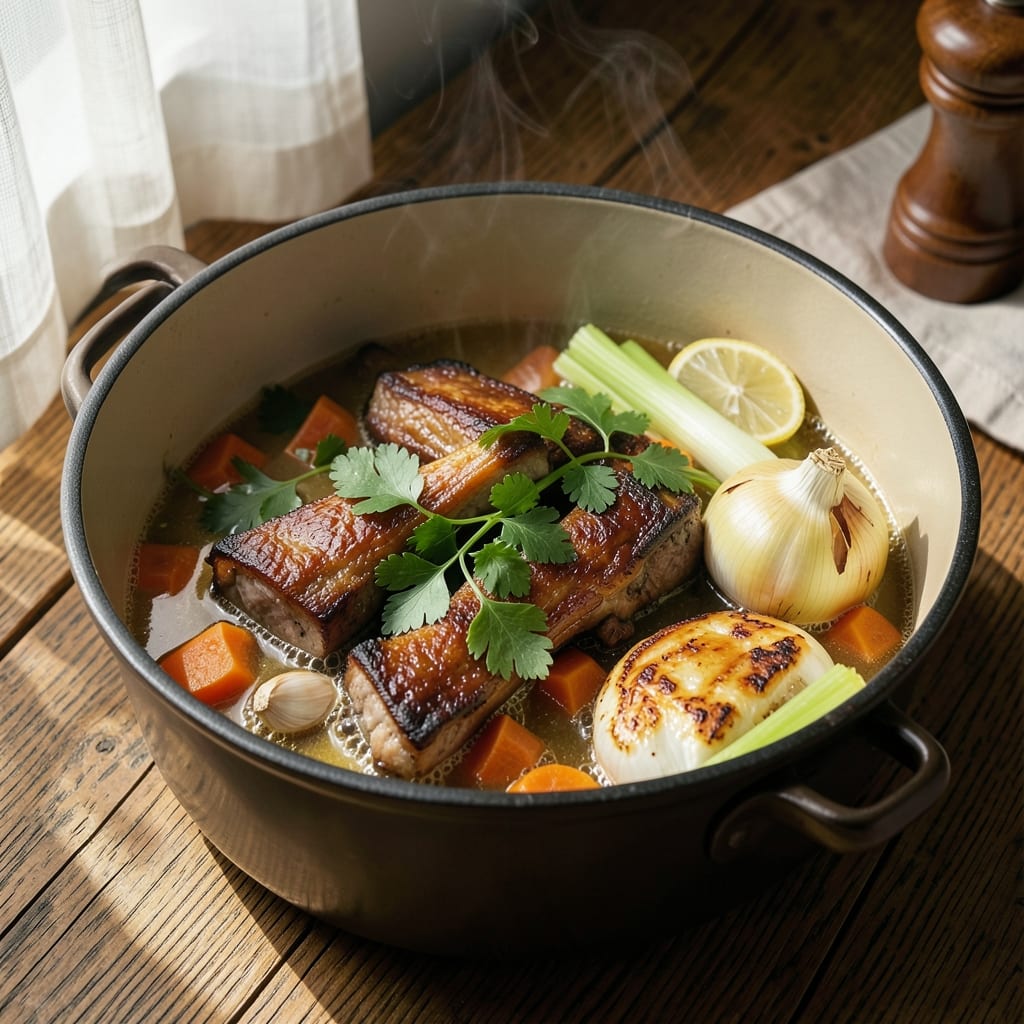
This Barefoot Contessa beef stock recipe transforms simple ingredients into a rich, umami-packed foundation for soups, sauces, and braises—all from scratch. The secret lies in slow-cooked bones, aromatic vegetables, and careful skimming to create a velvety, deeply flavorful base that elevates any dish. I’ve perfected this method over years, ensuring every batch delivers restaurant-quality depth without shortcuts.
The process is straightforward but requires patience: simmering beef bones, vegetables, and herbs for 8 to 24 hours to extract maximum flavor. Skimming fat and straining carefully are critical steps that separate homemade stock from store-bought. The result? A deep, complex broth that forms the backbone of your favorite recipes, with none of the sodium or additives found in commercial versions.
What sets this recipe apart is its versatility—use it as-is for soups or reduce it into a glaze for meats. The long cooking time develops layers of umami, while the aromatics add brightness. Whether you’re a home cook or a seasoned chef, this stock will transform your cooking with its rich, savory depth and foolproof technique.
For modern convenience, I’ll include a pressure cooker adaptation that cuts time without sacrificing flavor. But the traditional stovetop method remains the gold standard for true depth. Let’s get started—your pantry’s about to level up.
Ingredients for barefoot contessa beef stock
Rich, aromatic, and deeply flavorful—these ingredients create a velvety stock that rivals any restaurant version.
| Ingredient | Amount | Notes |
|---|---|---|
| Beef Bones 🦴 | 3 lb | Marrow-rich, knuckle or short ribs preferred |
| Yellow Onion 🧅 | 1 whole | Large, roughly chopped |
| Carrots 🥕 | 4 whole | Large, roughly chopped |
| Celery Stalks 🌿 | 4 whole | Thick, roughly chopped |
| Garlic Cloves 🧄 | 6 cloves | Smashed for deeper flavor |
| Fresh Parsley 🌿 | ½ cup | Tough stems removed |
| Fresh Thyme 🌿 | 8 sprigs | Stems intact for easy removal |
| Fresh Bay Leaves 🍃 | 2 whole | High-quality dried if unavailable |
| Black Peppercorns 🌶️ | 1 tbsp | Crushed for aroma |
| Salt 🧂 | 1 tsp | Kosher preferred, add at end |
| Cold Water 💧 | 12 cups | Filtered preferred for clarity |
| Apple Cider Vinegar 🍎 | 1 tbsp | Brightens flavor, optional |
The bones are everything here. Marrow-rich knuckles or short ribs deliver that unmistakable depth, but don't stress if you can only find regular beef bones—they'll still work. Local butchers often have the good stuff, or check the meat section at Whole Foods or Costco. Look for bones with visible marrow and minimal meat clinging to them. The vegetables? Thick celery stalks and large carrots add sweetness and body—no need for baby versions here. Fresh herbs like thyme and parsley are non-negotiable for brightness, but if you're using dried, halve the amount (and make sure it's high-quality, not the stuff that smells like dust).
No fresh parsley? Dried parsley at half the amount works, but it won't have the same freshness. Short on thyme? Rosemary sprigs add a nice earthy note, though you'll want to remove them before serving. The apple cider vinegar might seem odd, but trust me—it cuts through any bitterness and adds a subtle tang that makes the stock sing. White wine vinegar works too if that's what you've got. As for the water, filtered is ideal, but tap water in most places will do just fine. The key is starting with cold water—it extracts more flavor than hot water would.
This stock tastes even better the next day, so make a big batch—it keeps for 5 days in the fridge or 6 months in the freezer. For freezing, portion into ice cube trays for easy single-use portions. The fat will solidify on top—just scoop it off before using. Store in glass containers if possible, as plastic can absorb odors. And if you're making this ahead for a meal, reduce it by half before adding to your dish—it'll intensify the flavor even more.
Why You'll Love This Recipe
- No-Waste Prep: I swear by the "mirepoix" trick—chopping one onion, two carrots, and a few celery stalks at once. Those scraps? Freeze them for next time. Honestly, it’s the kind of efficiency that makes me feel like a cooking genius.
- Deep Umami Magic: The beef bones simmer until they render that golden, jelly-like marrow—that’s the secret. Add a crushed garlic clove here, a carrot peel there, and you’ve got a broth so rich it makes store-bought taste like sad tea.
- Soup-to-Stew Hero: This stock is the backbone of my week: dump it into a pot for hearty beef soup, use it to deglaze pans for gravy, or freeze it in ice cube trays for instant flavor boosts. Between us, I’ve revived burnt pasta with this stuff.
- Budget-Friendly Goldmine: A pound of beef bones costs less than a fancy dinner out, yet this makes enough stock for four meals. I’ll be real: my freezer’s always stocked with it, and my wallet thanks me every time.
Step-by-step instructions for Barefoot Contessa's beef stock
Here's how to extract rich, flavorful beef stock from scratch—every step matters for depth of flavor.
Prep and Brown the Beef Bones
Preheat your oven to 450°F. Pat the 3 lb beef bones dry with paper towels—this ensures maximum browning. Place them on a rimmed baking sheet in a single layer. Roast for 20-25 minutes until deeply browned and caramelized, turning occasionally for even color.
This browning step is non-negotiable—it develops the Maillard reaction, creating complex flavors that form the foundation of your stock. You'll know they're ready when they're a rich, dark brown all over, almost black in spots. Let them cool slightly before moving to the next step.
Build the Vegetable Base
While the bones cool, peel and roughly chop the 1 whole yellow onion, 4 whole carrots, and 4 whole celery stalks. You're not going for precision here—just rough chunks that will soften easily. Smash the 6 cloves garlic with the flat side of your knife to release their oils without mincing.
Add these vegetables to a large stockpot along with the 8 sprigs fresh thyme, 2 whole fresh bay leaves, and 1 tbsp crushed black peppercorns. The crushed peppercorns will infuse subtle heat into the stock. Give everything a quick stir to combine—this aromatic base will form the flavor backbone of your stock.
Simmer the Stock Low and Slow
Add the browned beef bones to the pot. Pour in the 12 cups cold water and 1 tbsp apple cider vinegar, then bring to a gentle boil over medium-high heat. Once boiling, immediately reduce heat to low to maintain a bare simmer—you should see just a few tiny bubbles breaking the surface.
Cover the pot and let it simmer for 3-4 hours, skimming off any foam or impurities that rise to the surface with a fine-mesh skimmer. This skimming process keeps your stock clear and prevents cloudiness. The longer it simmers, the more collagen breaks down from the bones, creating that silky texture we all love.
Strain and Finish
After simmering, remove the pot from heat and let it sit for 10 minutes to allow any settled particles to sink. Line a fine-mesh strainer with cheesecloth or a coffee filter for extra clarity, then carefully strain the stock into a clean bowl or pitcher, discarding the solids.
Return the strained stock to the pot and stir in the 0.5 cup fresh parsley and 1 tsp salt. The parsley adds brightness while the salt balances all the rich flavors. Taste and adjust seasoning if needed—you're aiming for a clean, meaty flavor with just a hint of saltiness. Let it cool completely before storing or using.
Store Properly for Maximum Freshness
Transfer the finished stock to airtight containers, leaving about 1 inch of headspace at the top. It will continue to shrink as it cools. Store in the refrigerator for up to 5 days or freeze for up to 6 months. For freezing, portion into ice cube trays or small containers for easy measuring later.
This stock is incredibly versatile—use it as a base for soups, braises, or risottos. The deep umami flavor comes from the slow extraction of collagen and gelatin during the long simmer, making every sip worth the effort. Trust the process, and you'll have a pantry staple that elevates any dish.
Pro Tips For Making Barefoot Contessa Beef Stock
- Char Bones First: The recipe calls for roasting bones, but I used to skip it—big mistake. After burning through three batches of bland stock, I learned: blast those bones at 450°F for 20-25 minutes until deeply browned. That caramelized crust unlocks layers of flavor the slow simmer can’t replicate. (Yes, even if you’re impatient like me.)
- Chop Veggies Small: My first attempt used thick onion chunks and whole carrots—result? A stock that tasted more like soup. For this recipe, dice onions into ¼-inch pieces and slice carrots and celery into ½-inch rounds. Smaller surfaces release flavor faster, and you’ll end up with a smoother, more consistent base. (Your future self will notice the difference.)
- Skim Early, Skim Often: I learned this the hard way—letting scum build up before skimming leads to a bitter stock. The Barefoot Contessa method works: skim the foam off the surface in the first 10 minutes, then every 15 minutes after that. Use a fine-mesh strainer or ladle; don’t just fish it out with your hands. (Your stock’s clarity and taste depend on this.)
- Add Garlic Late: My grandmother swore by this, and she was right: toss the garlic cloves in the last 10 minutes of simmering. If you add them too early, they’ll turn bitter and muddy the stock’s depth. The recipe says to smash them lightly—don’t skip this, or you’ll end up with garlic-flavored water. (Sounds weird, but it works.)
Regional styles of this dish
French Classic Approach
In France, beef stock is often called bouillon de bœuf, and the technique focuses on long, slow simmering with white wine instead of vinegar. Use 3 lb beef marrow bones and add 1 cup dry white wine after browning, reducing it by half before adding water. French chefs also recommend a parsing technique—roasting bones separately, then simmering with vegetables in a large Dutch oven for 6-8 hours. The result is a clear, delicate stock perfect for consommé or velouté sauces. 🍷
Italian Rustic Style
Italian brodo di manzo often includes tomato paste and Parmigiano rind for depth. After browning 3 lb beef bones, add 2 tbsp tomato paste and 1 Parmigiano rind along with the vegetables. Simmer for 4-5 hours, then strain through a cheesecloth-lined sieve for extra smoothness. Italians finish with a splash of red wine vinegar and fresh basil, creating a bold, slightly tangy stock ideal for pasta sauces or minestrone. 🌿
Spanish Sofrito Base
Spanish caldo de carne often starts with a sofrito—sautéing onions, garlic, and carrots in olive oil until deeply caramelized before adding bones. Use 3 lb beef shin bones (rich in collagen) and add 1 tbsp smoked paprika and 1 bay leaf along with the vegetables. Simmer uncovered for 5-6 hours, skimming frequently. The result is a dark, smoky stock perfect for paella or cocido. 🌶️
Pressure Cooker Shortcut
For modern kitchens, a pressure cooker cuts time without sacrificing flavor. Brown 3 lb beef bones as directed, then add all ingredients to a 6-quart electric pressure cooker. Cook on high pressure for 90 minutes, then natural release for 15 minutes. The stock will be just as rich but ready in under 2 hours. Strain through a fine-mesh sieve and finish with parsley and salt. This method works perfectly for weeknight meal prep! ⏱️
Japanese Dashi-Inspired Twist
For a lighter, umami-rich variation, add dashi powder (from kombu and bonito flakes) to the simmering stock. Use 1 tsp dashi powder per quart of stock, along with 1-inch ginger slice and 1 star anise pod. Simmer for 3-4 hours, then strain. This creates a delicate, aromatic stock perfect for ramen or miso soup bases. The ginger and star anise add a subtle warmth that pairs beautifully with Asian-inspired dishes. 🍜
Nutrition facts
Frequently asked questions
Why do I need to brown the beef bones first?
Browning creates the Maillard reaction, which develops deep, complex flavors through caramelization. This step is crucial for building the rich, umami base that separates homemade stock from store-bought versions. Skipping it results in a much milder flavor profile.
Can I use regular beef bones instead of marrow bones?
While marrow bones add extra richness, regular beef bones still work beautifully. Look for knuckle bones or short ribs—they contain more collagen, which breaks down during simmering to create that silky texture. Just expect slightly less gelatinous depth than with marrow bones.
What's the best way to store homemade beef stock?
For short-term use, store in airtight containers in the fridge for up to 5 days. For longer storage, freeze in ice cube trays or small containers for up to 6 months. The fat will solidify on top—just scoop it off before using. Glass containers preserve flavor better than plastic.
How do I know when the stock is done simmering?
Your stock is ready when the bones are completely tender and the liquid has reduced slightly, typically after 3-4 hours of simmering. The color should be deep amber, and you'll notice the bones have lost most of their meat. For maximum collagen extraction, let it simmer up to 24 hours if possible.
Can I make this in a slow cooker instead?
Yes! Brown the bones as directed, then transfer everything to a 6-quart slow cooker with 12 cups water. Cook on low for 8-10 hours or high for 4-5 hours, skimming foam periodically. The slow cooker method works well but may produce slightly less gelatinous stock than stovetop simmering.