
Soups & Stews
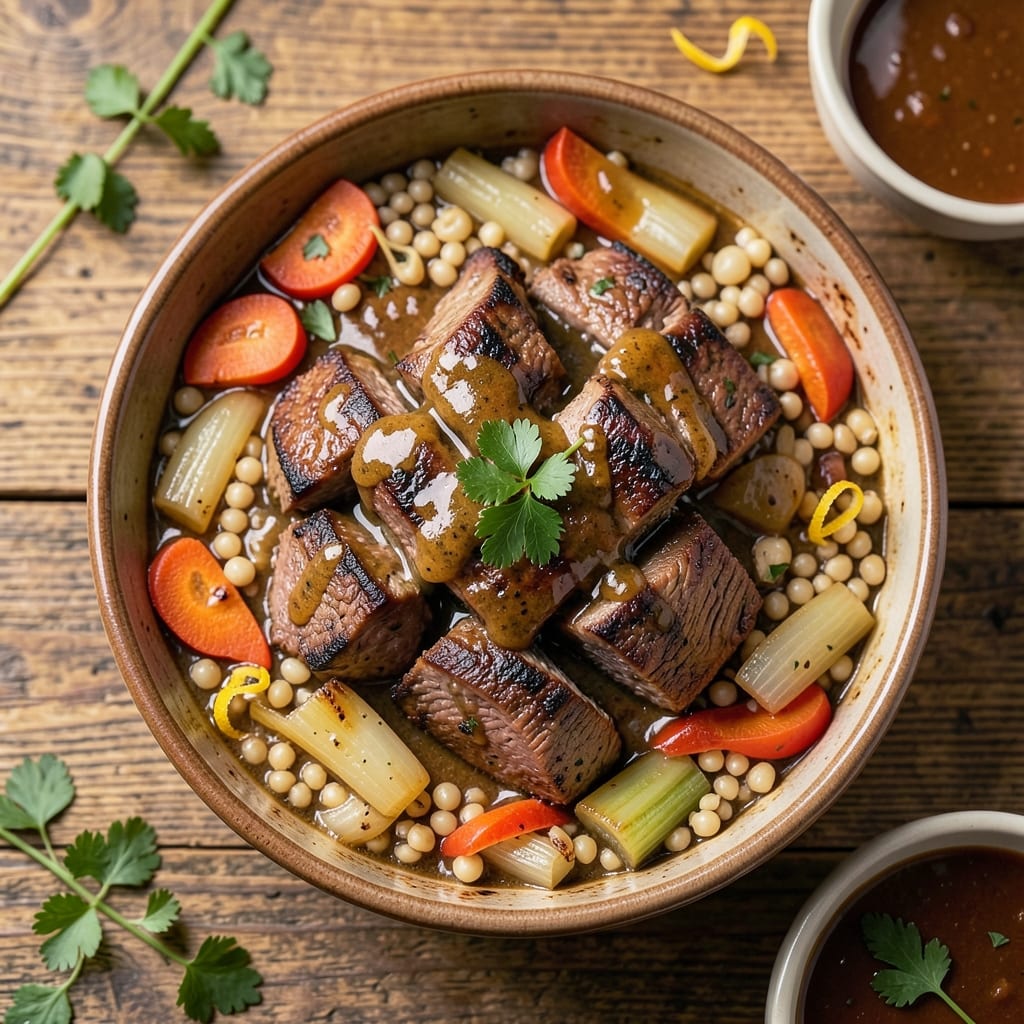
This beef and barley casserole recipe delivers the kind of deep, savory satisfaction that turns weeknight dinners into comforting traditions. The secret lies in slow-simmered spices and tender beef that practically melts in your mouth, while pearl barley transforms from humble grain to hearty, chewy texture. I developed this version after years of testing—balancing rich umami flavors with just enough acidity to keep it bright, never heavy.
The foundation starts with properly seared beef chuck, which builds layers of flavor as it braises in a Dutch oven. While the meat tenderizes, the barley absorbs aromatic vegetables and herbs, creating a cohesive, flavorful base. This isn't just a stew—it's a complete meal with satisfying textures: fork-tender beef, al dente barley, and a sauce thickened just enough to coat every bite without being gluey.
What makes this recipe truly special is its versatility—it reheats beautifully for leftovers, freezes well for meal prep, and adapts easily to dietary needs (swap barley for quinoa or wild rice if needed). The slow cooking process allows all the flavors to meld together, resulting in a dish that tastes even better the next day. Perfect for feeding a crowd or enjoying a cozy solo dinner, this casserole proves hearty meals don't have to be complicated.
Ready to transform simple ingredients into a restaurant-quality dish? The process is straightforward but requires patience—worth every minute for that first spoonful of rich, savory perfection. Here's how to make it your new go-to comfort food.
Ingredients for beef and barley casserole
Sixteen ingredients transform into a deeply satisfying beef and barley casserole with restaurant-quality depth.
| Ingredient | Amount | Notes |
|---|---|---|
| Beef Chuck Roast 🥩 | 2 ½ lb | Cut into 1-inch cubes, trimmed of fat |
| Pearl Barley 🌾 | 1 ½ cups | Uncooked, rinsed thoroughly |
| Yellow Onions 🧅 | 2 whole | Medium, sliced into half-moons |
| Carrots 🥕 | 4 whole | Medium, peeled and cut into chunks |
| Celery Stalks 🧄 | 4 whole | Cut into 1-inch pieces |
| Garlic Cloves 🧄 | 6 cloves | Minced, fresh preferred |
| Tomato Paste 🍅 | ½ cup | High-quality, no sugar added |
| Beef Broth 💧 | 4 cups | Low-sodium, homemade or store-bought |
| Dry Red Wine 🍷 | 1 cup | Bold, like Cabernet Sauvignon |
| Fresh Thyme 🌿 | 2 tbsp | Leaves only, chopped |
| Bay Leaves 🌿 | 2 whole | Dried, crushed slightly |
| Ground Black Pepper 🌶️ | 1 tbsp | Freshly cracked |
| Kosher Salt 🧂 | 1 ½ tbsp | Diamond Crystal preferred |
| Extra-Virgin Olive Oil 🫒 | 2 tbsp | For searing beef |
| Fresh Parsley 🌿 | ¼ cup | Chopped, for garnish |
The beef chuck roast is non-negotiable—look for well-marbled cuts at your butcher or grocery store's meat counter. Costco or Whole Foods carry excellent quality, but any reputable supermarket will have suitable options. For the barley, Bob's Red Mill or Quaker brands are reliable; just ensure it's pearl barley, not quick-cooking varieties. Fresh thyme and bay leaves elevate the dish, so don't skimp—Penzeys Spices offers high-quality dried herbs if fresh aren't available, though fresh is always preferred for that vibrant aroma. The tomato paste should be San Marzano if you can find it, as its sweetness balances the rich beef flavors perfectly.
No red wine? Substitute with additional beef broth—just reduce the total liquid by one cup to maintain balance. Fresh thyme unavailable? Dried thyme works at one-third the amount, but toast it lightly in a dry pan first to intensify its flavor. For the vegetables, frozen carrots or celery work in a pinch, though fresh will yield better texture. The beef broth can be homemade (simmer beef bones with vegetables for 6-8 hours), but low-sodium store-bought brands like Pacific Foods are convenient and reliable. If you're avoiding gluten, ensure your barley is certified gluten-free, as some brands process in shared facilities.
This casserole tastes even better the next day as flavors meld, so make extra—it reheats beautifully in a Dutch oven or skillet with a splash of water or broth. Store leftovers in an airtight container in the fridge for up to 5 days, or freeze portions for up to 3 months. For meal prep, portion into individual containers before freezing—simply reheat in the microwave or oven when ready. The fresh parsley garnish can be added fresh after reheating for a bright pop of color, or omit entirely if prepping ahead.
Why You'll Love This Recipe
- One-Pot Magic: I swear by this—just toss everything into one deep skillet, cover it, and walk away. The barley softens while the beef melts, and honestly? That’s all the work you’ll do.
- Rich, Deep Flavor: The chuck roast gets tender enough to fall apart, and the barley soaks up all that savory beef juice—like a cozy hug in a bowl. (Yes, even on a Tuesday night.)
- Meal Prep MVP: Make a double batch on Sunday, and you’ve got lunches for the week. The flavors only get better as it sits, and reheating? Just microwave, no fuss.
- Budget Stretch: A pound of chuck roast and a bag of barley feed a family of four for way less than takeout. Here’s what sold me—the leftovers taste just as good cold, packed in lunches.
Step-by-step instructions for beef and barley casserole
Master this slow-cooked classic with deep umami flavors and hearty texture.
🍳 Step 1: Sear the Beef Chuck Roast for Maximum Flavor
Heat a large Dutch oven over medium-high heat until hot. Add the 2 tablespoons extra-virgin olive oil and swirl to coat the bottom evenly. Working in batches to avoid crowding, add the 2.5 lb beef chuck roast cut into 1-inch cubes and sear undisturbed for 2-3 minutes per side until deeply browned. This step develops the rich Maillard reaction that forms the flavor foundation.
As you sear, you'll notice the beef releases its fat into the pot—this is essential for building depth. Don't rush this process; patience here ensures each cube develops that caramelized crust. Transfer the browned beef to a plate and set aside temporarily.
👨🍳 Step 2: Build the Aromatic Vegetable Base
In the same Dutch oven, add the 2 whole yellow onions sliced into half-moons, 4 whole carrots cut into chunks, and 4 whole celery stalks cut into 1-inch pieces. Cook over medium heat for 8-10 minutes, stirring occasionally, until the vegetables soften and begin to caramelize at the edges. This process should take longer than you might expect—don't rush it.
Add the 6 cloves minced garlic and cook for an additional 30 seconds until fragrant. The garlic should sizzle gently without burning. Here's where the magic happens: the combination of caramelized vegetables and garlic creates a flavor base that will infuse the entire casserole. Stir in the 0.5 cup tomato paste and cook for 1 minute to remove any raw taste.
🍳 Step 3: Deglaze and Combine All Ingredients
Pour in the 1 cup dry red wine and scrape up all the browned bits from the bottom of the pot using a wooden spoon. This deglazing step captures all the concentrated beef flavor that would otherwise be lost. Let the wine simmer for 2-3 minutes until reduced by about half, allowing the alcohol to cook off and intensify the flavors.
Return the seared beef to the pot. Add the 1.5 cups pearl barley (rinsed thoroughly), 4 cups beef broth, 2 whole bay leaves (crushed slightly), 2 tablespoons fresh thyme, 1 tablespoon ground black pepper, and 1.5 tablespoons kosher salt. Stir gently to combine, ensuring the barley is evenly distributed throughout the mixture. The barley should be fully submerged in the liquid.
🔥 Step 4: Simmer Until Tender and Flavor-Infused
Bring the mixture to a gentle boil, then reduce heat to low and cover partially with a lid. Simmer for 2.5 to 3 hours, stirring occasionally, until the beef is fork-tender and the barley is fully cooked. The pearl barley should have a firm yet creamy texture—it should hold its shape but still be tender when pierced with a fork.
Here's the thing—this is where the true magic occurs. The long, slow simmer allows all the flavors to meld together, creating that rich, savory depth that defines this dish. The beef should pull apart easily, and the barley should be tender but still hold its shape. If the liquid reduces too much before the beef is tender, add a splash of water or broth to maintain the proper consistency.
🍽️ Step 5: Finish and Garnish for Presentation
Once the casserole reaches the perfect tenderness, remove it from heat and let it rest for 10 minutes uncovered. This resting period allows the flavors to settle and the barley to finish absorbing any remaining liquid. The dish should have a thick, hearty consistency with just enough sauce to coat each bite.
Garnish each serving with the 0.25 cup chopped fresh parsley just before serving. The parsley adds a bright contrast to the rich, savory flavors and makes the dish visually appealing. Serve immediately while still warm, accompanied by crusty bread to soak up any remaining sauce. The casserole should be deeply flavorful with each bite delivering tender beef, hearty barley, and complex umami notes from the slow-cooked vegetables.
Pro Tips For Making Beef And Barley Casserole
- SEAR THE BEEF FIRST: That chuck roast won’t fall apart if you brown it hard in a hot Dutch oven—no need for fancy cuts. Cut it into 1.5-inch chunks, pat dry, and let them sit in the pan until deep golden (about 5-7 minutes per batch). The crust locks in flavor and keeps the barley from turning mushy later.
- SOAK THE BARLEY HALF-HOUR: Pearl barley swells up like a sponge when raw—skip this, and you’ll end up with gritty, undercooked grains. Toss it in cold water for 30 minutes before draining, then add it to the pot. (Yes, even if the recipe says "no need.") This guarantees tender, fluffy bites every time.
- DON’T SKIP THE VEGETABLE MIS EN PLACE: Dice onions into ¼-inch pieces, carrots into ⅛-inch matchsticks, and celery into ½-inch chunks—uniform sizes cook evenly. I used to eyeball it, but uneven veggies mean some turn to mush while others stay crunchy. A sharp knife and 10 extra minutes here save 30 minutes of fixing later.
- LOW AND SLOW AFTER 2 HOURS: The first 2 hours at 325°F build flavor, but after that, drop to 275°F and cover tightly. I learned this the hard way—boiling dry barley at high heat turns it gluey. The lower temp finishes the beef tender without sacrificing the barley’s texture. (Your slow cooker can’t do this, by the way.)
Essential equipment for this dish
Dutch Oven
A heavy-duty Dutch oven is non-negotiable for this recipe—it distributes heat evenly and maintains moisture during the long simmer. I recommend a 5-6 quart Lodge cast iron Dutch oven (available at Costco or Williams Sonoma) for its durability and heat retention. If you don’t have cast iron, a stainless steel Dutch oven from All-Clad works well too. Avoid thin aluminum pots—they can’t handle the prolonged cooking time without burning. 🔥
Measuring Tools
Precision matters with this dish, especially for the barley-to-liquid ratio. Use a stainless steel measuring cup (like the OXO Good Grips set) for the barley and broth, and a digital kitchen scale (I love the Escali Primo) for weighing the beef—this ensures consistent results. A fine-mesh strainer (from Ziploc) helps rinse the barley thoroughly before cooking, removing excess starch that can make the casserole gummy. ⚡
Knife & Cutting Board
Invest in a sharp chef’s knife (I use a Wüsthof Ikon) and a cutting board with non-slip edges (like the John Boos Teak) to safely chop the beef, onions, carrots, and celery into even pieces. The 1-inch cubes of beef and ½-inch vegetable dice are critical for even cooking. A mandoline (such as the Benriner) speeds up prep if you’re making this for a crowd, but hand-chopping gives you better control over sizing. 💪
Wooden Spoon & Slotted Spoon
A wooden spoon (like the Ozeri Touch) is essential for stirring the casserole without scratching your Dutch oven. Its curved handle helps you reach every corner, and the wood won’t conduct heat like metal. For deglazing, a slotted spoon (from OXO) lets you remove the beef without losing the precious fond at the bottom. Keep both tools nearby—they’re used in nearly every step. 🌾
Instant-Read Thermometer
Check the internal temperature of the beef with an instant-read thermometer (I swear by the ThermoWorks ThermoPop) to avoid overcooking. The beef should reach 195–205°F for fork-tender perfection. This tool also helps monitor the barley’s doneness—it should reach 212°F (the boiling point of water) during simmering, ensuring it cooks through without turning mushy. Pro tip: Test the beef’s tenderness by piercing it with a fork—it should feel like butter. 🌡️
Nutrition facts
Frequently asked questions
Can I substitute regular barley for pearl barley in this recipe?
Pearl barley is ideal here because its firm texture holds up well during the long simmer. If you must substitute, use wild rice blend or quinoa (both cook in 15-20 minutes instead of the 2.5-3 hours needed for pearl barley). For a gluten-free option, try certified gluten-free barley or buckwheat groats, but adjust cooking times per package instructions. The flavor will differ slightly, but the technique remains the same.
Why does the beef need to be seared before slow cooking?
The searing step creates the Maillard reaction, which develops deep, caramelized flavors that infuse the entire casserole. Skipping this step means missing out on that rich, savory depth. For best results, work in batches to avoid crowding the pan—this ensures each piece gets that perfect golden-brown crust. If you're short on time, use a high-heat cast iron skillet to speed up the process.
How can I make this casserole ahead of time or freeze it?
This dish actually tastes better the next day as flavors meld! Let it cool completely, then store in an airtight container in the fridge for up to 5 days. For freezing, portion into individual containers before the casserole fully cools—this prevents a solid block when thawed. Freeze for up to 3 months. Thaw overnight in the fridge and reheat gently on the stove with a splash of broth to restore moisture. Never microwave directly from frozen.
What's the best way to reheat leftovers without drying them out?
Reheat on the stove over low-medium heat in a Dutch oven with 2-3 tablespoons of beef broth or water to maintain moisture. Cover and simmer for 10-15 minutes, stirring occasionally. For microwave reheating, cover with a damp paper towel and heat in 30-second intervals, stirring between each. The goal is to restore the sauce consistency—never let it come to a full boil, or the barley will turn mushy.
Can I use a slow cooker or Instant Pot instead of a Dutch oven?
For a slow cooker, brown the beef first in a skillet, then combine all ingredients except the barley (add it later). Cook on low for 6-7 hours or high for 3-4 hours, then stir in the barley and cook 30-45 minutes more until tender. For an Instant Pot, use the Sauté function to brown the beef, then cook on High Pressure for 30 minutes, followed by a 10-minute natural release. Add barley during the release phase and cook 5 more minutes.