
Soups & Stews
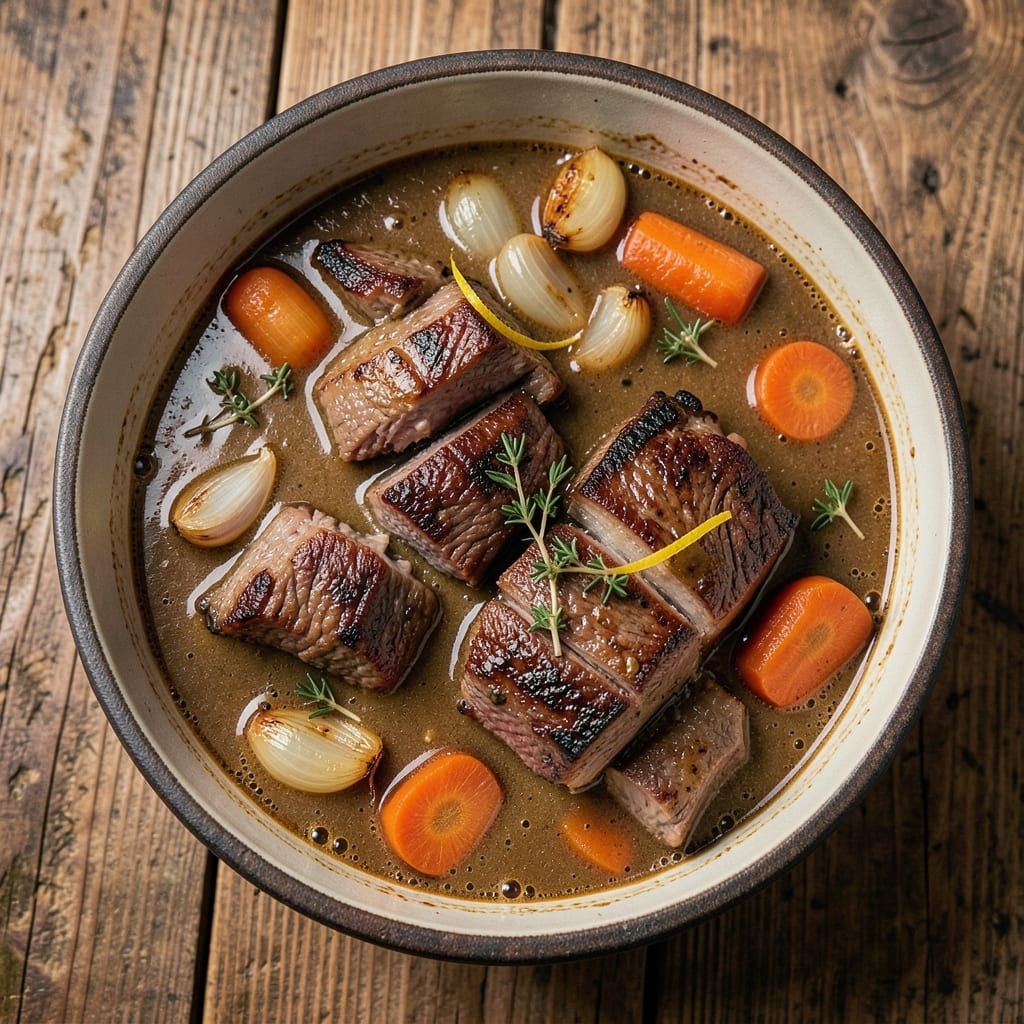
Gordon Ramsay's beef and ale stew transforms tough cuts into melt-in-your-mouth perfection through slow simmering and rich umami development. This isn't just a stew—it's a restaurant-quality dish built on proper searing, careful deglazing, and the right balance of ale and broth. I've recreated it exactly as Ramsay does, with techniques that ensure deep flavor and tender beef every time.
The foundation starts with a deep, golden-brown crust on the beef—this isn't just about color, it's about flavor extraction. After searing, we deglaze with ale to capture those precious browned bits, then slow-cook until the meat falls apart. The ale isn't just an ingredient; it's the secret weapon that adds complexity and body to the sauce. This is where the magic happens, transforming simple ingredients into something extraordinary.
What you'll end up with is a rich, velvety stew where tender beef chunks float in a deeply flavored sauce that's perfectly balanced between the malty sweetness of ale and the savory depth of beef. The aroma alone will have everyone gathering at the table, and each bite delivers layers of flavor that build with every spoonful. This is comfort food at its finest—warm, hearty, and impossible to resist.
Serve it with crusty bread to soak up every last drop of that delicious sauce, or alongside roasted vegetables for a complete meal. The beauty of this recipe is in its versatility—it's impressive enough for dinner parties but simple enough for a weeknight dinner. Let's get started on creating your perfect beef and ale stew.
Ingredients for beef and ale stew gordon ramsay
Sixteen ingredients that pack restaurant-quality flavor into every spoonful of rich, umami-packed beef and ale stew.
| Ingredient | Amount | Notes |
|---|---|---|
| Chuck Roast Beef 🥩 | 3 lb | Cut into 1.5-inch cubes, trimmed of excess fat |
| Dark Ale Beer 🍺 | 2 cups | Stout or porter preferred (Guinness, Samuel Smith Oatmeal) |
| Beef Stock 🥫 | 2 cups | Homemade or high-quality store-bought |
| Yellow Onions 🧅 | 2 whole | Medium, sliced into 1/2-inch pieces |
| Carrots 🥕 | 3 whole | Medium, peeled and cut into 1-inch chunks |
| Garlic Cloves 🧄 | 6 cloves | Peeled and lightly crushed |
| Tomato Paste 🍅 | 2 tbsp | San Marzano preferred for sweetness |
| Dried Thyme 🌿 | 1 tbsp | Or 1 tbsp fresh thyme sprigs |
| Dried Bay Leaves 🍃 | 2 whole | Remove before serving |
| Worcestershire Sauce 🍯 | 1 tbsp | Original, not vegetarian version |
| All-Purpose Flour 🌾 | 1 tbsp | For dredging beef |
| Olive Oil 🫒 | 2 tbsp | Extra-virgin for searing |
| Salt 🧂 | 1 ½ tsp | Diamond Crystal kosher salt |
| Black Peppercorns 🌶️ | 1 tsp | Freshly cracked |
| Fresh Parsley 🌿 | ¼ cup | Chopped, for garnish |
The beef is non-negotiable—chuck roast with good marbling is essential for that melt-in-your-mouth texture. Costco or Whole Foods carry excellent cuts, but check the fat content: you want visible marbling, not pure lean meat. If you're buying a whole roast, cube it yourself for even cooking. The ale? Guinness or Samuel Smith Oatmeal are Ramsay's go-to choices, but any dark stout or porter will work. Avoid light lagers—they won't deliver the malty depth you need. For the stock, homemade is ideal, but Kitchen Basics or Pacific Foods make reliable store-bought versions. The tomato paste should be San Marzano—its natural sweetness balances the ale's bitterness beautifully.
No dark ale? Substitute with beef broth plus 1 tbsp balsamic vinegar for depth, though you'll lose some complexity. Fresh thyme works better than dried, but if you only have dried, reduce to 1/3 the amount. Worcestershire sauce is crucial for that umami punch—Lea & Perrins original is the only version Ramsay uses. Short on time? Pre-cubed beef from the deli counter saves prep work, though you'll lose some of that perfect sear. The carrots can be baby carrots if that's what's on hand, but whole carrots with skins on add more texture. And for the love of stews, don't skip the bay leaves—they infuse subtle earthy notes that disappear when removed.
This stew tastes even better the next day as flavors meld. Store in an airtight container in the fridge for up to 4 days, or freeze portions for 3 months. I like to make a double batch—one for dinner, one for lunches. The sauce thickens as it cools, so add a splash of ale or broth when reheating. For serving, crusty sourdough is ideal, but any sturdy bread will do. Garnish with fresh parsley right before serving—it adds a bright contrast to the rich stew. Leftovers reheat beautifully on the stove over medium-low heat, stirring occasionally to prevent scorching.
Why You'll Love This Recipe
- One-Pot Magic: I swear by this—just sear the chuck roast, dump in the beer and stock, and let it slow-cook. No extra pans, no fuss. The onions and carrots soften into the sauce while you’re doing anything else.
- Rich, Deep Umami Bomb: That dark ale isn’t just for flavor—it’s the secret weapon. The maltiness cuts through the beef’s richness, and the stock deepens it into something so satisfying, you’ll forget about takeout. (Yes, even on a Tuesday night.)
- Leftovers That Save Me: This stew only gets better the next day. I make a double batch, freeze half, and pull it out for lazy nights. The flavors meld even more overnight, and reheating takes two minutes.
- Budget-Friendly Feast: Chuck roast is cheap, beer adds character, and you’re using basic veggies. For under $15, I feed four people a meal that feels like a restaurant dish. Honestly, my wallet thanks me every time.
Step-by-step instructions for gordon Ramsay's beef and ale stew
This is where the magic happens—slow-simmered richness meets bold ale flavors for a stew that tastes like a pub classic.
Sear the Beef for Deep Flavor
Pat the 3 lb chuck roast beef completely dry with paper towels. Cut it into 1.5-inch cubes and trim any excess fat. In a large Dutch oven, heat 2 tablespoons olive oil over medium-high heat until shimmering. Working in batches (don't overcrowd), sear the beef for 2-3 minutes per side until deeply browned and caramelized. This step is crucial—it develops the Maillard reaction that builds the stew's rich foundation.
As you sear, sprinkle each batch with 1.5 teaspoons salt and 1 teaspoon freshly cracked black peppercorns. Remove the beef and set aside on a plate. The browned bits (fond) in the pot will dissolve into the stew later, adding layers of flavor. If the oil starts smoking, reduce the heat slightly to maintain control without losing the sear.
Build the Aromatic Base
In the same Dutch oven, add 2 tablespoons tomato paste and stir to coat the browned bits. Cook for 1 minute until it darkens slightly. Add 2 whole yellow onions (sliced into ½-inch pieces), 3 whole carrots (cut into 1-inch chunks), and 6 peeled garlic cloves (lightly crushed). Sauté for 5 minutes until the onions soften and the carrots begin to caramelize at the edges.
Stir in 1 tablespoon dried thyme and 2 whole dried bay leaves, then pour in 2 cups dark ale beer (stout or porter preferred). Scrape up any browned bits from the bottom of the pot with a wooden spoon. Let the liquid simmer for 3 minutes until it reduces slightly and the alcohol aroma dissipates. This reduction concentrates the flavors and prepares the stew for the long simmer ahead.
Create the Velvety Sauce
Return the seared beef to the pot. Sprinkle 1 tablespoon all-purpose flour over the beef and stir gently to coat each piece. Pour in 2 cups beef stock and 1 tablespoon Worcestershire sauce. Bring the mixture to a gentle simmer, then reduce the heat to low. The stew should bubble softly—not vigorously boil—to prevent the beef from toughening.
Cover the pot and let the stew simmer for 2 hours. Stir occasionally to ensure even cooking and prevent the vegetables from sticking. The beef should become fork-tender, and the sauce should thicken into a rich, glossy consistency. If the liquid reduces too quickly, add ¼ cup water to maintain the proper balance. This slow cooking transforms tough chuck roast into melt-in-your-mouth tenderness.
Finish with Umami Depth
After 2 hours, remove the 2 dried bay leaves from the stew. Taste and adjust the seasoning with additional salt or black peppercorns if needed. The stew should be rich, slightly tangy from the ale, and deeply savory. If the sauce feels too thin, uncover the pot and simmer for another 10-15 minutes to reduce it further. The goal is a stew that coats the back of a spoon but isn't gluey.
Garnish with ¼ cup chopped fresh parsley just before serving. The parsley adds a bright contrast to the deep, umami flavors of the stew. Let the stew rest for 10 minutes before serving to allow the flavors to meld completely. Serve with crusty bread or buttered egg noodles to soak up every last drop of that luxurious sauce.
Pro Tips For Making Beef And Ale Stew Gordon Ramsay
- SEAR THE ROAST HOT: Chuck roast needs a proper crust to lock in flavor, so don’t skimp on heat—get your Dutch oven screaming hot (medium-high) before adding the meat. I used to rush this and end up with pale, bland chunks; now I wait until the oil shimmers before searing each side for 3-4 minutes.
- SWEAT ONIONS LOW: Onions should caramelize, not burn, so keep the heat at a steady simmer (medium-low) for 8-10 minutes. After burning three batches, I finally figured out that patience here makes the difference—don’t rush, or you’ll end up with bitter, dark bits instead of sweet depth.
- DEGLAZE WITH BEER IMMEDIATELY: As soon as you remove the roast, pour in that dark ale while the pan is still hot—this lifts all those browned bits (fond) into the liquid. I used to let the pan cool, and the stew lost half its flavor. Do it fast, or regret it later.
- STIR IN CARROTS LATE: Toss in the carrots only after the roast has cooked for 1.5 hours—they’ll soften perfectly without turning to mush. I learned this the hard way when I added them early and ended up with a stew full of overcooked, mealy chunks. Save them for the final hour.
Common mistakes when making this dish
Skipping the Sear
I can't stress this enough—skipping the sear is the biggest mistake you can make. That golden crust isn't just for looks; it's where the Maillard reaction happens, creating deep, complex flavors that dissolve into the stew. If you rush this step or sear at too low a heat, you'll end up with bland beef. I've seen home cooks try to compensate by adding more salt later, but nothing replaces that caramelized crust. Pro tip: Use a cast iron Dutch oven like the Lodge 6-quart—it retains heat better and gives you that perfect sear every time. 🔥
Overcrowding the Pot
When searing the beef, don't overcrowd the pan—this is where most home cooks mess up. If you pile all the beef cubes in at once, they'll steam instead of sear, and the oil temperature will drop, ruining that crucial crust. Work in small batches (about ½ lb at a time) to give each piece room to develop that beautiful brown color. I like to use a slotted spoon to transfer the beef to a plate as it sears, keeping the pot hot and ready for the next batch. This might take a few extra minutes, but it's worth it for that restaurant-quality texture.
Using the Wrong Ale
Not all beers are created equal, and light lagers or pilsners just won't cut it here. The ale needs to be dark and malty—think stout or porter like Guinness or Samuel Smith Oatmeal. These beers add body, sweetness, and depth that lighter beers can't match. I once made this stew with a pale ale, and while it was drinkable, it lacked that rich, velvety quality. If you're out of dark ale, substitute with beef broth plus 1 tbsp balsamic vinegar, but expect the flavor to be less complex. The ale isn't just a liquid—it's the secret weapon that elevates this dish from good to extraordinary.
Boiling the Stew
Here's a common mistake: letting the stew boil vigorously. Once you add the liquid and bring it to a simmer, reduce the heat to low so it's just bubbling gently. Boiling too hard can turn the beef tough instead of tender. Think of it like a gentle hug—you want the beef to cook slowly and evenly, not get shaken around like it's in a blender. If you're unsure, use a meat thermometer—the beef should reach 195-205°F for that fall-apart texture. Patience is key here; rushing the process is a surefire way to end up with chewy meat instead of melt-in-your-mouth perfection.
Ignoring the Fond
The fond—those browned bits stuck to the bottom of your Dutch oven—are flavor gold. If you scrape them up and toss them in the trash, you're throwing away layers of depth that took minutes to create. After searing the beef, deglaze with the ale right away to dissolve those bits into the sauce. I like to use a wooden spoon to scrape every last bit from the bottom, ensuring none of that flavor goes to waste. This step is what separates a good stew from a great one—don't skip it! 💫
Not Resting Before Serving
Finally, serving the stew immediately after cooking is a mistake. Letting it rest for 10-15 minutes allows the juices to redistribute throughout the beef, keeping it moist and flavorful. I've seen people serve it straight from the pot, and while it's still delicious, the texture isn't as tender. This is especially important if you're serving it with bread—you want every bite to be as rich and satisfying as possible. Trust me, that extra wait makes all the difference. It's like letting a fine wine breathe—it just gets better with a little patience.
Nutrition facts
Frequently asked questions
Can I use a different cut of beef instead of chuck roast?
While chuck roast is ideal for its marbling and tenderness, you can substitute with brisket or short ribs. If using brisket, increase simmering time to 3 hours for maximum tenderness. Short ribs will cook faster (2 hours) but require trimming excess fat first. Avoid lean cuts like sirloin—they'll dry out during the long simmer.
What's the best way to reheat leftover beef and ale stew?
Reheat gently on the stove over low-medium heat for 10-15 minutes, stirring occasionally. Add 1-2 tablespoons of ale or beef stock if the sauce thickens too much. Never microwave—it creates a skin and uneven texture. For best results, reheat in the same Dutch oven you cooked it in. The stew tastes even better the next day as flavors meld!
How can I make this stew vegetarian?
Replace the beef with mushrooms (cremini or portobello) and lentils (brown or green) for texture. Use vegetable stock instead of beef stock and vegetarian Worcestershire sauce. The ale remains key for depth, but reduce to 1 cup to balance the dish. Simmer for 45 minutes instead of 2 hours. The umami will come from mushrooms and soy sauce (1 tbsp).
Can I prepare this stew in a slow cooker?
Yes! Brown the beef in a skillet first, then transfer everything to a 6-quart slow cooker. Cook on low for 8 hours or high for 4-5 hours. The slow cooker method is perfect for hands-off prep, but you'll lose some of the caramelized depth from the Dutch oven. For best results, finish by simmering on the stove for 10 minutes to reduce the sauce.
Why does my stew taste bitter?
Bitterness usually comes from overcooking the ale or using too much tomato paste. The ale should simmer just 3 minutes to reduce alcohol aroma—don't boil it. For depth without bitterness, use 1 tbsp tomato paste max. If the stew tastes bitter, balance it with 1 tsp sugar or ½ cup apple cider to mellow the flavors. Always taste as you go!