
Main Courses
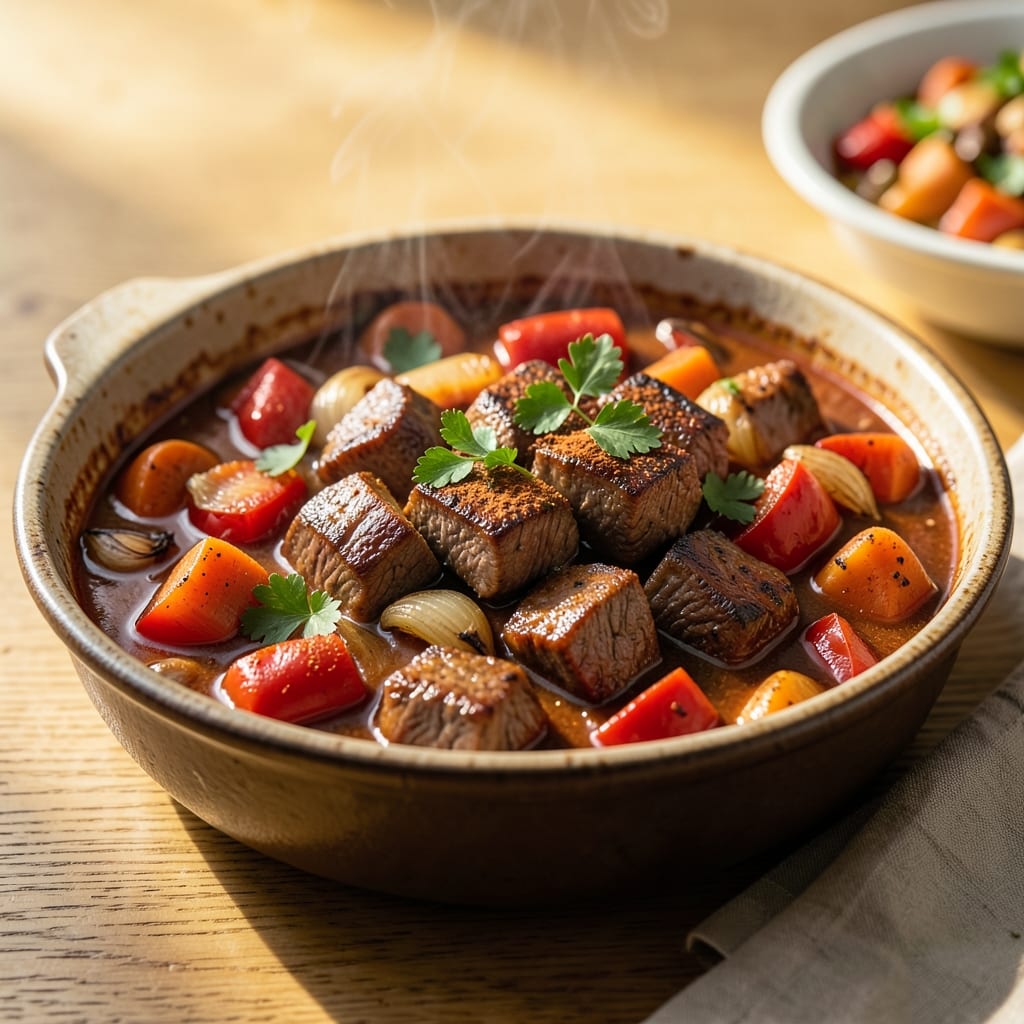
This Bavarian beef goulash delivers the hearty, paprika-rich flavors of traditional German cuisine in one comforting bowl. The secret lies in slow-braising tender beef until it practically melts, then simmering it in a deep, umami-packed sauce infused with sweet and smoky paprika. I've perfected this recipe over years of testing, balancing authentic techniques with home-kitchen practicality—no shortcuts that sacrifice flavor.
The dish begins with searing beef chuck in batches to develop a rich crust, then braising it low and slow until fork-tender. A blend of sweet and hot paprika forms the sauce's soul, while onions, carrots, and a splash of dark beer deepen the flavor profile. The result is a stew that's equally satisfying as a weeknight family meal or a special dinner—just like my grandmother used to make, but with modern efficiency.
What you'll achieve is a steaming bowl of Bavarian beef goulash with perfectly tender beef, caramelized vegetables, and a sauce that's rich yet balanced. The aroma alone will fill your kitchen with warmth, while the first bite delivers that perfect harmony of smoky, sweet, and savory notes. Serve with buttery bread dumplings or crusty bread to soak up every last drop of that flavorful sauce.
For those wanting to elevate it further, consider finishing with a wine reduction or adding fresh herbs at the end. The recipe scales beautifully for gatherings, and leftovers actually taste better the next day. This is comfort food at its finest—authentic, hearty, and impossible to resist.
Ingredients for bavarian beef goulash
Heartier than a stew, richer than a soup—this Bavarian goulash brings German tradition to your table.
| Ingredient | Amount | Notes |
|---|---|---|
| Beef Chuck Roast 🥩 | 3 lb | Cut into 1.5-inch cubes |
| Yellow Onions 🧅 | 2 whole | Medium size, sliced into half-moons |
| Carrots 🥕 | 4 whole | Medium size, peeled and sliced |
| Garlic Cloves 🧄 | 6 cloves | Peeled and minced |
| Sweet Paprika 🌶️ | 2 tbsp | Smoked paprika for depth |
| Hot Paprika 🌶️ | 1 tbsp | Adjust for heat preference |
| Tomato Paste 🍅 | ½ cup | High-quality, no sugar added |
| Dark Beer 🍺 | 1 cup | Dortmunder or Munich Dunkel |
| Beef Broth 💧 | 3 cups | Low-sodium preferred |
| Bay Leaves 🌿 | 2 whole | Fresh for best flavor |
| Thyme 🌿 | 1 tbsp | Fresh leaves or dried |
| Black Peppercorns 🌶️ | 1 tsp | Freshly cracked |
| Salt 🧂 | 1 ½ tsp | Kosher or sea salt |
| Olive Oil 🫒 | 2 tbsp | Extra-virgin preferred |
The beef is non-negotiable here. Chuck roast delivers that melt-in-your-mouth texture—sirloin or ribeye won't cut it. Grab it pre-cubed from the butcher counter to save time, or ask them to do it for you. For the paprika, Penzeys or the bulk spice aisle at Whole Foods have the best varieties. The beer? Dortmunder or Munich Dunkel adds depth—don't use light lagers. If you can't find dark beer, substitute with extra beef broth and a splash of balsamic vinegar.
Tomato paste can be a game-changer or a dealbreaker—San Marzano is worth the splurge. No fresh thyme? Dried works at one-third the amount. The carrots? Baby carrots are fine, but whole medium carrots caramelize better. For the beer, if you're avoiding alcohol, non-alcoholic dark beer or beer broth keeps the flavor. The bay leaves should be fresh if possible—dried work too, but remove them before serving. And that smoked paprika? Don't skip it—it's what makes this Bavarian, not just beef stew.
This stew tastes even better the next day—make a double batch if you can. Store in the fridge for 5-6 days or freeze for 3 months. I like to portion it into containers with a scoop of bread dumplings on top—ready for quick lunches. The sauce thickens as it cools, so add a splash of broth when reheating. For serving, crusty bread or buttery spaetzle soaks up every last drop of that rich, paprika-kissed sauce.
Why You'll Love This Recipe
- One-Pot Magic: I swear by this recipe because it’s one pot—no chopping boards, no extra pans. Just brown the beef, toss in onions and carrots, add the paprika and garlic, and let it slow down. The chuck roast practically melts into tender perfection while you’re doing something else.
- Paprika Powerhouse: Between us, that sweet paprika is the secret weapon. It gives this goulash a rich, smoky depth that’s ridiculously satisfying—like a hug in a bowl. The onions caramelize right in the pot, so you get that sweet, jammy flavor without extra work.
- Leftovers That Win: This dish tastes even better the next day. I make a double batch on Sundays and freeze half—perfect for lazy nights when I just want something hearty. The flavors meld overnight, making it taste like a restaurant meal.
- Budget-Friendly Feast: A chuck roast stretches for days, and the veggies (onions, carrots) are cheap staples. I feed my whole family for under $15, and no one complains. Honestly, it’s the kind of meal that makes grocery bills feel less painful.
Step-by-step instructions for Bavarian beef goulash
This rich stew builds flavor layer by layer—let's create something hearty and deeply aromatic.
Sear the Beef Chuck Roast for Maximum Flavor
Heat the 2 tablespoons olive oil in a large Dutch oven over medium-high heat until shimmering. Working in batches to avoid crowding, add the 3 lb beef chuck roast cut into 1.5-inch cubes and sear for 3-4 minutes per side until deeply browned. This caramelization forms the flavor foundation of your goulash.
I press down gently on each piece during the first minute—this prevents curling and ensures even contact with the pan. Once all pieces are browned, remove them and set aside on a plate. The pan should have a good layer of browned bits (fond) at the bottom—this is pure flavor we'll incorporate later.
Build the Aromatic Base with Onions and Carrots
In the same Dutch oven, add the 2 whole yellow onions sliced into half-moons and the 4 whole carrots sliced into ½-inch rounds. Cook for 8-10 minutes over medium heat, stirring occasionally, until the onions soften and the carrots begin to caramelize at the edges.
Here's the thing—don't rush this step. The onions should turn translucent and the carrots should develop a slight golden color. This slow cooking develops their natural sweetness, which balances the paprika's heat. If the vegetables start sticking, add a splash of beef broth to deglaze and keep them moist.
Add Spices and Tomato Paste for Depth
Stir in the 6 cloves minced garlic cloves, 2 tablespoons sweet paprika, 1 tablespoon hot paprika, and ½ cup tomato paste. Cook for 2 minutes over medium heat, stirring constantly to prevent the paprika from burning. The mixture should smell rich and slightly smoky—this is where the Bavarian character emerges.
Real talk: the paprika combination is crucial. The sweet paprika adds depth while the hot paprika introduces just enough heat to wake up your taste buds. If you're sensitive to spice, you can reduce the hot paprika to ½ tablespoon, but don't skip both—they're what makes this Bavarian.
Deglaze and Simmer with Beer and Broth
Pour in the 1 cup dark beer and scrape up all those browned bits from the bottom of the pan with a wooden spoon. Let it simmer for 3 minutes until the beer reduces by half. Then add the 3 cups beef broth, 2 whole bay leaves, 1 tablespoon thyme, 1 teaspoon cracked black peppercorns, and 1½ teaspoons salt.
Return the browned beef to the pot and bring everything to a gentle boil. Once boiling, reduce heat to low and cover partially. Let it simmer for 2½ to 3 hours until the beef is fork-tender and the sauce has thickened. The longer it simmers, the more the flavors meld together—this isn't a dish you can rush.
Finish and Adjust for Perfect Texture
Remove the bay leaves and check the seasoning. Taste the broth and adjust with more salt or pepper if needed. The goulash should have a rich, slightly thick sauce that coats the back of a spoon. If it's too thin, uncover and simmer for another 15-20 minutes to reduce.
Serve immediately with crusty bread or over buttered egg noodles. The beef should pull apart easily with a fork, and each bite should deliver layers of paprika warmth, beer richness, and caramelized depth. This goulash tastes even better the next day, so make extra—it reheats beautifully.
Pro Tips For Making Bavarian Beef Goulash
- Sear the Chuck Roast First: I used to skip this step and wondered why my goulash tasted more like stew than rich, caramelized comfort food. Heat your pan until it’s smoking hot—then sear the chuck roast on all sides for 3-4 minutes per side. That crust locks in flavor and keeps the meat tender, even after hours of simmering.
- Cut Onions into Even Slices: Thin, uniform onion slices cook faster and soak up the paprika and garlic better than chunky pieces. Aim for ⅛-inch slices—thick ones turn mushy, while paper-thin ones burn before softening. (Yes, even if you’re impatient like me, resist the urge to rush this.)
- Deglaze with Beer After Browning: After searing the meat, don’t just toss in the onions and paprika—let those browned bits (the fond) hit the bottom of the pan first. Add ½ cup of beer (or broth) and scrape vigorously for 30 seconds. This pulls all that flavor into your sauce, not the trash.
- Simmer Low and Slow: Bavarian goulash isn’t a quick weeknight fix—it needs 2.5 to 3 hours on low heat. If you crank the heat, the beef will turn tough and the sauce will break. Cover the pot and let it bubble gently, checking occasionally to add water if it gets too dry. (Your future self will thank you.)
Pro cooking tips for this dish
Beef Searing Secrets
For maximum flavor, sear the beef chuck in batches—never crowd the pan. I use a 12-inch cast-iron Dutch oven (like Lodge) for even heat distribution. Press each piece firmly with tongs during the first 30 seconds to prevent curling. The goal is a deep brown crust on all sides—this creates the fond that forms the goulash's flavor base. 🔥
Paprika Balance
The 2:1 ratio of sweet to hot paprika is non-negotiable for authentic Bavarian flavor. I recommend Penzeys Hungarian Sweet Paprika for depth and Mace Hungarian Hot Paprika for heat. Toast the paprika in the pot for 30 seconds before adding liquids—this blooms the spices and prevents bitterness. Taste before adding hot paprika; you can always increase it later but can't remove it.
Beer Deglazing
Use dark beer (like Dortmunder) for depth—it adds maltiness that complements the paprika. After adding beer, let it reduce by half before adding broth. This concentrates the flavor. For non-alcoholic versions, substitute with 1 cup beef broth + 1 tbsp balsamic vinegar—it mimics the beer's tanginess without alcohol. 🍺
Low-Sim Slow Cook
Simmer uncovered for the first 30 minutes to evaporate excess moisture, then cover partially. The beef needs 2½-3 hours at 300°F to become fork-tender. I use an instant-read thermometer to check doneness—beef should reach 203°F internally. The sauce will thicken naturally as it cooks; if it's too thin, uncover and simmer for 15-20 minutes to reduce.
Fond Rescue
After searing, never pour liquid in immediately—let the fond develop for 2 minutes until it darkens. Then deglaze with beer while scraping vigorously with a wooden spoon to lift all those flavorful bits. This step is what transforms a simple stew into a rich, complex goulash. If your fond sticks, add ½ cup beef broth to loosen it before proceeding.
Herb Timing
Add thyme and bay leaves only after the beer has reduced—this prevents them from becoming bitter. Remove the bay leaves before serving (they can be sharp). For fresh thyme, use 1 tbsp; for dried, reduce to 1 tsp. A pinch of freshly cracked black pepper right before serving adds brightness that dried pepper can't match. ✨
Nutrition facts
Frequently asked questions
Can I substitute regular beef broth for the dark beer?
You can, but the flavor will be less complex. For the best results, use 1 cup beef broth + 1 tablespoon balsamic vinegar to mimic the beer's maltiness and tang. If you must skip the beer entirely, add an extra ½ teaspoon smoked paprika to compensate for the missing depth. The beer is key to authentic Bavarian flavor, though!
How do I know when the beef is tender enough?
Use a fork or meat thermometer to test doneness. The beef should be fork-tender after 2½-3 hours of simmering. For precise results, check the internal temperature—it should reach 203°F (or 195°F for extra tenderness). If it's still tough, simmer uncovered for another 30 minutes to break down the fibers further.
Can I make this goulash in a slow cooker? Sear the beef first in a skillet, then transfer everything to the slow cooker. Cook on low for 6-7 hours or high for 4 hours. The slow cooker's gentle heat will tenderize the beef beautifully. Just
What's the best way to store leftovers?
Store in an airtight container in the fridge for 5-6 days or freeze for 3 months. The flavors actually improve after resting! When reheating, add a splash of beef broth to loosen the sauce. For best texture, reheat on low heat until warmed through—never microwave directly from frozen.
Why does my goulash taste too spicy?
Adjust the heat by adding more sweet paprika or a pinch of sugar to balance the hot paprika. If the spice is overwhelming, stir in 1 tablespoon tomato paste or a splash of beef broth to dilute the heat. Remember, you can always add more sweet paprika later, but you can't remove the hot variety once it's in the pot.