
Main Courses
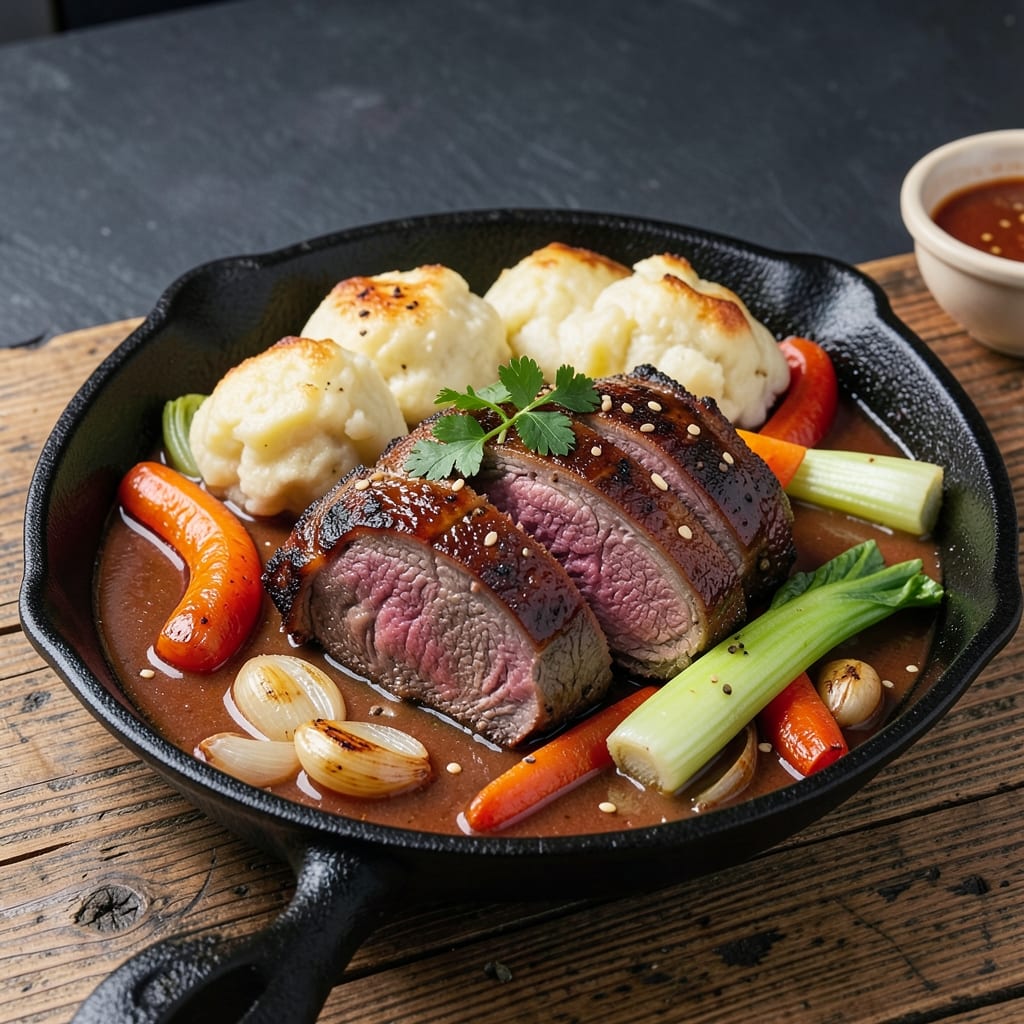
This Baltimore sour beef and dumplings recipe delivers the kind of soul-satisfying comfort that only slow cooking and vinegar-rich tradition can create. This dish, born in Baltimore’s working-class kitchens, transforms tough beef into tender, tangy perfection with a sauce that’s equal parts savory and bright. The secret lies in the balance of vinegar and spices, simmered low and slow until the flavors meld into something deeply comforting.
The star of the show isn’t just the beef—it’s the herbed potato dumplings that transform this dish from hearty to extraordinary. Made with just flour, potatoes, and fresh herbs, these dumplings absorb the rich, tangy sauce as they cook, creating bites that are fluffy, flavorful, and impossible to resist. What makes this recipe special is how the dumplings finish cooking right in the pot, soaking up every last drop of that velvety, vinegar-kissed sauce.
What you’ll end up with is a steaming bowl of slow-simmered beef, tender enough to melt in your mouth, swimming in a sauce that’s rich yet tangy, with dumplings that are light and herby. This isn’t just a meal—it’s a taste of Baltimore’s culinary history, brought to life in your own kitchen. The aroma alone will have everyone gathering around the table, and the first bite will have them asking for seconds.
Perfect for family dinners, potlucks, or when you need a dish that feels like a hug in a bowl, this recipe delivers restaurant-quality results with just a few simple ingredients and a little patience. The key is letting the flavors develop over time, so don’t rush it—this is the kind of dish that gets better with the wait.
Ingredients for baltimore sour beef and dumplings
Pantry staples meet Baltimore tradition in this soul-warming beef and dumpling feast.
| Ingredient | Amount | Notes |
|---|---|---|
| Chuck Roast 🥩 | 3 lb | Tough cut for slow cooking |
| Yellow Onions 🧅 | 2 whole | Medium-sized, chopped |
| Carrots 🥕 | 3 whole | Medium-sized, sliced |
| Celery Stalks 🌿 | 3 whole | Medium, chopped |
| Garlic Cloves 🧄 | 4 cloves | Freshly minced |
| White Vinegar 💧 | ½ cup | White or apple cider |
| Beef Broth 🍲 | 4 cups | Low-sodium preferred |
| All-Purpose Flour 🌾 | 1 ½ cups | For dumplings |
| Russet Potatoes 🥔 | 2 lb | Peeled, grated |
| Fresh Parsley 🌿 | ¼ cup | Chopped, for dumplings |
| Salt 🧂 | 1 ½ tsp | Kosher or sea salt |
| Black Pepper 🌶️ | ½ tsp | Freshly ground |
| Ground Allspice 🌶️ | ½ tsp | Key spice for Baltimore flavor |
| Ground Cloves 🌿 | ¼ tsp | For depth of flavor |
| Butter 🧈 | 2 tbsp | Unsalted, for dumplings |
The chuck roast is non-negotiable here—its toughness transforms into tender perfection with slow cooking. Costco or local butchers often have the best prices for this cut, and it's worth seeking out. Look for good marbling to ensure flavor. If you can't find chuck, short ribs work in a pinch, but the texture will differ slightly. For the vegetables, Trader Joe's has pre-chopped mirepoix mixes that save time, but fresh is always better. The vinegar should be white or apple cider—avoid balsamic or wine vinegars, which can overpower the delicate balance of flavors in this dish.
No white vinegar? Apple cider vinegar or even lemon juice will work, though the flavor profile shifts slightly. Short on beef broth? Water plus a bouillon cube gets you close, but the depth of flavor suffers. For the dumplings, Russet potatoes are essential—their starch content creates that signature fluffy texture. If you can't find fresh parsley, dried parsley at half the amount works, though it lacks the fresh brightness. The allspice and cloves are critical for that authentic Baltimore tang—don't skip them, even if you're not familiar with the flavors. They're what makes this dish special.
This dish tastes even better the next day as flavors meld. Store leftovers in the fridge for 4-5 days, or freeze portions for up to 3 months. I like to portion it into individual containers so I can reheat just what I need. The dumplings will absorb more sauce when reheated, so add a splash of broth or water if they seem dry. For serving, a sprinkle of fresh parsley on top adds that final touch of freshness that makes this dish feel restaurant-quality.
Why You'll Love This Recipe
- One-Pot Magic: I swear by this—dump everything in one pot, walk away, and come back to rich, tangy beef that practically melts in your mouth. The chuck roast gets fork-tender while the onions and carrots caramelize right in the same liquid, so no extra pans or fuss.
- Tangy, Herby Bomb: That vinegar and mustard combo? Chef’s kiss. It cuts through the richness of the beef while the garlic and thyme add warmth—like a hug in a bowl. My picky-eater husband actually licks his plate clean (and he’s not a licker).
- Leftovers That Don’t Suck: Honestly, this dish begs for seconds, but even better? It reheats like a dream. The dumplings stay soft, the gravy thickens just enough, and the sour kick stays sharp—no sad, dry leftovers here.
- Budget Feast for Crowds: A single chuck roast feeds six, and the veggies stretch the flavor without breaking the bank. I’ve made this for game nights, lazy Sundays, and even a last-minute dinner when my in-laws showed up unannounced. (Yes, even on a Tuesday night.)
Step-by-step instructions for Baltimore sour beef and dumplings
This traditional dish builds rich, tangy flavors through slow cooking and simple yet essential techniques.
Brown the Chuck Roast and Prepare the Vegetables
Heat a large Dutch oven over medium-high heat. Pat the 3 lb chuck roast dry with paper towels and season generously with 1.5 tsp salt, 0.5 tsp black pepper, 0.5 tsp ground allspice, and 0.25 tsp ground cloves. Sear the roast on all sides until deeply browned, about 5-6 minutes total. This step develops the deep, meaty flavor that forms the base of the dish.
While the roast browns, chop the 2 whole yellow onions into ½-inch dice, slice the 3 whole carrots into ¼-inch rounds, and chop the 3 whole celery stalks into ¼-inch pieces. Minced the 4 cloves garlic finely. Set these aside—they'll join the pot shortly after the roast is browned.
Build the Flavor Base
Remove the roast from the Dutch oven and set it aside. In the same pot, add 2 tablespoons butter and cook the onions, carrots, and celery over medium heat for 8-10 minutes, stirring occasionally, until softened and slightly caramelized. Add the garlic and cook for 30 seconds more until fragrant—this releases the aromatic compounds that will infuse the entire dish.
Return the roast to the pot and pour in 4 cups beef broth and 0.5 cup white vinegar. The vinegar will add that signature tangy brightness that defines Baltimore sour. Bring the mixture to a simmer, then cover and reduce heat to low. This is where patience pays off—let the roast cook undisturbed for 2 hours, allowing the meat to become fork-tender and the flavors to meld.
Prepare the Potato Dumplings
While the beef cooks, peel and grate the 2 lb russet potatoes using a box grater or food processor. Place the grated potatoes in a clean kitchen towel and squeeze out all excess moisture—this ensures your dumplings will be light and fluffy, not dense. Transfer the potatoes to a large bowl and mix in 1.5 cups all-purpose flour, 0.25 cup chopped fresh parsley, 0.5 tsp salt, and 0.25 tsp black pepper.
Real talk: don't skip squeezing out the moisture. I've learned the hard way that soggy dumplings ruin the texture. Once mixed, let the dumpling dough rest for 10 minutes—this allows the flour to fully absorb the potato moisture, creating a cohesive dough that holds together when dropped into the broth.
Drop and Simmer the Dumplings
After the beef has cooked for 2 hours, check for tenderness by inserting a fork into the thickest part of the roast. If it slides in easily, the meat is ready. Remove the roast from the pot and set it aside to rest. The internal temperature should read 195-205°F—this is the perfect range for pull-apart tenderness.
Bring the cooking liquid to a gentle simmer over medium heat. Using a tablespoon, drop spoonfuls of the dumpling dough into the simmering broth, spacing them about 1 inch apart. Cover the pot and let the dumplings cook for 15-20 minutes without lifting the lid. They're done when they've puffed up and turned a creamy golden color—this indicates they're fully cooked through.
Finish and Serve
Once the dumplings are golden and the broth has thickened slightly, return the roast to the pot and let it warm through for 5 minutes. The roast should be fork-tender enough to pull apart easily. Using two forks, shred the meat directly in the pot, allowing the rich beef juices to coat every strand.
Taste the sauce and adjust seasoning if needed—you might want to add a pinch more salt or a splash of vinegar to brighten the flavors. Ladle the beef, dumplings, and broth into bowls, serving each portion with a generous helping of the creamy potato dumplings. The dumplings should be light and fluffy, absorbing the rich beef broth while maintaining their shape. Serve immediately while hot, as the flavors continue to develop as they sit.
Pro Tips For Making Baltimore Sour Beef And Dumplings
- Sear the Chuck Hard: The roast needs that deep, caramelized crust to hold up through the long cook. Use a heavy pot—cast iron or Dutch oven—and don’t move it for at least 4 minutes per side. I learned this the hard way when my first batch turned out bland because I kept stirring to "check doneness."
- Chop Celery Small: Those thick celery stalks won’t soften properly in the slow simmer. Dice them into ¼-inch pieces—same as the onions and carrots—so they break down evenly. Skimp here, and you’ll end up with crunchy bits in an otherwise tender stew.
- Don’t Rush the Sour: The vinegar or buttermilk (depending on your recipe) needs time to mellow. After adding it, let the pot sit off the heat for 5 minutes before simmering. I used to skip this and ended up with a sharp, unfinished taste that ruined the whole dish.
- Use a Meat Thermometer: Pull the chuck when it hits 195°F—yes, it’ll seem dry at first, but it’ll absorb the broth as it rests. Guessing leads to either tough meat or a mushy mess. (Your future self will thank you for not eyeballing it.)
Troubleshooting great baltimore sour beef and dumplings
Dumplings Too Dense
If your dumplings turn out dense instead of fluffy, you likely didn’t remove enough moisture from the grated potatoes. After grating 2 lb russet potatoes, wrap them in a clean kitchen towel and squeeze vigorously for 30-60 seconds—this step is non-negotiable. For extra insurance, I sometimes press the potatoes through a fine-mesh strainer to extract even more liquid. Also, ensure your dough rests for 10 minutes before dropping into the broth, as this allows the flour to fully hydrate and create a lighter texture. 🥔
Beef Not Tender Enough
The most common reason for tough beef is rushing the cooking time. Chuck roast needs 2-2.5 hours at low heat (275-300°F) to break down properly. If your 3 lb roast isn’t fork-tender after 2 hours, extend the time by 30-minute increments until it reaches 195-205°F internal temperature. Pro tip: I use a meat thermometer to avoid guessing—this is the only reliable way to ensure perfect doneness.
Sauce Too Thin or Watery
A watery sauce usually means the broth wasn’t reduced enough during the beef’s cooking time. After the initial 2-hour simmer, uncover the pot and let the liquid reduce over medium-low heat for an additional 15-20 minutes before adding dumplings. If the sauce is still too thin after cooking, remove the roast and reduce the broth alone until it thickens to a gravy-like consistency. For extra richness, I sometimes add 1 tablespoon cornstarch mixed with 2 tablespoons cold water as a slurry, stirring it in during the final 5 minutes of cooking. 🍲
Dumplings Sink Instead of Float
Dumplings that sink are typically undercooked or too dense. First, verify your broth is at a gentle simmer—not a rolling boil—before dropping in the dough. If they still sink, they need more time: cover the pot and cook for an additional 5-10 minutes. For a foolproof method, I like to test one dumpling first—if it floats within 3-5 minutes, the rest will follow. Also, ensure your dough isn’t packed too tightly when forming spoonfuls; a slightly loose consistency helps them puff properly.
Vinegar Flavor Too Overpowering
If the 0.5 cup white vinegar dominates the dish, balance it by adding 1-2 tablespoons of tomato paste or 1 teaspoon of brown sugar to the pot during the final 30 minutes of beef cooking. The acidity in the vinegar needs sweetness or umami to mellow its sharpness. For a more subtle tang, you can also reduce the vinegar to 0.375 cup next time and add 1 tablespoon of lemon juice for brightness instead.
Broth Burns or Sticks
Burnt broth is usually caused by insufficient liquid or high heat. Always ensure your Dutch oven has enough liquid to cover the roast by at least 1 inch—if it looks too shallow, add ½ cup more beef broth. Also, avoid scraping the bottom of the pot; instead, stir gently to lift any browned bits. For stubborn stuck-on residue, add 1 cup water and simmer for 5 minutes before proceeding. A well-seasoned Dutch oven helps, but if yours is new, consider preheating it empty for 5 minutes before adding oil to create a better nonstick surface. 🔥
Nutrition facts
Frequently asked questions
Why does Baltimore sour beef use vinegar?
The vinegar is what gives this dish its signature tangy brightness that cuts through the richness of the beef. Traditionally, white vinegar was used because it's strong enough to tenderize the meat while adding that distinctive sour flavor. The acidity also helps preserve the meat during the long cooking process, which was especially important in Baltimore's hot summers.
Can I make this dish in a slow cooker? For a slow cooker version, brown the roast first, then transfer everything to your slow cooker and cook on low for 7-8 hours or high for 4-5 hours. The dumplings can be added during the last 30 minutes of cooking. Just
What's the difference between Baltimore sour beef and other beef and dumpling dishes?
The key difference is the vinegar-based sauce and the specific spice blend. Baltimore sour beef uses allspice and cloves for warmth, while other regional versions might use more pepper or mustard. The dumplings here are also made with grated potatoes for extra fluffiness, rather than traditional biscuit-style dumplings you might find in other Southern recipes.
How do I know when the dumplings are done?
Perfect dumplings should float to the surface and turn a creamy golden color, about 15-20 minutes after being dropped in. If they're still pale inside when you cut one open, cover the pot and cook for another 5 minutes. They're done when they're light and fluffy—not dense or doughy—and have absorbed some of the rich beef broth.
Can I make this dish ahead of time?
This dish actually tastes even better the next day as the flavors meld! Store leftovers in the fridge for up to 4-5 days or freeze portions for 3 months. When reheating, add a splash of beef broth or water to prevent the sauce from becoming too thick. The dumplings will absorb more liquid when reheated, so they'll be extra tender and flavorful.