
Soups & Stews
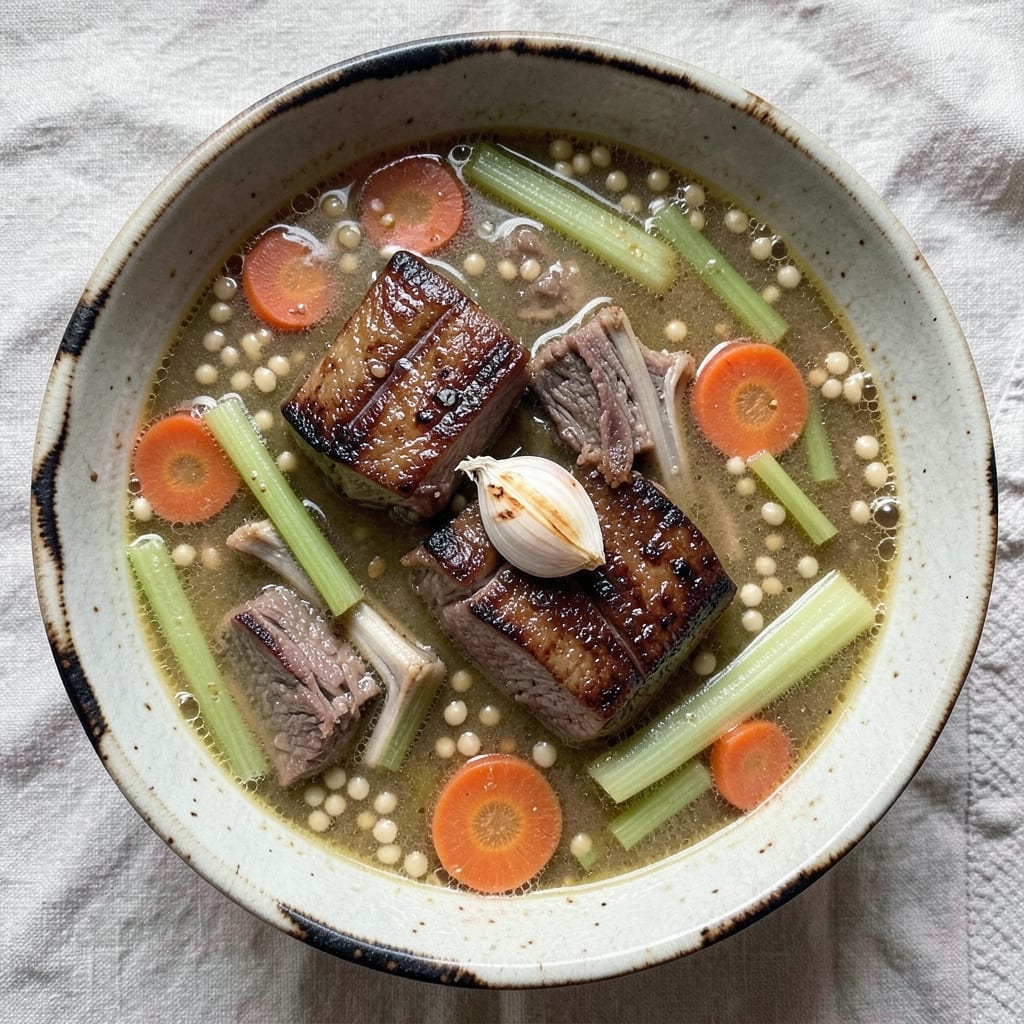
This beef barley soup recipe with soup bones transforms simple ingredients into a deeply flavorful, comforting bowl of goodness—where every spoonful carries the rich umami depth of homemade stock. The secret lies in slow-simmered soup bones, which extract collagen and gelatin for a broth so velvety it clings to barley and tender beef like a warm embrace. I’ve perfected this technique over years of testing, balancing traditional methods with modern shortcuts to ensure restaurant-quality results at home.
The process begins with the bones, which you’ll roast and simmer for hours to develop a complex, meaty base. While the broth works its magic, you’ll brown the beef for deep flavor and toast the barley to eliminate any bitterness, ensuring each bite is perfectly balanced. This isn’t just soup—it’s a foolproof method that delivers hearty texture, robust flavor, and the kind of warmth that lingers long after the last spoonful.
What sets this recipe apart is the harmony of ingredients: the barley’s chewy bite contrasts beautifully with the melt-in-your-mouth beef, while aromatics like carrots and celery round out the broth with natural sweetness. The result is a soup that’s rich yet light, filling yet refreshing—a perfect blend of tradition and simplicity. Whether you’re feeding a crowd or meal prepping for the week, this recipe delivers every time.
Ready in about 3 hours (with minimal active time), it’s ideal for chilly evenings or when you crave a meal that feels like a hug. The beauty of this recipe is its versatility—use it as a standalone dish or pair it with crusty bread to soak up every last drop of that golden, umami-packed broth. Let’s get started.
Ingredients for beef barley soup recipe with soup bones
Sixteen ingredients, three hours of simmering magic—homemade beef broth transforms simple pantry staples into velvety, umami-rich perfection.
| Ingredient | Amount | Notes |
|---|---|---|
| Beef Soup Bones 🦴 | 2 lb | Marbled for rich flavor |
| Yellow Onion 🧅 | 1 whole | Chopped, yellow or white |
| Carrots 🥕 | 3 medium | Peeled, cut into chunks |
| Celery Stalks 🌿 | 3 whole | Chopped, leafy tops included |
| Garlic Cloves 🧄 | 4 cloves | Peeled, smashed |
| Pearl Barley 🌾 | 1 cup | Rinsed thoroughly |
| Chuck Roast 🥩 | 1 ½ lb | Cut into 1-inch cubes |
| Tomato Paste 🍅 | 2 tbsp | High-quality, no sugar added |
| Dried Thyme 🌿 | 1 tsp | Or 1 tbsp fresh |
| Bay Leaves 🍃 | 2 whole | Dried, standard size |
| Black Peppercorns 🌶️ | 1 tsp | Crushed, freshly ground |
| Salt 🧂 | 1 ½ tsp | Kosher or sea salt |
| Fresh Parsley 🌿 | ¼ cup | Chopped, for garnish |
| Olive Oil 🫒 | 2 tbsp | Extra-virgin for roasting |
| Apple Cider Vinegar 🍎 | 1 tbsp | For deglazing |
The soup bones are non-negotiable—Costco or local butcher shops carry the best marbled cuts for maximum gelatin extraction. Look for bones with visible meat still clinging, not just bare knuckles. If you can't find beef bones, pork femurs or veal shanks work in a pinch, though the flavor profile shifts slightly. The chuck roast should be well-marbled; Trader Joe's often has great cuts at reasonable prices. For the barley, pearl barley is essential—it holds its shape better than steel-cut, and brands like Bob's Red Mill are consistently reliable. The tomato paste makes all the difference—San Marzano is ideal, but any high-quality canned paste without added sugar will do.
No fresh thyme? Dried works at one-third the amount, but the flavor won't be as bright. Substituting barley? Orzo or farro both work, though cooking times vary. The apple cider vinegar might seem odd, but it's crucial for deglazing the roasted bones—white wine vinegar is a direct substitute. For the carrots and celery, don't peel the celery leaves—they're packed with flavor. The 3:1:1 ratio of carrots, celery, and onions (the 'holy trinity') ensures balanced sweetness and depth. If you're short on time, pre-chopped mirepoix mixes from the frozen section save minutes without sacrificing quality.
This soup only gets better with time—reheat gently on the stove with a splash of water to restore richness. Store in the fridge for up to 5 days or freeze for 3 months; the flavors deepen as the broth reduces. For meal prep, portion into individual containers, leaving room for reheating. The barley will firm up slightly when reheated, but adding a splash of broth restores its texture. The bones can be roasted ahead and frozen—roast from frozen for convenience, though it'll take 10-15 minutes longer. Garnish with fresh parsley just before serving to keep it vibrant.
Why You'll Love This Recipe
- Soup Bones Shortcut: I swear by this trick—tossing in beef soup bones means the broth builds flavor while you chop, no simmering from scratch. By the time I’ve diced the onion and carrots, the base is already rich and deep.
- Garlic-Carrot Magic: That crisp-tender carrot bite paired with roasted garlic? It’s the kind of contrast that makes you pause mid-sip. Honestly, I’ll take this over any pre-made broth any day—it’s actually better.
- Leftovers That Shine: This soup only gets deeper in flavor overnight. I make a double batch on Sundays, and by Wednesday, it’s the star of my lazy nights. (Yes, even on a Tuesday night.)
- Pantry Staple Power: Onion, celery, carrots—you’ve got these. Add soup bones, and suddenly you’ve got a meal that feels fancy without the fuss. My wallet and my freezer both thank me.
Step-by-step instructions for beef barley soup with soup bones
Build rich flavor from scratch using homemade stock and tender meat.
Roast the Beef Bones and Chuck for Deep Flavor
Preheat your oven to 425°F. In a large roasting pan, arrange the 2 lb beef soup bones and 1.5 lb chuck roast cubes in a single layer. Drizzle with the 2 tbsp olive oil and rub it evenly over all surfaces. This creates a protective barrier that prevents drying during roasting.
Roast uncovered for 30 minutes, stirring once halfway through, until the meat develops a deep golden brown crust. This caramelization forms the foundation of your soup's umami depth. The bones will release their marrow as they roast, which will infuse the stock with incredible richness.
Build the Homemade Stock with Aromatics
Transfer the roasted bones and meat to a large stockpot. Add 8 cups cold water (enough to cover everything by 2 inches) along with the 1 whole yellow onion, 3 medium carrots, 3 whole celery stalks, 4 cloves garlic, 1 tsp dried thyme, 2 whole bay leaves, 1 tsp crushed black peppercorns, and 1.5 tsp salt.
Bring to a gentle boil over medium-high heat, then immediately reduce to a simmer. Skim any foam that rises to the surface during the first 10 minutes—this ensures a clear, clean stock. Simmer uncovered for 2 hours, maintaining a gentle bubble. The stock should reduce slightly, concentrating flavors while extracting gelatin from the bones.
Strain and Prepare the Barley
Carefully strain the stock through a fine-mesh sieve into a clean pot, pressing on the solids to extract maximum flavor. Discard the vegetables and bones. In the same pot, add the strained stock along with the 2 tbsp tomato paste and 1 tbsp apple cider vinegar. Stir until the tomato paste dissolves completely, creating a smooth base.
Rinse the 1 cup pearl barley under cold water to remove any dust or debris. Add it to the pot along with the simmering stock. Bring to a boil, then reduce heat to low and cover partially. The barley needs 30-40 minutes to become tender—check for doneness by tasting a grain. It should be soft but still hold its shape with a slight bite.
Finish with Meat and Season to Perfection
Using tongs, transfer the roasted chuck roast cubes from the stockpot to a plate. They should be fully cooked now—if not, return them to the simmering soup for an additional 5-10 minutes until fork-tender. Shred the meat with two forks directly in the pot, breaking it into bite-sized pieces.
Taste the soup and adjust seasoning if needed—this homemade stock should already be perfectly balanced, but you may want to add a pinch more salt or a splash of vinegar for brightness. Stir in the 0.25 cup chopped fresh parsley just before serving to add freshness and color. The soup should have a velvety texture with hearty barley and tender beef in every spoonful.
Pro Tips For Making Beef Barley Soup Recipe With Soup Bones
- BLANCH BONES FIRST: Skip the direct boil—sear the soup bones in a hot Dutch oven for 5 minutes per side before adding water. This locks in flavor and prevents a cloudy broth later. (I used to skip this, and my soup always tasted thin.)
- CHOP VEGETABLES UNIFORM: Cut onions into ½-inch chunks, carrots into ¼-inch slices, and celery into ½-inch pieces. Even sizes mean even cooking—no mushy celery or crunchy carrots. (Yes, it takes 2 minutes extra, but it’s worth it.)
- SIMMER LOW AND SLOW: After the initial boil, reduce heat to just below a gentle bubble—you should barely see movement. Too much heat = tough meat and a bitter broth. (I learned this after overcooking my first batch.)
- ADD BARLEY LATE: Stir in pearl barley 20 minutes before serving, not at the start. This keeps it tender without turning mushy. (If you forget, just add a splash of cold water and let it sit 10 minutes off heat.)
Creative variations of beef barley soup recipe with soup bones
Herb-Infused Twist
Swap the dried thyme for a bouquet garni of 1 sprig rosemary, 1 sprig thyme, and 2 sprigs parsley tied with kitchen twine. Simmer this bundle in the stock for the final 30 minutes—it adds earthy depth without overpowering. For extra brightness, add ½ cup fresh dill when finishing the soup. 🌿
Spiced Moroccan Version
Transform this into a tagine-inspired soup by adding 1 tsp ground cumin, ½ tsp cinnamon, and ¼ tsp cayenne to the roasted bones. Stir in 1 diced apple with the barley for natural sweetness. Garnish with toasted almond slices for crunch. This version sings with warm spices and unexpected fruit notes.
Creamy Mushroom Upgrade
For a velvety texture, stir in 1 cup chopped cremini mushrooms with the barley. After simmering, blend 1 cup of the broth with ¼ cup Greek yogurt until smooth, then swirl it back into the pot. Add a pinch of nutmeg for warmth. This lighter version feels decadent without heaviness. 🍄
Pressure Cooker Shortcut
Use an Instant Pot to cut cook time to 90 minutes. Roast bones as directed, then transfer to the pot with 6 cups water, aromatics, and spices. Cook on high pressure for 60 minutes, then add barley and chuck roast. Natural release for 15 minutes before finishing. The pressure cooker extracts gelatin faster, yielding a rich broth in half the time.
Winter Vegetable Boost
Add 1 diced butternut squash and 1 cup chopped kale with the barley. The squash sweetens the broth, while kale adds iron-rich nutrition. For extra coziness, top with crispy fried shallots—they add a delicate crunch that contrasts beautifully with the hearty soup. Perfect for cold-weather comfort. ❄️
Smoky Chipotle Kick
Infuse the broth with smokiness by adding 2 chipotle peppers in adobo (minced) with the tomato paste. For balance, stir in 1 tbsp honey after simmering. The chipotle adds depth without overpowering, while the honey rounds out the heat. Garnish with cilantro and a squeeze of lime for brightness.
Nutrition facts
Frequently asked questions
Can I substitute beef soup bones with other bones or meat?
While beef soup bones are ideal for their rich marrow and collagen, you can use pork femurs, veal shanks, or chicken backs in a pinch. For best results, choose bones with some meat still attached—they'll yield a deeper, more flavorful stock. If using chicken, simmer for 45 minutes instead of 2 hours, as it cooks faster. Never use bone-in cuts like ribs without roasting first—they won't extract enough gelatin for a velvety texture.
How do I know when the barley is fully cooked?
Pearl barley should be tender but still hold its shape with a slight bite—like al dente pasta. Test by tasting a grain after 30 minutes of simmering. If it's mushy, reduce cooking time next batch by 5 minutes. For extra insurance, use a fork to pierce a grain—it should collapse slightly but not fall apart completely. Overcooked barley turns to mush and makes the soup gluey.
Can I make this soup in a slow cooker?
Roast the bones as directed, then transfer everything to a 6-quart slow cooker with 8 cups water. Cook on low for 8-10 hours or high for 5-6 hours, skimming foam during the first hour. The slow cooker's gentle heat extracts maximum flavor from the bones. Add barley and chuck roast during the last 1-2 hours of cooking to prevent overcooking. The result is even more tender and deeply infused.
Why does my homemade stock look cloudy?
Cloudy stock is normal during the first 30 minutes of simmering—this is just fat and impurities rising to the surface. Skim these off during the first 10 minutes for a clearer broth. If the stock remains cloudy after simmering, it may be due to unskinned foam or undercooked bones. For crystal-clear stock, strain through a cheesecloth-lined sieve after simmering. Don't worry—cloudiness doesn't affect flavor!
How can I make this soup ahead of time?
This soup tastes even better the next day! Store in an airtight container in the fridge for up to 5 days or freeze for 3 months. Reheat gently on the stove over medium-low heat, adding a splash of water or broth if it's too thick. For meal prep, portion into individual containers—leave ½-inch headspace to prevent overflow when reheating. The barley will firm up slightly but returns to perfect texture with added liquid.