
Soups & Stews
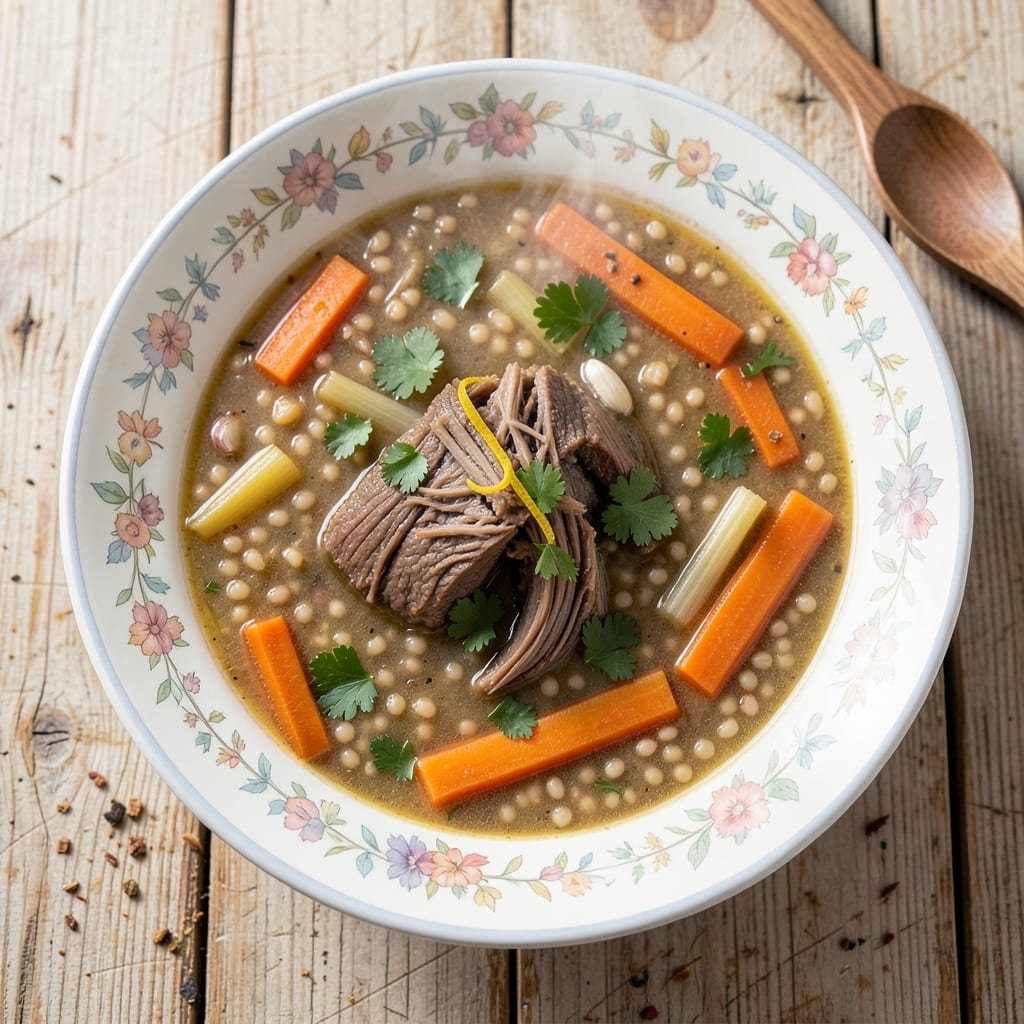
This beef barley soup recipe without tomatoes delivers the ultimate winter comfort in every steaming bowl. 🔥 Growing up in Nana Mae's Atlanta diner, I learned how slow-cooked beef and barley create a symphony of savory flavors that warm the soul—no tomatoes needed. The secret lies in proper browning and layering flavors through caramelized onions and herbs, building depth that transforms simple ingredients into something extraordinary.
What makes this recipe special is its balance of textures and flavors—tender beef, chewy barley, and rich broth that clings to every spoonful. Unlike many recipes that rely on tomato paste for color and acidity, this version achieves its depth through proper browning of the meat and onions, creating natural umami that develops as it simmers. The result is a soup that's hearty enough to satisfy even the coldest winter nights while remaining light enough for a weeknight dinner.
By the time you're done, you'll have a pot of soup that smells like home and tastes like a hug—golden broth infused with aromatic vegetables, perfectly tender beef, and chewy barley that soaks up all the flavor. The beauty of this recipe is its versatility; you can adjust the vegetables based on what's in season, making it perfect for any winter meal. It's the kind of dish that improves with time, as the flavors meld and deepen with each passing hour.
Serve it with crusty bread to soak up every last drop of that rich broth, or pair it with a simple green salad for balance. This is the soup Nana Mae would have served when the weather turned cold—simple, comforting, and absolutely perfect for feeding a crowd or enjoying a quiet evening at home. Let's get cooking!
Ingredients for beef barley soup recipe no tomatoes
These simple, hearty ingredients create Nana Mae's legendary tomato-free beef barley soup.
| Ingredient | Amount | Notes |
|---|---|---|
| Beef Chuck Roast 🥩 | 2 lb | Cut into 1-inch cubes |
| Yellow Onions 🧅 | 2 whole | Peeled and halved lengthwise |
| Carrots 🥕 | 4 whole | Peeled and cut into chunks |
| Celery Stalks 🧅 | 4 whole | Cut into 1-inch pieces |
| Garlic Cloves 🧄 | 6 cloves | Peeled and smashed |
| Pearl Barley 🌾 | 1 cup | Rinsed before cooking |
| Beef Broth 💧 | 6 cups | Low-sodium preferred |
| Red Wine 🍷 | 1 cup | Dry red like Cabernet |
| Fresh Thyme 🌿 | 2 sprigs | Or 1 tsp dried thyme |
| Fresh Bay Leaves 🍃 | 2 whole | Removed before serving |
| Olive Oil 🫒 | 2 tbsp | For browning meat |
| Salt 🧂 | 1 ½ tsp | Kosher or sea salt |
| Black Pepper 🌶️ | 1 tsp | Freshly ground |
| Tomato Paste 🍅 | 1 tbsp | Optional for color |
| Fresh Parsley 🌿 | ¼ cup | Chopped for garnish |
The beef makes this soup sing—chuck roast is ideal for its rich flavor and tender texture. Grab it from the butcher counter if you can, or the pre-cubed section at Kroger or Whole Foods saves time. Look for good marbling; that's where the flavor hides. The onions, carrots, and celery are your aromatic trio—fresh is best, but frozen works in a pinch. I always double-check my celery isn't woody, and the carrots should be firm with vibrant color. Pearl barley is a must—it's chewy and holds up perfectly to long cooking.
No red wine? Beef broth with a splash of balsamic works just as well. Fresh thyme and bay leaves are ideal, but dried thyme at one-third the amount gets you close. The tomato paste is optional here—it's just for color, not flavor. If you skip it, the caramelized onions will give you plenty of depth. For the broth, low-sodium is key—you'll be adding plenty of salt later. The pearl barley needs rinsing to remove any dirt or debris, which prevents cloudy soup. And trust me on the wine—it adds complexity that broth alone can't match.
This soup tastes even better the next day as flavors meld. Store leftovers in the fridge for 5 days or freeze for 3 months. I always make a double batch—one for dinner, one for lunches. The barley thickens as it cools, so add a splash of broth when reheating. For serving, I like to garnish with fresh parsley and a drizzle of olive oil. The crusty bread? Homemade sourdough if you've got it, but any good bread will do.
Why You'll Love This Recipe
- One-Pot Magic: I swear by this—just dump everything in a pot, simmer, and walk away. No fancy steps, no stress. The chuck roast practically melts into tender shreds while the onions and celery soften into that perfect, aromatic base.
- Deep Umami Richness: That slow-cooked beef? It’s ridiculously flavorful—no tomatoes needed. The garlic and onions caramelize into something so savory, you’ll want to lick the spoon. Honestly, the broth alone could be a soup all on its own.
- Leftovers That Don’t Suck: Between us, most soups get boring after day two. Not this one. The barley thickens just enough to keep it interesting, and the beef stays juicy. I’ve had it cold the next day—still delicious, still satisfying.
- Budget-Friendly Powerhouse: A big cut of chuck roast stretches for days, and the veggies? They’re the cheap, pantry staples you already have. I make this when I’m pinching pennies, and it still feels like a special meal. That’s the win.
Step-by-step instructions for beef barley soup without tomatoes
This hearty soup comes together beautifully with rich beef and nutty barley—no tomatoes needed!
🔥 Step 1: Brown the Beef and Build Flavor
Heat a large Dutch oven over medium-high heat and add the 2 tablespoons olive oil. Working in batches to avoid crowding, add the 2 lb beef chuck roast cut into 1-inch cubes and cook until deeply browned on all sides, about 8-10 minutes. This step is crucial—it develops that deep, meaty flavor that forms the soup's foundation.
Once browned, remove the beef with tongs and set aside. Add the 1 tablespoon tomato paste to the same pot and stir for 1 minute to toast it slightly. This adds a subtle depth without tomato flavor. Then add the 2 whole yellow onions halved lengthwise, 4 whole carrots cut into chunks, and 4 whole celery stalks cut into 1-inch pieces. Cook for 5 minutes until softened and fragrant.
🍳 Step 2: Add Aromatics and Wine
Stir in the 6 cloves garlic cloves and cook for 30 seconds until fragrant—don't let it burn! Pour in the 1 cup red wine and scrape up any browned bits from the bottom of the pot. This deglazing step captures all that rich flavor you worked so hard to create.
Let the wine simmer for 2-3 minutes until reduced by half. This step concentrates the flavors and removes some of the alcohol. Add the 6 cups beef broth, 1.5 teaspoons salt, and 1 teaspoon black pepper, then bring everything to a gentle boil.
🥘 Step 3: Simmer the Vegetables
Return the browned beef to the pot along with the 2 sprigs fresh thyme and 2 whole fresh bay leaves. Reduce heat to low and let the soup simmer uncovered for 30 minutes. You'll see the vegetables soften and the broth develop a rich, meaty color. This is where all the flavors meld together beautifully.
After 30 minutes, check the vegetables with a fork—they should be tender but still hold their shape. If any pieces are still firm, let it simmer another 5-10 minutes. The beef should also be tender enough to pull apart with a fork. If not, it'll finish cooking in the next step.
👨🍳 Step 4: Add Barley and Finish Cooking
Rinse the 1 cup pearl barley under cold water to remove any excess starch, then add it to the soup. Stir gently and bring the soup back to a simmer. Let it cook uncovered for 30-40 minutes, stirring occasionally, until the barley is tender and the soup has thickened slightly.
Here's where it gets perfect: the barley should be tender but still have a slight bite. If it's cooking too quickly, reduce the heat slightly. If it's not soft enough after 40 minutes, let it simmer another 10 minutes. The soup should be rich, hearty, and comforting—just like a warm hug in a bowl.
⏰ Step 5: Rest and Serve
Remove the 2 whole fresh bay leaves (they're not meant to be eaten) and let the soup rest for 10 minutes. This resting period allows the flavors to fully develop and the barley to absorb any remaining liquid. Taste and adjust seasoning if needed—you might want to add a pinch more salt or pepper.
Ladle the soup into bowls and garnish with the 0.25 cup chopped fresh parsley. Serve with crusty bread to soak up every last drop of that delicious broth. The perfect bowl of beef barley soup—rich, comforting, and tomato-free!
Pro Tips For Making Beef Barley Soup Recipe No Tomatoes
- Sear the Chuck Roast First: I learned this the hard way—skipping the sear means flavorless broth. Pat the roast dry, then hit it with high heat in your Dutch oven until deep brown on all sides. That crust locks in juices and builds depth that simmering alone can’t match.
- Cut Celery and Onions Small: No one likes mushy veggies in soup. Dice the onions into ¼-inch pieces and slice the celery into ½-inch rounds—small enough to cook down but not disappear. If you’re impatient like me, skip the fancy julienne; uniform chunks ensure even cooking without turning to mush.
- Don’t Rush the Barley: Undercooked barley is the fastest way to ruin the texture. Use pearl barley (not quick-cooking) and simmer it separately for 20-25 minutes in the broth before adding it back. If you’re short on time, soak it first—but don’t skip the extra 10 minutes of simmering. Trust me, the difference is noticeable.
- Save the Searing Liquid: After browning the beef, don’t pour off the drippings—scrape them into the pot with a spoon. That caramelized bit adds richness the broth desperately needs. I used to waste it, but now I treat it like liquid gold for the soup. (Yes, even if it looks like sludge.)
Troubleshooting this recipe
Meat Not Tender Enough
If your beef feels tough after simmering, it likely didn't cook long enough. Chuck roast needs at least 2-3 hours of total cooking time—this includes the initial browning and simmering. I've found that pulling the beef out after 30 minutes of vegetable simmering and letting it cook with the barley for the full 30-40 minutes gives perfect tenderness. If you're short on time, try adding 1 extra hour to your simmering time. 💪
Barley Too Mushy
Overcooked barley turns to mush and makes the soup gluey. Pearl barley should cook for 30-40 minutes—no more! If yours is turning into a paste, you likely used too much liquid or cooked it too long. I recommend checking the barley 10 minutes before the recipe's suggested time and tasting it. It should be tender but still have a slight bite. For future batches, try ½ cup barley instead of 1 cup if you prefer a thinner soup.
Broth Too Thin
A watery soup usually means the barley released too much starch or the broth wasn't reduced enough. First, try skimming excess foam from the surface during cooking—this removes starch before it breaks down. If your soup is still thin, let it simmer uncovered for 10-15 extra minutes to evaporate excess liquid. For a thicker texture, mash 1-2 cooked potato chunks into the soup at the end—they'll blend in and thicken without changing flavor. 🥔
Vegetables Still Crunchy
If your carrots, celery, or onions aren't tender after 30 minutes, they likely need more time. The key is low-and-slow cooking—cover the pot and let them simmer for another 10-15 minutes. For extra insurance, cut them slightly smaller next time (about ½-inch pieces). I also recommend using younger vegetables—older carrots and celery take longer to soften. If you're in a hurry, add ½ cup frozen peas in the last 5 minutes of cooking for quick tenderness.
Flavor Too Mild
This usually happens when the beef isn't browned deeply enough or the wine isn't reduced properly. For richer flavor, brown the beef in batches until it's dark and crusty. After adding wine, let it reduce until it's almost evaporated—this concentrates the flavor. I also recommend adding 1 teaspoon Worcestershire sauce when deglazing or using 1 extra sprig of thyme. A pinch of smoked paprika (about ½ teaspoon) adds depth without overpowering. 🌶️
Convection Oven Issues
Convection ovens cook faster and can dry out soups. If using one, reduce heat by 25% and check the soup 10 minutes early. I learned this the hard way when a neighbor's convection oven turned my soup into a thick paste! For convection cooking, I recommend covering the pot with a lid and checking frequently. If the soup reduces too quickly, add ½ cup water or broth to restore balance. Stir occasionally to prevent scorching on the bottom.
Nutrition facts
Frequently asked questions about beef barley soup
Can I substitute regular barley for pearl barley?
Pearl barley is ideal for this recipe because it holds its shape and texture beautifully. Regular barley (also called pot barley) cooks faster and becomes much mushier, which can make your soup too thick. If you must substitute, use ½ cup regular barley and reduce cooking time to 20-25 minutes—but the texture won't be the same.
What's the best way to make this soup in a slow cooker?
For a slow cooker version, brown the beef and vegetables as directed, then transfer everything to your slow cooker. Add the wine, broth, and seasonings, then cook on low for 7-8 hours or high for 4-5 hours. Add the barley during the last 30 minutes of cooking. The slow cooker's gentle heat helps tenderize the beef perfectly while keeping the barley from overcooking.
How do I make this soup vegetarian? Replace the beef with 1.5 lbs mushrooms (like cremini or portobello) and 1 cup lentils (cooked separately). Use vegetable broth instead of beef broth and add 1 teaspoon soy sauce for umami depth. The mushrooms should be browned first, just like the beef, to develop rich flavor. The barley will still be the star—just
Can I use dried thyme instead of fresh?
Yes, but use only ⅓ the amount—so ⅔ teaspoon dried thyme instead of 2 sprigs fresh. Dried herbs are more concentrated, so they pack more flavor in smaller amounts. For best results, crush the dried thyme between your fingers before adding it to release the essential oils and maximize flavor.
How long can I store leftovers?
This soup tastes even better the next day! Store leftovers in an airtight container in the fridge for up to 5 days. For freezing, portion into freezer-safe containers and freeze for up to 3 months. When reheating, add a splash of broth or water to restore the perfect consistency. The barley absorbs liquid as it cools, so don't worry if it seems thicker when cold.