
Soups & Stews
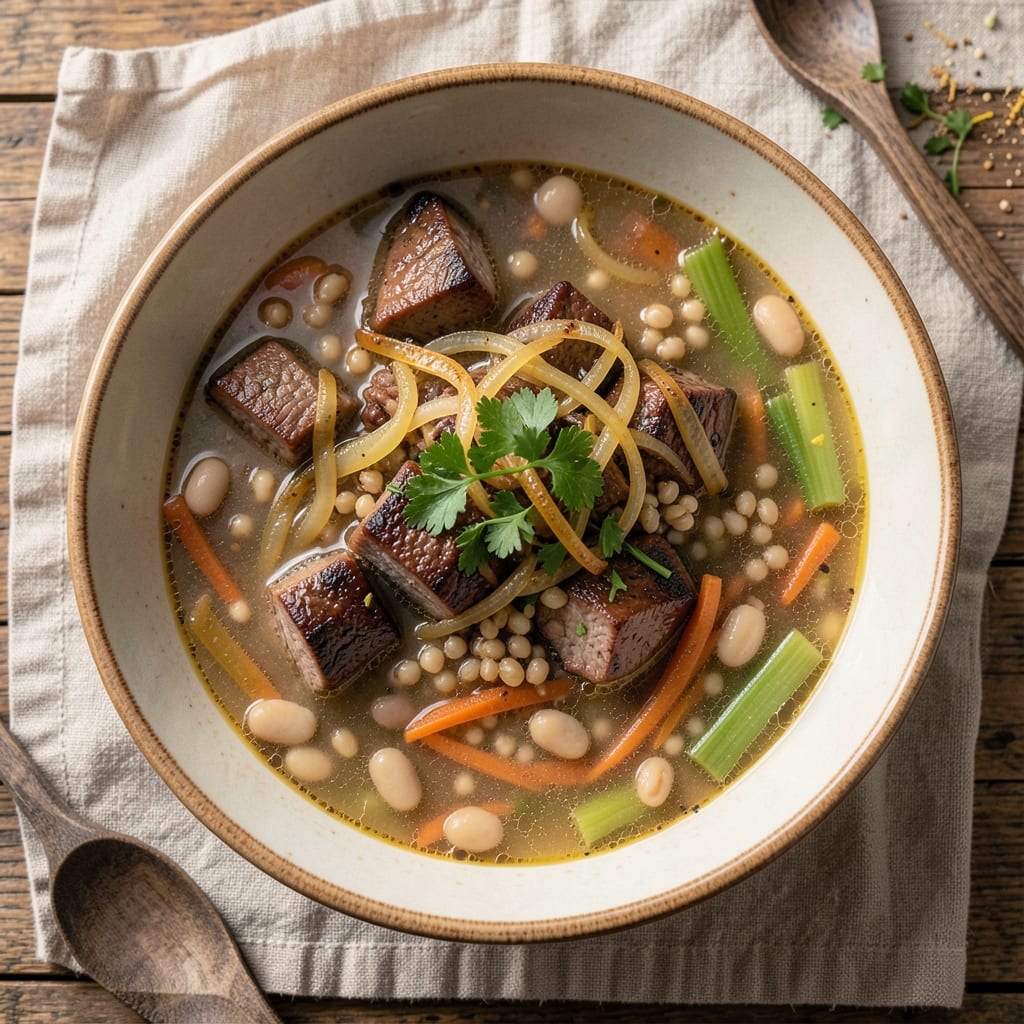
This beef barley and bean soup recipe transforms humble ingredients into a soul-warming stew that simmers with earthy depth and hearty satisfaction. 🌟 The secret lies in slow simmering—where tough beef becomes tender, barley absorbs rich flavors, and beans thicken the broth into velvety perfection. I developed this version after years of testing, balancing traditional techniques with modern shortcuts for busy weeknights. What sets this recipe apart is its versatility—equally comforting as a weeknight dinner or a centerpiece for holiday gatherings. The combination of barley, white beans, and beef creates a perfect balance of textures: tender meat, creamy beans, and chewy barley. Seasoned with aromatic herbs and a touch of red wine, it develops layers of flavor that only improve with time. By the time you ladle the first bowl, you'll taste the caramelized edges of beef, the nutty sweetness of barley, and the earthy richness of beans all working together. The soup thickens beautifully as it sits, making it even more satisfying the next day—ideal for meal prep or leftovers. For those short on time, I've included a pressure cooker adaptation that cuts cooking time by half without sacrificing depth. Let's get started—this soup is worth every minute of simmering.
Ingredients for beef barley bean soup
Six hearty ingredients—plus a few pantry staples—create this soul-warming winter stew.
| Ingredient | Amount | Notes |
|---|---|---|
| Chuck Roast 🥩 | 2 lb | Trimmed of excess fat |
| Pearl Barley 🌾 | 1 cup | Rinsed before cooking |
| Great Northern White Beans 🥫 | 1 ½ cups | Dried, soaked overnight |
| Yellow Onion 🧅 | 1 whole | Diced, medium size |
| Carrots 🥕 | 3 medium | Peeled, cut into chunks |
| Celery Stalks 🧄 | 3 whole | Diced, medium size |
| Garlic Cloves 🧄 | 4 cloves | Peeled, rough chopped |
| Dry Red Wine 🍷 | 1 cup | Bold variety like Cabernet |
| Beef Broth 💧 | 6 cups | Low-sodium preferred |
| Tomato Paste 🍅 | 2 tbsp | Smooth, not chunky |
| Fresh Thyme 🌿 | 2 tbsp | Leaves only, chopped |
| Fresh Rosemary 🌿 | 1 tbsp | Needles only, chopped |
| Bay Leaves 🍃 | 2 whole | Dried, standard size |
| Salt 🧂 | 1 ½ tsp | Diamond Crystal preferred |
| Ground Black Pepper 🌶️ | 1 tsp | Freshly ground |
The chuck roast is your flavor anchor here. Costco or local butchers often have it pre-cut, but if you're buying a whole roast, ask for the chuck section—it's the most flavorful cut. Look for pieces with good marbling, not too lean. The white beans? Great Northern or cannellini work best—they hold their shape while soaking up flavor. If using dried, soak them overnight; canned beans are fine but rinse well to cut excess sodium. Barley can be tricky—pearl barley is the classic choice, but if you can't find it, arborio rice works in a pinch (though texture will differ).
No red wine? Substitute beef broth with an extra splash of balsamic vinegar—it mimics the depth. Fresh herbs are ideal, but dried thyme and rosemary at half the amount work too. The tomato paste can be swapped for a handful of sun-dried tomatoes if you prefer. Carrots and celery are classic mirepoix—don't skip them, even if you're short on time. For a quicker version, pre-cut frozen veggies save chopping time without sacrificing flavor. The bay leaves? Remove them before serving—no one wants to bite into one.
This soup tastes even better the next day—make a double batch and store leftovers for 5 days in the fridge. Freezes beautifully for 3 months if you portion it into airtight containers. I like to freeze it in single-serving portions so I can grab one straight from the freezer on cold mornings. The barley thickens as it cools, so add a splash of broth if it seems too thick when reheating. For the pressure cooker version, reduce the broth by 2 cups and cook on high pressure for 45 minutes—no natural release needed.
Why You'll Love This Recipe
- One-Pot Magic: Honestly, I dump everything in a slow cooker and walk away. The chuck roast practically falls apart on its own, while the barley and beans soak up all that rich flavor—no stirring required after the first hour.
- Rich, Deep Umami: Between us, the slow-cooked chuck roast turns tender enough to melt, and those Great Northern beans? They soak up the beef’s juices until every bite is hearty yet balanced—like a hug in a bowl.
- Meal Prep MVP: I make a double batch on Sundays because this soup only gets better as it sits. The barley thickens just right overnight, and the flavors meld into something seriously satisfying—perfect for lunches all week.
- Budget-Friendly Feast: A chuck roast stretches across four servings, and pearl barley costs pennies compared to quinoa. This is the kind of recipe that makes grocery day feel like a win, especially when it feeds the whole family for under $10.
Step-by-step instructions for beef barley and bean soup
This hearty stew comes together in layers—start with a rich beef base, then build depth with aromatic vegetables and earthy beans.
🔥 Step 1: Sear the Chuck Roast for Maximum Flavor
Pat the 2 lb chuck roast dry with paper towels and season generously with 1.5 tsp salt and 1 tsp ground black pepper. Heat a heavy pot (Dutch oven works best) over medium-high heat until hot. Add the roast and sear for 4-5 minutes per side until deeply browned—this creates the Maillard reaction that forms the soup's foundation.
Once browned, remove the roast and set it aside. The goal here is to develop a rich, caramelized crust on the meat. If the pan isn't hot enough, the roast will steam instead of sear. I like to leave it slightly pink in the center at this stage—it'll finish cooking later.
👨🍳 Step 2: Build the Aromatic Vegetable Base
In the same pot, add 2 tbsp tomato paste and stir to coat the browned bits on the bottom. This helps create a deeper, more complex flavor. Add 1 whole yellow onion (diced), 3 medium carrots (cut into chunks), and 3 whole celery stalks (diced). Cook for 5 minutes, stirring occasionally, until the vegetables begin to soften.
Add the 4 cloves garlic (rough chopped), 2 tbsp fresh thyme, and 1 tbsp fresh rosemary. Stir for 30 seconds until fragrant—this is where the soup develops its signature earthy aroma. The thyme and rosemary should be finely chopped so they disperse evenly throughout the broth. Don't let the garlic burn; it should just perfume the mixture.
🍳 Step 3: Deglaze and Simmer with Wine and Broth
Pour in the 1 cup dry red wine and scrape up any browned bits from the bottom of the pot. Let it simmer for 3 minutes until the wine reduces by half. This deglazing step captures all the flavor you built in the previous steps. Add 6 cups beef broth and bring the mixture to a gentle boil.
Return the chuck roast to the pot, along with the 2 whole bay leaves. Partially cover and simmer for 1.5 hours on low heat, turning the roast occasionally. You're looking for the meat to become fork-tender but still hold its shape. The broth should be rich and slightly reduced—this is where the soup develops its signature depth.
🥘 Step 4: Add Barley and Beans for Hearty Texture
Add the 1 cup rinsed pearl barley and 1.5 cups soaked great northern white beans to the pot. Stir gently to distribute them evenly. The beans should have been soaked overnight—this ensures they cook thoroughly without becoming mushy. Return to a simmer and cook for another 45-60 minutes until both the barley and beans are tender.
Check for doneness by tasting a piece of barley—it should be soft but still have a slight bite. The beans should be tender but not falling apart. If the soup is too thick, add a splash of water or broth to reach your desired consistency. The final texture should be hearty but still spoonable.
⏰ Step 5: Rest and Adjust Seasoning
Remove the chuck roast from the pot and let it rest for 10 minutes before shredding it with two forks. Return the shredded meat to the soup and discard the bay leaves. Taste and adjust seasoning—you might need a touch more salt or pepper depending on your broth's saltiness. The soup should be rich, savory, and balanced with the earthy notes from the barley and beans.
Let the soup sit off the heat for 5 minutes before serving. This resting period allows the flavors to meld and the broth to thicken slightly. Serve with crusty bread to soak up every last drop of that hearty, comforting stew. The combination of tender beef, chewy barley, and creamy beans makes this soup perfect for chilly days.
Pro Tips For Making Beef Barley Bean Soup
- SEAR THE ROAST FIRST: High heat. Seriously, crank it up until your chuck roast browns in 3-4 minutes per side—those crusty edges dissolve into the broth and turn a bland pot of soup into something rich and layered. I used to skip this, and the soup always tasted like it needed more seasoning. Doesn’t.
- SOAK THE BARLEY: Pearl barley swells faster and cooks more evenly if you give it a 30-minute soak in cold water before adding it to the pot. I learned this the hard way—my first attempt left some grains rock-hard after hours of simmering. (Yes, even if you’re impatient like me, this makes a real difference.)
- ADD BEANS LATE: Toss the Great Northern beans in 5 minutes before serving—they’ll soften just enough to blend into the texture without turning to mush. I was skeptical until I tried it: the beans stay intact enough to bite into, but the broth still gets their earthy flavor. Skip the long simmer, and they’ll fall apart.
- CHOP CARROTS SMALL: Dice those carrots into ¼-inch pieces, not thick chunks. They’ll cook faster and stay tender without turning to glue. I used to cut them in big, uniform slices, and half the time they’d end up either undercooked or falling apart. Small pieces mean even cooking—no guessing.
Common mistakes when making this dish
Skipping the Sear
One of the biggest mistakes is rushing the sear on the chuck roast. That golden crust from the Maillard reaction is what builds deep, complex flavors in the soup. If you skip searing or just steam the meat, you'll end up with bland broth. I always take the extra 5-10 minutes to get that rich caramelization—it makes all the difference in the final result. 🔥
Under-Soaking Beans
Using dried beans without proper soaking leads to tough, uneven cooking. Always soak your Great Northern white beans for at least 8 hours (or overnight) before adding them to the soup. If you're short on time, use a quick soak method: cover the beans with water, bring to a boil for 2 minutes, then let them sit for 1 hour. Never skip this step—it ensures your beans will be tender and flavorful, not chalky and unappetizing.
Overcrowding the Pot
Adding all ingredients at once can turn your soup into a watery mess. Start with the beef and vegetables, then add barley and beans later when they have room to cook properly. I like to keep the broth level high enough to cover everything by about 1 inch. If your pot looks crowded, cook in batches or use a larger Dutch oven to maintain proper simmering and prevent uneven cooking.
Ignoring the Resting Time
Rushing the 10-minute rest before shredding the beef means you'll lose precious juices that would otherwise reabsorb into the meat. This resting period also lets the flavors meld together for a more cohesive taste. I've learned the hard way—skipping this step results in dry, stringy beef that doesn't hold up well. Give it the full rest time for maximum tenderness and flavor.
Using Low-Quality Broth
The broth is the foundation of your soup, so don't cut corners here. I always use low-sodium beef broth—it gives the best flavor without making the soup too salty. Homemade broth is ideal, but if you're using store-bought, look for brands like Pacific Foods or Kitchen Basics that prioritize quality. Watered-down or overly salty broth will ruin the balance of flavors you've worked so hard to create.
Not Adjusting Seasoning
Tasting and adjusting seasoning at the end is crucial, but many people skip this step. The flavors develop differently during cooking, so what tasted perfect at the start might need more salt or pepper by the end. I always taste the soup before serving and make final adjustments—this ensures every bowl is perfectly balanced. Don't be afraid to tweak it; that's what makes homemade soup taste so much better than store-bought.
Nutrition facts
Frequently asked questions about beef barley bean soup
Can I use canned beans instead of dried?
Yes, but rinse them thoroughly to remove excess sodium. Use 2 (15 oz) cans of Great Northern beans instead of the 1.5 cups dried. Canned beans cook faster but may make the soup slightly softer in texture. For best results, drain and rinse well before adding to the pot.
How do I make this soup in a slow cooker?
Brown the beef first, then transfer everything to your slow cooker. Use 6 cups broth and cook on low for 8 hours or high for 4-5 hours. Add barley and beans during the last 1-2 hours of cooking. The slow cooker's gentle heat helps tenderize the beef beautifully while keeping the barley firm.
What can I add to make it vegetarian?
Replace the beef with 2 cups chopped mushrooms and 1 cup lentils (cooked). Use vegetable broth and add 1 tbsp soy sauce for umami depth. The barley and beans will still provide hearty texture, while the mushrooms add meaty flavor. Consider adding 1 cup spinach at the end for freshness.
Why does my barley turn mushy?
Overcooking is the most common cause. Barley should cook until tender but still have a slight bite—about 45-60 minutes in simmering soup. If using dried barley, check for doneness at 45 minutes and remove from heat if needed. For instant barley, reduce cooking time by 15-20 minutes. Always rinse barley before cooking to remove excess starch.
Can I make this soup gluten-free?
Yes! Use quinoa or wild rice instead of barley (1:1 ratio). Both grains hold up well in soups and provide similar texture. Check your broth label for gluten-free certification, as some contain wheat-based additives. The flavor profile will be slightly different but still hearty and satisfying.