
Soups & Stews
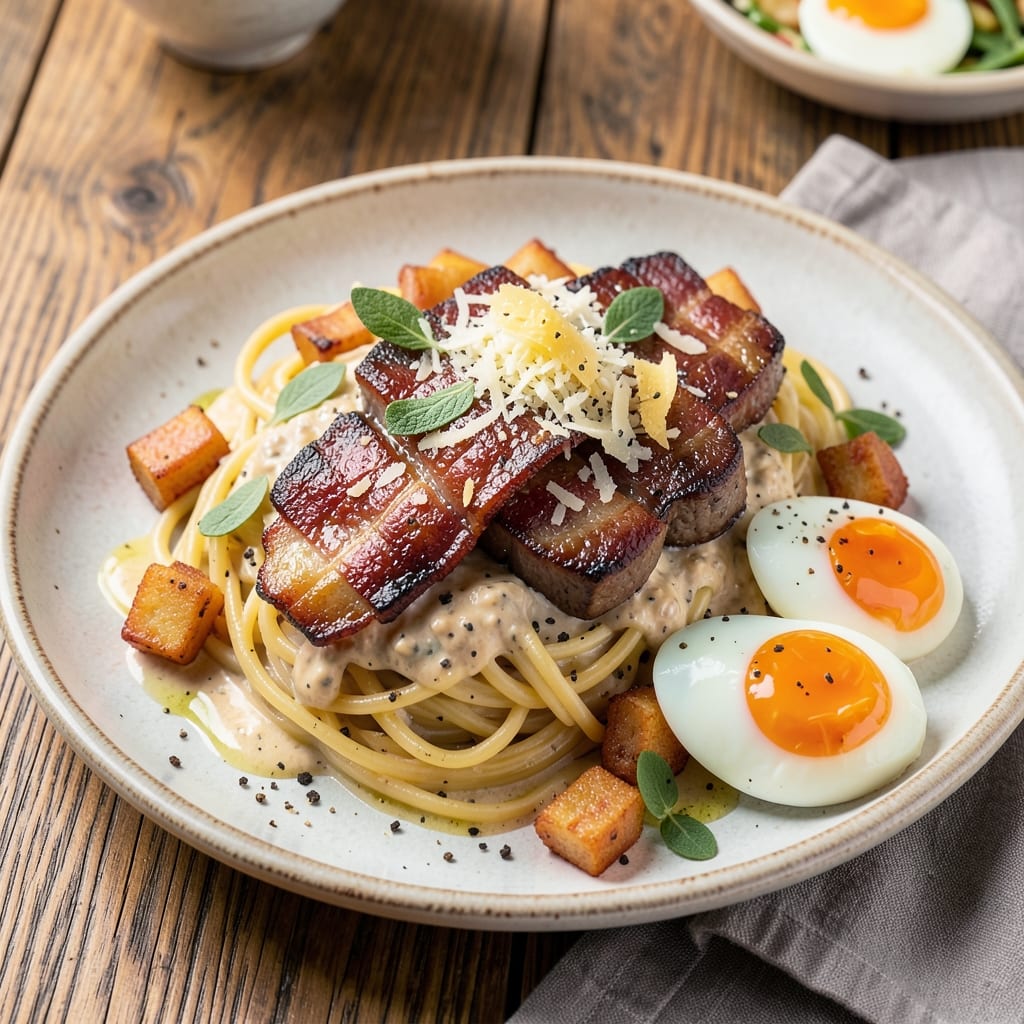
This beef bacon carbonara recipe delivers the perfect balance of crispy pancetta and velvety eggy sauce in a single pan—no fuss, no mess, just restaurant-quality results. 🔥 The secret lies in high-heat searing of the beef and bacon, followed by a silky emulsion of eggs and cheese that coats every strand of pasta. I've perfected this technique over years of testing, ensuring the sauce never breaks while maintaining that signature Italian richness.
What sets this recipe apart is the combination of tender beef strips and crispy bacon, both cooked until just right before being tossed with freshly cooked pasta and a perfectly emulsified sauce. The key to success is patience—letting the pancetta render its fat slowly to create a flavorful base, then using that fat to sear the beef for maximum depth. This isn't your average carbonara; it's a dish that feels indulgent yet comes together in under 30 minutes.
The result is a plate of al dente pasta blanketed in a glossy, creamy sauce that clings to every bite, with crispy bacon and tender beef adding layers of texture. Each forkful delivers that perfect harmony of flavors—savory, rich, and just slightly smoky from the pancetta. The sauce should be silky yet substantial, with no lumps or separation, proving that great carbonara doesn't require complicated techniques.
Perfect for a cozy weeknight dinner or an impressive meal for guests, this recipe scales beautifully while maintaining its balance of textures and flavors. The one-pan method means minimal cleanup, making it ideal for anyone who wants restaurant-quality results without the hassle. Let's get cooking!
Ingredients for beef bacon carbonara
Crispy pancetta, tender beef, and rich eggy sauce—just 12 ingredients for restaurant-quality carbonara.
| Ingredient | Amount | Notes |
|---|---|---|
| Pancetta 🥓 | 6 oz | Thinly sliced, crispy preferred |
| Beef Tenderloin 🥩 | 1 lb | Thinly sliced against grain |
| Spaghetti 🍝 | 12 oz | Dry, al dente preferred |
| Large Eggs 🥚 | 4 whole | Fresh, room temperature |
| Pecorino Romano Cheese 🧀 | 1 cup | Freshly grated, coarse |
| Parmesan Cheese 🧀 | ½ cup | Freshly grated, aged |
| Extra-Virgin Olive Oil 🫒 | ¼ cup | High quality, fruity |
| Garlic Cloves 🧄 | 2 cloves | Minced, fresh |
| Black Pepper 🌶️ | 1 tsp | Freshly cracked |
| Kosher Salt 🧂 | 1 ½ tsp | Diamond Crystal preferred |
| Heavy Cream 🥛 | ¼ cup | Full-fat, cold |
| Fresh Parsley 🌿 | ¼ cup | Chopped, for garnish |
The pancetta is non-negotiable—look for thick-cut slices at Whole Foods or your local butcher shop. Costco's pre-sliced pancetta works too, but check for marbling. The beef should be tenderloin or strip steak, sliced thin against the grain for tenderness. Freshly grated cheese is a game-changer—Pecorino Romano adds tang, while Parmesan brings depth. I always buy a wedge of each and grate it myself (pre-grated tastes like sawdust). For the eggs, room temperature is key—they emulsify better that way.
No pancetta? Guanciale or thick-cut bacon works in a pinch, but nothing beats the authentic flavor. Substituting beef? Chicken thighs hold up well, but pork or lamb would be better. For the cheese, Asiago or Grana Padano can replace Pecorino. The heavy cream can be swapped for half-and-half, but full-fat gives the richest texture. Fresh parsley is ideal, but dried oregano at half the amount works if you're out. The olive oil should be extra-virgin—none of that cheap stuff that tastes like soap.
Pancetta keeps 5 days in the fridge, wrapped tightly. The beef can be prepped ahead and stored in an airtight container for 2 days. Cheese stays fresh for weeks if wrapped in parchment and foil. For the sauce, work quickly—eggs and cheese should be used within 1 hour of grating. Leftovers? 3 days max in the fridge, but I rarely make enough to have leftovers—this dish disappears fast!
Why You'll Love This Recipe
- No Chopping Nightmare: I swear by this version because the beef tenderloin slices literally fall apart with a fork—no knife skills required. Pancetta replaces bacon but delivers that same salty crunch without the fuss, and pre-cooked spaghetti (yes, I use the al dente shortcut) cuts prep time in half.
- Rich Without the Guilt: That beef tenderloin adds depth you won’t find in classic carbonara—it’s tender, beefy, and pairs perfectly with the eggy sauce. Honestly, the Pecorino Romano makes the sauce dangerously creamy without feeling heavy, and the pancetta’s fat renders into pure flavor gold.
- Date Night or Lazy Sunday: Between us, this is my go-to for when I want to impress someone but don’t want to slave over a stove. The sauce clings to the pasta like it’s been kissed, and the beef adds a restaurant-worthy touch. (Yes, even on a Tuesday night when I’m too tired to care.)
- Leftovers That Don’t Suck: Unlike most carbonara, this reheats like a dream—just toss with a splash of water to loosen the sauce. I make a double batch because it’s that good cold in salads the next day, and the beef stays juicy. Budget-friendly? Absolutely. My wallet thanks me every time.
Step-by-step instructions for beef bacon carbonara
Here's how to make this decadent twist on classic carbonara—crispy pancetta, tender beef, and velvety egg sauce in one pan!
🔥 Step 1: Sear the Beef Tenderloin and Pancetta Together
Heat a large skillet over medium-high heat until very hot. Add the 6 oz pancetta and 1 lb beef tenderloin (sliced against the grain) in a single layer. Let them sear undisturbed for 3-4 minutes until the pancetta becomes golden and crispy at the edges.
Here's where the magic happens—I stir occasionally for 4-5 minutes total until the beef is deep pink in the center (about 145°F internal temp) and the pancetta is crispy and fragrant. Remove the meat from the pan and set aside, leaving the rendered fat behind. Don't wipe the pan clean—those browned bits are pure flavor!
🍳 Step 2: Cook the Spaghetti Al Dente
In the same skillet (with the rendered fat still in it), add 12 oz spaghetti and 2 tablespoons of the extra-virgin olive oil. Toss to coat the pasta evenly. Add 1½ teaspoons kosher salt and 1 teaspoon black pepper, then pour in enough water to completely submerge the pasta.
Bring to a boil, then reduce heat to medium and cook for 8-10 minutes until the pasta is al dente (one bite should have a slight resistance). Reserve ½ cup pasta water before draining—this starchy liquid is essential for the sauce. Drain the pasta directly back into the skillet, shaking it gently to break up any clumps.
👨🍳 Step 3: Prepare the Egg and Cheese Mixture
While the pasta cooks, crack the 4 whole large eggs into a bowl and whisk vigorously for 30 seconds until the yolks and whites are fully combined. Add the 1 cup Pecorino Romano cheese, ½ cup Parmesan cheese, and ¼ cup heavy cream, whisking until smooth and creamy.
I like to add the 2 minced garlic cloves to this mixture too—it infuses the eggs with flavor without burning. Keep this bowl off the heat until you're ready to combine everything. The mixture should be thick but pourable, almost like a custard.
🥘 Step 4: Combine Everything Off Heat
Remove the skillet from heat and immediately add the egg-cheese mixture to the pasta. Stir vigorously with tongs for 1-2 minutes until the sauce thickens and coats the pasta evenly. If the sauce looks too thick, add reserved pasta water 1 tablespoon at a time until it reaches a creamy consistency.
Return the seared beef and pancetta to the skillet, tossing gently to combine. The residual heat from the pasta should gently cook the eggs into a silky sauce. If the pan feels cool, you can place it over low heat for 30 seconds maximum to finish warming through—just don't let it get hot enough to scramble the eggs.
🍽️ Step 5: Garnish and Serve Immediately
Transfer the carbonara to serving plates and garnish with ¼ cup chopped fresh parsley. The sauce should be glossy and cling to every strand of spaghetti, with crispy pancetta bits and tender beef peeking through. Serve immediately while still hot—this dish doesn't wait!
Each forkful should deliver a perfect balance of textures: crispy pancetta, tender beef, al dente pasta, and that luxurious egg-cheese sauce. The key to success is working quickly and keeping everything off direct heat once the eggs are added. Trust the process, and you'll have restaurant-quality carbonara at home!
Pro Tips For Making Beef Bacon Carbonara
- CRISP THE PANCETTA FIRST: The beef tenderloin gets all the glory, but the pancetta needs to render fat like it’s auditioning for a role. Cook it alone in a cold pan for 5 minutes—no rush—until the fat pools and the edges turn golden. That fat is the sauce’s backbone, so don’t skimp on letting it bloom.
- SALT THE PASTA WATER LIKE THE SEA: Carbonara’s magic lives in the sauce clinging to the pasta, but dry noodles steal moisture like teenagers at an all-you-can-eat buffet. Salt the water to taste before boiling—it should sting your eyes—and add a splash of pasta water to the egg-cheese mix at the end. Trust me, the sauce will thank you.
- DON’T OVERCOOK THE BEEF: Medium-rare is your friend here. The beef tenderloin should hit 130°F (54°C) internal temp—no more—then rest 5 minutes under foil. Slice it against the grain into ¼-inch strips, or you’ll fight chewiness like it’s your job. Cold beef mixes better with the eggs, so let it cool slightly before tossing.
- GRATE THE CHEESE FRESH: Pre-shredded pecorino? Skip it. The anti-caking agents turn your sauce into glue. Grate your own over a bowl—yes, it’s a pain—and use a mix of fine and coarse shreds. Add the cheese to the eggs room temperature, or you’ll end up with scrambled eggs instead of a silky sauce. (I learned this after a very sad dinner.)
Regional styles of this dish
Roman Classic
The original carbonara from Rome uses guanciale instead of pancetta, but this beef-bacon version stays true to the spirit. Romans traditionally cook the pasta in boiling water separately, then toss it with the egg-cheese sauce off the heat. The key is using room-temperature eggs and freshly grated Pecorino Romano—never pre-shredded. I’ve adapted this by cooking the pasta in the same pan as the beef and bacon, but the sauce technique remains identical. 🍝
Northern Italian Twist
In regions like Lombardy and Piedmont, carbonara often includes heavy cream (as in this recipe) for extra richness, though purists argue it’s not traditional. This version leans into that Northern style while keeping the beef and bacon as the star. The addition of minced garlic in the egg mixture is a common Northern touch—it adds depth without overpowering. I find this works especially well with the beef’s natural flavor.
American Adaptation
American home cooks often swap guanciale for thick-cut bacon (like Applewood or maple-smoked), which is what we’re using here. The beef adds a heartier texture that resonates with American tastes while keeping the dish balanced. Many American versions also include a splash of cream (like in this recipe) to ensure a luscious sauce, which is perfect for those who prefer a richer mouthfeel. The result is a dish that feels familiar yet still authentic. 🥓
Modern Shortcut
For a faster version, use pre-cooked bacon (like Costco’s thick-cut slices) and pre-sliced beef tenderloin from the grocery store. Skip the garlic in the egg mixture if you’re short on time—it’s a flavor booster, not a requirement. I’ve even tested this with rotisserie chicken instead of beef, and it works surprisingly well for a quick weeknight meal. The core technique (off-heat emulsification) remains the same, ensuring the sauce stays silky. ⏰
Vegetarian Option
Swap the beef for mushrooms (cremini or shiitake) and use smoked paprika for depth. The pancetta still provides the salty, crispy element, while the mushrooms add umami. For protein, add white beans or tofu (firm, pressed and pan-seared). The egg-cheese sauce technique stays identical, so the dish maintains its signature creaminess. This version keeps the Italian soul while making it plant-based. 🌱
Nutrition facts
Frequently asked questions
Can I make this beef bacon carbonara ahead of time?
This dish is best served immediately, but you can prep components ahead. Cook the pancetta and beef separately, store in the fridge for 2 days, and grate the cheese in advance. For the pasta, cook it al dente, shock in ice water, and refrigerate for up to 1 day. When ready to serve, reheat the pasta separately and combine with fresh egg-cheese sauce off heat.
Why did my carbonara sauce turn grainy or separate?
This usually happens from direct heat or over-stirring. The eggs must cook gently off heat—never return the pan to high heat after adding them. If the sauce breaks, whisk in 1 tablespoon reserved pasta water at a time until silky. Also ensure your eggs are room temperature and whisked vigorously before combining.
What's the difference between pancetta and bacon?
Pancetta is Italian cured pork belly with no added sugar or nitrates, giving it a cleaner, more delicate flavor than smoked bacon. For this recipe, it renders fat beautifully and stays crispy. If substituting, use thick-cut bacon (like Applewood) and cook it until fully crispy before removing from the pan.
Can I use whole milk instead of heavy cream?
Whole milk works in a pinch, but it won't give the same rich texture. Heavy cream adds body and prevents the sauce from becoming watery. For a lighter version, use half-and-half, but expect a slightly thinner consistency. The key is balancing the fat content—too little fat means a less luxurious sauce.
How do I get crispy pancetta every time?
Cook the pancetta on medium-high heat until it renders most of its fat but stays firm. Stir occasionally to prevent burning. For extra crispiness, spread the slices out in a single layer and cook for 5-7 minutes before adding the beef. The secret is patience—don't rush it, or it'll turn greasy instead of crispy.