
Main Courses
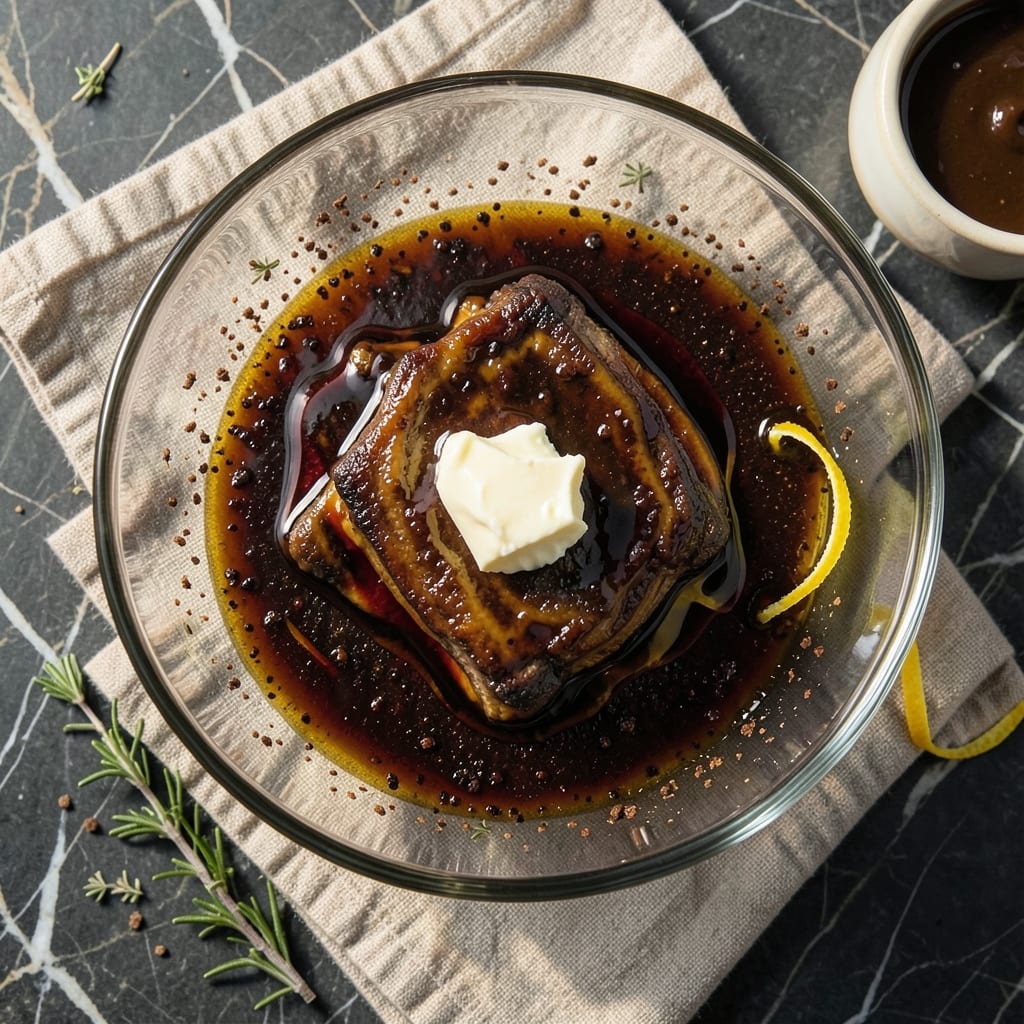
This beef back ribs marinade transforms tough cuts into melt-in-your-mouth perfection with a deep-penetrating blend of spices, acids, and fats. The secret lies in the balance of brown sugar, Worcestershire sauce, and apple cider vinegar—working together over 12-24 hours to tenderize the meat while infusing rich, smoky flavors. I developed this marinade after years of experimenting with competition-style ribs, and it consistently delivers that coveted fall-off-the-bone texture.
The marinade's magic comes from its dual-purpose ingredients: the vinegar and citrus break down connective tissue, while the olive oil and butter create a protective barrier that locks in moisture during cooking. Fresh garlic, ginger, and a touch of coffee add depth without overpowering the natural beef flavor. What sets this apart is the molasses, which adds a subtle caramel note that enhances the rib's natural sweetness when smoked or grilled.
After marinating, your ribs will be so tender they practically shred with a fork, with a surface that's ready for a perfect bark during the cooking process. The flavors penetrate deeply, creating a rib that's rich, slightly sweet, and packed with umami—far beyond what store-bought marinades can achieve. This isn't just about tenderness; it's about building layers of flavor that make every bite unforgettable.
Best of all, the marinade keeps well in the refrigerator for up to 5 days, giving you time to plan your perfect cook. Whether you're smoking, grilling, or braising, this marinade sets the foundation for competition-worthy ribs that will impress even the most discerning BBQ judges. Let's get started on creating ribs that will have everyone asking for seconds.
Ingredients for beef back ribs marinade
This marinade transforms tough ribs into melt-in-your-mouth perfection with bold flavors and deep tenderness.
| Ingredient | Amount | Notes |
|---|---|---|
| Apple Cider Vinegar 🍏 | ½ cup | Raw, unfiltered preferred |
| Worcestershire Sauce 🍶 | ¼ cup | High-quality, anchovy-free if needed |
| Dark Brown Sugar 🍚 | ½ cup | Packed firmly for accuracy |
| Molasses 🍯 | ¼ cup | Unsulphured for rich flavor |
| Extra-Virgin Olive Oil 🫒 | ½ cup | High-quality, fruity |
| Unsalted Butter 🧈 | ¼ cup | Cold, cubed for texture |
| Fresh Garlic Cloves 🧄 | 6 cloves | Peeled, roughly chopped |
| Fresh Ginger 🌿 | 1 tbsp | Grated, fresh preferred |
| Instant Coffee Granules ☕ | 1 tbsp | Strong, unsweetened |
| Smoked Paprika 🌶️ | 1 tbsp | High-quality, vibrant color |
| Kosher Salt 🧂 | 1 ½ tsp | Diamond Crystal preferred |
| Ground Black Pepper 🌶️ | 1 tsp | Freshly ground preferred |
The apple cider vinegar and Worcestershire sauce are the marinade's power duo—look for raw, unfiltered vinegar and a high-quality Worcestershire (like Lea & Perrins) for maximum depth. The brown sugar and molasses create that signature caramel richness that pairs perfectly with beef. I always grab Domino brand brown sugar from Costco—it's consistent and affordable. For the olive oil and butter, use the best you've got—this isn't the place to skimp. Fresh garlic and ginger are non-negotiable here; frozen just won't cut it. The instant coffee might sound odd, but it adds that deep, smoky umami that makes this marinade stand out from the rest.
No apple cider vinegar? White vinegar or red wine vinegar works in a pinch, but the flavor will be slightly different. Short on Worcestershire? Soy sauce plus a dash of liquid smoke gets you close. The molasses can be swapped for maple syrup (though it'll be less rich), and if you're avoiding sugar entirely, use date syrup instead. Need to make this dairy-free? Swap the butter for vegan butter or extra olive oil. The smoked paprika is key for that BBQ vibe—if you can't find it, regular paprika plus a pinch of liquid smoke will do. For the coffee, espresso powder works too, just use the same amount. And if you're out of fresh ginger, ginger powder at half the amount is fine for a quick fix.
This marinade keeps beautifully in the fridge for 5 days—perfect for meal prep. Store it in a glass jar with a tight lid to preserve all those amazing flavors. Before using, give it a good shake since the butter will separate. The marinade makes about 2 cups total, which is enough to coat a full pack of beef back ribs (about 4-5 lbs). If you're making extra, freeze it in ice cube trays for single-use portions. Trust me, you'll want to make a double batch—this stuff disappears fast!
Why You'll Love This Recipe
- I’ll be real: this marinade costs me less than $5 for a full batch, and it stretches to feed four people easily. The molasses and brown sugar add depth without breaking the bank, and Worcestershire? That little bottle does so much. It’s the kind of recipe that makes me feel fancy without the price tag—because great flavor shouldn’t be a splurge.
- Five-Ingredient Magic: I swear, this marinade is the kind of recipe that makes me feel like a genius—just dump those five pantry staples (vinegar, Worcestershire, sugar, molasses, oil) into a bowl and stir. No peeling garlic, no mincing herbs, no stress. The ribs practically fall apart when you grill them, and honestly? That’s the real win.
- Sweet-Savory Balance: Between us, this combo of apple cider vinegar and molasses is chef’s kiss—tangy enough to cut through the richness, but the brown sugar and Worcestershire turn it into something dangerously addictive. The olive oil keeps it glossy and tender, so you’re not left with dry, tough meat. Trust me, your taste buds will thank you.
- Tailgate or Tuesday: Here’s what sold me—this marinade works for everything. Slap it on ribs for a backyard cookout, but it’s also my go-to for weeknight dinners when I’m craving something hearty. (Yes, even on a Tuesday night.) The leftovers? Even better the next day—just reheat and serve with pickles or crusty bread.
Step-by-step instructions for beef back ribs marinade
This marinade transforms tough ribs into melt-in-your-mouth perfection—let's make it together.
Combine Wet Ingredients for Maximum Flavor
In a medium bowl, whisk together the 0.5 cup apple cider vinegar, 0.25 cup Worcestershire sauce, 0.5 cup dark brown sugar, and 0.25 cup molasses until the sugar and molasses dissolve completely. The mixture should be thick and syrupy—this is where the deep, caramelized flavors develop. I like to use a whisk for this step to ensure everything blends smoothly without any graininess.
The acidity from the vinegar and Worcestershire sauce helps tenderize the meat while breaking down proteins, while the molasses and brown sugar add a rich, slightly sweet depth that caramelizes beautifully during cooking. Let this mixture sit for 5 minutes while you prep the remaining ingredients—this gives the sugars time to fully integrate.
Add Aromatics and Fats for Richness
In a separate small bowl, finely grate the 1 tbsp fresh ginger and mince the 6 cloves fresh garlic into tiny pieces—you want them almost paste-like for even distribution. Melt the 0.25 cup unsalted butter in a small saucepan over low heat until it becomes a smooth liquid, then let it cool slightly. This melted butter will help carry the marinade's flavors deep into the meat.
Now, add the melted butter, ginger, garlic, 0.5 cup extra-virgin olive oil, 1 tbsp instant coffee granules, 1 tbsp smoked paprika, 1.5 tsp kosher salt, and 1 tsp ground black pepper to the vinegar mixture. Stir vigorously until everything is fully incorporated and the spices are evenly distributed. The coffee granules might seem odd, but they add a deep, earthy complexity that pairs perfectly with the smoky paprika and sweet molasses.
Blend Until Smooth and Ready to Use
Transfer the marinade to a blender or food processor and blend until completely smooth, scraping down the sides as needed. This step ensures an even coating on every inch of your ribs. The marinade should be thick but pourable—almost like a rich, spiced syrup. If it's too thick, add 1-2 tablespoons of water to reach your desired consistency.
Taste the marinade and adjust the seasoning if needed. You might want to add a pinch more salt or a dash of black pepper to suit your taste. Once perfected, pour the marinade into a resealable plastic bag or shallow dish large enough to accommodate your ribs. This marinade works best when applied generously—don't skimp!
Marinate for Maximum Tenderness
Submerge the beef back ribs completely in the marinade, making sure every surface is coated. Seal the bag or cover the dish and refrigerate for at least 4 hours, but I recommend marinating overnight for 12-24 hours if possible. The longer the ribs marinate, the more tender and flavorful they'll become. During this time, the acidity and enzymes in the marinade will work their magic, breaking down the muscle fibers and infusing the meat with rich, complex flavors.
When ready to cook, remove the ribs from the refrigerator and let them sit at room temperature for 30 minutes before cooking. This step ensures even heat distribution and prevents the meat from steaming when it hits the heat source. The marinade should be slightly sticky and cling to the ribs—this is a good sign that it's working its magic. Now your ribs are ready for the grill, smoker, or oven—where they'll transform into fall-off-the-bone perfection.
Pro Tips For Making Beef Back Ribs Marinade
- STIR THE MOLASSES FIRST: Warm the molasses and brown sugar together for 2 minutes before adding vinegar—this dissolves the sugar completely and prevents clumpy messes in your marinade. I learned this the hard way when my ribs tasted like I’d forgotten to mix properly.
- USE RAW APPLE CIDER VINEGAR: Skip the pasteurized stuff—raw, unfiltered apple cider vinegar adds depth and tang that pasteurized versions lack. The cloudiness isn’t gross; it’s packed with flavor. (Yes, even if it looks weird in the bottle.)
- LET THE MARINADE SIT: Mix everything, then let it rest 30 minutes before applying—this lets the flavors meld and the sugar start breaking down. I used to slap it on immediately, and the ribs always tasted unevenly seasoned.
- SWAP OLIVE OIL FOR AVOCADO OIL: Avocado oil has a higher smoke point and neutral flavor, so it won’t overpower the molasses or vinegar when searing. (Your future self will thank you when the ribs don’t taste like a salad.)
Storing and reheating your beef back ribs marinade
Marinade Storage
Store your unused marinade in an airtight glass container with a lid in the refrigerator for up to 5 days. The glass preserves the rich flavors better than plastic, and the tight seal prevents evaporation. I always shake it well before using since the butter will naturally separate. For longer storage, freeze the marinade in ice cube trays—each cube makes a perfect single-use portion for future ribs. 🧊
Ribs After Marinating
Once your ribs have marinated for 12-24 hours, remove them from the fridge and let them sit at room temperature for 30 minutes before cooking. This crucial step ensures even heat penetration and prevents the meat from steaming when exposed to high heat. Pat the ribs dry with paper towels to help develop that perfect bark during grilling or smoking. The marinade will cling to the surface—don't rinse it off! 🍖
Reheating Leftover Ribs
If you have leftover ribs (unlikely, but it happens!), reheat them wrapped in foil in a 300°F oven for 15-20 minutes. The foil traps moisture and prevents drying. For a quick fix, use the microwave on medium power for 2-3 minutes, then finish under the broiler for 2-3 minutes to restore crispiness. Add a splash of apple cider or beef broth to keep them juicy. 🔥
Reviving Dried-Out Ribs
If your ribs seem dry after reheating, don't toss them! Place them in a slow cooker with ½ cup beef broth and cook on low for 1-2 hours. The broth will rehydrate the meat while keeping it tender. Alternatively, simmer them in a pot with sauce for 10 minutes—this transforms them into delicious pulled ribs. 💫
Marinade Leftovers
Save any leftover marinade (after touching raw meat) by boiling it for 5 minutes to kill bacteria, then use it as a glaze for grilled chicken or vegetables. The bold flavors work beautifully on corn on the cob or as a dip for fries. I've even used it as a base for BBQ sauce—just thicken it with cornstarch and add a splash of vinegar. 🌶️
Freezing Marinated Ribs
For meal prep, freeze marinated ribs in a single layer on a tray before transferring to a freezer bag. This prevents sticking. Thaw them in the fridge overnight, then cook as usual. The marinade will keep the ribs moist during freezing, though the texture might be slightly softer when reheated. Still, they're perfect for lazy weeknight dinners! ❄️
Nutrition facts
Frequently asked questions about beef back ribs marinade
How long should I marinate beef back ribs for best results?
For maximum tenderness and flavor, marinate your ribs for 12-24 hours in the refrigerator. The acidity in the marinade works overtime to break down tough fibers, but never exceed 24 hours—longer marinating can make the meat mushy. If short on time, 4 hours will still yield great results, though the texture won't be as tender.
Can I use this marinade for other meats besides beef back ribs?
This marinade works beautifully on pork ribs, chicken thighs, or even steak. The balance of sweet, smoky, and acidic flavors enhances almost any red meat. For poultry, reduce marinating time to 4-6 hours since the acidity can over-tenderize delicate meats.
What if I don't have apple cider vinegar? Can I substitute?
Yes! Use white vinegar or red wine vinegar in equal amounts, though the flavor will be slightly different. For a more complex taste, try balsamic vinegar (reduce to ¼ cup) or even lemon juice. The key is maintaining the acidity—just avoid using distilled white vinegar, as it lacks the depth of flavor.
Do I need to pat the ribs dry before cooking after marinating?
Yes, always pat your ribs dry with paper towels before cooking. This helps create that coveted bark during grilling or smoking. The marinade will cling to the surface, but removing excess moisture ensures better heat transfer and a crispier exterior. Just don't rinse off the marinade—those flavors are essential!
Can I reuse leftover marinade that touched raw meat?
No, never reuse marinade that came into contact with raw meat due to potential bacteria. However, you can boil it for 5 minutes to kill bacteria, then use it as a glaze for vegetables or grilled chicken. The bold flavors make it perfect for corn on the cob or as a dip for fries. Just don't apply it back to meat!