
Sauces & Condiments
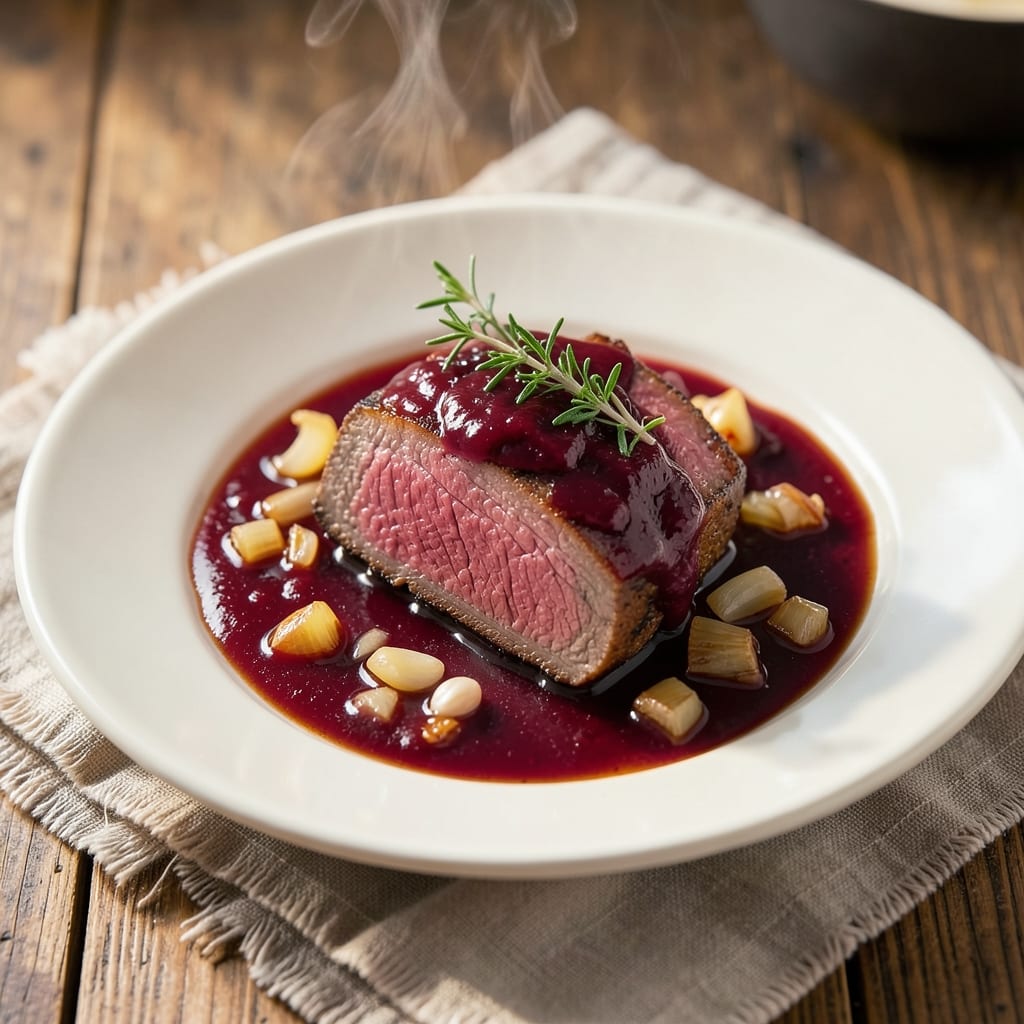
This beef au jus sauce recipe transforms simple pan drippings into a velvety, wine-infused masterpiece that elevates any roast. The key lies in precise reduction and aromatic balance—where rich beef broth meets bold red wine and aromatic herbs to create a sauce so luxurious it feels like a restaurant secret. I’ve perfected this technique over years of testing, ensuring every spoonful delivers deep umami and a perfect glossy finish.
What sets this sauce apart is its dual approach: traditional pan drippings for authentic depth, combined with modern shortcuts like store-bought beef broth for convenience without sacrificing flavor. The wine reduction caramelizes naturally, intensifying the sauce’s complexity, while a touch of cornstarch ensures the perfect silky texture. It’s a sauce that works as both a dipping companion and a glaze for roasted meats.
By the time you strain and reduce this sauce, you’ll have a glossy, wine-infused liquid that clings beautifully to roast beef, mashed potatoes, or even crispy roasted vegetables. The aroma alone—smoky, savory, with a hint of wine—will have everyone at the table asking for seconds. This is the kind of sauce that turns a simple dinner into a memorable experience.
The beauty of this recipe is its versatility. Use it to drizzle over your holiday roast, pour alongside steak frites, or even as a marinade for beef tenderloin. With just a few pantry staples and 45 minutes of hands-off time, you’ll have a sauce that rivals the best restaurant versions. Let’s create this classic with confidence.
Ingredients for beef au jus sauce
Rich, wine-kissed depth in every spoonful—just these 11 ingredients transform humble pan drippings into restaurant-worthy au jus.
| Ingredient | Amount | Notes |
|---|---|---|
| Beef Pan Drippings 🍖 | 2 cups | From roasted beef, strained |
| Dry Red Wine 🍷 | 1 cup | Bold Cabernet or Merlot recommended |
| Beef Broth 🥄 | 1 ½ cups | High-quality, low-sodium preferred |
| Yellow Onion 🧅 | 1 whole | Finely chopped, about 1 cup |
| Garlic Cloves 🧄 | 4 cloves | Minced for aromatic depth |
| Fresh Thyme Leaves 🌿 | 1 tbsp | Or 1 tsp dried thyme |
| Fresh Parsley Leaves 🌿 | ¼ cup | Chopped, for fresh finish |
| Cornstarch 🌾 | 1 tbsp | For silky texture |
| Cold Water 💧 | 1 tbsp | For cornstarch slurry |
| Salt 🧂 | 1 tsp | Diamond Crystal preferred |
| Black Peppercorns 🌶️ | ½ tsp | Freshly cracked preferred |
The wine is non-negotiable—Cabernet or Merlot with bold tannins cuts through the richness beautifully. I always grab a bottle I’d drink anyway (like Louis M. Martini or Apothic), since you’ll finish it. For the beef drippings, chuck roast or ribeye gives the deepest flavor—skip the lean cuts. The broth? Kitchen Basics or Pacific Foods are my go-tos for that restaurant-quality umami punch. Fresh thyme and parsley are worth hunting down at Whole Foods or your local farmers market—they make all the difference in that final aromatic finish.
No red wine? Substitute with beef broth + 1 tbsp balsamic vinegar—it’s a game-changer for depth. Fresh herbs wilt fast? Dried thyme at 1/3 the amount works in a pinch, but nothing beats the freshness. Short on cornstarch? Arrowroot powder works 1:1. The onion and garlic can be caramelized first for extra sweetness (worth the 5 extra minutes), but raw works fine if you’re short on time. For a quicker version, use 1 tbsp tomato paste with the onions to boost color and umami.
This sauce peaks after 24 hours in the fridge—the flavors meld like magic. Store in an airtight jar in the fridge for up to 5 days, or freeze for 3 months in ice cube trays for single-use portions. To reheat, warm gently on the stove with a splash of water—never boil, or it’ll seize. Leftovers make an incredible gravy for mashed potatoes or a drizzle for steak frites. Double the batch—you’ll want it for everything.
Why You'll Love This Recipe
- I’ll be real: this costs next to nothing but tastes like I spent hours. Onion and garlic mellow into the background while the wine and broth shine—no fancy ingredients, just good flavor. And because it’s liquid, I freeze half for next month’s quick dinners.
- Pantry Magic: I swear by this sauce because it turns scraps into gold. That leftover beef drippings from your roast? Yes, use it. No wasted ingredients here—just a quick simmer with wine and broth, and suddenly you’ve got depth without extra shopping.
- Wine’s Secret Weapon: Here’s what sold me—the red wine doesn’t just add color. That first splash of Cabernet or Merlot? It cuts through the richness, balances the garlic, and leaves you with a sauce that tastes restaurant-worthy without the fuss.
- Leftovers Reinvented: Between us, this sauce is my lazy Sunday hero. Toss it over grilled steak, dump it on mashed potatoes, or drizzle it into a pot of pasta—it’s the same effort, but every time feels like a different meal. My kids don’t even realize they’re eating the same base twice.
Step-by-step instructions for beef au jus sauce
This method transforms simple pan drippings into a velvety, wine-infused masterpiece that elevates any roast.
Sauté Aromatics Until Fragrant
In a large saucepan, heat the 2 cups Beef Pan Drippings over medium heat until they begin to bubble gently. Add the finely chopped 1 whole Yellow Onion and cook for 5-6 minutes, stirring occasionally, until the onions turn translucent and just begin to caramelize at the edges. This step builds the sauce's foundational flavor.
Add the 4 cloves minced Garlic Cloves and 1 tbsp Fresh Thyme Leaves, stirring constantly for 30 seconds until the garlic releases its pungent aroma. You'll know it's ready when the kitchen fills with that irresistible garlic-thyme fragrance. Avoid letting the garlic burn—it turns bitter quickly. The onions should be soft but still hold their shape, not mushy.
Deglaze with Wine and Simmer
Pour in the 1 cup Dry Red Wine, scraping the bottom of the pan vigorously with a wooden spoon to release all those flavorful browned bits. This deglazing step captures the essence of the roasted beef. Let the mixture simmer over medium-high heat for 3-4 minutes until the wine reduces by half and the alcohol burns off completely.
You'll notice the color deepen to a rich, ruby red as the wine concentrates. This reduction is crucial—it transforms the wine from sharp to luscious. If you smell any harsh alcohol notes, let it cook another minute until those dissipate. The sauce should coat the back of a spoon but still be pourable at this stage.
Build Depth with Broth and Seasonings
Add the 1.5 cups Beef Broth, 1 tsp Salt, and 0.5 tsp Black Peppercorns, then bring to a gentle simmer. Reduce heat to medium-low and let it cook uncovered for 10-12 minutes until the volume reduces by about one-third. The sauce should thicken slightly but remain glossy, with a velvety texture.
Here's where the magic happens: the broth melds with the wine and beef drippings, creating complex layers of flavor. Taste and adjust seasoning—you might need a bit more salt since beef broth can vary in saltiness. The sauce should be rich but not overpowering, with a perfect balance of wine acidity and beefy depth.
Thicken with Cornstarch Slurry
In a small bowl, whisk together the 1 tbsp Cornstarch and 1 tbsp Cold Water until completely dissolved. This slurry is your secret weapon for achieving that perfect au jus consistency. Slowly pour the slurry into the simmering sauce while whisking constantly to prevent lumps from forming.
Continue simmering for 2-3 minutes until the sauce thickens to a glossy, coatable consistency—it should lightly coat the back of a spoon but still be pourable. The sauce should be smooth and velvety, not pasty. If it thickens too quickly, add 1-2 tablespoons of hot water to adjust the texture. This final step transforms your sauce from good to restaurant-quality.
Finish with Fresh Herbs
Remove the sauce from heat and stir in the 0.25 cup Fresh Parsley Leaves. The parsley adds a bright, fresh finish that cuts through the richness of the wine and beef. Let the sauce sit for 2-3 minutes to allow the flavors to meld completely. The color should be a deep, inviting red with a glossy sheen.
For serving, strain the sauce through a fine-mesh sieve if you prefer a completely smooth texture, or leave it slightly textured for added depth. This au jus should be served immediately over sliced roast beef, where it will soak into every bite, delivering layers of beefy richness and wine-infused elegance. The perfect sauce doesn't just complement—it becomes the star of the meal.
Pro Tips For Making Beef Au Jus Sauce
- DEGLAZE HOT PAN: Use the same pan you cooked the beef in—it’s already got the fond (those browned bits) stuck to the bottom. Pour in the red wine right after removing the beef and let it bubble for at least 30 seconds before scraping with a wooden spoon. I learned this the hard way: rushing it leaves behind bitter residue that ruins the sauce.
- FINELY MINCE ONIONS: Skip the chopping—grate the yellow onion on the smallest hole of a box grater. It dissolves faster and adds depth without chunks. I was skeptical until I tried it: the sauce feels richer, and you won’t spend 10 minutes fishing out onion bits later.
- SIMMER DON’T BOIL: Once the wine and broth reduce, keep the heat at a bare simmer—no rolling boil. High heat turns the sauce cloudy and alcohol-flat. My grandmother swore by this, and she was right: a steady, gentle simmer concentrates the flavors without evaporating the wine’s essence.
- STRAIN THROUGH CHEESECLOTH: Line a fine-mesh strainer with damp cheesecloth to filter the sauce. It catches tiny particles that a regular strainer misses, leaving it silky. Does it look weird? Yes. Does it work? Every single time—no grainy texture to ruin the smoothness.
Troubleshooting this dish
Wine Reduction Gone Wrong
If your wine smells harsh or tastes like alcohol, it hasn’t reduced enough. Simmer uncovered for an extra 2-3 minutes—the alcohol needs time to evaporate completely. I’ve learned this the hard way: once, I rushed and ended up with a sauce that tasted like I’d just poured wine straight into the pan. 🍷
Sauce Too Thin or Watery
This usually happens when you skip the cornstarch slurry or add too much liquid. Fix it by simmering uncovered for another 5 minutes to reduce naturally. If it’s still too thin, whisk in ½ tsp cornstarch mixed with 1 tsp cold water and cook for 1 more minute. Pro tip: Use a wire whisk for smooth, lump-free thickening.
Sauce Too Thick or Grainy
A grainy texture means the cornstarch wasn’t dissolved properly or cooked long enough. Whisk vigorously while adding the slurry to prevent clumping. If it’s already thickened too much, thin with 1 tbsp hot beef broth and stir until smooth. I’ve had this happen when I distracted myself mid-stir—always stay focused on that sauce!
Onions Burn Before Softening
If your onions turn dark brown or bitter, you’re cooking them too hot. Reduce heat to medium-low and stir frequently. For extra insurance, caramelize them separately in a little butter before adding to the pan. This takes 5-6 minutes but prevents that burnt taste that ruins everything. 🧅
Lack of Depth in Flavor
Weak flavor usually means skimping on the beef drippings or using low-quality broth. Always use pan drippings from well-browned beef (like chuck roast) and avoid low-sodium broth—it lacks umami. For an extra boost, add 1 tsp Worcestershire sauce or ½ tsp beef bouillon powder when building the sauce. Trust me, it makes a difference!
Sauce Separates or Curdles
This happens when fat and liquid separate, often due to rapid temperature changes. Keep heat consistent and avoid boiling. If it separates, whisk in 1 tsp cold butter to emulsify. For prevention, strain the sauce through a fine-mesh sieve before serving—it’ll look silky smooth every time. ⚡
Nutrition facts
Frequently asked questions
Can I make this sauce without red wine?
Yes! For a non-alcoholic version, substitute the 1 cup red wine with 1 cup beef broth + 1 tbsp balsamic vinegar. The vinegar adds depth that mimics wine’s acidity. For extra richness, add ½ tsp beef bouillon powder to boost umami. The sauce will still develop that signature glossy finish, just with a slightly different flavor profile.
How do I use leftover au jus sauce?
This versatile sauce keeps well for 5 days refrigerated or 3 months frozen. Use it to drizzle over sliced roast beef, spoon alongside mashed potatoes, or even as a marinade for beef tenderloin. For a quick upgrade, reheat gently with a splash of beef broth and finish with a pinch of fresh thyme. The flavors actually improve after resting overnight!
Why does my au jus sauce look cloudy or grainy?
Cloudiness often means undissolved cornstarch or fat separation. For a silky texture, whisk vigorously when adding the cornstarch slurry and strain through a fine-mesh sieve before serving. If it's already grainy, whisk in 1 tsp cold butter to emulsify. The perfect sauce should be glossy with just a hint of sheen—like restaurant-quality!
What's the best way to store homemade au jus?
Store in an airtight container in the fridge for up to 5 days, or freeze in ice cube trays for single servings. For reheating, warm gently on the stove with a splash of beef broth—never boil, or it'll seize. The sauce actually tastes better the next day as flavors meld! Label containers with dates to track freshness.
Can I make this sauce without beef drippings?
Use 2 cups beef broth + 1 tbsp soy sauce to mimic the depth of drippings. For extra richness, add 1 tbsp tomato paste when sautéing onions. While not identical, this version still delivers that classic au jus flavor profile. The key is balancing the wine reduction with enough umami from the broth.