
Soups & Stews
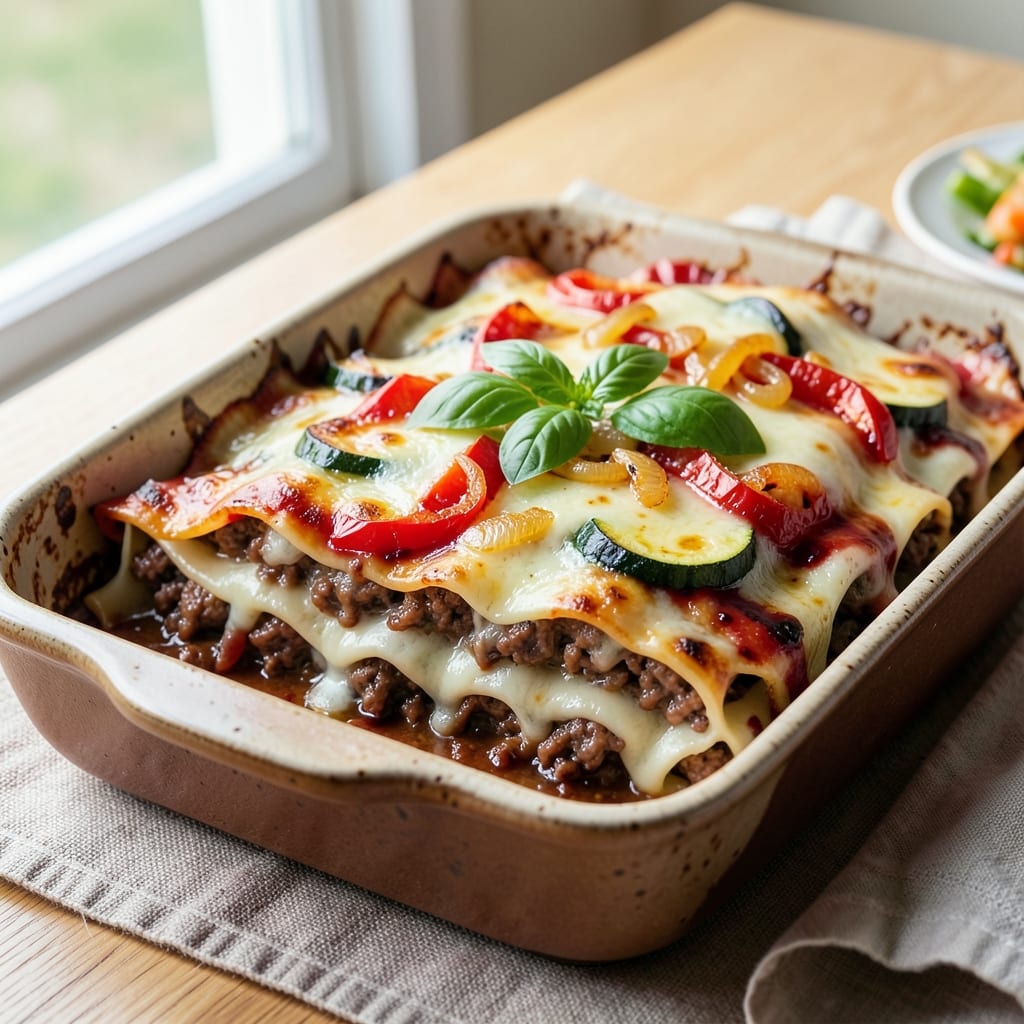
This beef and veg lasagna recipe delivers restaurant-quality layers of savory beef, tender vegetables, and melted cheese—all without the fuss of traditional boiling noodles. 💛 The secret lies in using no-boil lasagna sheets that soften perfectly in the oven, while browning the beef and sautéing the vegetables creates deep, caramelized flavors that elevate every bite. I developed this recipe after years of testing different techniques, and it’s now my go-to for family dinners and gatherings where comfort food is always in demand.
The beauty of this lasagna is its balance—rich, hearty beef sauce layered with crisp-tender vegetables like zucchini and bell peppers, all blanketed in a creamy béchamel and melted mozzarella. What makes it special is the simplicity: no pre-cooking noodles, no complicated sauce reductions, just straightforward layers that come together in one baking dish. The result? A lasagna that’s both indulgent and foolproof, perfect for weeknights or special occasions.
By the time it emerges from the oven, you’ll have a lasagna with perfectly tender noodles, a golden cheese crust, and layers of flavor that make every forkful satisfying. The beef stays juicy, the vegetables retain their texture, and the cheese melts into a velvety blanket over the top. This is the kind of dish that transforms a simple dinner into a memorable meal, without requiring hours in the kitchen.
Serve it with a side of garlic bread and a crisp salad for a complete Italian feast. Ready to master this lasagna? Let’s get started with the ingredients and step-by-step instructions that make it easy and delicious every time.
Ingredients for beef and veg lasagna
Pantry staples meet fresh veggies for a lasagna that's foolproof and flavor-packed.
| Ingredient | Amount | Notes |
|---|---|---|
| Ground Beef 🥩 | 1 ½ lb | 80% lean, finely ground |
| No-Boil Lasagna Sheets 🍝 | 12 pieces | Standard 9x13 inch size |
| Zucchini 🥒 | 2 medium | Sliced into 1/4-inch rounds |
| Bell Pepper 🍅 | 1 whole | Red or green, sliced |
| Yellow Onion 🧅 | 1 large | Diced, about 1 cup |
| Garlic Cloves 🧄 | 4 cloves | Minced for beef sauce |
| Tomato Sauce 🍅 | 2 cups | High-quality jarred or homemade |
| Mozzarella Cheese 🧀 | 2 cups | Part-skim, shredded |
| Ricotta Cheese 🧀 | 1 ½ cups | Full-fat for creaminess |
| Parmesan Cheese 🧀 | ½ cup | Freshly grated |
| Unsalted Butter 🧈 | 3 tbsp | For béchamel sauce |
| All-Purpose Flour 🌾 | ¼ cup | For béchamel |
| Whole Milk 🥛 | 1 ½ cups | For béchamel |
| Salt 🧂 | 1 ½ tsp | Kosher or sea salt |
| Black Pepper 🌶️ | ½ tsp | Freshly ground |
| Dried Basil 🌿 | 1 tsp | For beef sauce |
| Olive Oil 🫒 | 2 tbsp | For sautéing veggies |
The beef is where the magic happens. 80% lean ground beef gives you that perfect balance of flavor and texture—leaner cuts can dry out. I grab mine from Costco or the butcher counter at Whole Foods for the best quality. Freshly ground is ideal, but pre-ground works fine if it's labeled fresh. For the veggies, zucchini and bell peppers should be firm and vibrant—no mushy spots. The no-boil lasagna sheets? Barilla or De Cecco are my go-tos—they soften perfectly without pre-cooking. Look for the ones labeled 'no-boil' or 'oven-ready' in the pasta aisle.
No ricotta? Cottage cheese blended smooth works in a pinch (drain excess liquid first). Running short on mozzarella? Provolone or sharp cheddar add great flavor—just reduce the amount by a third. The béchamel sauce is where the creamy goodness comes from, so don't skip it. Butter, flour, and milk are all you need for this simple roux. For the beef sauce, I like to add a splash of red wine if I've got it—Cabernet Sauvignon works great. If not, just use extra tomato sauce. The garlic and onion should be cooked down until soft but not browned—this keeps the flavors balanced.
This lasagna tastes even better the next day, so make it ahead if you can. Assemble everything, cover with foil, and refrigerate for up to 24 hours before baking. The cheese keeps well in the fridge for 3 months if wrapped tightly, and the ricotta can be stored in its container for 2 weeks. For the veggies, store them in the crisper drawer—zucchini lasts 5 days, bell peppers keep for a week. The ground beef should be used within 2 days of purchase for best flavor. If you're prepping ahead, you can even make the béchamel sauce a day in advance and reheat it gently before using.
Why You'll Love This Recipe
- No-Fuss Assembly: I swear by no-boil lasagna sheets—no pre-cooking, no waiting, just layer and bake. The zucchini and bell peppers chop fast (honestly, I keep a knife handy just for this), and the onion adds sweetness without fuss.
- Rich, Fresh Layers: Ground beef browned with garlic and herbs? That’s the base, but the roasted veggies—zucchini with its slight crunch, bell pepper adding brightness—make it feel lighter than classic lasagna. The no-boil sheets stay tender, so every bite has that perfect mix of hearty and fresh.
- Meal Prep Hero: Between us, this is my go-to for busy nights. Assemble it ahead, refrigerate, then bake when ready—no one notices the prep time. Leftovers? Even better the next day, if there are any (my kids always finish it).
- Budget-Friendly Feast: Ground beef stretches far, and seasonal veggies keep costs low. A single batch feeds four, and the no-boil sheets cut grocery runs short. Plus, it’s the kind of dish that makes you look like you slaved all day—without the effort.
Step-by-step instructions for beef and veg lasagna
Here's how to build layers of flavor—no-boil sheets make this easier than classic lasagna.
🍳 Step 1: Sauté the Veggie Base
Heat the 2 tablespoons olive oil in a large skillet over medium heat. Add the 1 large yellow onion and 1 whole bell pepper (sliced), cooking for 5-6 minutes until softened and slightly caramelized. Toss in the 2 medium zucchini (sliced into ¼-inch rounds) and cook for another 3 minutes until just tender.
Push the veggies to one side of the pan and add the 1.5 lb ground beef. Break it up with a wooden spoon as it browns, about 5-6 minutes, until no longer pink. Stir in the 4 cloves minced garlic and cook for 30 seconds until fragrant. Season with 1.5 tsp salt, 0.5 tsp black pepper, and 1 tsp dried basil, then mix in the 2 cups tomato sauce. Let the mixture simmer for 3-4 minutes to meld the flavors.
🥘 Step 2: Make the Creamy Béchamel
In a medium saucepan, melt the 3 tablespoons unsalted butter over medium heat. Whisk in the 0.25 cup all-purpose flour and cook for 1-2 minutes until golden brown. Slowly pour in the 1.5 cups whole milk, whisking constantly to prevent lumps. Keep stirring until the sauce thickens to a smooth, creamy consistency, about 5-7 minutes. Remove from heat and stir in the 1.5 cups ricotta cheese and 0.5 cup freshly grated parmesan cheese until fully combined.
Season the béchamel with 0.5 tsp salt and 0.25 tsp black pepper. Here's the thing—this sauce should be thick enough to cling to the lasagna sheets but still spreadable. If it's too thick, whisk in 1-2 tablespoons milk to loosen it slightly.
🥘 Step 3: Assemble the Lasagna Layers
Preheat your oven to 375°F. Grease a 9x13-inch baking dish with a little olive oil or butter. Spread ½ cup of the beef-veggie mixture on the bottom of the dish to create a flavorful base. Place 4 no-boil lasagna sheets over the sauce, slightly overlapping them if needed.
Spread ⅓ of the béchamel sauce evenly over the sheets, then sprinkle ⅓ of the 2 cups mozzarella cheese. Repeat the layers: another 4 no-boil sheets, ⅓ of the beef-veggie mixture, ⅓ of the béchamel, and ⅓ of the mozzarella. Finish with the last 4 no-boil sheets, remaining beef-veggie mixture, and béchamel sauce. Top with the final ⅓ of mozzarella, pressing down gently to help it melt into the layers.
🔥 Step 4: Bake to Golden Perfection
Cover the lasagna tightly with aluminum foil and bake for 25 minutes. Remove the foil and bake for another 10-15 minutes until the top is golden brown and bubbly. The edges should be crispy, and the cheese should be melted and slightly browned. If the top browns too quickly, tent it loosely with foil to prevent burning.
Let the lasagna rest for 10-15 minutes before slicing—this gives the layers time to set and makes it easier to serve. The no-boil sheets will hold up perfectly, but the real magic happens when the cheeses meld together during resting. Slice into 6 equal portions and serve with a side salad or garlic bread for the ultimate comfort meal.
Pro Tips For Making Beef And Veg Lasagna
- Sear the Beef First: I learned this the hard way—skipping the sear makes the beef taste bland. Brown the ground beef in batches over medium-high heat until deeply caramelized (it should look almost black in spots), then drain the fat. That crust locks in flavor, and you’ll taste the difference when it’s layered.
- Salt the No-Boil Sheets: No-boil lasagna sheets still need a little help staying tender. Sprinkle each sheet with a pinch of salt before layering—it prevents them from drying out in the oven. (Yes, even if they’re labeled no-boil, they’re not magic.)
- Prep Zucchini Like a Pro: Skip the soggy mess by grating the zucchini, then pressing it hard in a clean towel to squeeze out excess water. Let it sit for 5 minutes while you finish chopping the peppers—this keeps your layers from turning into a waterlogged disaster.
- Layer Thin, Even Batches: Resist the urge to pile everything high. Use half the sauce, meat, and veggies for the first three layers, then repeat. This guarantees even cooking—no underdone middle or overcooked top. (And yes, it’s worth the extra minute of planning.)
Common mistakes when making this recipe
Overcooking the Beef
One of the biggest mistakes is overcooking the beef until it's dry and tough. Ground beef should be cooked until it's just browned and no longer pink in the center—about 5-6 minutes over medium heat. I've ruined many lasagnas by letting the beef turn into a greasy, rubbery mess. The key is to break it up with a spoon while cooking and remove it from heat as soon as it reaches 160°F internal temperature. 🔥
Skipping the Béchamel
Many home cooks try to cut corners by skipping the béchamel sauce or replacing it with heavy cream. This is a huge mistake—the béchamel adds that creamy, velvety texture that makes lasagna truly special. If you're worried about the extra step, make it ahead of time and reheat it gently before using. The butter-flour-milk roux creates a rich base that balances the tomato sauce perfectly.
Uneven Layering
Uneven layers lead to soggy noodles and a messy lasagna. I see this all the time when people don't distribute the sauce and cheese evenly. Start with a thin layer of beef mixture on the bottom, then alternate between 4 lasagna sheets, ⅓ of the béchamel, and ⅓ of the mozzarella for each layer. Press down gently on each layer to help the cheese adhere and prevent shifting during baking.
Not Resting Before Slicing
Cutting into lasagna immediately after baking is a recipe for disaster—it'll fall apart and make a mess. The cheeses need time to set, and the layers need to firm up. Always let your lasagna rest for 10-15 minutes before slicing. This gives the no-boil sheets time to absorb all the flavors and creates clean slices. I've learned this the hard way after serving lasagna that slid right off the cutting board! 🍝
Using Pre-Cooked Noodles
Some people think they can use regular lasagna noodles and just bake them longer. This leads to mushy, overcooked noodles that turn to paste. The beauty of no-boil sheets is that they soften perfectly in the oven without pre-cooking. If you must use regular noodles, boil them al dente (1 minute less than package instructions) and drain them well before layering. The difference in texture is night and day.
Overloading the Cheese
While cheese is what makes lasagna delicious, piling on too much can create a greasy, unbalanced dish. Stick to the 2 cups mozzarella and 1.5 cups ricotta called for in the recipe. The ricotta should be spread thinly between layers—don't create a thick layer that won't bake through. Too much cheese means soggy noodles and a lasagna that's more like a cheese casserole than a layered masterpiece.
Nutrition facts
Frequently asked questions
Can I make this lasagna ahead of time?
Assemble the lasagna completely, cover it tightly with foil, and refrigerate for up to 24 hours before baking. This actually enhances the flavors. When ready to bake, add 10-15 minutes to the baking time (cover with foil for the first 35 minutes instead of 25 minutes). The cheese will melt beautifully when it comes out of the oven.
What if I don't have ricotta cheese?
No problem! Blend 1.5 cups cottage cheese until smooth (drain excess liquid first) as a substitute. For a richer flavor, mix in ¼ cup grated parmesan. The texture will be slightly different but still delicious. If you're avoiding dairy, use a vegan ricotta alternative or a mix of mashed tofu and nutritional yeast for a similar creamy consistency.
How do I prevent the lasagna from getting soggy?
The key is proper layering and baking technique. First, don't skip the béchamel—it creates a moisture barrier between layers. Second, bake covered with foil for the first 25 minutes to trap steam, then uncover to crisp the top. Finally, let it rest for 10-15 minutes before slicing so the noodles absorb flavors instead of getting waterlogged.
Can I use frozen vegetables in this recipe?
Yes, but thaw and drain them first to avoid excess moisture. For best texture, use fresh zucchini and bell peppers—they hold up better during baking. If using frozen, pat them completely dry with a paper towel before layering. Avoid overloading with frozen veggies, as they release more liquid than fresh ones during baking.
What's the best way to reheat leftovers?
Slice the lasagna and reheat portions in the microwave for 2-3 minutes (covered with a damp paper towel) or in a 350°F oven for 15-20 minutes until bubbly. For the crispest texture, cover with foil and bake, then uncover for the last 2 minutes to brown the cheese. Leftovers keep well in the fridge for 4-5 days or can be frozen for up to 3 months.