
Main Courses
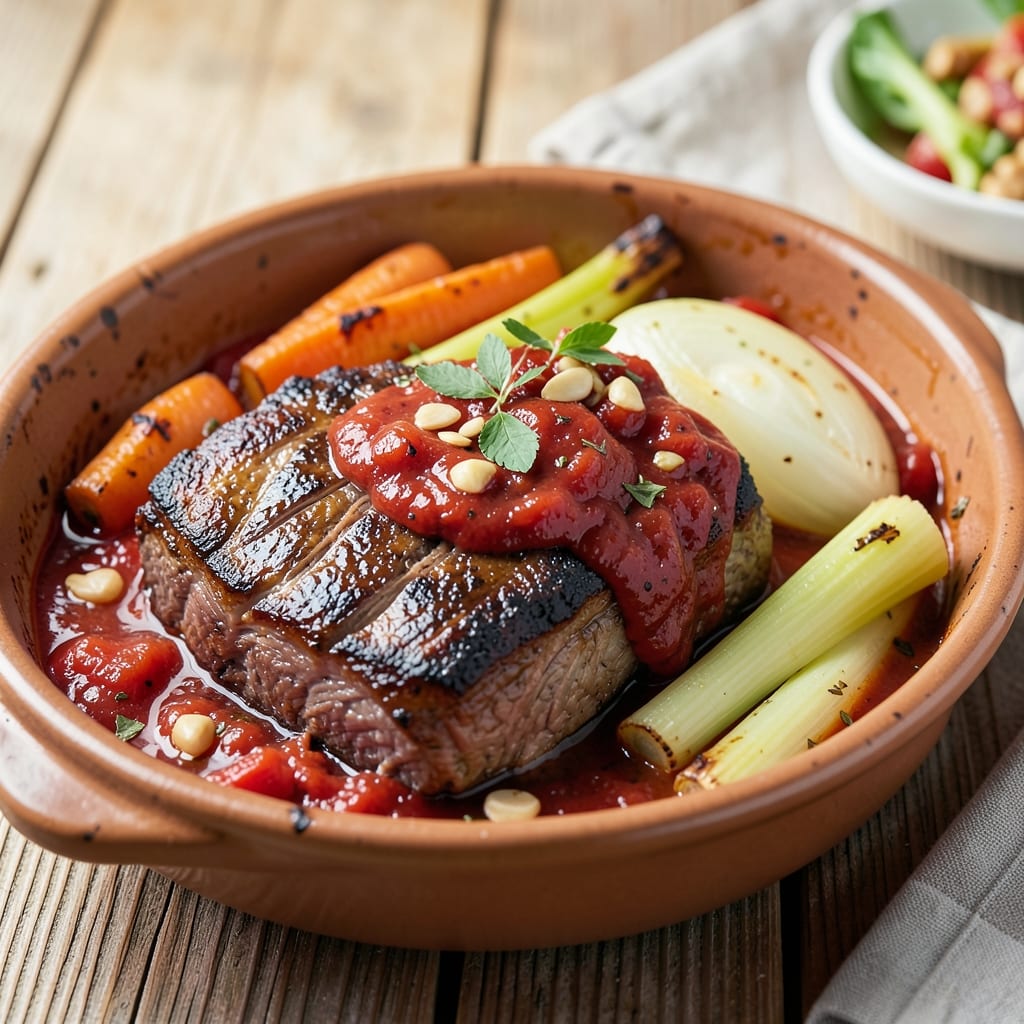
This Italian-style beef and tomatoes recipe transforms simple ingredients into a deeply flavorful one-pot meal that tastes like a restaurant classic. 💛 I developed it after years of testing what makes simmered beef dishes truly special—tender meat, rich tomato sauce, and aromatic herbs working in perfect harmony. The secret lies in slow cooking the beef until fork-tender while letting the tomatoes caramelize into a velvety sauce that clings to every bite.
What makes this recipe particularly approachable is the one-pot method, which means minimal cleanup and maximum flavor development. You'll start with beef cut into bite-sized pieces that cook down beautifully, while canned tomatoes (or fresh if you prefer) form the base of a sauce that deepens in flavor as it simmers. The addition of garlic, onions, and herbs creates layers of complexity without requiring advanced techniques—just time and patience.
The result is a dish that's rich yet balanced, with tender beef swimming in a sauce that's both hearty and elegant. The tomatoes soften into a luscious consistency while retaining their natural sweetness, creating a sauce that's perfect for serving over pasta, alongside crusty bread, or with a side of roasted vegetables. This recipe delivers restaurant-quality results with the simplicity of a weeknight dinner.
For an extra touch of sophistication, garnish with fresh basil or a sprinkle of grated parmesan just before serving. The flavors only get better the next day, making it ideal for meal prep or when you want to impress guests with minimal effort. Let's get cooking!
Ingredients for beef and tomatoes
Italian pantry staples and tender beef create a restaurant-worthy one-pot masterpiece.
| Ingredient | Amount | Notes |
|---|---|---|
| Chuck Roast 🥩 | 1 ½ lb | Cut into 1-inch cubes |
| San Marzano Tomato Cans 🍅 | 2 cans | 28 oz each, crushed by hand |
| Yellow Onion 🧅 | 1 whole | Diced into 1/4-inch pieces |
| Garlic Cloves 🧄 | 4 cloves | Minced finely |
| Carrots 🥕 | 3 whole | Cut into 1-inch chunks |
| Celery Stalks 🌿 | 3 whole | Diced into 1/4-inch pieces |
| Extra-Virgin Olive Oil 🫒 | ¼ cup | For searing beef |
| Dry Red Wine 🍷 | 1 cup | Bold variety like Cabernet |
| Beef Broth 💧 | 2 cups | Low-sodium preferred |
| Tomato Paste 🍅 | 2 tbsp | For thickening sauce |
| Fresh Rosemary 🌿 | ¼ cup | Chopped finely |
| Fresh Thyme 🌿 | ¼ cup | Leaves only, chopped |
| Bay Leaves 🍃 | 2 whole | For aromatic depth |
| Salt 🧂 | 1 ½ tsp | Diamond Crystal preferred |
| Ground Black Pepper 🌶️ | ½ tsp | Freshly ground |
The chuck roast is the heart of this dish—its marbled fat renders down to create a rich sauce while keeping the meat fork-tender. Look for well-marbled cuts at your local butcher or the pre-cubed chuck section at Whole Foods or Costco. If you're buying whole, ask for it cut into 1-inch cubes to save time. San Marzano tomatoes are non-negotiable for that authentic Italian sweetness—Trader Joe's carries them affordably, or find them at specialty Italian markets. Fresh herbs elevate the dish, so grab a small bunch of rosemary and thyme at the grocery store's produce section (they keep for weeks in the fridge if wrapped in damp paper towels).
No red wine? Substitute with beef broth plus 1 tbsp balsamic vinegar for depth. The tomato paste can be skipped if you prefer a lighter sauce, but it adds incredible richness—those little squeeze tubes from Trader Joe's are perfect for this. Fresh herbs? Dried will work at one-third the amount, but fresh is ideal. For extra umami, add a pinch of fish sauce or soy sauce (just 1/2 tsp), though it's optional. The carrots and celery form the aromatic base—feel free to swap for fennel or zucchini if you prefer.
This dish tastes even better the next day as flavors meld. Store in an airtight container in the fridge for 4-5 days or freeze for 3 months. Portion into meal prep containers for easy lunches—just reheat with a splash of water or broth. For serving, a sprinkle of fresh basil or grated Parmesan adds that final restaurant touch. The sauce thickens as it cools, so thin with extra broth if needed when reheating.
Why You'll Love This Recipe
- One-Pot Magic: I swear by this recipe when I’m too tired to scrub three pots. Chuck roast and San Marzano tomatoes simmer together—no flipping pans, no fuss—just dump, season, and let the slow cooker or Dutch oven do the work. The onions caramelize right in the sauce, and the carrots soften without turning to mush. (Yes, even on a Tuesday night.)
- Sauce That Sticks: Between us, the San Marzano tomatoes change the game—sweet, rich, and never mealy. The garlic and onions build layers of flavor while the beef gets fork-tender, soaking up that velvety sauce like a sponge. Honestly, I’ve tried other recipes, but this one? It’s the only one my picky husband doesn’t complain about.
- Leftovers for Days: This dish tastes better the next day—like, “why didn’t I make more?” better. I’ll prep a big batch on Sunday, portion it out, and reheat slices for sandwiches or toss it into pasta for a lazy weeknight. The carrots stay tender, the beef stays juicy, and the sauce? Even richer after a night in the fridge.
- Budget Beef Win: Chuck roast is my wallet’s best friend—cheap, hearty, and forgiving. A single roast feeds my family for three meals, and the San Marzano cans (splurge alert, but worth it) stretch the sauce thin enough to stretch my grocery budget. I’ll be real: it’s the kind of meal that makes me feel like I’m feeding a crowd without breaking the bank.
Step-by-step instructions for Italian-style simmered beef and tomatoes
Here's the professional method for developing deep, rich flavors in one pot.
🔥 Step 1: Sear the Chuck Roast for Maximum Flavor
Heat a Dutch oven over medium-high heat until hot. Add the 0.25 cup extra-virgin olive oil and swirl to coat the bottom. Working in batches (you'll need to do this twice), add the 1.5 lb chuck roast cut into 1-inch cubes and sear undisturbed for 2-3 minutes per side until deeply browned.
This crucial step builds the Maillard reaction that creates deep flavor. Don't rush it—you want each piece to develop a rich crust. Once all pieces are browned, transfer them to a plate and set aside. The residual fat in the pot will become the foundation of your sauce.
👨🍳 Step 2: Build the Aromatic Base
In the same Dutch oven, add the diced yellow onion and cook for 5 minutes until softened and translucent. Add the minced garlic cloves, diced carrots, and diced celery stalks, stirring frequently for 3-4 minutes until the vegetables begin to soften and release their natural juices.
Here's where the flavor foundation takes shape. The vegetables should be tender but not mushy—this ensures they'll break down beautifully during the long simmer. Stir occasionally to prevent burning while allowing the vegetables to develop their natural sweetness.
🍳 Step 3: Deglaze and Develop the Sauce
Pour in the 1 cup dry red wine and scrape up all the browned bits from the bottom of the pot using a wooden spoon. This deglazing step captures all the concentrated flavors you worked so hard to create. Let the wine simmer for 3-4 minutes until reduced by half.
Next, stir in the 2 tbsp tomato paste and cook for 1 minute until it darkens slightly. This creates a rich, velvety base for your sauce. Then add the crushed San Marzano tomato cans, 2 cups beef broth, 1.5 tsp salt, and 0.5 tsp ground black pepper. Stir well to combine all ingredients.
🥘 Step 4: Simmer and Infuse with Herbs
Return the browned beef to the pot and add the 2 whole bay leaves, 0.25 cup chopped fresh rosemary, and 0.25 cup chopped fresh thyme. Bring everything to a gentle simmer, then reduce heat to low and cover partially. Let it cook for 2-2.5 hours until the beef is fork-tender and the sauce has thickened.
This long, slow cooking process is what transforms tough chuck roast into melt-in-your-mouth beef. The herbs will infuse the dish with their aromatic qualities, while the tomatoes develop a rich, concentrated flavor. Stir occasionally to prevent sticking, but avoid over-mixing which can make the meat tough.
⏰ Step 5: Finish and Adjust Seasoning
Once the beef is tender, uncover the pot and increase heat to medium to reduce the sauce for 5-10 minutes until it reaches your desired consistency. Taste and adjust seasoning if needed—you may need to add a bit more salt or pepper depending on your preference.
The sauce should coat the back of a spoon and be rich but not gloppy. If it's too thin, simmer uncovered for a few more minutes to thicken. The beef should be so tender it practically falls apart with a fork. Serve immediately over polenta or crusty bread to soak up every last bit of that delicious sauce.
Pro Tips For Making Beef And Tomatoes
- Sear the Chuck Roast: After burning three batches of chuck roast, I finally learned to sear it in two batches—don’t crowd the pan. Use about 2 tablespoons of oil per batch, high heat, and let those brown crusts form before anything else goes in. That’s what makes the sauce taste like it’s been simmering all day, not just an hour.
- Dice the Onion Small: I used to cut onions into big chunks, thinking they’d soften into oblivion. Wrong. Dice them into 1/4-inch pieces—they’ll melt into the tomatoes faster and actually sweeten the sauce instead of sitting like sad, undercooked rocks. (Yes, even if you’re impatient like me.)
- Crush Garlic with a Knife: Skip the mincer—flat garlic cloves in the pan burn before they flavor. Instead, smash them with the side of your knife first, then finely chop. They’ll release their aroma without turning bitter, and you won’t spend 10 minutes waiting for them to soften.
- Simmer Tomatoes Low and Long: This isn’t the prettiest method, but it’s the tastiest: after adding the tomatoes, reduce heat to a bare simmer and walk away for at least 45 minutes. The longer they cook, the deeper the flavor—no need to stir constantly, just let them work their magic. (Your future self will thank you.)
Common mistakes when making your beef and tomatoes
Overcrowding the Pot
I've made this mistake more times than I'd admit—dumping all the beef into the pot at once. When you overcrowd, the beef steams instead of sears, resulting in pale, bland pieces that don't develop that beautiful crust. The solution? Work in batches—sear half the beef first, then set it aside while you finish the second batch. This ensures each piece gets that perfect golden-brown crust that builds so much flavor. 🔥
Skipping the Deglaze
That browned crust on the bottom of your pot? It's called the fond, and it's packed with flavor. When I first started cooking, I'd just pour in the wine and tomatoes without scraping up those bits, and the sauce would always taste flat. Always deglaze with the wine—use a wooden spoon to scrape up every last bit of that flavor-packed crust. This step adds depth that you simply can't skip.
Underestimating Cook Time
Patience is key with chuck roast, but I've seen so many people pull it out too soon. The beef needs that 2-2.5 hour simmer to become truly tender. I remember my first attempt where I checked it at 1.5 hours—it was still tough as boot leather. Use a meat thermometer if you're unsure: the beef is done when it reaches 203°F internal temperature. Trust the process, and don't rush it.
Using Low-Quality Tomatoes
Not all tomatoes are created equal, especially when it comes to canned varieties. I used to grab whatever was on sale, and my sauce would always taste thin and watery. The secret is San Marzano tomatoes—their natural sweetness and thick texture make all the difference. If you can't find them, look for high-quality crushed tomatoes with no added salt. The better the tomatoes, the richer your sauce will be.
Ignoring the Herbs
Fresh herbs make a world of difference in this dish, and I've seen people skip them or use dried herbs incorrectly. Fresh rosemary and thyme should be chopped finely and added during the final 30 minutes of cooking so they infuse the dish without losing their bright flavor. If you must use dried herbs, use half the amount, but fresh is always better. Don't just toss them in—let them steep in the sauce to release their aromatic oils.
Not Adjusting Seasoning at the End
I used to taste the dish right out of the pot and think it was perfect, only to find it needed more salt after it cooled. Always let the dish sit for 5-10 minutes before tasting and adjusting seasoning. The flavors continue to develop even after cooking, so don't be afraid to add a pinch more salt or pepper if needed. A little extra effort here makes all the difference in the final result. 💡
Nutrition facts
Frequently asked questions
Can I substitute chuck roast with another beef cut?
Yes! For this recipe, you can use stew beef or chuck shoulder as direct substitutes—they have similar fat content and tenderness when slow-cooked. If you prefer leaner options, try top round but expect slightly less juiciness. For extra richness, use brisket, though it may need an additional 30 minutes of cooking time. Always cut into 1-inch cubes for even cooking.
How do I make this dish faster without sacrificing flavor?
For a quicker version, use a pressure cooker—reduce the cooking time to 45-60 minutes on high pressure. Alternatively, sear the beef as directed, then transfer everything to a slow cooker and cook on low for 6-7 hours or high for 4-5 hours. The key is still searing the beef first—this builds the foundational flavor even when time is limited.
What's the best way to serve this beef and tomatoes dish?
This rich, hearty stew pairs perfectly with crusty Italian bread or creamy polenta to soak up the sauce. For a complete meal, serve with roasted potatoes, garlic sautéed spinach, or a simple green salad with lemon vinaigrette. The dish also works beautifully over fresh pasta like pappardelle or tagliatelle if you prefer a lighter presentation.
Can I make this recipe with fresh tomatoes instead of canned?
For 4 large fresh tomatoes, crush them by hand and remove seeds. Use 1 cup tomato juice or beef broth to replace the liquid lost from canned tomatoes. Fresh tomatoes will give a brighter, slightly more acidic flavor—balance it with an extra pinch of sugar (1 tsp) if needed. Simmer slightly longer (10-15 minutes) to break down the tomatoes fully.
Why did my beef turn out tough instead of tender?
Tough beef usually means it didn't cook long enough or was overworked. Always cook chuck roast until it reaches 203°F internal temperature—this ensures tenderness. Avoid lifting the lid frequently (which releases steam and extends cooking time), and never overcrowd the pot during searing. If using a slow cooker, make sure it's on low heat for the full time, not high.