
Soups & Stews
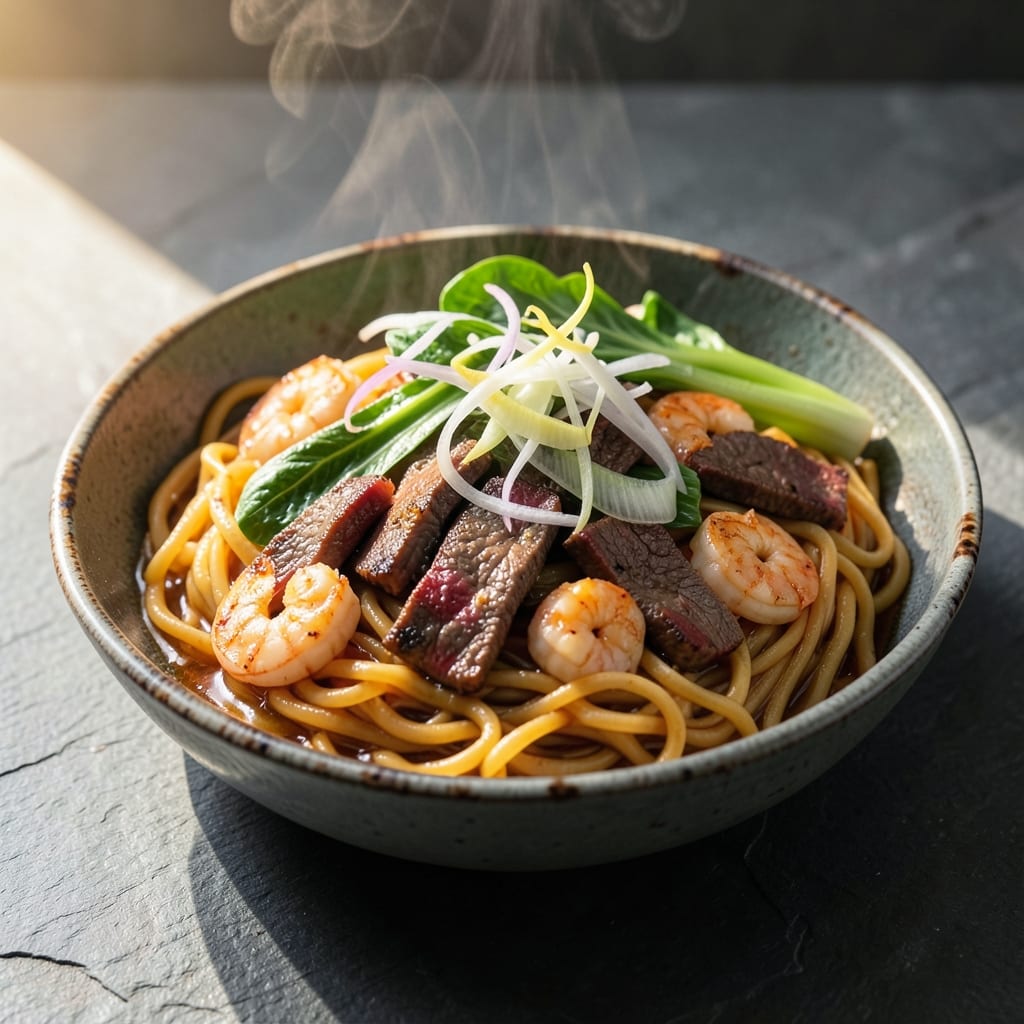
This beef and shrimp lo mein recipe delivers restaurant-quality wok-fired noodles with a perfectly balanced umami sauce that clings to every strand. The secret lies in high-heat stir-frying—where tender beef strips and plump shrimp transform in minutes, absorbing the savory-sweet glaze while keeping their texture intact. I’ve refined this technique over years of testing, ensuring the sauce remains glossy and cohesive without turning gluey.
The foundation is a simple yet deeply flavorful sauce: soy sauce, oyster sauce, and a touch of sesame oil create that signature umami depth, while a splash of rice vinegar brightens the richness. Fresh ginger and garlic infuse the oil before the proteins hit the wok, building layers of aroma that fill your kitchen instantly. The key? Cooking the proteins in batches to avoid crowding—they should sizzle and sear, not steam.
What you’ll end up with is a dish that’s vibrant, aromatic, and packed with texture: chewy noodles, tender beef, succulent shrimp, and crisp vegetables all tossed in a glossy sauce. The high-heat method locks in juices, while the sauce’s balance of salt, sweet, and umami ensures every bite is satisfying. Garnish with toasted sesame seeds and sliced green onions for that final restaurant touch.
This recipe scales effortlessly—double it for a crowd or halve it for a quick weeknight meal. The technique stays the same, so you’ll master the art of wok-fired lo mein in no time. Let’s get cooking.
Ingredients for beef and shrimp lo mein
Restaurant-quality lo mein starts with fresh proteins, aromatic aromatics, and a balanced sauce.
| Ingredient | Amount | Notes |
|---|---|---|
| Beef Flank Steak 🥩 | 1 lb | Thinly sliced against grain |
| Large Shrimp 🦐 | 1 lb | Peeled, deveined, tails on |
| Fresh Egg Noodles 🍜 | 12 oz | Or lo mein noodles, uncooked |
| Fresh Ginger 🧄 | 1 tbsp | Finely grated, aromatic |
| Garlic Cloves 🧄 | 6 cloves | Minced, fresh preferred |
| Vegetable Oil 🫒 | ½ cup | High smoke point for wok |
| Sesame Oil 🫒 | 1 tbsp | Toasted, for aroma |
| Light Soy Sauce 🧂 | ½ cup | Kikkoman preferred |
| Oyster Sauce 🍲 | ¼ cup | Lee Kum Kee brand |
| Rice Vinegar 🍶 | 1 tbsp | For brightness |
| Brown Sugar 🍯 | 1 tbsp | Or honey for sweetness |
| Green Onions 🧅 | 4 whole | Sliced, white and green parts |
| Toasted Sesame Seeds 🌾 | 1 tbsp | For garnish |
| Carrots 🥕 | 1 whole | Julienned, thin strips |
| Bell Pepper 🍅 | 1 whole | Red or yellow, thinly sliced |
The beef and shrimp are the stars here. Flank steak slices beautifully against the grain, while large shrimp (16/20 count) stay plump when cooked quickly. For the best quality, grab fresh shrimp at Whole Foods or your local seafood market—the frozen kind works in a pinch but lacks that restaurant-fresh texture. Prep ahead by slicing the beef and deveining shrimp, then store them separately in the fridge until ready to cook. The noodles? Fresh egg noodles are ideal, but if you can't find them, lo mein noodles work just fine—just cook them al dente.
No oyster sauce? Substitute with 1/4 cup hoisin sauce plus 1 tbsp soy sauce. The ginger and garlic are non-negotiable—they build the aromatic base that makes this dish sing. If you're short on time, use 1 tbsp fresh ginger paste and 2 tbsp minced garlic for convenience. For the vegetables, carrots and bell peppers add crunch and color, but you can swap in broccoli or snap peas if you prefer. The sesame oil is for aroma only—add it at the end to preserve its nutty flavor. And if you're feeling adventurous, a dash of chili garlic sauce adds a kick without overpowering the dish.
Prep the sauce ingredients first—they keep for 3 days in the fridge if stored in an airtight container. The noodles should be cooked just until al dente, then tossed with a bit of oil to prevent sticking. Shrimp and beef can be prepped ahead but cook them fresh for the best texture. This dish reheats beautifully—just toss with a splash of water or broth to revive the sauce. For leftovers, store in individual portions so you can grab and reheat quickly. Garnish with sesame seeds and green onions right before serving to keep everything crisp.
Why You'll Love This Recipe
- One-Pan Magic: I swear by this—no chopping boards, no extra bowls. Sear the flank steak and shrimp right in the same wok or skillet where the noodles will dance, then toss everything together. The ginger and garlic caramelize into a sticky glaze that coats everything in minutes. That’s what I call efficient.
- Umami Bomb: Between the beef’s deep savoriness and the shrimp’s briny sweetness, this dish is a flavor explosion. The ginger and garlic don’t just hint at their presence—they sing, especially when you let them sizzle in the hot oil first. Honestly, the first bite makes me forget it’s a weeknight dinner.
- Lunchbox Hero: Pack this for work or school—it reheats like a dream. The egg noodles stay tender, the shrimp doesn’t turn rubbery, and the sauce clings to every strand. I’ll be real: my kids actually ask for leftovers, and that’s saying something after the third time I sent them to school with it.
- Budget Flex: Flank steak is affordable, shrimp stretches further than you’d think, and fresh ginger/garlic last longer than dried spices. Double the batch, freeze half, and you’ve got a $15 meal that feeds four and saves you from takeout. Not the prettiest, but the taste makes up for it every time.
Step-by-step instructions for beef and shrimp lo mein
Master this wok technique for restaurant-quality lo mein every time.
Prep All Ingredients for Quick Cooking
Start by slicing the 1 lb beef flank steak thinly against the grain into ¼-inch thick strips. This ensures tender bites that cook quickly in the wok. Pat the 1 lb large shrimp dry with paper towels and make a small cut along the belly to prevent curling during cooking.
Julienne the 1 whole carrot and thinly slice the 1 whole bell pepper into ¼-inch strips. Finely grate the 1 tbsp fresh ginger and mince the 6 cloves garlic. Slice the 4 whole green onions into 1-inch pieces, separating the white and green parts. Have all ingredients prepped and within reach before starting to cook.
Cook the Protein and Vegetables Separately
Heat 1 tablespoon vegetable oil in a wok or large skillet over high heat until shimmering. Add the beef strips and stir-fry for 1-2 minutes until lightly browned but still slightly pink. Remove and set aside. In the same wok, add 1 tablespoon vegetable oil and cook the shrimp for 1-2 minutes per side until pink and opaque. Remove and set aside with the beef.
Add the remaining 0.3 cup vegetable oil to the wok and stir-fry the carrots and bell pepper for 2-3 minutes until crisp-tender. Add the white parts of the green onions and cook for 30 seconds until fragrant. Remove vegetables and set aside with the proteins.
Make the Sauce and Combine Everything
In a small bowl, whisk together the 0.5 cup light soy sauce, 0.25 cup oyster sauce, 1 tbsp rice vinegar, 1 tbsp brown sugar, and 1 tbsp sesame oil. Return the wok to high heat and add the sauce mixture, letting it simmer for 1 minute until slightly thickened.
Add the 12 oz fresh egg noodles to the wok and toss vigorously for 2 minutes until coated with sauce. Return the beef, shrimp, and vegetables to the wok and toss everything together for 1-2 minutes until everything is heated through and well combined. The noodles should be tender but still slightly firm.
Finish and Garnish
Remove the lo mein from heat and transfer to serving plates. Garnish each serving with the green parts of the sliced green onions and 1 tbsp toasted sesame seeds. Serve immediately while hot and sizzling, with extra green onions on the side for garnish.
This dish should be vibrant with colors, packed with tender beef and shrimp, and coated in a glossy, umami-rich sauce. The combination of textures—crisp vegetables, tender noodles, and juicy protein—makes each bite exciting. Enjoy with a side of steamed greens or a simple cucumber salad.
Pro Tips For Making Beef And Shrimp Lo Mein
- Sear the Flank Steak First: I learned this the hard way—thinly sliced flank steak turns rubbery if it cooks too long in the stir-fry. Sear it for 1–2 minutes per side in a screaming-hot pan before adding other ingredients. The crust locks in flavor and keeps it tender when it hits the noodles later.
- Peel Shrimp Last Minute: Shrimp darkens fast, and peeled shrimp loses texture if sitting around. Leave the shells on until you’re ready to toss them in, then peel and devein right before cooking. Quick, clean, and the meat stays bright and snappy.
- Don’t Overcrowd the Wok: I was skeptical until I tried it—packing the pan with beef, shrimp, and noodles at once steams everything instead of searing. Work in batches: start with protein, then noodles, then sauce. Your stir-fry will actually crisp instead of turn soggy.
- Use Cold Noodles for Crispiness: Fresh egg noodles stick like glue if they’re warm. Rinse them cold, then shock them in ice water for 30 seconds before draining. Toss them into the wok straight from the fridge—they’ll absorb the sauce perfectly and stay al dente.
Pro cooking tips for this recipe
High-Heat Wok Mastery
Your wok needs to be screaming hot before adding any ingredients—think medium-high to high heat until oil shimmers like a mirror. I use a 14-inch carbon steel wok (like the De Buyer brand) because it heats up fast and retains heat better than stainless steel. If you don’t have a wok, a heavy-bottomed skillet works, but you’ll need to stir more frequently to prevent burning. Preheat your wok for 3-5 minutes before cooking, and keep it moving—this prevents proteins from sticking and ensures that signature sizzle. 🔥
Batch Cooking Proteins
Cooking proteins in batches keeps them tender and prevents overcrowding, which steams instead of sears. Start with the beef—add ¼ of the strips at a time to the wok and stir-fry for 1-2 minutes until lightly browned. Remove immediately and set aside. Repeat with the shrimp, cooking just 1-2 minutes per side until pink. Overcooking turns shrimp rubbery, so timing is everything. I like to keep a small bowl of ice water nearby to plunge cooked shrimp if they’re done early—it stops cooking instantly.
Sauce Timing Tricks
The sauce should coat the noodles but not turn gluey. Whisk the sauce ingredients together in a small bowl, then add them to the wok just before tossing in the noodles. Let it simmer for 1 minute to slightly thicken, but don’t reduce it too much—you want a glossy finish, not a dry one. If your sauce thickens too quickly, add 1-2 tablespoons of hot water to loosen it. Pro tip: Taste the sauce before adding noodles and adjust seasoning—sometimes oyster sauce needs a pinch of salt, or the rice vinegar could use a splash more brightness. ✨
Noodle Perfection
Fresh egg noodles should be cooked just until al dente—about 2-3 minutes in boiling water. Drain and rinse briefly under cold water to stop cooking, then toss with 1 teaspoon vegetable oil to prevent sticking. When tossing the noodles in the wok, work quickly but gently to avoid breaking them. If your noodles are too dry after cooking, add 1 tablespoon of hot water or broth to the wok while combining everything. The goal is a dish where every strand is coated in sauce but still holds its shape. 🍜
Garnish Like a Pro
Toasted sesame seeds and sliced green onions aren’t just for looks—they add texture and freshness. Toast the sesame seeds in a dry skillet over medium heat for 1-2 minutes until fragrant, then sprinkle over the finished dish. For the green onions, separate the white and green parts—cook the white with the vegetables for flavor, but save the green for garnishing to keep it bright and crisp. A final drizzle of sesame oil (just ½ teaspoon per serving) adds aroma without overpowering the dish. Trust me, this little touch elevates the whole plate. 💫
Nutrition facts
Frequently asked questions
Can I substitute frozen shrimp for fresh in this recipe?
Yes, but thaw them properly first! Place frozen shrimp in a colander and rinse under cold water for 1-2 minutes to remove excess ice crystals. Pat them completely dry before cooking to ensure a good sear. For best results, thaw shrimp in the fridge overnight rather than at room temperature. The texture won't be identical, but it'll still be delicious.
What if I don't have a wok? Can I still make this?
A heavy-bottomed skillet or even a large frying pan works perfectly. The key is maintaining high heat and stirring constantly to prevent sticking. If your pan isn't wide enough, cook ingredients in batches just like you would in a wok. The sauce and technique remain the same—just adjust your stirring frequency.
How can I make this lo mein spicier?
Add heat with ½ teaspoon chili flakes or 1 tablespoon chili garlic sauce to the sauce mixture. For extra kick, stir-fry 1-2 thinly sliced Thai chilies with the aromatics at the beginning. If you prefer a smoother heat, add a splash of sriracha to the sauce after cooking. Always taste first—you can adjust, but you can't remove excess spice!
Can I make this recipe gluten-free?
Yes, with simple swaps! Use tamari (gluten-free soy sauce) instead of regular soy sauce and check your oyster sauce label for gluten. For extra umami, add 1 tablespoon coconut aminos to the sauce. The rest of the recipe remains unchanged—just ensure all ingredients are certified gluten-free if needed.
How do I reheat leftover lo mein?
Reheat in a skillet over medium heat with 1-2 tablespoons of water or broth to revive the sauce. Stir constantly for 2-3 minutes until everything is hot through. For microwave reheating, cover with a damp paper towel and heat in 30-second intervals, stirring between each. Add a splash of water if the sauce seems too dry.