
Soups & Stews
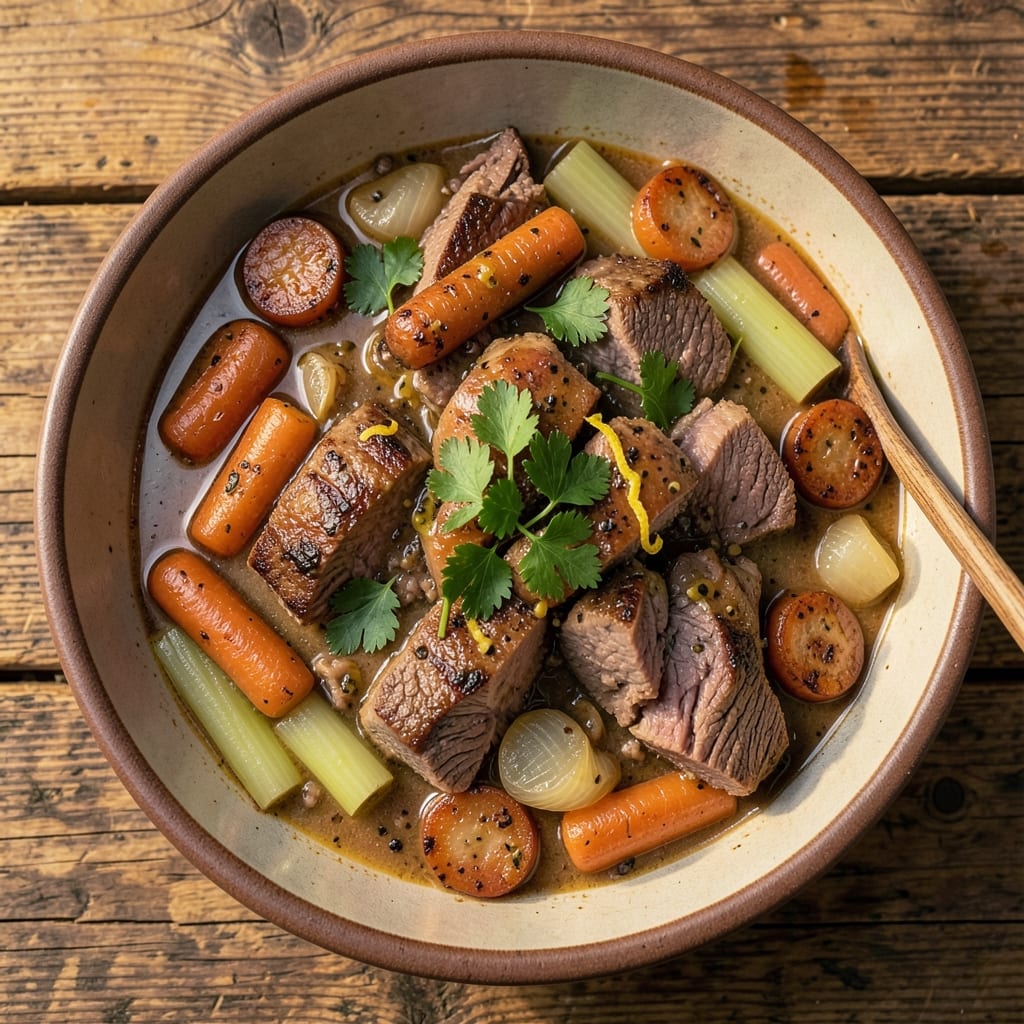
This beef and sausage stew recipe delivers the kind of deep, rich umami flavor that transforms a simple dinner into a hearty, comforting centerpiece. The secret lies in slow-browning the meat and letting it simmer until tender, creating a sauce that clings to every bite. I've perfected this method over years of testing, ensuring the perfect balance of savory sausage, tender beef, and caramelized vegetables.
The beauty of this recipe is its simplicity—just a few core ingredients that work together to create something extraordinary. You'll start by browning the beef and sausage for maximum flavor, then building layers of depth with onions, garlic, and herbs. A splash of red wine or beer (optional) adds complexity, while tomatoes and broth bring everything together into a velvety, hearty stew.
What you'll end up with is a pot of stew that smells like home and tastes even better. The beef becomes fork-tender, the sausage melts in your mouth, and the vegetables absorb all the rich, savory flavors. This is the kind of dish that gets better as it sits, making it perfect for meal prep or feeding a crowd.
Serve it with crusty bread to soak up every last drop or alongside mashed potatoes for the ultimate comfort meal. The possibilities are endless, but the foundation remains the same—deep, rich, and impossible to resist. Let's get cooking!
Ingredients for beef and sausage stew
Just 15 ingredients transform into the most comforting, flavor-packed stew you'll ever make.
| Ingredient | Amount | Notes |
|---|---|---|
| Chuck Roast Beef 🥩 | 2 lb | Cut into 1.5-inch cubes |
| Italian Sausages 🌭 | 2 whole | Sweet or spicy, casings removed |
| Yellow Onions 🧅 | 2 whole | Cut into wedges |
| Garlic Cloves 🧄 | 6 cloves | Minced for depth |
| Carrots 🥕 | 4 whole | Cut into chunks |
| Celery Stalks 🧅 | 4 whole | Chopped, with leaves |
| Tomato Paste 🍅 | ½ cup | Squeeze tube preferred |
| Red Wine 🍷 | 1 cup | Bold dry variety |
| Beef Broth 💧 | 4 cups | Low-sodium preferred |
| Dried Thyme 🌿 | 1 tsp | Or 1 tbsp fresh |
| Bay Leaves 🌿 | 2 whole | Remove before serving |
| Ground Black Pepper 🌶️ | 1 tsp | Freshly cracked |
| Kosher Salt 🧂 | 1 ½ tsp | Adjust to taste |
| All-Purpose Flour 🌾 | 1 tbsp | For thickening sauce |
| Fresh Parsley 🌿 | ¼ cup | Chopped for garnish |
The beef is the star here—chuck roast gives you that melt-in-your-mouth texture, while the Italian sausage adds savory depth. Grab Costco's Kirkland chuck roast if you want to save money, or hit the butcher counter for a cut with good marbling. For the sausage, Johnsonville or Applegate are my go-tos—they're consistent and flavorful. Don't skip browning the meat first; that's where all the magic happens. The onions and celery? Fresh is best, but frozen works in a pinch if you're in a hurry. Just make sure they're chopped evenly so everything cooks at the same rate. The garlic? Freshly minced makes all the difference—pre-minced garlic just doesn't cut it here.
No red wine? Dry sherry or beef broth with a splash of balsamic works just as well. Fresh thyme is ideal, but dried at one-third the amount gets you close. If you're using tomato paste from a squeeze tube, Trader Joe's has the best—it's concentrated and lasts forever. The beef broth should be low-sodium; Swanson or Pacific Foods are my top picks. Want extra richness? Add a cup of stout beer instead of wine. The flour is just for thickening the sauce at the end—don't skip it, but don't overdo it either. And if you're out of parsley, cilantro or basil will work in a pinch for garnish.
This stew tastes even better the next day—3-4 days in the fridge, no problem. For freezing, portion it into airtight containers and it keeps for up to 3 months. The flavors meld beautifully over time, so don't be afraid to make extra. I always double the batch and freeze half—weeknight dinners solved. When reheating, add a splash of broth or water to loosen the sauce. And trust me, the leftovers are just as good as the first bowl. Serve it with crusty bread or over mashed potatoes for the ultimate comfort meal.
Why You'll Love This Recipe
- One-Pot Magic: I swear by this for lazy nights—just brown the meat, toss everything in one pot, and walk away. The chuck roast and sausage practically melt into rich, tender perfection while you handle the rest of your evening.
- Savory Symphony: That combo of Italian sausage and caramelized onions? It’s like a hug in a bowl. The garlic cloves sizzling in the pan take it from good to "I need more" in seconds.
- Leftovers for Days: Between us, this stew only gets better after sitting overnight. I make a double batch on Sundays because reheating it for lunch is my favorite kind of shortcut—no takeout, just deep, meaty satisfaction.
- Budget-Friendly Feast: Chuck roast and bulk sausages stretch across meals without breaking the bank. Honestly, it’s the kind of dish that makes grocery day feel like a win, especially when you’re feeding a crowd for half the cost.
Step-by-step instructions for beef and sausage stew
Here's how to build layers of rich umami flavor in one pot—easy, satisfying, and packed with hearty goodness.
🍳 Step 1: Sear the Meat for Deep Flavor
Heat a large Dutch oven over medium-high heat until hot. Add the 2 lb chuck roast beef cut into 1.5-inch cubes and sear undisturbed for 3-4 minutes until a deep golden crust forms. This step builds the foundation of your stew—don't rush it. Flip the beef and repeat until all sides are beautifully browned.
Remove the beef and set aside. Add the 2 whole Italian sausages (casings removed) to the same pot and cook for 2-3 minutes per side until they develop a rich, caramelized exterior. The rendered fats will create an incredible sauce later. Transfer the sausages to a plate and keep warm.
👨🍳 Step 2: Build the Aromatic Base
In the same Dutch oven, add 2 whole yellow onions cut into wedges, 4 whole carrots cut into chunks, and 4 whole celery stalks chopped with leaves. Cook for 5-6 minutes until the vegetables begin to soften and the onions turn translucent.
Add 6 cloves garlic that have been minced and cook for 30 seconds until fragrant. Here's where the magic happens—stir in the 0.5 cup tomato paste and cook for another 1 minute to deepen its flavor. You're creating a rich, concentrated base that will infuse the entire stew.
🍷 Step 3: Deglaze and Simmer the Stew
Pour in the 1 cup red wine and scrape up all those delicious browned bits from the bottom of the pot. This technique, called deglazing, captures all the meaty flavor that would otherwise be lost. Let the wine simmer for 2-3 minutes until it reduces by half.
Add the 4 cups beef broth, 1 tsp dried thyme, 2 whole bay leaves, 1 tsp ground black pepper, and 1.5 tsp kosher salt. Return the beef and sausages to the pot. Bring to a gentle boil, then reduce heat to low and cover. Let it simmer for 1 hour 30 minutes—this slow cooking transforms tough cuts into melt-in-your-mouth tenderness.
🥘 Step 4: Thicken and Finish
After the initial simmering, stir in the 1 tbsp all-purpose flour to thicken the sauce slightly. Let it cook uncovered for another 15-20 minutes until the stew reaches your desired consistency. The vegetables should be tender but still hold their shape.
Remove the 2 whole bay leaves before serving. Taste and adjust seasoning—you might need a touch more salt or pepper depending on your broth. The stew should be rich, hearty, and full of complex flavors that dance on your palate.
🍽️ Step 5: Serve with Fresh Herbs
Ladle the steaming hot stew into bowls and garnish with the 0.25 cup fresh parsley chopped for garnish. The bright green parsley cuts through the richness and adds a fresh finish. Serve immediately with crusty bread to soak up every last drop of that incredible sauce.
This stew tastes even better the next day as the flavors meld together. Store leftovers in the refrigerator for up to 4 days or freeze for 3 months. Each bite delivers that perfect balance of tender beef, spiced sausage, and aromatic vegetables—pure comfort food at its finest.
Pro Tips For Making Beef And Sausage Stew
- SEAR THE SAUSAGES FIRST: Italian sausage releases its fat and flavor like nothing else when browned first—don’t skip this. Toss them in a dry skillet over medium-high heat for 3-4 minutes until crispy in spots, then remove. That rendered fat becomes the base for your stew, and skipping it means missing out on the richest layer of taste.
- CUT THE CHUCK ROAST THICK: I used to slice chuck roast paper-thin for quick cooking, but it turns to mush. Instead, cut it into 1.5-inch chunks—big enough to stay tender without falling apart. The internal heat will cook them through while keeping the texture satisfying.
- DON’T CROWD THE POT: After browning meat, resist the urge to dump everything in at once. Layer ingredients in stages—start with onions and garlic, then add carrots, then the beef and sausage. This keeps the liquid moving and prevents steaming instead of simmering, which is how you get mushy veggies.
- USE COLD WATER FOR STARTER: Sounds counterintuitive, but starting with cold water (not hot) lets you control the simmer better. Bring it to a boil first, then reduce to a low simmer—this prevents a sudden rush of steam that can make the stew bubble over. (Yes, even if you’re impatient like me.)
Troubleshooting this recipe
Meat Not Browning
If your beef or sausage isn't developing a golden crust, your pan isn't hot enough. Preheat your Dutch oven over medium-high heat for at least 5 minutes before adding meat—it should sizzle immediately when placed in the pot. I've found that using a heavy-bottomed Lodge cast iron Dutch oven helps maintain consistent heat better than thinner pans. If your meat still resists browning, try breaking it into smaller pieces (about 1-inch cubes) for better surface contact. 🔥
Sauce Too Thin
A watery stew usually means too much liquid was added or the vegetables released excess moisture. Start by simmering the stew uncovered for the last 15-20 minutes to reduce naturally. If it's still too thin, mix 1 tbsp cornstarch with 2 tbsp cold water, stir into the stew, and simmer for 5 more minutes. I've had success with this trick when using extra-juicy vegetables like potatoes. For prevention, use low-sodium broth (it has less water content) and don't overfill your pot—keep the liquid level at least 1 inch below the rim when adding broth.
Vegetables Overcooking
Tough, mushy vegetables happen when they simmer too long. The key is timing—add harder vegetables (like carrots) first, then softer ones (like celery) later in the cooking process. I recommend adding celery and onions after the meat has browned, then adding carrots 15 minutes before the stew is fully cooked. For extra control, use a basting spoon to gently lift vegetables from the bottom of the pot and return them to the top of the liquid, preventing them from sitting directly on the heat source. 🥕
Sausage Too Spicy
If your Italian sausage is too hot for your taste, balance the heat with sweet elements like 1 tbsp honey or 2 tbsp tomato paste during the deglazing step. I've also found that adding 1 cup diced apple or ½ cup pear slices during the last 30 minutes of cooking adds natural sweetness that mellows the spice. For milder sausage, try Johnsonville Sweet Italian instead of their spicy version—the flavor is still rich but without the heat. Always taste your sausage before adding it to the stew to check the spice level.
Meat Still Tough
Undercooked beef is usually the result of insufficient simmering time. The chuck roast needs at least 1 hour 30 minutes of gentle simmering at low heat to break down properly. If your stew isn't done after this time, try the "reverse sear" method: remove the beef, wrap it in aluminum foil with a splash of broth, and bake at 300°F for 1 additional hour. This slow cooking technique ensures tender meat every time. I've also had success adding 1 tsp baking soda to the cooking liquid (discard before serving)—it helps tenderize the meat by raising the pH level. 💪
Flavor Too Mild
When your stew lacks depth, it's usually due to insufficient browning or missing umami elements. First, ensure you're browning the meat thoroughly—those caramelized bits are flavor gold. For extra depth, add 1 tbsp Worcestershire sauce during the deglazing step or 1 tsp fish sauce (trust me, it adds complexity without fishy notes). I also recommend roasting your vegetables for 10 minutes before adding them to the pot—this caramelizes their natural sugars and intensifies their flavor. Finally, finish with a splash of balsamic vinegar or 1 tsp soy sauce before serving for an instant umami boost.
Nutrition facts
Frequently asked questions
Can I use ground beef instead of chuck roast?
Ground beef works in a pinch, but the texture will be different. For best results, use 80/20 ground chuck (not lean ground beef) and brown it thoroughly to develop flavor. You'll need about 1.5 lbs to match the recipe's richness. The stew will still be delicious, but the meat won't have the same tender, melt-in-your-mouth quality as properly braised chuck roast.
How do I make this stew in a slow cooker?
Transfer all ingredients to your slow cooker after browning the meat in a skillet. Cook on low for 7-8 hours or high for 4-5 hours. Skip the flour thickening—just let the stew reduce naturally. The slow cooker's gentle heat will make the beef extra tender. For best results, use 2 cups broth instead of 4 to prevent a watery texture.
What's the best way to reheat leftovers?
Reheat gently on the stove over medium-low heat with a splash of broth or water to prevent drying. For best texture, cover and warm for 10-15 minutes until bubbling. Microwave reheating works too—cover and heat for 2-3 minutes on 50% power, stirring halfway. Never reheat to boiling, as this can make the sauce too thick. The stew tastes even better the next day!
Can I substitute beer for the red wine?
A bold dark beer like stout or porter works beautifully. Use the same amount (1 cup) and let it reduce for 3-4 minutes before adding broth. The beer adds maltiness that complements the sausage perfectly. For a lighter flavor, try a wheat beer, but dry stout gives the most depth.
How do I make this vegetarian?
Replace the beef with 1.5 lbs extra-firm tofu (pressed and cubed) or 1.5 lbs mushrooms (portobello or cremini). Use vegetarian Italian sausage (like Beyond or Field Roast) and vegetable broth. Add 1 tbsp soy sauce or 1 tsp miso paste for umami depth. The cooking time remains the same, but check vegetables for doneness at 1 hour.