
Soups & Stews
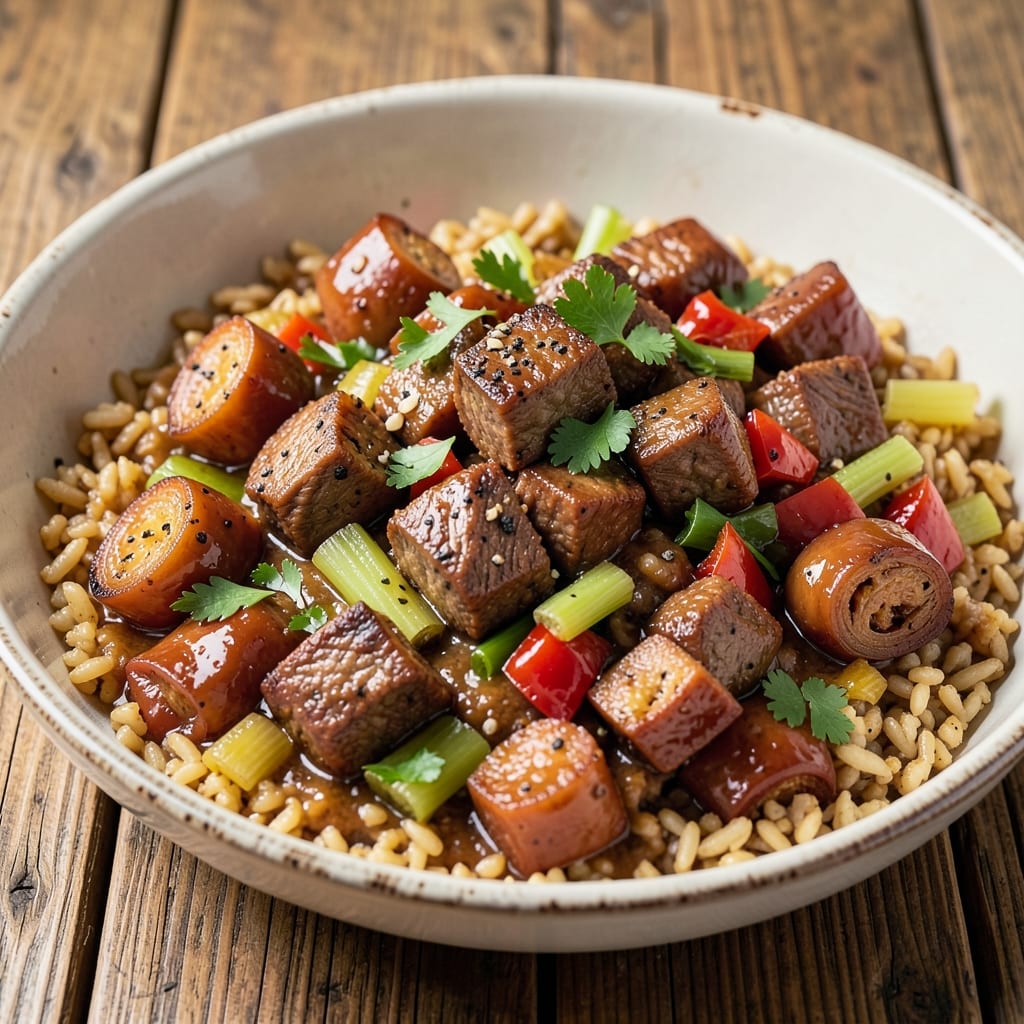
This beef and sausage jambalaya recipe delivers a bold, one-pot feast that simmers with smoky sausage, tender beef, and the holy trinity of onions, bell peppers, and celery—all coming together in a rich, spiced broth. The secret lies in slow-cooking the proteins first to lock in flavor, then building layers of depth with Cajun seasoning and tomato paste before adding rice. Every bite packs hearty texture and warm spices that taste like a Louisiana kitchen.
What sets this jambalaya apart is the balance of technique and simplicity. You'll sear the beef and sausage until deeply browned, then develop the vegetables until they're soft but still vibrant. The rice absorbs the flavorful broth as it cooks, creating a dish that's both satisfying and restaurant-quality. With just one pot to manage, cleanup becomes a non-issue—perfect for weeknight dinners or gathering crowds.
The result is a dish with tender beef, crisp-edged sausage, and perfectly cooked rice all infused with smoky, spiced goodness. The aroma alone will have everyone gathering at the table, and the flavors only deepen as it sits. This jambalaya stands up as a main course on its own or pairs beautifully with crusty bread and a simple coleslaw for a complete meal.
Whether you're feeding a family or hosting a dinner party, this recipe scales effortlessly while maintaining its bold character. The one-pot method ensures minimal effort without sacrificing flavor, making it a go-to for any occasion. Let's get cooking!
Ingredients for beef and sausage jambalaya
Six servings of smoky, spiced goodness in one pot—just gather these ingredients and let the flavors meld.
| Ingredient | Amount | Notes |
|---|---|---|
| Beef Chuck Roast 🥩 | 1 ½ lb | Cut into 1-inch cubes |
| Andouille Sausage 🌭 | 1 lb | Smoked sausage, sliced into rounds |
| Yellow Onion 🧅 | 1 whole | Diced, medium size |
| Green Bell Pepper 🌶️ | 1 whole | Diced, medium size |
| Celery Stalks 🥬 | 3 whole | Diced, medium stalks |
| Garlic Cloves 🧄 | 4 cloves | Minced |
| Long-Grain White Rice 🍚 | 2 cups | Uncooked, medium grain |
| Tomato Paste 🍅 | 2 tbsp | Smooth, unsweetened |
| Cajun Seasoning 🌶️ | 2 tbsp | Store-bought or homemade blend |
| Chicken Broth 💧 | 2 cups | Low-sodium preferred |
| Dried Thyme 🌿 | 1 tsp | Or 1 tbsp fresh |
| Bay Leaves 🌿 | 2 whole | Fresh or dried |
| Olive Oil 🫒 | 2 tbsp | For searing |
| Salt 🧂 | 1 tsp | Kosher or sea salt |
| Black Pepper 🌶️ | ½ tsp | Freshly ground |
The beef and sausage are the heart of this dish. Andouille sausage gives that authentic Cajun flavor, but any smoked sausage works in a pinch. For the beef, chuck roast stays tender when slow-cooked—sirloin or ribeye will dry out. Most grocery stores carry pre-cubed chuck, but if you're buying a whole roast, ask the butcher to cube it for you. The holy trinity—onion, bell pepper, celery—should be diced uniformly for even cooking. Trader Joe's often has pre-diced veggie mixes that save time.
No Cajun seasoning? Mix 1 tbsp paprika, 1 tsp garlic powder, 1 tsp onion powder, 1/2 tsp dried oregano, 1/4 tsp cayenne, and 1/4 tsp thyme. Fresh thyme is ideal but dried works at one-third the amount. The tomato paste can be swapped for 1/2 cup crushed tomatoes if you prefer a chunkier texture. For extra depth, add a dash of Worcestershire sauce (ensure it's vegetarian if needed). The rice? Jasmine or basmati both work, but long-grain white is traditional. Don't skip rinsing it first—removes excess starch for fluffier grains.
This jambalaya tastes even better the next day as flavors meld. Store leftovers in an airtight container in the fridge for 4-5 days or freeze for 3 months. I like to portion it into meal prep containers—perfect for lunches. The rice will firm up when reheated, so sprinkle a splash of broth or water when warming. For extra crispiness, broil for 2-3 minutes before serving. The one-pot method makes cleanup a breeze—just a quick soak and scrub.
Why You'll Love This Recipe
- One-Pot Magic: I swear by this recipe because it’s the only time I’ve ever cooked a full meal without scrubbing three pots. Chuck roast and sausage simmer together while the onions, peppers, and celery soften—no flipping, no fussing, just hands-off flavor.
- Smoky Depth Bomb: That andouille sausage? It’s the secret weapon. The smoky, spicy kick from the sausage blends with the beef’s rich, slow-cooked tenderness, and the bell pepper adds just enough brightness to keep it from feeling heavy. Honestly, I’ve never tasted a jambalaya that didn’t feel like a hug.
- Leftovers That Beg: This dish tastes even better the next day—if there is a next day. The flavors meld into something deeper, and it reheats like a dream. I’ve packed it for lunches, frozen portions for lazy Sundays, and even brought it to potlucks where people asked for the recipe.
- Budget-Friendly Feast: A chuck roast and a pack of andouille stretch farther than you’d think. The veggies are cheap staples, and the spices don’t break the bank. I’ve fed six people for under $15, and everyone left happy—no sad, half-eaten takeout boxes here.
Step-by-step instructions for beef and sausage jambalaya
Master this one-pot wonder with perfectly seared meat and aromatic spices that meld together.
Sear the Beef and Sausage
Heat the 2 tablespoons olive oil in a large, heavy pot over medium-high heat until shimmering. Add the 1.5 pounds beef chuck roast cut into 1-inch cubes and sear for 3-4 minutes per side until deeply browned. This step develops rich flavor through the Maillard reaction.
Remove the beef and set aside. In the same pot, add the 1 pound andouille sausage sliced into rounds and cook for 2-3 minutes until lightly browned. The sausage will release its smoky flavor as it cooks. Keep these seared meats warm while you prepare the aromatic base.
Build the Aromatic Base
In the same pot, add the diced yellow onion, green bell pepper, and 3 celery stalks (the classic "holy trinity"). Cook for 5-6 minutes until softened and slightly caramelized. This foundational step develops deep, sweet flavors that carry through the entire dish.
Add the 4 minced garlic cloves and cook for 30 seconds until fragrant. Stir in the 2 tablespoons tomato paste and cook for another 1 minute to deepen its flavor. This creates a rich, slightly sweet base that will form the heart of your jambalaya.
Add Spices and Liquid
Sprinkle the 2 tablespoons Cajun seasoning, 1 teaspoon dried thyme, 1 teaspoon salt, and ½ teaspoon black pepper over the vegetables. Stir well to coat everything evenly with the spices. Add the 2 cups chicken broth and bring to a gentle simmer.
Return the seared beef and sausage to the pot. Add the 2 whole bay leaves and stir gently to combine. The broth should just cover the ingredients—this ensures the rice will absorb the liquid perfectly. Let everything simmer for 10 minutes to allow the flavors to meld together.
Cook the Rice to Perfection
Stir in the 2 cups long-grain white rice and spread it evenly across the bottom of the pot. The rice should be level with the liquid surface—this prevents uneven cooking. Bring the mixture to a boil, then reduce heat to low and cover tightly with a lid.
Simmer for 20-25 minutes without lifting the lid. You'll know it's done when the rice is tender and the liquid has been completely absorbed. The dish should have a slightly crispy top layer from the residual heat. If the rice seems undercooked after 25 minutes, add ¼ cup hot broth and cook for another 5 minutes.
Rest and Serve
Remove the pot from heat and let the jambalaya rest for 5-10 minutes covered. This resting period allows the flavors to continue developing and the rice to finish absorbing any remaining liquid. Remove and discard the bay leaves before serving.
Garnish with additional Cajun seasoning if desired. Serve immediately with crusty bread or over steamed vegetables to soak up every last bit of that rich, spiced sauce. The beef should be tender and flavorful, the sausage smoky and savory, and the rice perfectly cooked with each grain distinct.
Pro Tips For Making Beef And Sausage Jambalaya
- SEAR THE BEEF FIRST: Take that chuck roast out of the fridge 30 minutes before cooking—cold meat steams instead of browns. Hit the pan with high heat and 2 tablespoons of oil, then let the beef sit undisturbed for 3-4 minutes per side until it develops a deep crust. I learned this the hard way after serving jambalaya with beef that tasted like it was poached instead of seared.
- SWEAT THE VEGETABLES LOW: Don’t rush the onion, bell pepper, and celery—these are the flavor base. Cook them over medium-low heat for 8-10 minutes, stirring occasionally, until the onion turns translucent and the peppers soften. High heat burns them before they release their sweetness, and you’ll taste it in every bite.
- SLICE THE SAUSAGE LENGTHWISE: Cut those andouille sausages into ½-inch rounds lengthwise (not crosswise) so they hold their shape better while cooking. Crosswise slices fall apart too easily, turning your jambalaya into a loose, soupy mess instead of hearty, bite-sized pieces.
- DEGLAZE WITH BEER AND TOMATO: After browning the meat, don’t just splash in liquid—deglaze with ½ cup of beer (or broth) and a splash of tomato paste. Scrape every last bit from the bottom of the pan; that’s where the Maillard reaction magic lives. Stir it in, let it bubble for 2 minutes, then add the rest of your liquid. It makes a real difference in depth of flavor.
Troubleshooting this dish
Grainy Rice Texture
If your jambalaya turns out with separate, hard rice grains instead of a cohesive texture, you likely added too much liquid or didn’t stir enough during cooking. The key is maintaining a 1:1.5 liquid-to-rice ratio—for 2 cups rice, use 2.5 cups broth total (including what’s in the meat and veggies). Stir the rice once after boiling to distribute it evenly, then let it steam undisturbed. If it’s still dry, add 2 tbsp hot broth and cover for 5 more minutes. 🌟
Undercooked Meat
Tough beef or rubbery sausage happens when proteins don’t cook long enough. The beef should reach 160°F internal temperature (use a meat thermometer) and the sausage 165°F. If you’re short on time, sear the beef extra brown (5-6 minutes per side) and simmer the whole dish for 30-45 minutes after adding rice. For extra tenderness, add 1 cup beef broth and simmer 10 more minutes covered. ⏰
Mushy Vegetables
Overcooked veggies lose their brightness when simmered too long. The holy trinity (onions, bell peppers, celery) should be soft but still vibrant—cook them for no more than 6-7 minutes before adding spices. If they’re already mushy, reduce the simmer time to 15 minutes after adding rice (instead of 20-25). For extra crunch, stir in ½ cup diced bell peppers during the last 5 minutes of cooking. 🥬
Blah Flavor
Weak or one-dimensional flavor usually means the spices weren’t toasted enough. Before adding broth, stir the Cajun seasoning and tomato paste into the veggies and cook for 1-2 extra minutes to bloom the spices. For depth, add 1 tsp smoked paprika or ½ tsp liquid smoke to the broth. A splash of hot sauce (like Crystal or Tabasco) at the end also brightens the dish. 🌶️
Burnt Bottom
A crusty, burnt layer forms when the pot gets too hot or the rice isn’t spread evenly. Use a heavy-bottomed pot (like a Dutch oven) and reduce heat to low after boiling. Before adding rice, spread the veggie mixture in an even layer across the pot’s surface. If it browns too fast, cover with foil for the first 10 minutes of rice cooking. 🔥
Sauce Too Thin
If the jambalaya is watery, the rice absorbed too much liquid or the broth was too weak. For future batches, use low-sodium chicken broth and add 1 tbsp tomato paste or ½ cup crushed tomatoes for thickness. If it’s already done, simmer uncovered for 5-10 minutes to reduce the sauce. A sprinkle of cornstarch slurry (1 tbsp cornstarch + 2 tbsp water) stirred in at the end also helps. 💧
Nutrition facts
Frequently asked questions about beef and sausage jambalaya
Can I make this jambalaya in a slow cooker?
Brown the beef and sausage first in a skillet, then transfer everything to a 6-quart slow cooker. Add the veggies, spices, broth, and rice, then cook on low for 6-7 hours or high for 3-4 hours. The slow cooker keeps the rice tender and the flavors deep. Just stir once before serving to redistribute the sauce.
What kind of sausage works best for jambalaya?
Andouille sausage is traditional for its smoky, spiced flavor, but any smoked sausage works. Avoid mild breakfast sausages—they lack the depth jambalaya needs. For a vegetarian option, use smoked tofu or spiced tempeh instead, but increase the Cajun seasoning by 1 teaspoon to compensate.
How do I adjust the spice level for picky eaters?
Reduce the Cajun seasoning to 1 tablespoon and omit the cayenne if included. For extra mildness, stir in 1 teaspoon sugar with the spices to balance heat. Serve with extra hot sauce on the side so everyone can adjust to their taste. The tomato paste already adds natural sweetness to mellow the spice.
Can I use brown rice or quinoa instead of white rice?
Brown rice works but requires 30-35 minutes extra cooking time and may need ½ cup extra broth to stay tender. Quinoa cooks in 15 minutes but absorbs liquid differently—use 1.5 cups quinoa with 3 cups broth total and simmer uncovered for 20 minutes. Both alternatives add texture but change the dish's traditional creaminess.
Why does my jambalaya taste better the next day?
The flavors deepen as the spices and meat marinate in the broth overnight. The rice also reabsorbs moisture, becoming more cohesive. Store leftovers in an airtight container and reheat with 2 tablespoons broth to restore moisture. For extra richness, stir in 1 tablespoon butter or 1 teaspoon olive oil while warming.