
Soups & Stews
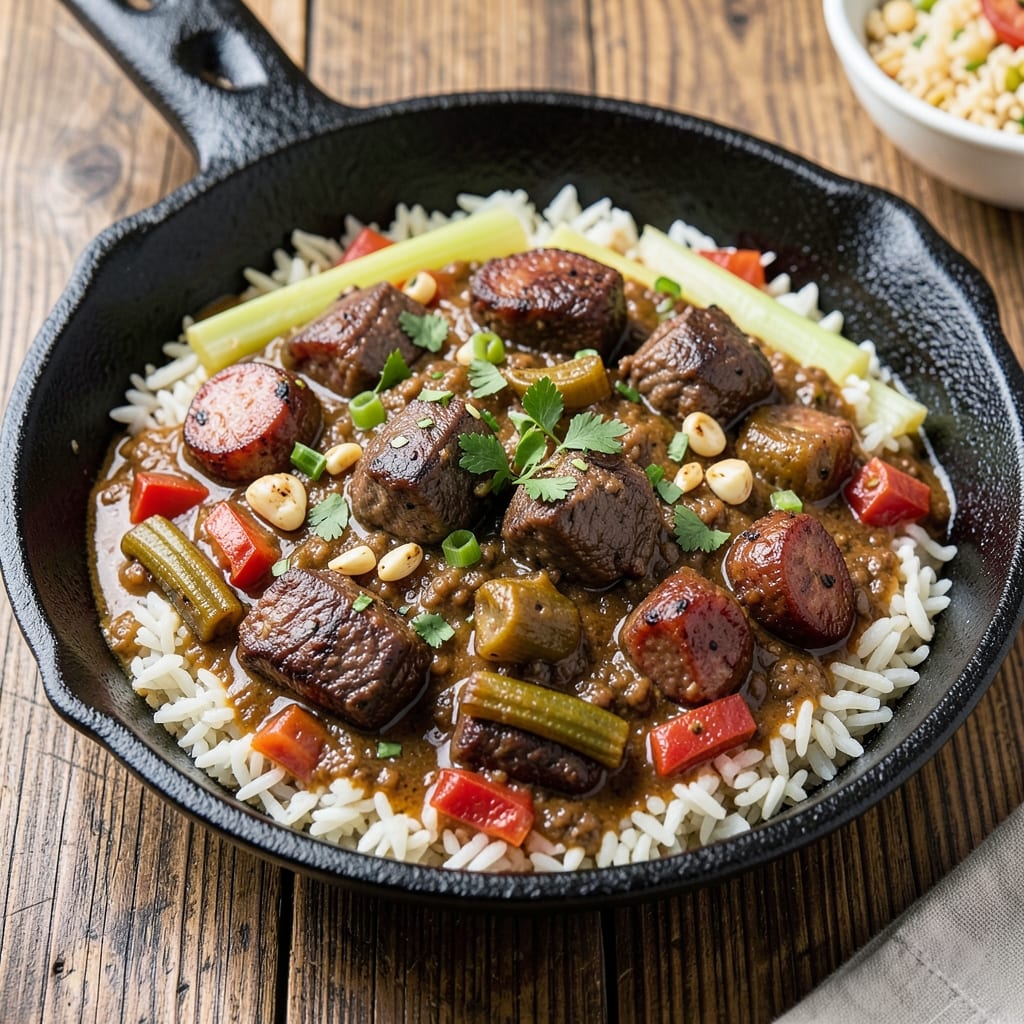
This beef and sausage gumbo recipe brings the soul of Louisiana to your kitchen with its smoky roux foundation and layers of Cajun flavor that build with every simmer. The key to authentic gumbo lies in that deep, dark roux—where equal parts fat and flour transform from peanut butter-like to chocolate-brown, unlocking the rich, complex base that defines this dish. I've perfected this version over years of testing, balancing tender beef, spicy sausage, and the holy trinity of onions, peppers, and celery for that unmistakable Louisiana taste.
The beauty of gumbo is in its versatility—this recipe delivers restaurant-quality depth without requiring specialty ingredients. A slow simmer develops the flavors while keeping the vegetables tender-crisp, and the right combination of spices creates that signature balance of heat and earthiness. The secret weapon? Cooking the roux low and slow to avoid burning, then building layers of flavor with stock, tomatoes, and the proteins. It's a labor of love that rewards you with a pot of gumbo so rich it feeds the soul as much as it fills the stomach.
By the time you serve this gumbo, you'll have a steaming pot of hearty, aromatic stew with perfectly tender beef chunks, spicy sausage, and vegetables that have absorbed all that deep, smoky flavor. The roux isn't just a base—it's the heart of the dish, giving each spoonful that unmistakable gumbo character. Serve it with warm cornbread or crusty bread to soak up every last drop of that flavorful broth, and prepare for compliments that'll make this your new go-to recipe.
What makes this gumbo special is how it captures the essence of Louisiana cooking while being approachable for home cooks. The technique is straightforward once you understand the roux, and the ingredients are simple staples you likely already have. Whether you're making it for a family gathering or a cozy weeknight dinner, this recipe delivers that authentic gumbo experience that feels like a warm hug in a bowl. Let's get started on creating your own pot of Louisiana magic.
Ingredients for beef and sausage gumbo
Simple pantry staples transform into Louisiana's most iconic dish when you master the roux.
| Ingredient | Amount | Notes |
|---|---|---|
| Chicken Fat or Vegetable Oil 🫒 | 1 cup | For roux foundation (chicken fat preferred) |
| All-Purpose Flour 🌾 | 1 cup | White or whole wheat for roux |
| Yellow Onion 🧅 | 1 ½ lb | Diced, yellow or white preferred |
| Green Bell Pepper 🍅 | 1 ½ lb | Diced, any color bell pepper |
| Celery Stalks 🥬 | 6 whole | Diced, including leaves for flavor |
| Garlic Cloves 🧄 | 6 cloves | Minced for depth of flavor |
| Andouille Sausage 🌭 | 1 ½ lb | Smoked sausage, sliced into rounds |
| Chuck Roast 🥩 | 2 lb | Cut into 1-inch cubes, trimmed |
| Diced Tomatoes 🍅 | 2 cups | San Marzano if available, or canned |
| Chicken Stock 💧 | 6 cups | Low-sodium preferred, homemade best |
| Cajun Seasoning 🌶️ | 2 tbsp | Homemade or Tony Chachere's blend |
| Dried Thyme 🌿 | 1 tsp | Or 1 tbsp fresh thyme leaves |
| Bay Leaves 🍃 | 2 whole | Removed before serving |
| Salt 🧂 | 1 ½ tsp | Diamond Crystal preferred for accuracy |
| Black Pepper 🌶️ | ½ tsp | Freshly cracked for best flavor |
The roux is where gumbo magic happens. Chicken fat gives that authentic smoky depth, but vegetable oil works in a pinch—just know it won't be as rich. For the best quality, grab chicken fat from Costco or your local butcher (they'll render it for you). Flour matters too—King Arthur or Gold Medal for the best roux texture. The holy trinity (onion, bell pepper, celery) should be finely diced—about 1/4-inch pieces—so they melt into the stew without chunks. Andouille sausage? Zatarain's or Johnsonville are the brands that deliver that perfect smoky heat.
No andouille? Spicy Italian sausage works in a bind, but you'll lose some of that Cajun soul. Short on chicken stock? Beef stock with extra thyme gets you close, though purists will notice. The tomatoes can be fresh or canned—San Marzano if you want to splurge, but any good-quality canned tomatoes will do. For the Cajun seasoning, Tony Chachere's is the gold standard, but if you're making your own, start with paprika, garlic powder, onion powder, cayenne, and thyme. The roux is non-negotiable though—no shortcuts here—it's what turns this into gumbo, not just stew.
This gumbo tastes even better the next day as flavors meld. Store in an airtight container in the fridge for 4-5 days or freeze for up to 3 months. I always make a double batch because it disappears fast. For reheating, low heat on the stove is best—microwaving can break the roux's delicate texture. Serve with warm cornbread to soak up every last drop of that smoky, savory broth.
Why You'll Love This Recipe
- Holy Trinity Hack: I swear by that onion, bell pepper, and celery combo—it’s the secret sauce. Chop once, sauté together, and suddenly you’ve got the base of something magical. No measuring cups, no guesswork, just three ingredients that transform into flavor gold.
- Deep, Rich Payoff: That roux—flour and oil cooked until it’s dark like molasses—is where the magic happens. It’s not instant, but once it’s done, every spoonful of gumbo tastes like a hug from your grandma’s kitchen.
- Weeknight to Party: Serve it with crusty bread on a Tuesday or bring it to a potluck on Sunday. The same recipe works for both—just scale it up or down. Honestly, I’ve fed a crowd of 10 with this, and it’s still my go-to for lazy nights.
- Budget-Friendly Leftovers: A pound of sausage and beef stretches for days, and the gumbo only gets better after sitting overnight. Freeze half for another week, or reheat it for lunch—either way, you’re saving money without sacrificing taste.
Step-by-step instructions for building a deep Cajun roux foundation
This is where the magic begins—your roux will develop that signature mahogany color that defines authentic gumbo.
Heat the Fat Over Medium Heat
Place a large, heavy-bottomed pot over medium heat and add the 1 cup chicken fat or vegetable oil. I prefer chicken fat for its rich flavor, but vegetable oil works in a pinch. Let the fat heat through for 3-5 minutes until it shimmers and reaches about 275°F—you'll see small bubbles forming around the edges.
This gentle heat is crucial. Too high and the flour will burn before it browns properly. You want the fat to be hot enough to cook the flour but not so hot it smokes violently. If you're using chicken fat, you'll notice it starts to foam slightly—this is normal and actually helps create flavor.
Whisk in the Flour Gradually
Reduce the heat to medium-low and immediately begin whisking in the 1 cup all-purpose flour in a slow, steady stream. This is where patience pays off—adding too much at once can cause lumps. Keep whisking constantly for 1-2 minutes until the mixture forms a thick paste and begins to bubble gently.
The goal is to create a smooth, lump-free roux that coats the back of your spoon. If you see any dry spots, stir them into the fat before they burn. This initial cooking transforms the raw flour into a flavorful base that will thicken your gumbo beautifully. Don't walk away—this step requires constant attention.
Cook the Roux to Mahogany Color
Continue cooking the roux over medium-low heat, whisking constantly, for 20-30 minutes until it reaches a deep mahogany color. This is the most critical step—your gumbo's flavor depends on this perfect balance. You'll know it's ready when the roux smells nutty and rich, and it coats the whisk like thick syrup.
Here's the thing—don't rush this. A dark roux adds incredible depth, but it can easily burn if you're not careful. If it starts to smell acrid or develop a burnt aroma, remove it from heat immediately. The color should be like dark chocolate milk, not burnt toast. Once achieved, remove the pot from heat and set aside—your roux is now ready to build the gumbo.
Sauté the Holy Trinity
Return the pot to medium heat and add the diced 1.5 lb yellow onion, 1.5 lb green bell pepper, and 6 whole celery stalks (diced including leaves). Cook for 8-10 minutes, stirring occasionally, until the vegetables soften and begin to caramelize. This combination is called the "holy trinity" for a reason—it forms the flavor base of Cajun cooking.
You'll notice the vegetables release moisture as they cook. Let this evaporate completely before adding the next ingredients. The goal is to develop deep, sweet flavors in these vegetables that will infuse your entire gumbo. If the roux starts to darken too much from the vegetables, reduce the heat slightly to maintain that mahogany color.
Add Aromatics and Sausage
Stir in the 6 minced garlic cloves and cook for 30 seconds until fragrant. Then add the sliced 1.5 lb andouille sausage and cook for another 3-4 minutes, stirring occasionally, until the sausage begins to brown and release its smoky flavors. This is where the gumbo starts to come together with layers of flavor.
Don't be tempted to rush this step. The sausage needs time to render its fat and develop that characteristic smokiness that defines Cajun cuisine. The garlic should be cooked just until fragrant—not burnt, but fully integrated into the mixture. This aromatic foundation will carry through the entire cooking process, ensuring every bite is packed with flavor.
Pro Tips For Making Beef And Sausage Gumbo
- COOK THE ROUX LOW AND SLOW: I learned this the hard way—rushing the roux turns it into burnt paste instead of the rich, peanut-butter-like base gumbo needs. Start with medium-low heat and stir constantly (yes, even if you’re impatient like me). If it gets too dark too fast, you’re overcooking it, and no amount of extra flour or oil will fix it.
- DICE ONIONS AND PEPPERS SMALL: Big chunks in gumbo mean you’ll be chewing on them by the second bowl. Aim for ¼-inch pieces—small enough to disappear but not so fine they turn to mush. My grandmother swore by this, and she was right: the texture should be uniform, not a mix of soft and crunchy bits.
- DON’T CROWD THE POT: I used to dump everything in at once, thinking it’d cook faster. Wrong. Overloading the pot steams the meat and veggies instead of browning them, which kills flavor. Cook the beef and sausage in batches if needed—browned meat makes gumbo taste like it’s been simmering all day, not rushed in 30 minutes.
- SWAP VEGETABLE OIL FOR CHICKEN FAT: If you’re using vegetable oil, you’re missing out on depth. Chicken fat has a higher smoke point and adds a savory richness that oil can’t replicate. Render it from a few chicken backs or thighs first, then use the fat for the roux—it’ll give your gumbo that authentic, layered taste. (Yes, it’s messier, but trust the process.)
Perfect pairings for this beef and sausage gumbo
Bread Pairings
Warm, crusty cornbread is the classic companion to gumbo, designed to soak up every last drop of that rich, smoky broth. I love making a batch with jalapeño or honey mixed into the batter—just 1 tsp jalapeño seeds or 2 tbsp honey per 1 cup cornmeal adds a perfect sweet-spicy contrast. For a more refined touch, serve with freshly baked French bread or a baguette—the crisp crust cuts through the gumbo's richness while the soft interior absorbs the flavors beautifully. 🥖
Coffee & Tea
A steaming mug of medium-roast coffee with a splash of half-and-half balances gumbo's bold flavors perfectly. The bitterness in the coffee cleanses your palate between spoonfuls, while the creaminess complements the dish's richness. For tea lovers, Earl Grey or chamomile work wonders—Earl Grey's bergamot notes enhance the gumbo's spices, while chamomile offers a soothing contrast after a spicy meal. I often serve chilled hibiscus tea in summer for a refreshing, tangy pairing that brightens the dish. ☕
Dessert Pairings
Finish your gumbo feast with benne seed cookies—a traditional Louisiana treat with a nutty, slightly sweet flavor that echoes the gumbo's spices. For a modern twist, try peach cobbler with a scoop of vanilla bean ice cream, where the fruit's juiciness and creaminess provide a light, refreshing contrast. If you want something lighter, lemon bars with their bright citrus notes cut through the meal's heaviness while keeping the Southern theme intact. 🍰
Spicy & Tangy Sides
Add a pickled okra and jalapeño salad to cut through the gumbo's richness with its crisp, tangy bite. I make mine with 2 cups sliced okra, 1 tbsp vinegar, 1 tsp sugar, and ½ tsp red pepper flakes, then let it sit for 30 minutes before serving. For a heartier option, collard greens cooked with smoked turkey neck and a touch of apple cider vinegar add depth and acidity that elevate the gumbo's flavors. 🥗
Beverage Pairings
A dry Riesling from Alsace or a Sauvignon Blanc from New Zealand complements gumbo's complexity with their bright acidity and citrus notes. For beer lovers, a Belgian witbier like Hoegaarden or a light lager like Peroni provides a crisp, refreshing contrast that cleanses the palate. If you prefer something stronger, a bourbon neat** or on the rocks with a splash of water enhances the dish's smoky, spicy flavors while adding a touch of Southern tradition. 🍷
Nutrition facts
Frequently asked questions about beef and sausage gumbo
What's the difference between Creole and Cajun gumbo?
Cajun gumbo (like this recipe) focuses on the roux foundation and often includes seafood or dark meats like sausage. Creole gumbo typically has a tomato base, okra, or filé powder, and might include more complex spices like thyme and bay leaves. This recipe blends both traditions with its deep roux and rich Cajun seasoning while keeping it approachable for home cooks.
Can I make this gumbo in a slow cooker?
First make the roux on the stovetop, then transfer everything to your slow cooker. Cook on low for 6-8 hours or high for 3-4 hours, stirring occasionally. The slow cooker won't develop the roux as deeply, but it'll still create a flavorful stew. For best results, use a 6-quart slow cooker to maintain proper proportions.
Why did my roux burn before reaching mahogany color?
This happens when heat is too high or you're not stirring constantly. Always use medium-low heat and whisk vigorously every 30 seconds. If it starts smoking, remove from heat immediately and let cool slightly before continuing. The key is patience—the roux needs time to develop that nutty, chocolate-brown color without burning.
How can I make this gumbo less spicy?
Reduce the cayenne in your Cajun seasoning or use a milder blend like Tony Chachere's Mild. You can also add 1 cup extra chicken stock to dilute the heat. For serving, offer cooling toppings like sour cream, shredded cabbage, or sliced avocado to balance the flavors.
Can I substitute the andouille sausage?
Yes! For authentic flavor, use smoked kielbasa or spicy Italian sausage in a pinch. If you want to stay true to Cajun traditions, look for Zatarain's or Johnsonville andouille. The key is choosing a sausage with good smokiness—it's what gives gumbo its signature depth.