
Main Courses
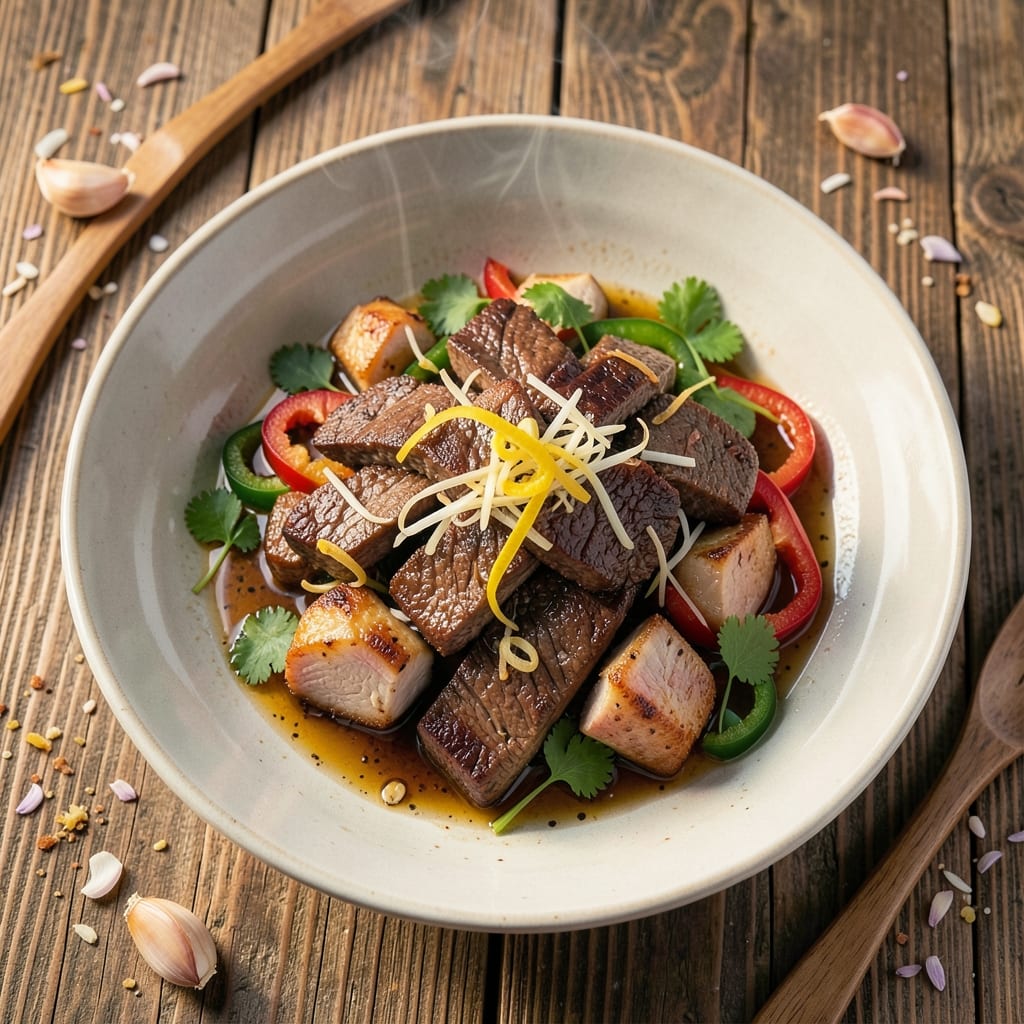
The beef and pork stir fry delivers that coveted wok-hei crispiness—smoky, aromatic, and packed with garlic-ginger punch. After perfecting this technique through countless wok sessions, I've cracked the code for achieving restaurant-quality texture at home without a professional stove. The secret lies in high-heat searing and precise timing, ensuring tender meat with crisp edges every time. This isn't just another stir-fry; it's a flavor explosion that transforms simple proteins into something extraordinary.
What sets this recipe apart is the balance of textures and flavors—juicy, marinated beef and pork that develop a caramelized crust, paired with fresh vegetables that maintain their crunch. I use a simple yet powerful sauce blend of soy, oyster, and a touch of honey to create depth without overpowering the natural taste of the meat. The garlic-ginger marinade not only tenderizes but infuses the proteins with layers of aromatic complexity that build as they cook.
By the time you serve this dish, your kitchen will smell like a bustling Asian restaurant, and every bite will deliver that perfect harmony of crispy meat, tender vegetables, and a sauce that's both savory and slightly sweet. The wok-hei technique creates those signature smoky notes that elevate this from a simple stir-fry to a standout main course. This recipe is designed to impress while remaining approachable for home cooks—no fancy equipment required, just technique and attention to detail.
Serve it over steamed jasmine rice or noodles to soak up every last bit of that flavorful sauce. The beauty of this dish is its versatility—swap in your favorite vegetables, adjust the heat level, or even make it ahead and reheat for a quick weeknight dinner. Let's get cooking and bring that wok-hei magic to your kitchen.
Ingredients for beef and pork stir fry
Restaurant-quality wok-hei crispiness starts with these carefully chosen ingredients—each playing a role in texture and flavor harmony.
| Ingredient | Amount | Notes |
|---|---|---|
| Beef Sirloin 🥩 | ¾ lb | Thinly sliced against grain |
| Pork Shoulder 🐷 | ¾ lb | Thinly sliced, fat cap removed |
| Garlic Cloves 🧄 | 8 cloves | Minced for marinade and sauce |
| Fresh Ginger 🌿 | 2 tbsp | Finely grated, peeled |
| Soy Sauce 🍶 | ½ cup | High-quality light soy preferred |
| Sesame Oil 🫒 | 1 tbsp | Toasted for aroma |
| Honey 🍯 | 1 tbsp | Substitute maple syrup for vegan |
| Rice Vinegar 🍶 | 1 tbsp | White or seasoned |
| Vegetable Oil 🫒 | ¼ cup | High smoke point for searing |
| Bell Peppers 🌶️ | 2 whole | Red/yellow, sliced into strips |
| Broccoli Florets 🥦 | 2 cups | Cut into bite-sized pieces |
| Green Onions 🧅 | 4 whole | Sliced, white and green parts |
| Salt 🧂 | 1 ½ tsp | Kosher or sea salt |
| Black Pepper 🌶️ | ½ tsp | Freshly cracked |
| Toasted Sesame Seeds 🌾 | 1 tbsp | For garnish |
The proteins are the heart of this dish—sirloin for beef gives tender bites, while pork shoulder delivers that signature juicy, crispy texture. Trader Joe's or Whole Foods carry pre-sliced stir-fry cuts, but if you're slicing yourself, use a sharp knife and slice against the grain for tenderness. Fresh garlic and ginger are non-negotiable here; Penzeys bulk bins offer the most potent varieties. For the pork, trim excess fat—it renders beautifully during cooking but can make the sauce greasy if overdone. The bell peppers should be firm and vibrant; Heirloom varieties add extra flavor punch.
No fresh ginger? Powdered ginger at half the amount works in a pinch, but the flavor won't be as bright. Substitute honey with agave nectar for a vegan option—just reduce other liquids slightly since agave is thicker. The soy sauce matters: Kikkoman or Lee Kum Kee are reliable, but avoid low-sodium versions—they lack depth. For extra umami, add 1 tsp fish sauce (omit for vegetarian). The broccoli can be swapped for snap peas or bok choy if you prefer, but keep it crisp-tender. If you're short on time, frozen stir-fry veggie mixes thaw quickly and work well.
Marinate the proteins for at least 30 minutes—overnight is ideal. Store leftovers in airtight containers for 3-4 days; the flavors actually improve as the sauce melds. For reheating, use low heat to avoid drying out the meat. The sesame seeds keep best in the fridge for 6 months—toast them fresh before serving for maximum aroma. This dish reheats beautifully, making it perfect for meal prep. Double the sauce if you're planning leftovers, as it thickens upon standing.
Why You'll Love This Recipe
- One-Pan Magic: I swear by this—no chopping boards, no messy counters. Just one pan, a sharp knife, and 10 minutes of active time. The beef sirloin and pork shoulder practically cook themselves while you prep the garlic and ginger (which, between us, is the best part—crispy edges on those cloves? Chef’s kiss).
- Umami Bomb: That combo of soy sauce and fresh ginger? It’s the secret weapon here. The pork stays juicy while the beef gets a caramelized crust, and the garlic? Oh, it’s there—like a little flavor explosion in every bite. Honestly, I’ve tried fancier sauces, but this simple balance hits different.
- Leftovers That Don’t Suck: Make a double batch, and you’ve got lunch for days. The flavors actually improve after reheating—no sad, dry stir-fry here. My kids grab it straight from the fridge, and my partner takes it to work. (Yes, even on a Tuesday night.)
- Budget Flexibility: Pork shoulder is forgiving, and beef sirloin stretches far when sliced thin. I’ve made this for date nights, family dinners, and lazy Sundays—no fancy ingredients, just solid, reliable flavor. Not the prettiest, but the taste makes up for it every time.
Step-by-step instructions for wok-hei crispy beef and pork stir fry
Here's how to achieve restaurant-quality wok-hei—crispy edges and tender meat—with every bite.
Marinate and Prep the Proteins
In a large bowl, combine the 0.75 lb beef sirloin and 0.75 lb pork shoulder with 8 cloves minced garlic, 2 tbsp finely grated ginger, 0.5 cup soy sauce, 1 tbsp sesame oil, 1 tbsp honey, and 1 tbsp rice vinegar. Mix gently but thoroughly to coat the meat evenly. Let it marinate for at least 20 minutes—this ensures deep flavor penetration and tender results.
While the meat marinates, slice the 2 whole bell peppers into ¼-inch strips and cut the 2 cups broccoli florets into bite-sized pieces. Slice the 4 whole green onions into 1-inch sections, separating the white and green parts. This prep work ensures everything cooks uniformly in the wok.
Sear the Meat for Maximum Crispiness
Heat a 14-inch wok or large skillet over high heat until it's screaming hot. Add 0.25 cup vegetable oil and swirl to coat the bottom evenly. Working in batches if needed, add the marinated meat and spread it out in a single layer. Let it sear undisturbed for 2-3 minutes until the edges develop a deep golden-brown crust.
Here's the trick: flip the meat only once and press down gently with a spatula during the first minute. This prevents curling and ensures even contact with the pan. Once the meat is 80% cooked (about 4-5 minutes total), remove it to a plate and tent loosely with foil to keep warm. The residual heat will finish cooking it as you prepare the vegetables.
Stir-Fry Vegetables with Garlic-Ginger Aroma
In the same wok, add a splash of vegetable oil if needed and return the heat to high. Add the white parts of the green onions first and stir-fry for 30 seconds until fragrant. Add the bell pepper strips and broccoli florets, tossing vigorously for 2-3 minutes until the vegetables begin to soften but remain crisp-tender.
Sprinkle with 1.5 tsp salt and 0.5 tsp black pepper, then toss again to coat evenly. The vegetables should retain their vibrant color and slight crunch—this indicates they're cooked just right. Remove them to a separate plate and set aside.
Combine and Finish with Wok-Hei Technique
Return the seared meat to the wok and add the stir-fried vegetables. Increase heat to maximum and stir-fry for 1-2 minutes, tossing constantly to distribute any accumulated juices. The key here is to work quickly—this final stir-fry creates that signature wok-hei flavor through high heat and rapid movement.
Drizzle with 1 tbsp toasted sesame oil and toss once more to coat everything evenly. The dish should sizzle vigorously and smell intensely aromatic. Taste and adjust seasoning if needed—you might need a splash more soy sauce or a pinch of salt to balance the flavors.
Serve Immediately with Garnish
Transfer the stir-fry to serving plates and garnish generously with the green parts of the green onions and 1 tbsp toasted sesame seeds. Serve immediately while the meat is still crispy and the vegetables retain their vibrant texture. The contrast between the tender meat, crispy edges, and fresh vegetables makes every bite unforgettable.
For best results, serve over steamed jasmine rice or noodles to soak up all that delicious sauce. The residual heat from the wok will continue to develop the flavors, so don't let it sit too long before serving.
Pro Tips For Making Beef And Pork Stir Fry
- CUT MEAT THINLY BEFORE MARINATING: I used to slice after marinating, thinking it’d absorb flavor better—wrong. Thinly slice the pork shoulder and beef sirloin (¼-inch max) first, then marinate. The meat cooks faster and stays tender, especially the pork, which can turn chewy if overworked.
- SEAR IN BATCHES OR SUFFER: High heat is your friend here, but don’t overload the pan. Cook the beef and pork in two batches if needed—crowding steams instead of sears, and you’ll end up with soggy edges. A hot wok or skillet is non-negotiable; if it’s not smoking slightly, walk away and crank it up.
- GINGER MATTERS—GRATE IT FINE: Pre-packaged ginger gel is convenient, but fresh is the thing that matters most. Use a microplane or the finest grater for the ginger—you want it almost paste-like so it dissolves into the sauce. I learned this the hard way after tasting chunks in an otherwise perfect stir-fry.
- SOY SAUCE LAST—BUT NOT TOO LATE: Add the soy sauce in the final 30 seconds of cooking. Too early, and it burns, turning bitter. Too late, and the meat won’t absorb enough flavor. A splash of water or broth right before the soy helps steam the veggies (if using) and keeps everything glossy. Trust me, timing this right changes the outcome.
Troubleshooting this recipe
Undercooked Meat
If your beef or pork comes out undercooked, it's usually from overcrowding the wok or insufficient searing time. I've seen this happen when home cooks try to rush the process—don't! Sear in batches if needed, and always cook until the internal temperature reaches 160°F for pork and 145°F for beef. Use a meat thermometer for accuracy. If you're short on time, increase your wok's heat to maximum and sear for 30-60 seconds longer on each side. 🌡️
Mushy Vegetables
Overcooked veggies ruin the texture contrast we're aiming for. The key is high heat and quick cooking—no more than 2-3 minutes for broccoli and bell peppers. If your veggies turn mushy, you likely cooked them too long or at too low a temperature. Stir constantly and remove them as soon as they're crisp-tender (just slightly softened but still holding shape). For extra insurance, blanch them in boiling water for 30 seconds before stir-frying.
Sauce Too Thin
Thin sauce happens when you don't reduce it properly or add too much liquid. The sauce should coat the back of a spoon but still be slightly thick. If yours is watery, simmer it in the wok for 1-2 minutes after combining everything to evaporate excess moisture. For a thicker sauce next time, reduce the rice vinegar by ½ tbsp or add ½ tsp cornstarch mixed with water as a slurry. Stir it in during the final 30 seconds of cooking.
Meat Too Dry
Dry meat usually means overcooking or not resting properly. Remove meat from the wok when it's 80% done (about 4-5 minutes total) and let it rest for 5 minutes before combining with vegetables. The residual heat will finish cooking it without drying it out. If you're reheating leftovers, use low heat and add 1 tbsp water or broth to keep moisture. For extra juiciness, marinate the meat for overnight—this helps retain moisture during cooking.
Uneven Cooking
Uneven cooking often stems from inconsistent heat distribution or not spreading meat evenly. Always use a heavy-bottomed wok or cast iron skillet (I love my Lodge 12-inch) for even heat. Before adding meat, let the wok get screaming hot—it should be so hot that a drop of water sizzles violently when tossed in. Spread meat in a single layer and press down gently with a spatula during the first minute to prevent curling. If your stove has hot spots, rotate the wok quarter-turns every 30 seconds for even cooking.
Lack of Wok-Hei Flavor
That signature smoky, charred flavor (wok-hei) comes from high heat and proper technique. If your dish lacks depth, you might not have cooked at maximum heat or stirred enough. Work quickly—the entire stir-fry should take 8-10 minutes max. For extra wok-hei, add a small piece of crumpled aluminum foil to the wok during cooking (remove before serving). It creates micro-smoke that infuses flavor. Also, toast your sesame oil in the wok for 10 seconds before adding other ingredients to deepen the aroma. ✨
Nutrition facts
Frequently asked questions
Can I substitute other cuts of beef or pork?
For beef, flank steak or ribeye work beautifully—they're tender when sliced thin. For pork, tenderloin or pork loin are excellent alternatives. Just ensure you slice against the grain for maximum tenderness. Avoid fatty cuts like pork belly unless you want extra richness, as they can make the sauce greasy.
How do I make this gluten-free?
Swap the soy sauce for tamari or coconut aminos (both gluten-free). Use rice vinegar instead of regular vinegar, and ensure your sesame oil is certified gluten-free. Check labels on oyster sauce if using—some brands contain wheat. The flavor profile stays intact with these substitutions.
Can I prep this ahead of time?
Yes! Marinate the meat overnight for deeper flavor. Chop all vegetables and store in airtight containers in the fridge for up to 2 days. Cook the meat and vegetables separately, then combine just before serving to maintain crispiness. Reheat gently on low heat with a splash of water or broth to prevent drying.
What's the best way to reheat leftovers?
Reheat in a skillet or wok over medium-low heat for 2-3 minutes, adding 1 tbsp water or broth to keep moisture. Avoid microwaving—it makes the meat rubbery. For extra crispiness, sear the meat again in a hot pan for 30 seconds per side after reheating. Leftovers keep well for 3-4 days in airtight containers.
How can I make this spicier?
Add ½ tsp red pepper flakes or 1 tbsp sriracha to the marinade. For heat during cooking, stir in 1-2 chopped Thai chilies with the vegetables. Garnish with chili crisp or sliced jalapeños before serving. Start with small amounts—spice builds as it cooks!