
Soups & Stews
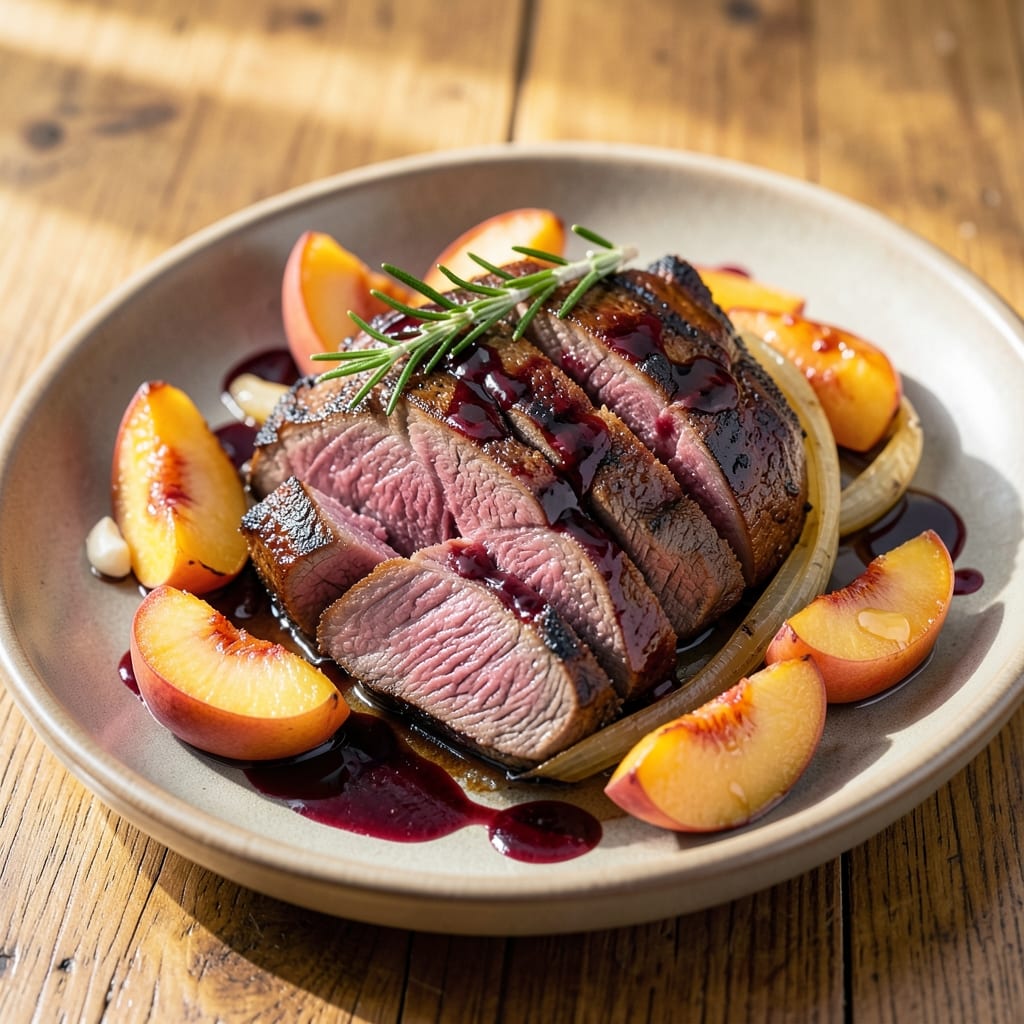
This beef and peaches recipe transforms humble ingredients into a restaurant-worthy stew where tender beef and juicy peaches create a perfect balance of sweet and savory. The secret lies in slow-braising the beef until fork-tender while caramelizing the peaches to deepen their natural sweetness—no fancy techniques required, just patience and a few key ingredients.
The magic happens in the sauce, where red wine and balsamic vinegar develop rich, caramelized depth as they simmer down. This isn’t just a dessert-inspired dish—it’s a bold, hearty meal that pairs beautifully with crusty bread or fluffy mashed potatoes. The peaches add unexpected brightness, cutting through the richness of the beef while keeping every bite exciting.
By the time you serve this, you’ll have a dish that looks as impressive as it tastes—deep amber sauce clinging to perfectly cooked beef, with peaches that burst with juicy sweetness in every spoonful. The aroma alone will draw everyone to the table, and the flavors will have them asking for seconds.
Perfect for a weeknight dinner that feels special or a weekend gathering, this recipe delivers comfort food with a gourmet twist. The best part? Leftovers taste even better the next day as the flavors meld further. Let’s get cooking!
Ingredients for beef and peaches
Restaurant-worthy flavors start with these vibrant ingredients—juicy peaches and tender beef braised to perfection.
| Ingredient | Amount | Notes |
|---|---|---|
| Chuck Roast 🥩 | 2 lb | Well-marbled for tenderness |
| Fresh Peaches 🍑 | 4 whole | Ripe but firm, pitted |
| Yellow Onion 🧅 | 1 whole | Diced, medium size |
| Garlic Cloves 🧄 | 6 cloves | Minced, fresh preferred |
| Red Wine 🍷 | 1 cup | Bold, dry variety |
| Balsamic Vinegar 🍶 | ½ cup | Aged, aged preferred |
| Beef Broth 💧 | 2 cups | Low-sodium preferred |
| Tomato Paste 🍅 | 2 tbsp | Smooth, no sugar added |
| Olive Oil 🫒 | 2 tbsp | Extra-virgin for richness |
| Fresh Thyme 🌿 | ½ oz | Leaves only, stems removed |
| Fresh Rosemary 🌿 | ¼ oz | Chopped sprigs |
| Brown Sugar 🍚 | 2 tbsp | Light or dark |
| Salt 🧂 | 1 ½ tsp | Kosher or sea salt |
| Ground Black Pepper 🌶️ | 1 tsp | Freshly ground preferred |
The chuck roast is your secret weapon here—look for well-marbled cuts at Whole Foods or your local butcher. If buying pre-cut, check for even-sized pieces. Costco often carries great deals on chuck roast, but any reputable grocery store will have it. For the peaches, farmers' markets deliver the juiciest, ripest fruit—avoid any with soft spots or wrinkled skin. Fresh thyme and rosemary should smell fragrant and vibrant; if they're wilted, skip them. The red wine? Cabernet Sauvignon or Merlot work perfectly—they'll add depth without overpowering the sweetness of the peaches.
No chuck roast? Beef short ribs or chuck steak cut into chunks will work, but they'll need slightly less braising time. Substitute white wine for red if needed—just add an extra splash of balsamic to balance. No fresh thyme or rosemary? Dried works at one-third the amount, but fresh is ideal. For the peaches, canned peaches in juice (drained) can be used in a pinch, though fresh is far superior. The tomato paste can be swapped for crushed tomatoes if you prefer, but paste gives that deeper, richer flavor. And if you're out of balsamic vinegar? Red wine vinegar will do in a squeeze.
This stew tastes even better the next day—4-5 days in the fridge, or freeze for up to 3 months. Store with the lid slightly ajar to prevent skin formation. For reheating, add a splash of water or broth to restore moisture. The peaches will soften further, intensifying their sweetness. If you're prepping ahead, braise the beef first, then add the peaches just before serving to keep them vibrant. Garnish with fresh thyme sprigs for that restaurant touch—it makes all the difference!
Why You'll Love This Recipe
- One-Pan Magic: I swear by this—just brown the beef, toss in onions and garlic, then let the wine and peaches do the work. No fancy gadgets, no flipping between pots, and honestly? That peach caramel clinging to the beef? Worth every second.
- Sweet-Savory Balance: The red wine cuts through the richness while the peaches add this unexpected sweetness that makes it feel fancy without trying. Between us, my picky husband actually licks his plate. (Yes, even on a Tuesday night.)
- Leftovers That Shine: This beef stays tender for days, and the peaches? They soften just enough to melt into the sauce. I freeze half the batch—perfect for quick lunches or when I’m too tired to cook.
- Budget-Friendly Luxury: Chuck roast is cheap, but it feels like a restaurant meal. Fresh peaches might seem pricey, but one bag stretches for multiple uses. I’ll be real: my grocery bill dropped, but my dinner table didn’t.
Step-by-step instructions for sweet-savory beef and peaches stew
This rich, caramelized stew transforms humble beef and peaches into a symphony of sweet-savory perfection.
Sear the Chuck Roast for Deep Flavor
Pat the 2 lb chuck roast dry with paper towels—this ensures maximum browning. Heat 2 tablespoons olive oil in a heavy Dutch oven over medium-high heat until shimmering. Add the beef and sear on all sides for 8-10 minutes total, pressing gently with a spatula to prevent curling. You're building that fundamental Maillard reaction—the golden crust that carries flavor through the entire dish.
Once deeply browned, remove the beef and set it aside. Don't wipe the pan clean—those browned bits are pure flavor gold. Add the 1 whole yellow onion and cook for 5 minutes until softened and lightly caramelized. Stir occasionally to prevent sticking, and resist the urge to add liquid yet—this step develops rich, nutty depth.
Build the Sweet-Savory Base
Lower the heat to medium and add the 6 cloves minced garlic, stirring for 30 seconds until fragrant. Immediately add the 2 tablespoons tomato paste and cook for 1 minute, stirring constantly to prevent burning. This creates a velvety base that will carry the wine and peaches beautifully.
Pour in the 1 cup red wine and scrape up all those browned bits from the bottom with a wooden spoon. Let the wine reduce by half—about 3-4 minutes—until it's syrupy and concentrated. This step transforms ordinary wine into complex, flavorful liquid gold. Add the 2 tablespoons brown sugar and 1.5 teaspoons salt, stirring to dissolve completely.
Simmer the Beef and Infuse Aromatics
Return the seared beef to the pot along with the 2 cups beef broth. Bring to a gentle simmer, then add the 0.5 ounces fresh thyme leaves and 0.25 ounces chopped rosemary sprigs. Partially cover and simmer for 1.5 hours, turning the beef occasionally. You want it to become fork-tender but not falling apart—this is where patience pays off.
After 1.5 hours, the beef should be easily fork-tender. Remove it from the pot and set it aside on a plate. Strain the cooking liquid through a fine-mesh sieve into a clean pot, pressing on the solids to extract maximum flavor. Discard the solids and return the strained liquid to the pot—this creates a silky, particle-free base for your sauce.
Caramelize the Peaches and Finish the Stew
Peel and slice the 4 whole fresh peaches into ½-inch thick wedges. Return the beef to the pot along with the peach slices. Add the 0.5 cup aged balsamic vinegar and bring to a gentle simmer. Cover partially and cook for 20-25 minutes, stirring occasionally, until the peaches are tender but still hold their shape and the sauce has thickened slightly.
Taste and adjust seasoning with ground black pepper if needed. The sauce should be rich, slightly sweet, and tangy from the balsamic. If it's too thin, simmer uncovered for 5-10 minutes to reduce further. The peaches should be caramelized at the edges but still juicy in the center—this balance is what makes this dish extraordinary.
Rest and Serve with Perfect Texture
Transfer the beef and peaches to a serving platter, spooning the sauce over the top. Let the stew rest for 10 minutes before serving—this allows the juices to redistribute, ensuring each bite is moist and flavorful. The beef should be fork-tender with visible peach wedges throughout, and the sauce should coat everything like a glossy, sweet-savory glaze.
Serve immediately with crusty bread or over mashed potatoes to soak up every last drop of that caramelized sauce. The contrast between the tender beef, juicy peaches, and rich sauce creates a perfect harmony of textures and flavors that will have everyone asking for seconds.
Pro Tips For Making Beef And Peaches
- Sear the Chuck Roast First: I learned this the hard way—skipping the sear means bland beef. Pat the roast very dry with paper towels, then hit it with high heat in a heavy pot for 3-4 minutes per side until deep brown. That crust locks in flavor when it braises later.
- Peel and Pit Peaches Last: Fresh peaches bruise easily, so don’t prep them until you’re ready to add them. Halve and pit just before tossing into the pot—this keeps their texture firm and their juices intact. (Yes, even if you’re impatient like me.)
- Deglaze with Wine Early: After searing the onions and garlic, pour in the red wine immediately while the pan is still hot. Let it bubble for 2-3 minutes to pull up all those stuck-on bits—this builds depth of flavor before the beef even goes in.
- Use a Meat Thermometer: Chuck roast needs patience, but overcooking turns it tough. Pull it at 195°F internal temp (it’ll rest to 190°F), then shred it. No guessing—your future self will thank you for not cutting into a dry brick.
Wine and beer pairings for these flavors
Red Wine Pairings
For this sweet-savory stew, I reach for a bold, dry red wine with enough body to complement the beef while cutting through the peaches' sweetness. A California Cabernet Sauvignon—like Louis M. Martini's Cabernet—works beautifully, with its dark fruit notes and subtle spice. The tannins in Cabernet help balance the dish's richness, while its acidity keeps the peaches from feeling cloying. 🍷
If you prefer something lighter, a Chianti Classico offers bright acidity and cherry flavors that play off the peaches' juiciness. For a more affordable option, try a Washington State Merlot—it's smooth enough to handle the sweetness without overpowering the beef's savory depth.
White Wine Alternatives
Don't have red wine? A dry Riesling or Viognier can work surprisingly well, especially if you add an extra splash of aged balsamic vinegar to balance the sweetness. The Riesling's citrus notes contrast nicely with the peaches, while Viognier's floral hints add complexity. I've used Dr. Loosen Blue Slate Riesling with great success—just chill it slightly to enhance its crispness. 🍷
Beer Pairings
For beer lovers, a malty amber ale or porter brings deep, caramelized notes that mirror the stew's sweet-savory profile. Try a New Belgium Fat Tire Amber Ale—its biscuity malt and subtle hop bitterness complement the peaches and beef without competing. For something richer, a Deschutes The Abyss Double IPA (yes, IPA!) works surprisingly well—the hop bitterness cuts through the sweetness while the malt sweetness enhances the peaches. 🍺
Non-Alcoholic Options
Skip the alcohol? A sparkling peach iced tea or ginger beer adds refreshing acidity to cleanse your palate between bites. For something more substantial, try a homemade spiced apple cider—simmer 2 apples, 1 cinnamon stick, and 1 orange peel in 4 cups apple juice until reduced by half. The warm spices echo the stew's depth while the acidity brightens the peaches. 🍎
Pro Tip: Temperature Matters
Serve your wine or beer slightly cooler than room temperature—around 55-60°F for reds and 45-50°F for whites. Chilling reds too much dulls their flavors, while serving whites too warm makes them taste flat. I keep my reds in the fridge for 20-30 minutes before serving, and whites for 10-15 minutes. This small adjustment makes a world of difference in how the flavors interact with your dish. ❄️
Nutrition facts
Frequently asked questions
Can I substitute canned peaches for fresh?
You can use canned peaches in a pinch, but fresh is ideal for that juicy burst. Drain and rinse canned peaches thoroughly to remove excess syrup, then slice them into ½-inch wedges just like fresh. For best results, add them 15 minutes before serving to preserve their texture. The natural juices from fresh peaches also help create a richer sauce.
How do I make this dish quicker?
For a faster version, use pre-cut beef chuck steak (about 1.5 lbs) instead of a roast, and reduce braising time to 1 hour. Skip the straining step and let the stew simmer uncovered for 10 minutes to thicken. Use frozen peaches (thawed and drained) and cut cooking time to 15 minutes. The flavors won't be as deep, but it's still delicious!
Why does my sauce taste too sweet?
The balsamic vinegar and brown sugar create the sweetness, but if it's overpowering, balance it with acid. Add 1 tablespoon lemon juice or ½ teaspoon red wine vinegar to brighten the flavors. For savory depth, stir in ½ teaspoon smoked paprika or a pinch of ground cinnamon. Taste as you go—small adjustments make all the difference!
Can I make this in a slow cooker?
Brown the beef and onions in a skillet first, then transfer everything to a 6-quart slow cooker. Add all remaining ingredients, including the peaches, and cook on LOW for 6-7 hours or HIGH for 3-4 hours. The slow cooker enhances tenderness, and the peaches will soften beautifully. Just add them 30 minutes before serving to keep them vibrant.
What’s the best way to reheat leftovers?
Reheat gently in a saucepan over low heat with 2-3 tablespoons water or broth to prevent drying. Stir occasionally until warmed through (5-7 minutes). For microwave reheating, cover with a damp paper towel and heat in 30-second intervals, stirring between each. Leftovers taste even better the next day as flavors meld!