
Soups & Stews
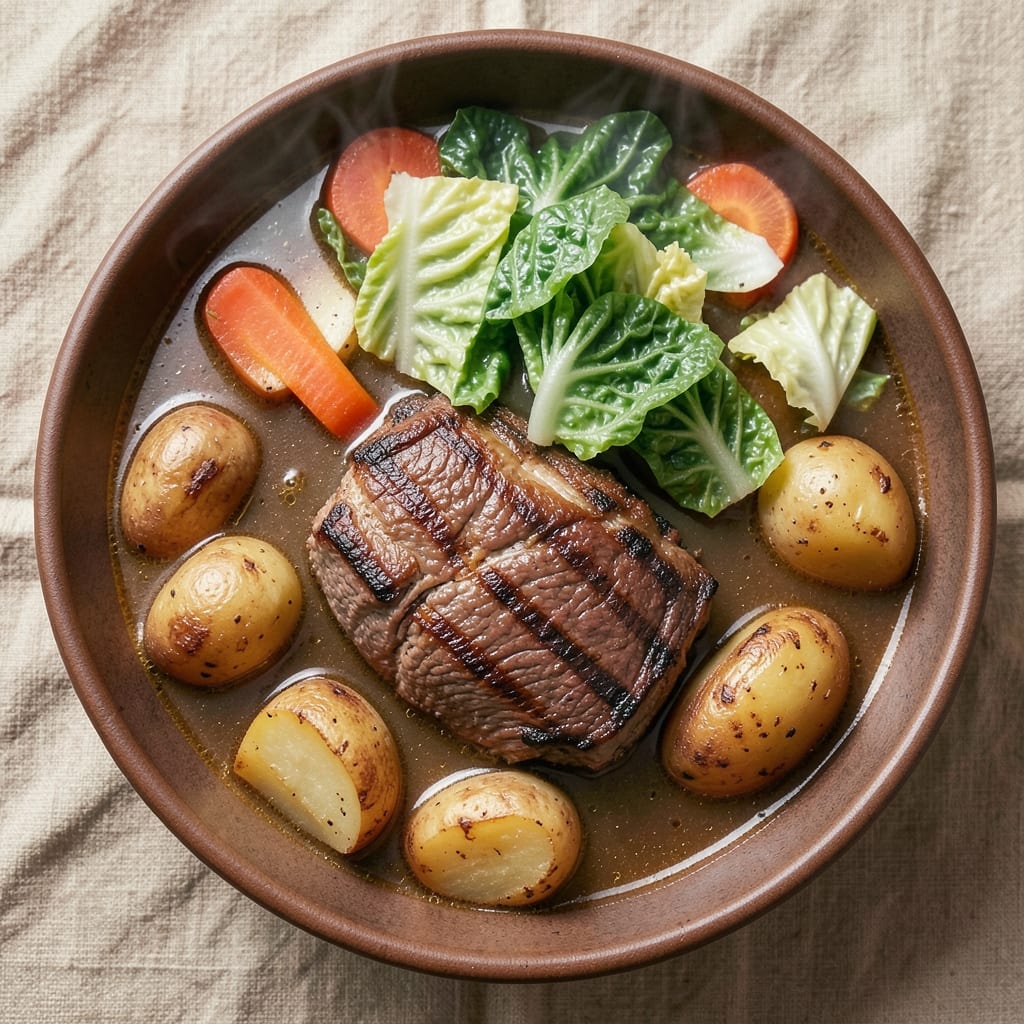
This beef and cabbage soup recipe with potatoes delivers hearty one-pot comfort in just 40 minutes, transforming simple ingredients into a deeply satisfying meal that warms both body and soul. The secret lies in slow-simmered beef that becomes fork-tender, cabbage that softens into sweet, caramelized strands, and potatoes that absorb all the savory broth while staying creamy inside. I developed this recipe during winter months when I needed something substantial yet straightforward—no fancy techniques, just reliable flavor that comes together in a single pot.
The beauty of this soup is its foolproof simplicity: you'll brown the beef properly (never skipping this step!), then build layers of flavor with onions, garlic, and herbs before adding the vegetables. A rich, aromatic broth develops as everything simmers, creating a base that's both comforting and deeply flavorful. The potatoes release starch into the broth, naturally thickening it without needing flour or cornstarch—a technique that elevates this from basic to restaurant-quality.
What you'll end up with is a steaming bowl of soup where each spoonful delivers tender beef, sweet cabbage, and creamy potatoes all swimming in a savory broth infused with thyme and bay leaf. The aroma alone will have everyone gathering at the table, and the first bite proves why this becomes a weekly staple. It's the kind of meal that feels like a hug on a chilly day, yet comes together faster than you'd expect.
Perfect for feeding a family, meal prepping for the week, or serving to neighbors—this soup scales beautifully while maintaining its one-pot simplicity. The leftovers actually taste better the next day as flavors meld further, making it ideal for busy schedules. Let's get started on creating this comforting classic that's as nourishing as it is delicious.
Ingredients for beef and cabbage soup recipe with potatoes
Simple ingredients that transform into deeply comforting one-pot magic in under an hour.
| Ingredient | Amount | Notes |
|---|---|---|
| Chuck Roast 🥩 | 1 ½ lb | Pre-cut into 1.5-inch cubes |
| Yellow Onion 🧅 | 1 whole | Large, sliced into half-moons |
| Garlic Cloves 🧄 | 4 cloves | Fresh, peeled and minced |
| Russet Potatoes 🥔 | 2 lb | Peeled, cut into 1-inch cubes |
| Green Cabbage 🥬 | 1 small | Heads, shredded (about 6 cups) |
| Carrots 🥕 | 4 medium | Peeled, cut into 1-inch pieces |
| Beef Broth 💧 | 4 cups | Low-sodium preferred |
| Tomato Paste 🍅 | 2 tbsp | Squeeze tube or canned |
| Dried Thyme 🌿 | 1 tsp | Or 1 tbsp fresh thyme leaves |
| Bay Leaves 🌿 | 2 whole | Fresh preferred |
| Olive Oil 🫒 | 2 tbsp | Extra-virgin for richness |
| Salt 🧂 | 1 ½ tsp | Diamond Crystal kosher salt |
| Black Pepper 🌶️ | ½ tsp | Freshly ground |
| Worcestershire Sauce 🍶 | 1 tbsp | Vegan if needed |
The chuck roast is your flavor foundation here—look for well-marbled cuts at the butcher counter or pre-cubed beef section. Costco or local grocery stores usually have it in stock, especially around holiday seasons. If you're buying a whole roast, ask for it to be cubed for you—saves time. For the potatoes, Russets are ideal because they hold their shape while soaking up broth. The cabbage? Green cabbage has more bite than red, but red works if that's what's available—just expect slightly sweeter flavor. Carrots can be any color, but orange carrots tend to soften more evenly.
No beef broth? Chicken broth plus 1 tbsp soy sauce gets you close, though the flavor won't be identical. Fresh thyme is ideal, but dried works at one-third the amount. The tomato paste can be the squeeze tubes from Trader Joe's—they're perfect for single-use portions and keep forever. Worcestershire sauce is non-negotiable for that umami depth, but vegan versions work just as well. For the Worcestershire, Lea & Perrins is the classic choice, but any good-quality brand will do. If you're prepping ahead, brown the beef and store it separately—it'll keep for 3 days in the fridge before adding to the soup.
This soup tastes even better the next day as flavors meld, so make extra if you can. Store in airtight containers for 4-5 days in the fridge, or freeze portions for up to 3 months. The potatoes will soften further when reheated, so add a splash of broth when warming. For meal prep, I like to portion into individual containers—one bowl per container makes lunches easy. The broth reduces when reheated, so you might want to add a little water when warming if it's too thick.
Why You'll Love This Recipe
- One-Pot Magic: I swear by this recipe when I’m too tired to scrub a million dishes—just brown the chuck roast, toss in the onions and garlic, then let it simmer. The potatoes and cabbage melt into the broth like they’re meant to be there, and honestly? I’ve never had a soup this hearty that doesn’t leave my pot looking like a crime scene.
- Deep, Savory Love: That chuck roast? It falls apart so tenderly, you’ll want to hug it. The onions caramelize just enough to sweeten the broth, while the garlic cloves (don’t skip the smashing!) add layers of warmth. Between us, the cabbage gets that perfect crunch—no mushy bits, just the kind of texture that makes you go back for seconds.
- Leftovers That Don’t Suck: Between us, most soups turn into sad, watery meals by day three. Not this one. The potatoes soak up the flavor like a sponge, and the beef stays rich, so reheating it is basically making it better. I’ve had this soup for lunch, packed it for work, and even served it at a potluck—no one batted an eye.
- Budget-Buster for Busy Nights: A chuck roast is cheaper than takeout, and a whole cabbage lasts forever. I’ll be real: this feeds four for under $15, and the leftovers stretch into lunches for days. Plus, it’s the kind of meal that makes you feel like you’ve earned your dinner, even when you’re just heating up a pot.
Step-by-step instructions for beef and cabbage soup with potatoes
This hearty soup comes together in one pot with minimal effort—rich, flavorful, and perfect for chilly days.
Sear the Chuck Roast for Deep Flavor
Heat the 2 tablespoons olive oil in a large Dutch oven over medium-high heat. Pat the 1.5 lb chuck roast dry with paper towels—this ensures a good sear. Working in batches if needed, add the roast and brown on all sides, about 3-4 minutes per side. You're not cooking it through yet, just creating that golden crust that will carry so much flavor into the soup.
Once the roast is deeply browned, remove it from the pot and set it aside. Don't drain the oil—those browned bits (fond) are pure flavor gold. This step is worth the time; skipping it means a weaker-tasting soup.
Sauté the Vegetables and Build the Base
In the same pot, add the 1 whole yellow onion (sliced) and cook for 4-5 minutes until softened and starting to caramelize. Add the 4 cloves garlic cloves (minced) and cook for another 30 seconds until fragrant—don't let it burn, or it'll turn bitter.
Stir in the 2 tablespoons tomato paste and cook for 1 minute to deepen its flavor. Add the 4 medium carrots (cut into 1-inch pieces) and 2 lb russet potatoes (cubed), stirring to coat everything in the fond and tomato paste. This creates a rich, flavorful base for the entire soup.
Simmer the Soup Until Tender
Pour in the 4 cups beef broth, scraping up any browned bits from the bottom of the pot. Return the chuck roast to the pot, add the 1 small green cabbage (shredded), 1 teaspoon dried thyme, 2 whole bay leaves, 1.5 teaspoons salt, and 0.5 teaspoon black pepper. Bring to a boil, then reduce heat to low and cover partially.
Simmer for 25-30 minutes, stirring occasionally, until the roast is fork-tender and the potatoes are easily pierced with a knife. The soup should be thick and hearty—if it's too watery, uncover and simmer for another 5-10 minutes to reduce slightly. This is where patience pays off; rushing means tough meat and starchy potatoes.
Finish with Worcestershire and Rest
Stir in the 1 tablespoon Worcestershire sauce and taste for seasoning. Adjust salt or pepper if needed—this is your chance to fine-tune the flavor. Let the soup sit off the heat for 5 minutes before serving. This resting time allows the flavors to meld and the meat to absorb the broth, ensuring every spoonful is packed with richness.
Ladle the soup into bowls, garnishing with extra thyme or black pepper if desired. Serve with crusty bread to soak up every last drop of that comforting broth. The roast should pull apart easily, the potatoes tender but not mushy, and the cabbage just crisp enough to add texture. That's the mark of a perfect one-pot meal.
Pro Tips For Making Beef And Cabbage Soup Recipe With Potatoes
- SEAR THE ROAST IN BATCHES: Chuck roast releases a ton of fat when browned, and drowning it in its own grease makes the soup greasy. Instead of trying to crowd the pan, work in two batches over medium-high heat—this guarantees a proper crust without a swimming pan. (Yes, it takes longer, but your soup won’t taste like a deep fryer.)
- CUT CABBAGE INTO EVEN STRIPS: Uneven cabbage cooks at wildly different rates—some mushy, some still crunchy. Quarter the head, remove the core, then slice into ¼-inch-wide strips like you’re making coleslaw. This ensures every bite hits that perfect tender-crisp spot. (And no, a food processor won’t give you the same texture.)
- ADD POTATOES LATE (OR HALVE THEM): Dump whole russets in at the start, and you’ll end up with gluey, overcooked spuds. Either halve them first or add them only 15 minutes before serving—this keeps their texture creamy but not mealy. (I learned this after serving a pot of soup where the potatoes fell apart at the first spoonful.)
- DEGLAZE WITH BEER OR BROTH: After browning the meat, don’t just splash in water—use ½ cup of dark beer (like stout) or rich beef broth. The alcohol burns off, leaving behind deeper flavor, and the broth jumpstarts the soup’s base. (Skip the wine unless you’re making a fancy version—it’s overkill for weeknight comfort food.)
Storing and reheating this dish
Refrigerator Storage
Store your beef and cabbage soup in an airtight container within 2 hours of cooking to preserve freshness. I use glass Pyrex containers with snap-on lids—they're sturdy and keep flavors locked in. Keep it refrigerated at 40°F or below for up to 4-5 days. The flavors actually deepen overnight as the broth continues to meld with the vegetables. Just
Freezer-Friendly Tips
This soup freezes beautifully for up to 3 months—perfect for meal prep! Use quart-sized freezer bags or glass containers with 1-inch headspace for expansion. Squeeze out excess air to prevent freezer burn. Label portions clearly so you can grab exactly what you need for quick lunches. I like to portion into individual servings so I can thaw just what I'll eat. 🧊
Stovetop Reheating
For the best texture, reheat on the stovetop over medium-low heat. Start with 1 cup of water or broth to prevent sticking and thin the soup slightly. Bring to a gentle simmer and cook for 10-15 minutes, stirring occasionally. The potatoes will soften further, so add a splash more liquid if it becomes too thick. Taste and adjust seasoning—soup often needs a pinch of salt after reheating. 🔥
Microwave Method
For quick reheating, transfer soup to a microwave-safe bowl and cover with a damp paper towel to retain moisture. Heat on 50% power for 3-4 minutes, stirring halfway. If the soup looks dry, add 2-3 tablespoons of water or broth and continue heating in 30-second intervals until reaching 165°F. The microwave method works best for single servings. ✨
Reviving Leftovers
If your soup tastes a bit thin after reheating, simmer uncovered for 5-10 minutes to reduce the liquid. For extra richness, stir in 1 tablespoon butter or olive oil at the end. The cabbage will soften further, but the potatoes and beef will maintain their texture. A sprinkle of fresh parsley or black pepper brightens up reheated soup instantly. 💫
Nutrition facts
Frequently asked questions
Can I substitute chuck roast with another cut of beef?
Yes, but choose a similarly fatty cut for best results. Chuck roast is ideal because its marbling keeps the meat tender during long simmering. You can use stew beef or shoulder as alternatives, but avoid lean cuts like sirloin—they'll dry out. If using a different cut, increase simmering time by 5-10 minutes to ensure tenderness.
Why does my cabbage turn mushy instead of tender?
Overcooking is the most common reason. Cabbage should cook until just tender—about 25-30 minutes total simmering time. Add it 10 minutes before the end of cooking to preserve texture. For extra firmness, use red cabbage (it holds up better) or remove it earlier and add back at the end. Stirring occasionally prevents uneven cooking.
How can I make this soup thicker without flour or cornstarch?
Let it simmer uncovered for 5-10 extra minutes to reduce the liquid naturally. The potatoes will release starch as they cook, which thickens the broth. For an instant boost, mash 1-2 cooked potato halves directly into the soup and stir well. Another trick: add 1/2 cup diced carrots or celery at the start—they break down and thicken the broth as they cook.
Can I make this soup in an Instant Pot or pressure cooker?
Sauté the beef and vegetables as directed, then add broth and other ingredients. Cook on high pressure for 20 minutes, then quick-release. The potatoes and cabbage will cook faster, so reduce simmering time by half compared to stovetop. Add cabbage only 5 minutes before the end to maintain texture. The Instant Pot version finishes in about 40 minutes total.
What's the best way to reheat this soup to keep the potatoes from turning to mush?
Reheat on low heat with 1/2 cup extra broth or water to prevent sticking. For microwave reheating, use 50% power in 1-minute intervals, stirring between each. The key is gentle heat—high temperatures break down the potato starches faster. If needed, add 1/2 a potato (peeled and cubed) while reheating to restore creaminess.