
Soups & Stews
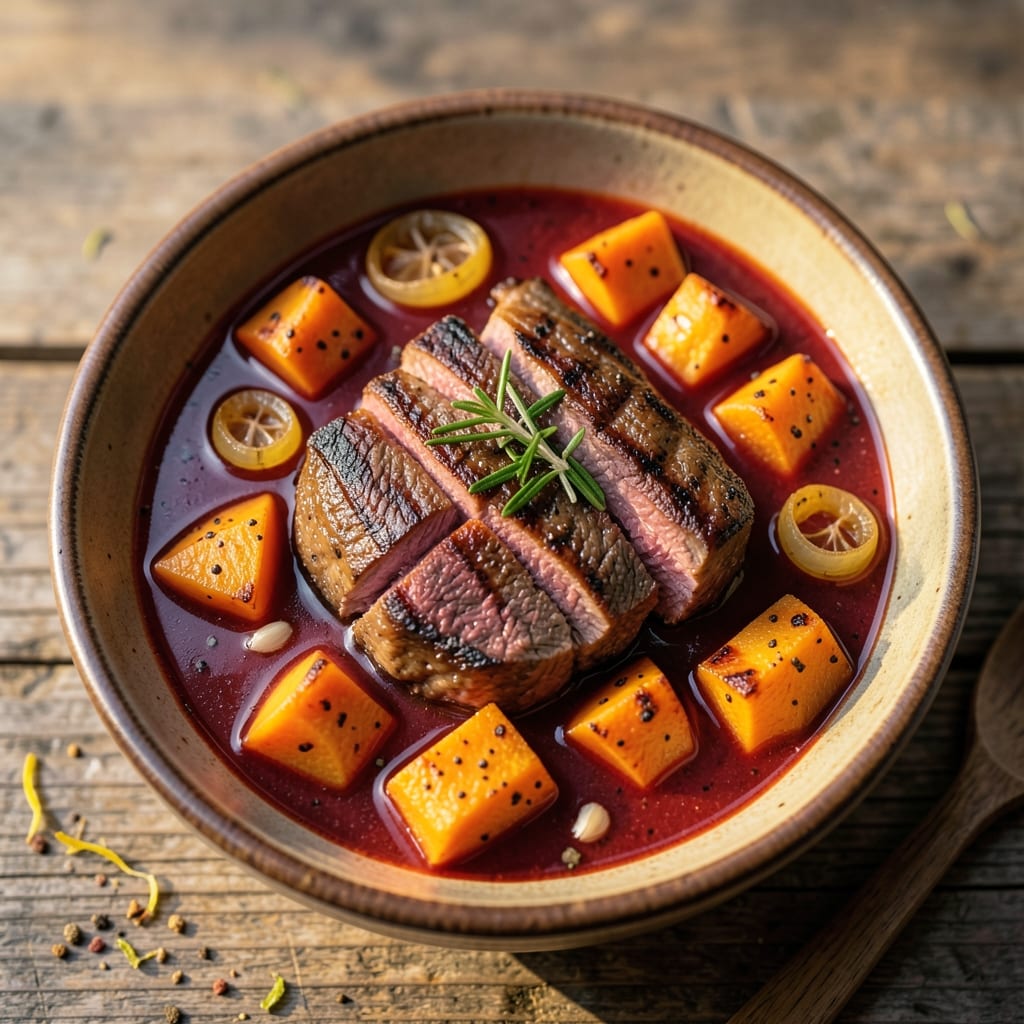
This beef and butternut squash stew recipe delivers deep umami comfort in every spoonful, transforming simple ingredients into a hearty, restaurant-quality meal. The secret lies in slow-braised beef that melts into tender perfection while sweet butternut squash caramelizes into rich, velvety sweetness. I developed this recipe during chilly evenings when I craved something substantial yet comforting—no shortcuts, just layers of flavor built through patience and technique.
The beauty of this stew is its one-pot simplicity: tough cuts of beef become fork-tender through gentle simmering, while the squash releases natural sugars that balance the savory richness. A touch of red wine and aromatic herbs elevates the broth, creating depth that makes this dish feel special without requiring fancy ingredients. The result is a stew that's equally satisfying as a weeknight dinner or holiday centerpiece.
What you'll achieve is a rich, velvety stew where the beef falls apart at the touch of a fork, the squash is tender yet holds its shape, and every bite carries that perfect harmony of sweet, savory, and umami. The aroma alone—warm spices mingling with caramelized squash and tender beef—will have your kitchen (and guests) smelling like a cozy autumn gathering.
Serve with crusty bread to soak up every last drop of that golden, aromatic broth, or pair it with a simple green salad for balance. This recipe scales beautifully for crowds, and leftovers reheat even better the next day. Let's create this foolproof comfort dish that tastes like a hug in a bowl.
Ingredients for beef and butternut squash stew
Sixteen ingredients, one pot, restaurant-quality umami depth in every bite.
| Ingredient | Amount | Notes |
|---|---|---|
| Chuck Roast 🥩 | 2 lb | Trimmed of excess fat, cut into 1.5-inch cubes |
| Butternut Squash 🎃 | 3 cups | Peeled, seeded, cubed (about 1 medium squash) |
| Yellow Onion 🧅 | 1 whole | Diced, medium size |
| Garlic Cloves 🧄 | 4 cloves | Minced, fresh preferred |
| Dry Red Wine 🍷 | 1 cup | Bold variety like Cabernet Sauvignon |
| Beef Broth 💧 | 4 cups | Low-sodium preferred, homemade or high-quality |
| Tomato Paste 🍅 | 2 tbsp | Smooth, not chunky |
| Fresh Thyme 🌿 | 2 tbsp | Leaves only, chopped |
| Fresh Rosemary 🌿 | 1 tbsp | Needles chopped, stems removed |
| Bay Leaves 🍃 | 2 whole | Dried, standard size |
| Olive Oil 🫒 | 2 tbsp | Extra-virgin, for searing |
| Kosher Salt 🧂 | 1 ½ tsp | Diamond Crystal preferred |
| Ground Black Pepper 🌶️ | 1 tsp | Freshly cracked |
| Brown Sugar 🍚 | 1 tbsp | Light or dark, packed |
| All-Purpose Flour 🌾 | 1 tbsp | For thickening |
The chuck roast is non-negotiable here—its marbling and connective tissue create that melt-in-your-mouth texture when slow-braised. Costco or Whole Foods carry excellent cuts, but any reputable butcher will have it pre-cut for convenience. Look for pieces with visible fat marbling, as this renders during cooking to keep the meat moist. For the butternut squash, organic varieties from Trader Joe's or local farmers markets have superior sweetness, though conventional squash works fine if you roast it first to concentrate its natural sugars. The red wine should be bold and dry—Cabernet Sauvignon or Merlot work perfectly, but whatever's open in your cabinet will do (just avoid sweet varieties).
No red wine? Substitute with additional beef broth and 1 tbsp balsamic vinegar for depth. Fresh herbs are ideal, but dried thyme at half the amount works in a pinch. The tomato paste can be swapped for 1 cup crushed tomatoes if you prefer a less concentrated flavor. For a deeper umami profile, add 1 tsp soy sauce or Worcestershire sauce (ensure it's vegetarian if needed). The brown sugar balances acidity—use coconut sugar for a refined option, though regular brown sugar adds subtle caramel notes. If your squash is particularly fibrous, roast it separately before adding to the stew for better texture control.
This stew tastes even better the next day as flavors meld, so make a double batch if you're feeding a crowd. Store in an airtight container in the fridge for up to 5 days, or freeze portions for 3 months—the broth thickens beautifully upon reheating. For reheating, add a splash of water or broth to prevent drying. The fresh herbs should be added last when reheating to preserve their bright flavor. Leftovers reheat best at low heat on the stovetop, stirring occasionally to distribute the thickened broth evenly.
Why You'll Love This Recipe
- One-Pot Magic: I swear by this—just chop the onion, toss in the squash cubes and chuck roast, then let the wine and garlic work their magic. No extra bowls, no stress, and the slow simmer does all the heavy lifting.
- Wine-Infused Richness: That splash of dry red wine? It’s the secret weapon—deepens the beef’s tenderness while balancing the squash’s sweetness. The aroma alone makes my kitchen feel like a cozy bistro.
- Leftovers That Shine: Between us, this stew tastes better the next day. Reheat it, add a sprinkle of fresh thyme, and suddenly you’ve got a lunch that feels like a treat—not a chore.
- Budget-Friendly Feast: Chuck roast stretches for days, and squash stays fresh forever. Honestly, I make this when I’m pinching pennies, and no one ever guesses it’s my wallet-friendly secret.
Step-by-step instructions for beef and butternut squash stew
This method delivers deep umami flavor and tender beef through precise timing and technique.
Sear the Chuck Roast for Rich Flavor
Heat the 2 tablespoons olive oil in a heavy Dutch oven over medium-high heat until shimmering. Pat the 2 lb chuck roast dry with paper towels and season generously with 1.5 teaspoons kosher salt and 1 teaspoon ground black pepper. Place the meat in the pot and sear undisturbed for 4-5 minutes until a deep brown crust forms.
This initial sear creates the Maillard reaction, locking in flavor. After the first side is browned, carefully flip the roast and sear another 4-5 minutes. For even cooking, you may need to sear in batches if your pot isn't large enough. Once browned on all sides, remove the roast and set it aside on a plate.
Build the Aromatic Base
In the same Dutch oven, add the 1 whole yellow onion and cook over medium heat for 5-6 minutes, stirring occasionally, until softened and golden. Add the 4 cloves minced garlic and cook for 30 seconds until fragrant—don't let it burn. Stir in the 2 tablespoons tomato paste and cook for 1 minute to deepen its flavor.
Here's where the depth of flavor begins. The caramelized onions and garlic form the foundation, while the tomato paste adds umami richness. Keep the heat at medium to prevent burning, and stir frequently to ensure even cooking of the aromatics.
Deglaze and Simmer the Stew
Pour in the 1 cup dry red wine and scrape up any browned bits from the bottom of the pot with a wooden spoon. This deglazing step captures all the flavor you've built. Add the 4 cups beef broth, 3 cups butternut squash, 2 tablespoons fresh thyme, 1 tablespoon fresh rosemary, 2 whole bay leaves, and 1 tablespoon brown sugar.
Return the chuck roast to the pot, along with any accumulated juices. Bring the mixture to a gentle boil, then reduce heat to low and cover partially. Simmer for 2 hours, stirring occasionally, until the beef is fork-tender and easily pulls apart. The stew should reduce slightly, creating a rich, concentrated sauce.
Thicken and Finish the Stew
Remove the chuck roast from the stew and set it aside. In a small bowl, whisk together the 1 tablespoon all-purpose flour with 2 tablespoons cold water to create a slurry. Stir this mixture into the stew and simmer uncovered for 5-7 minutes until the sauce thickens slightly to your desired consistency.
Return the beef to the stew and adjust seasoning with additional salt and pepper if needed. The stew should have a velvety texture with tender beef and caramelized squash. If you prefer a smoother texture, use an immersion blender to partially purée the squash while leaving the beef intact.
Rest and Serve
Let the stew rest for 10-15 minutes before serving. This allows the flavors to meld and the squash to absorb the rich beef broth. Serve the stew hot, ladling the tender beef and squash over crusty bread or with a sprinkle of fresh parsley for garnish.
The result should be a hearty, comforting dish with tender beef, sweet butternut squash, and a deep, savory broth. Each bite delivers a perfect balance of sweet, savory, and umami flavors that define this classic stew. The resting period ensures the squash absorbs all the rich juices, making every spoonful delicious.
Pro Tips For Making Beef And Butternut Squash Stew
- SEAR THE CHUCK ROAST: Brown that meat in batches if needed—overcrowding the pan steams instead of sears. A deep, caramelized crust locks in flavor, so don’t rush. I learned this the hard way after serving stew with barely browned beef that tasted bland.
- PEEL THE SQUASH WRONG: Skip the peeler—use a sharp knife to slice off the skin in one motion, then cut into cubes. The flesh stays intact, and you avoid the mushy texture that comes from scraping too close. (Yes, it looks messy, but it works.)
- DEGLAZE WITH WINE IMMEDIATELY: As soon as the beef comes out, splash in that red wine and scrape every bit of fond from the pot. Letting it sit turns the fond into a bitter sludge. This step makes the sauce richer without extra effort.
- LOW AND SLOW IS NON-NEGOTIABLE: Cover the pot and simmer at 300°F (150°C) for at least 3 hours—no peeking. High heat now = tough beef later. I was skeptical until I tried it, and now I refuse to rush this part.
Storing and reheating your leftovers
Refrigerator Storage
Let your stew cool completely before transferring to an airtight container—I recommend glass Pyrex with a tight-sealing lid. Store at 40°F or below for up to 5 days, though the flavors actually deepen overnight as the beef and squash continue to meld. The broth thickens slightly in the fridge, creating a more concentrated flavor profile. 💪
Freezer-Friendly Tips
For long-term storage, freeze portions in quart-sized freezer bags with 1 inch of headspace to prevent expansion cracks. Label with the date—this stew keeps for 3 months without losing quality. Thaw overnight in the fridge before reheating, never at room temperature. The texture remains tender, though the broth may separate slightly upon thawing. Add a splash of water or broth when reheating to restore consistency. ❄️
Stovetop Reheating
My preferred method is stovetop reheating on medium-low heat to prevent curdling. Add ¼ cup beef broth or water to loosen the stew, then simmer uncovered for 10-15 minutes, stirring occasionally. Taste and adjust seasoning—stews often need a pinch of salt after reheating. For extra richness, stir in 1 tablespoon butter or 1 teaspoon olive oil during the final minute. 🔥
Microwave Shortcuts
For quick reheating, transfer a portion to a microwave-safe bowl, cover loosely with a damp paper towel, and heat on 50% power in 2-minute intervals, stirring between each. Avoid full power to prevent uneven heating. If the stew looks dry, add 2-3 tablespoons broth and let it simmer for an extra minute. The microwave method works best for single servings and takes about 3-4 minutes total. ✨
Reviving Leftovers
If your stew has separated overnight, stir vigorously to redistribute the broth and beef. For extra depth, add 1 teaspoon soy sauce or ½ teaspoon smoked paprika while reheating. The fresh herbs should always be added after reheating to preserve their bright flavor. A sprinkle of fresh parsley or toasted breadcrumbs on top adds a restaurant-quality finish. 💫
Make-Ahead Pro Tips
Double the recipe and freeze half for future meals—I often make this stew on Sundays to enjoy all week. For meal prep, divide into individual portions before freezing to reheat exactly what you need. The stew reheats beautifully, and the flavors only improve with time. If you're short on time, use a slow cooker on low for 4-6 hours to reheat large batches efficiently. 📅
Nutrition facts
Frequently asked questions
Can I substitute chuck roast with another beef cut?
Yes! For a leaner option, use stew meat or chuck shoulder, but chuck roast is ideal because its fat content keeps the meat tender. If you only have sirloin or flank steak, cut it into small cubes and reduce the cooking time to 1 hour—these lean cuts cook faster and may dry out if over-simmered. For extra richness, add 1 tablespoon butter at the end of cooking.
How do I know when the beef is fully tender?
The beef should easily pull apart with a fork after 2 hours of simmering. For extra assurance, test a piece by pressing it gently—if it crumbles, it's done. If it's still slightly firm, return it to the pot for 30 more minutes. Never rush this step, as the beef needs time to break down and absorb all the rich flavors.
Can I make this stew in an Instant Pot or slow cooker?
For the Instant Pot, sear the beef first, then add all ingredients and cook on high pressure for 45 minutes, followed by a 10-minute natural release. For a slow cooker, combine all ingredients and cook on low for 8 hours or high for 4-5 hours. The slow cooker version will be slightly thicker, so add ¼ cup broth if you prefer a looser consistency. Both methods yield tender beef and caramelized squash!
What if my butternut squash isn't sweet enough?
Roast the squash cubes at 400°F for 20 minutes before adding them to the stew to concentrate its natural sweetness. Alternatively, add 1 extra tablespoon brown sugar or ½ teaspoon cinnamon during cooking. For a deeper flavor, swap ½ cup of the beef broth with vegetable broth—it adds subtle sweetness that complements the squash.
How can I make this stew vegetarian?
Replace the beef with 2 cups mushrooms (like cremini or portobello) and 1 cup lentils or chickpeas for protein. Use 4 cups vegetable broth instead of beef broth and add 1 teaspoon soy sauce for umami depth. The cooking time remains the same, but stir occasionally to prevent sticking. The result is a hearty, plant-based version with similar richness!