
Soups & Stews
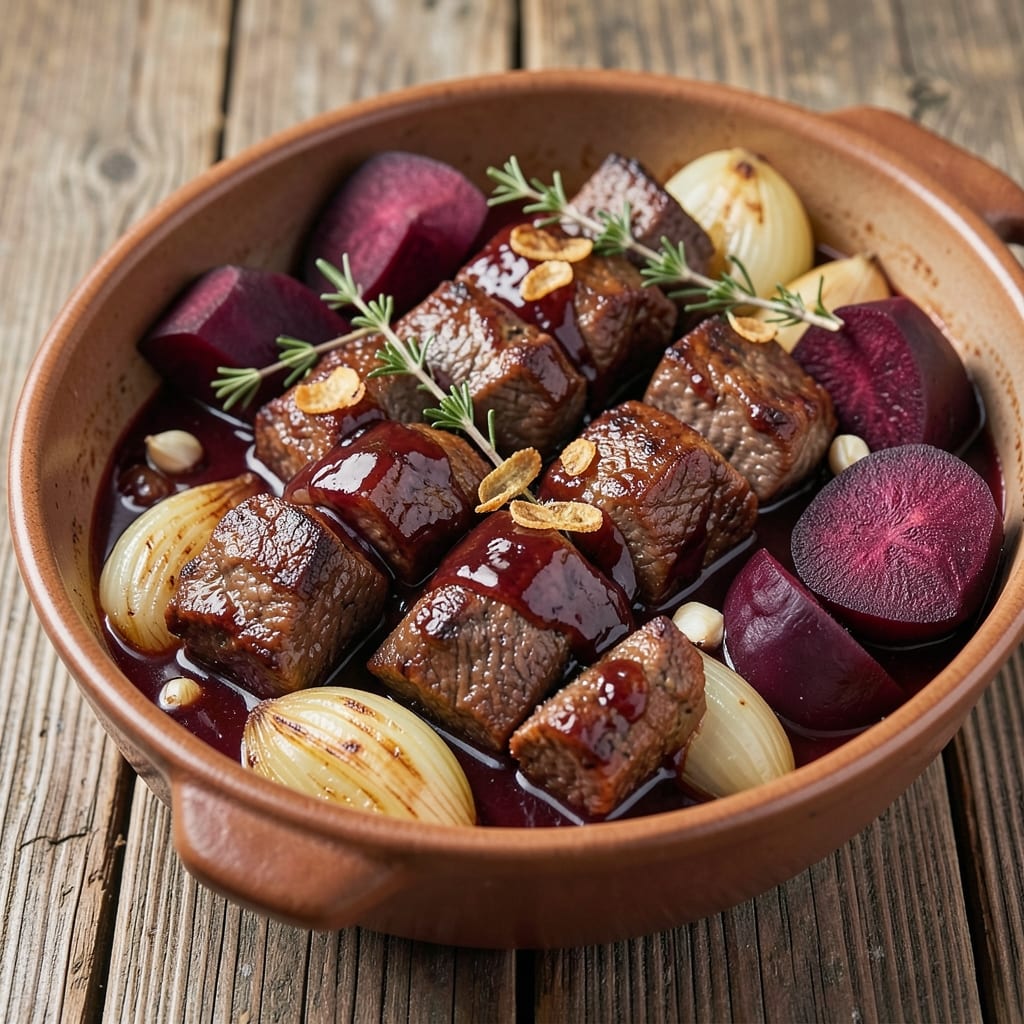
This beef and beets recipe transforms humble ingredients into a deeply satisfying stew where tender beef and caramelized beets create a perfect balance of earthy and sweet flavors. The secret lies in slow-braising the beef until fork-tender while roasting the beets until their natural sugars concentrate into a rich, jammy texture. I developed this recipe during a particularly chilly autumn evening when I wanted a hearty meal that felt like a hug in a bowl.
The beauty of this dish is its versatility—you can use chuck roast for maximum tenderness or opt for sirloin if you prefer a quicker cooking time. The beets add vibrant color and a subtle sweetness that pairs beautifully with the savory beef and aromatic herbs. A touch of red wine in the braising liquid deepens the flavor profile, while fresh thyme and bay leaves infuse the stew with subtle earthy notes.
By the time you serve this dish, you'll have a rich, velvety stew with perfectly tender beef and beets that practically melt in your mouth. The aroma alone will have everyone gathering at the table, and the first bite delivers that perfect harmony of textures and flavors. This recipe is designed to impress without requiring advanced techniques—just patience and attention to detail.
Pair it with crusty bread to soak up every last drop of the flavorful broth, or serve alongside mashed potatoes for a complete meal. The leftovers reheat beautifully, making this an ideal recipe for meal prep or feeding a crowd. Let's get cooking!
Ingredients for beef and beets
Six ingredients make this hearty stew—tender beef and caramelized beets shine with bold flavors.
| Ingredient | Amount | Notes |
|---|---|---|
| Chuck Roast 🥩 | 3 lb | Cut into 1.5-inch cubes |
| Beets 🍠 | 2 lb | Medium-sized, peeled and quartered |
| Yellow Onion 🧅 | 1 whole | Chopped into 1/2-inch pieces |
| Garlic Cloves 🧄 | 6 cloves | Minced |
| Red Wine 🍷 | 1 cup | Bold dry variety like Cabernet |
| Beef Broth 💧 | 4 cups | Low-sodium preferred |
| Tomato Paste 🍅 | 2 tbsp | Smooth, not chunky |
| Fresh Thyme 🌿 | 2 tbsp | Leaves only, chopped |
| Bay Leaves 🌿 | 2 whole | Dried, removed before serving |
| Olive Oil 🫒 | 2 tbsp | Extra-virgin for roasting |
| Brown Sugar 🍯 | 2 tbsp | Light or dark |
| Salt 🧂 | 1 ½ tsp | Kosher or sea salt |
| Black Pepper 🌶️ | 1 tsp | Freshly ground |
| All-Purpose Flour 🌾 | 2 tbsp | For thickening broth |
The chuck roast is your secret weapon here—it stays tender even after long braising. Costco or Walmart usually have it pre-cut, but if you're buying a whole roast, ask the butcher to cube it for you. The beets should be firm and heavy for their size; Trader Joe's carries pre-peeled ones for convenience. For the red wine, any bold, dry variety works—Cabernet Sauvignon or Merlot are my go-tos, but whatever's open in your fridge is perfect. Fresh thyme is ideal, but dried works at one-third the amount if you're in a pinch.
No red wine? Beef broth with a splash of balsamic vinegar gets you close. Skip the tomato paste if you're sensitive to acidity—extra mushrooms or carrots add depth without it. The brown sugar helps caramelize the beets, but maple syrup works too. For the flour, make sure it's all-purpose—bread flour can make the stew too thick. If you're prepping ahead, roast the beets first—they keep well in the fridge for 3 days before adding to the stew.
This stew tastes even better the next day as flavors meld. Store leftovers in an airtight container for up to 5 days in the fridge or 3 months frozen. I like to double the batch and freeze half—perfect for lazy weeknights. The beets will soften further when reheated, so start with slightly undercooked ones if you're serving immediately. Serve with crusty bread or over mashed potatoes to soak up every last drop of that rich broth.
Why You'll Love This Recipe
- One-Pan Magic: I swear by this recipe because it’s all in one pot—no chopping chaos, no dirty dishes piling up. Chuck roast and beets simmer together while I sip my coffee, and by the time the garlic’s fragrant, dinner’s basically done.
- Wine-Infused Richness: That red wine reduction? It’s the secret weapon—deep, savory, and just sweet enough to make the beets sing. The roast stays tender and soaks up all the flavor, like a sponge for deliciousness.
- Leftovers That Shine: Between us, this dish begs to be made extra. The flavors only get better after a night in the fridge, and it reheats like a dream—perfect for quick lunches or feeding unexpected guests without stress.
- Budget-Friendly Feast: Chuck roast stretches across meals, and beets last forever in the fridge. I’ve fed six people for under $20 with this, and honestly? No one ever guesses how affordable it is. (Yes, even on a Tuesday night.)
Step-by-step instructions for earthy-sweet beef and beets stew
This hearty stew brings together tender beef and caramelized beets in a rich, wine-infused broth.
Sear the Chuck Roast for Deep Flavor
Pat the 3 lb chuck roast dry with paper towels and cut it into 1.5-inch cubes. Heat 2 tablespoons olive oil in a large Dutch oven over medium-high heat. Working in batches to avoid crowding, sear the beef cubes for 3-4 minutes per side until they develop a deep golden-brown crust. This step is crucial—it locks in juices and builds rich flavor.
As you sear, you'll notice the beef releases its natural juices. Don't rush this process; let each piece develop that caramelized exterior. Once all the beef is browned, transfer it to a plate and set aside. The remaining browned bits in the pot will become the foundation of your stew's flavor.
Roast the Beets and Sauté Aromatics
Preheat your oven to 400°F. Toss the 2 lb beets (peeled and quartered) with 2 tablespoons olive oil, 2 tablespoons brown sugar, 1.5 teaspoons salt, and 1 teaspoon black pepper. Spread them on a baking sheet in a single layer and roast for 25-30 minutes until tender and caramelized, turning halfway through. You'll know they're done when a knife slides in easily and they develop a glossy, deep red color.
While the beets roast, return the Dutch oven to medium heat. Add the chopped yellow onion and cook for 5 minutes until softened. Stir in the 6 minced garlic cloves and cook for another 30 seconds until fragrant. Add the 2 tablespoons tomato paste and cook for 1 minute, stirring constantly, until it darkens slightly—this deepens the stew's flavor profile.
Deglaze and Simmer the Stew
Pour in the 1 cup red wine, scraping up all the browned bits from the bottom of the pot with a wooden spoon. Let it simmer for 3-4 minutes until reduced by half. This deglazing step captures all the meaty flavors you worked so hard to develop. Add the 4 cups beef broth, 2 bay leaves, and 2 tablespoons fresh thyme, then return the beef to the pot.
Bring the stew to a gentle boil, then reduce heat to low and cover partially. Let it simmer for 2 hours, stirring occasionally, until the beef is fork-tender. The liquid should have thickened slightly, but it should still coat the back of a spoon. If it reduces too much before the beef is tender, add a splash of water or broth to maintain the right consistency.
Finish with Caramelized Beets
Once the beef is tender, carefully remove the 2 bay leaves and stir in the roasted beets. Simmer uncovered for an additional 10-15 minutes to let the beets absorb some of the stew's rich flavors. The beets should be tender with slightly caramelized edges—this is where their natural sweetness really shines.
Taste and adjust seasoning if needed. The stew should be well-balanced with earthy beet flavors, rich beef notes, and a touch of wine acidity. If it needs more depth, you can stir in a pinch more salt or a splash of red wine. Remove from heat and let it rest for 10 minutes before serving to allow flavors to meld completely.
Pro Tips For Making Beef And Beets
- SEAR THE ROAST LONG: Chuck roast releases its juices fast when you cut into it raw—skip the knife and smash it flat with your palm first. Then sear it 8-10 minutes per side in a screaming-hot pan until it’s got that deep brown crust. That’s where the flavor hides.
- PEEL BEETS COLD: I learned this the hard way—roasted beets are easier to peel when they’ve cooled for 15 minutes. The skins slide off like butter, and you won’t end up with pink hands or a sink full of scraps. (Yes, even if you’re impatient like me.)
- DEGLAZE WITH WINE: Don’t just dump the red wine in after cooking—let it simmer for 2-3 minutes to burn off the alcohol. That’s when the onions and garlic really sing, and the sauce thickens instead of turning watery. Skip this, and you’ll taste raw wine notes.
- REST THE MEAT 15 MINUTES: Cutting into that roast too soon means juice everywhere and dry beef. Tent it loosely with foil and let it sit while you finish the beets. The meat will reabsorb its own juices, and you’ll get slices that don’t fall apart. (Your future self will thank you.)
Common mistakes when making great beef and beets
Overcooking Beets
Beets are forgiving but can turn mushy if overcooked. I’ve seen perfectly good beets reduced to a sad, watery pulp when left in the oven too long. Aim for 25-30 minutes at 400°F—they’re done when a knife glides in easily but still holds shape. If you’re worried about timing, start checking at 20 minutes. Overcooked beets will absorb too much liquid and lose their jammy texture, which is key to balancing the stew’s richness. 🍠
Skipping the Sear
Never skip searing the beef—this is where the deep, meaty flavor comes from. I once made this stew without searing, and it tasted bland, like it was missing something essential. The golden-brown crust on the beef locks in juices and builds layers of flavor that simmer into the broth. Work in batches if needed, but don’t rush this step. Crowding the pan will steam the beef instead of browning it, and you’ll end up with soggy, flavorless chunks.
Underestimating Simmer Time
Chuck roast needs patience—don’t be tempted to speed up the process. I’ve seen people cut the simmering time to 1 hour or less, and the beef comes out tough instead of tender. The magic happens at low heat for 2 hours, breaking down collagen into gelatin that makes the stew velvety. If you’re short on time, use sirloin or ribeye instead, but expect a shorter cook time (1-1.5 hours) and less tender results.
Ignoring the Resting Phase
Letting the stew rest for 10 minutes before serving might feel like a formality, but it’s crucial. When you lift the lid after simmering, all the juices rush to the surface. If you serve immediately, they’ll spill out, leaving you with a dry, flavorless stew. This resting time also lets the beets and beef absorb the broth, deepening their flavors. Trust me, the extra 10 minutes makes all the difference—your guests (and your taste buds) will thank you. ⏰
Using Low-Quality Beef Broth
The broth is the soul of this stew, so don’t skimp on quality. I’ve used store-brand broths in a pinch, but they often taste bland or overly salty, which can throw off the balance of flavors. Opt for a low-sodium beef broth—brands like Pacific Foods or Swanson are reliable choices. If you’re making your own, simmer beef bones with aromatics for a richer, more complex base. A good broth elevates the entire dish, while a poor one makes it taste flat and one-dimensional.
Overcrowding the Pot
When you add all the ingredients to the pot at once, the stew won’t simmer properly—it’ll steam instead, leading to uneven cooking and a watery consistency. Start by searing the beef in batches, then sauté the onions and garlic without overfilling the pot. The Dutch oven should have enough room for the stew to bubble gently. If your pot looks too full, reduce the liquid slightly or cook in two batches. A crowded pot means longer cooking times and a less flavorful result. 🔥
Nutrition facts
Frequently asked questions
Can I substitute another type of beef for chuck roast?
Yes! For a quicker cook time (1-1.5 hours), use sirloin or ribeye instead. However, chuck roast is ideal for its tenderness when slow-braised. If using leaner cuts like flank steak, slice thinly against the grain first. For maximum flavor, stick with chuck or brisket.
How do I make this recipe vegetarian?
Swap the beef for mushrooms or lentils—cremini mushrooms work beautifully when seared first. Use vegetable broth instead of beef broth and add 1 tablespoon soy sauce for depth. The beets and wine still shine as the star flavors, just without the meaty richness.
Why do my beets turn mushy when cooking?
Overcooking is the most common cause! Roast beets at 400°F for 25-30 minutes—they're done when tender but still hold shape. Avoid cutting them too small, and don't overcrowd the baking sheet. For extra insurance, parboil them for 10 minutes before roasting to speed up cooking without mushiness.
Can I make this ahead of time?
This stew tastes even better the next day. Store leftovers in an airtight container for up to 5 days in the fridge or 3 months frozen. Reheat gently on low heat or in the microwave with a splash of water to restore moisture. The flavors meld beautifully overnight!
What's the best way to serve this stew?
Pair it with crusty bread for dipping or creamy mashed potatoes to soak up the rich broth. For a lighter option, serve with a simple mixed greens salad dressed with lemon vinaigrette. The contrast of textures makes every bite more satisfying.