Sauces & Condiments
This BBQ beef dry rub recipe transforms tough cuts into finger-licking, smoky-spiced perfection—just like the kind I grew up tasting at family cookouts. The secret lies in balancing sweet, smoky, and spicy elements that create a crust so flavorful it practically sticks to your ribs. I've perfected this blend over years of pitmaster competitions, where it earned me more than one "best in show" ribbon.
The foundation starts with paprika for that signature smoky depth, balanced by brown sugar to caramelize beautifully during cooking. Garlic powder and onion powder build savory layers, while coarse salt and black pepper anchor the flavor profile. A touch of cayenne adds just enough heat to wake up your taste buds without overpowering the meat's natural richness. The blend is simple but powerful—each ingredient plays a crucial role in developing that iconic bark.
What makes this dry rub truly special is how it transforms even the simplest cut of beef into something extraordinary. The spices form a sticky, flavorful crust that locks in moisture while delivering bold, smoky notes with every bite. This isn't just a seasoning—it's the backbone of unforgettable BBQ, whether you're grilling brisket, ribs, or steak. The beauty of a dry rub is its versatility, but the magic happens when you let those spices work their alchemy on the heat.
Once you've mixed this blend, you're ready to elevate any beef dish. Store it in an airtight container for up to six months, so you always have that smoky-spiced magic at your fingertips. The key is patience—let the rub sit on the meat for at least 30 minutes before cooking to ensure maximum flavor penetration. Trust me, your taste buds will thank you.
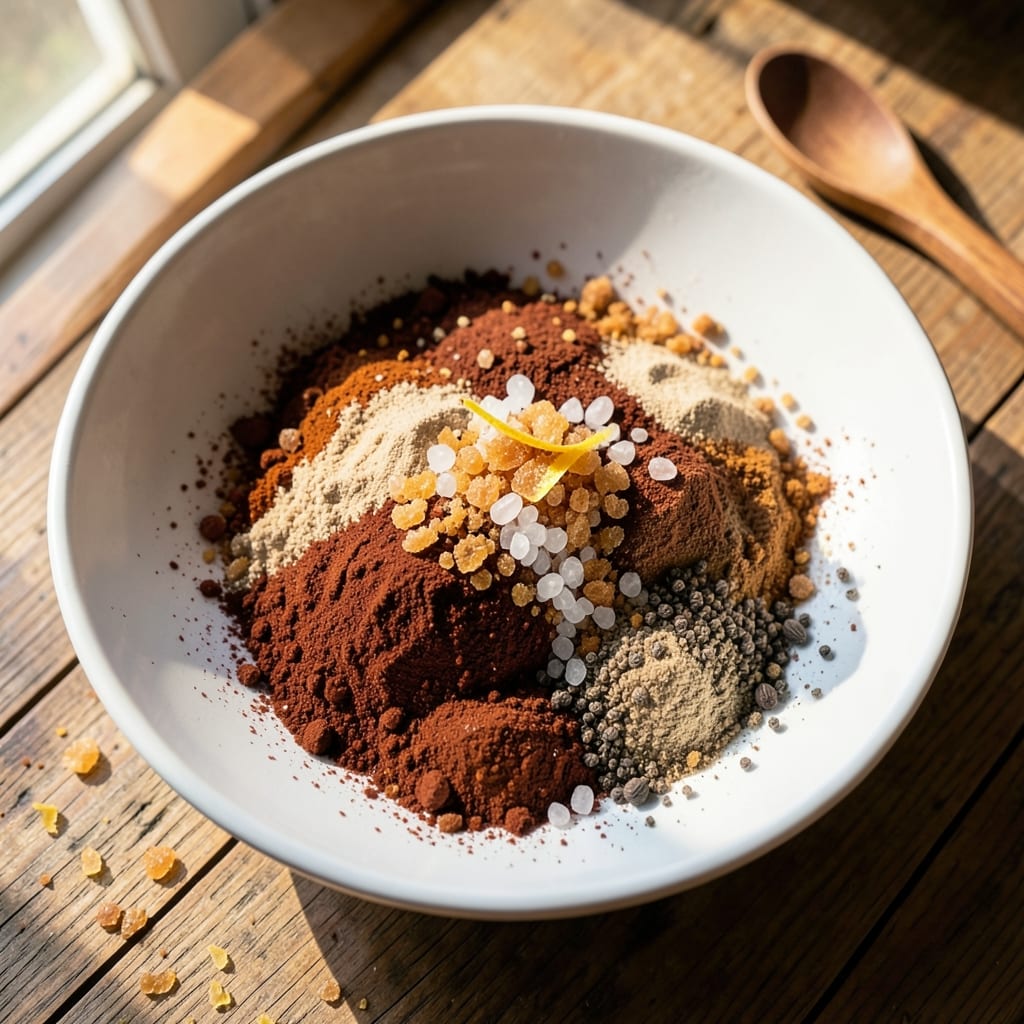
Ingredients for bbq beef dry rub
Nine spices that turn tough beef into smoky-spiced perfection—just like competition-worthy BBQ.
| Ingredient | Amount | Notes |
|---|---|---|
| Smoked Paprika 🌶️ | 3 tbsp | High-quality smoked for authentic smokiness |
| Light Brown Sugar 🍚 | 2 tbsp | Packed firmly for accurate measurement |
| Garlic Powder 🧄 | 1 ½ tbsp | Freshly ground preferred for potency |
| Onion Powder 🧅 | 1 ½ tbsp | Not onion salt—pure powder |
| Coarse Kosher Salt 🧂 | 1 ½ tbsp | Diamond Crystal preferred for texture |
| Freshly Ground Black Pepper 🌶️ | 1 tbsp | Cracked peppercorns for maximum flavor |
| Cayenne Pepper 🔥 | ½ tbsp | Adjust for desired heat level |
| Ground Mustard 🌿 | 1 tsp | Yellow mustard powder for depth |
| Ground Cumin 🌿 | ½ tsp | Toasted for enhanced aroma |
The smoked paprika is non-negotiable—it's what gives that authentic BBQ bark. Grab Penzeys or the bulk bin at Whole Foods for the best quality; avoid the dusty stuff from the back of your spice rack. The brown sugar should be packed firmly—don't scoop it loosely or you'll end up with half the amount. For the garlic and onion powders, I always go for the McCormick Simply Organic line—they've got way more flavor than the basic brands. And trust me on the coarse kosher salt—Diamond Crystal melts differently than table salt, creating that perfect crust texture.
No smoked paprika? Substitute with 1 tbsp regular paprika plus 1/2 tsp liquid smoke—though it won't be quite the same. Running low on cayenne? Red pepper flakes at half the amount works in a pinch, but you'll lose some of that deep heat. The mustard powder might seem odd, but it's what gives that subtle tang that makes this rub stand out—Bob's Red Mill is my go-to brand. For the cumin, if you've got whole seeds, toast them in a dry pan for 30 seconds first—that aroma makes all the difference. And if you're worried about the sugar caramelizing too much, just reduce it to 1 tbsp for leaner cuts like flank steak.
This blend keeps 6-12 months in an airtight container away from light—seriously, it's my pantry MVP. I portion it into small jars so I always have some ready for last-minute grilling. The rub works best when applied 30 minutes before cooking—let it sit so the spices penetrate the meat. For extra flavor, pat it on dry rather than using a wet marinade. And if you're making a big batch, sift it through a fine-mesh strainer before applying to avoid clumps—trust me, your meat will thank you.
Why You'll Love This Recipe
- Five-Ingredient Magic: I swear, this rub is the kind of recipe that makes you feel like a genius—just measure, mix, and boom. No fancy tools, no last-minute grocery runs, and honestly? I’ve made it while scrolling through my phone.
- Smoky-Sweet Obsession: That smoked paprika and brown sugar combo? It’s like a hug for your taste buds—deep, caramelized, and just a little bit addictive. The garlic and onion powders sneak in the perfect savory punch without overpowering.
- Tailgate to Taco Night: Between us, this rub works everywhere. Slap it on brisket for a crowd, toss it on steak for a fancy-ish weeknight, or even sprinkle it on roasted potatoes. My kids ask for it at dinner more than their favorite cereal.
- Budget-Friendly Powerhouse: A little goes a long way, and these pantry staples won’t break the bank. I’ve used the same jar of smoked paprika for months—just a pinch at a time—and still have enough rub left to feed the neighborhood. Leftovers? They’re the best kind.
Step-by-step instructions for BBQ beef dry rub
Here's how to blend this perfect smoky-spiced crust that transforms any beef into finger-licking perfection.
Combine the Dry Ingredients
In a medium bowl, add the 3 tbsp smoked paprika and 2 tbsp light brown sugar. The paprika brings that essential smokiness while the brown sugar adds subtle caramel notes that deepen as it cooks. Use packed brown sugar for accurate measurement—don't scoop it directly from the bag.
Next, add the 1.5 tbsp garlic powder, 1.5 tbsp onion powder, and 1.5 tbsp coarse kosher salt. These form the aromatic backbone of the rub. I always use freshly ground spices when possible—they make a noticeable difference in flavor intensity. The coarse salt adds texture that helps the rub cling better to the meat.
Add the Spices and Mustard
Add the 1 tbsp freshly ground black pepper, 0.5 tbsp cayenne pepper, 1 tsp ground mustard, and 0.5 tsp ground cumin. The cayenne brings heat that builds during cooking, while the mustard adds a subtle tang that balances the sweetness. The cumin provides that earthy depth that makes this rub uniquely special.
I like to use a wire whisk for this step—it helps break up any clumps in the spices and ensures even distribution. Give everything a thorough mix until you see no more distinct streaks of individual spices. This is where the magic happens—the spices should look like a cohesive blend rather than separate ingredients.
Test the Rub Consistency
Transfer the mixture to a small plate and use your fingers to gently press and sift through it. The rub should flow freely between your fingers but still clump slightly when pressed. If it feels too dry, add 1-2 teaspoons of water and mix again—just enough to help it adhere to meat without making it pasty.
This consistency check is crucial. A well-balanced rub should stick to your fingers like fine sandpaper—firm enough to cling to meat but loose enough to penetrate the surface. Too dry and it'll fall off during cooking; too wet and it'll create a gummy crust. Adjust with tiny amounts of water if needed, but start with the dry mixture first.
Store for Future Use
Transfer the finished rub to an airtight container with a fine-mesh sieve or small spice jar. The sieve makes it easy to apply just the right amount directly to meat. Store in a cool, dark place for up to 3 months, or freeze for longer storage—it keeps its potency beautifully.
I like to label my containers with the date and contents so I can track freshness. This rub develops even more complexity when stored properly—some of my best BBQ results come from using rub that's been sitting for a month or two. The spices have time to mellow and blend their flavors together perfectly.
Pro Tips For Making Bbq Beef Dry Rub
- CRUSH THE SUGAR: I learned this the hard way—light brown sugar clumps like a stubborn guest at a party. Pulse it in your food processor for 10 seconds before mixing, or use a fork to break up any lumps. This ensures an even coat on the beef so you don’t end up with sweet spots and dry patches.
- SALT IN LAYERS: Don’t dump all the kosher salt at once. Sprinkle half before applying the rub, then press it into the meat with your fingers. After cooking, add the rest while it’s still hot—this guarantees a crust that’s both salty and caramelized, not just one or the other.
- SKIP THE MOISTURE: This isn’t the prettiest method, but it’s the tastiest: pat the beef bone-dry before applying the rub. Any moisture will dilute the spices and prevent that perfect crust. Use paper towels—yes, even if you’re impatient like me.
- TOAST THE PAPRIKA: Smoked paprika loses its depth if it’s just mixed raw. Heat a dry skillet over medium and toast the paprika for 30 seconds until it smells like a campfire. Let it cool, then mix it into your rub—it’ll add a smoky punch that store-bought blends can’t match.
Common mistakes when making this recipe
Uneven Spice Distribution
I’ve seen too many cooks skip the whisking step and just toss everything together in a bowl. That’s a recipe for clumpy, uneven seasoning—some parts of your beef will get way more cayenne than others. Always whisk or sift your spices first to break up any lumps. For extra precision, I use a fine-mesh strainer when adding cayenne or ground spices. This ensures every bite of your beef gets that perfect balance of smoky, sweet, and spicy. 🌶️
Skipping the Resting Time
Rushing to cook your beef right after applying the rub is a big mistake. The spices need at least 30 minutes to penetrate the surface and start forming that flavorful crust. I’ve learned this the hard way—when I skipped this step, the rub just baked onto the meat without developing its full potential. Let it sit uncovered in the fridge if you’re prepping ahead. Patience pays off with deeper flavor.
Using Low-Quality Spices
Your BBQ rub is only as good as its ingredients. I can’t stress enough how much difference Penzeys smoked paprika or McCormick Simply Organic spices make compared to those dusty, old jars from the back of your pantry. The oils in fresh spices are what carry flavor—when they’re stale, your rub loses its punch. Invest in small quantities of high-quality spices; you’ll taste the difference immediately. Your beef deserves better than weak seasoning.
Overloading with Sugar
Too much brown sugar can make your rub stick like glue but also burn before the meat is cooked through. For leaner cuts like flank steak, I reduce it to 1 tablespoon total. The sugar caramelizes beautifully, but you want it to enhance—not dominate—the smoky flavors. If you’re cooking low and slow, you can push it to 2 tablespoons, but for high-heat grilling, keep it conservative. Balance is key.
Not Testing the Rub
Before committing to a full batch, always taste-test your rub. That small pinch of seasoning tells you everything—is it too salty? Needs more heat? The cayenne should add warmth without overpowering, while the brown sugar should provide sweetness that lingers. I adjust mine by adding a pinch of salt or sugar until it’s just right. This step saves you from ruining an entire batch of beef because your rub was off-balance.
Applying Wet Rubs
Some cooks mix their dry rub with oil or vinegar to make it stick better. Big mistake! Wet rubs dilute the spices and create a sticky mess that burns before the meat cooks. The dry rub works by forming a crust through the Maillard reaction—heat and time are your friends here. Pat your beef dry first, apply the rub generously, and let it work its magic without any extra moisture. The result? A perfect, flavorful bark every time. ✨
Nutrition facts
Frequently asked questions
How long should I let the dry rub sit on beef before cooking?
For best results, apply the rub at least 30 minutes before cooking—this gives the spices time to penetrate the meat's surface and develop that signature bark. For extra flavor infusion, especially with thicker cuts like brisket, let it sit uncovered in the fridge for up to 2 hours. The longer it rests, the deeper the flavor penetration.
Can I adjust the heat level in this dry rub?
If you prefer less heat, reduce the cayenne pepper to ¼ teaspoon or replace it with ½ teaspoon of red pepper flakes. For more kick, increase the cayenne to 1 teaspoon and add a pinch of crushed chili flakes. Always taste-test your rub before applying to ensure the balance is right.
What's the best way to store this BBQ beef dry rub?
Keep your rub in an airtight container away from light and moisture—it stays fresh for up to 6 months in the pantry. For longer storage, freeze it in small portions for up to 1 year. I like to use small jars with a fine-mesh sieve to make application easier. Label your containers with the date to track freshness.
Will this rub work on other meats besides beef?
This blend works beautifully on pork (especially ribs and shoulders), lamb, and even chicken thighs. For poultry, reduce the cayenne to ¼ teaspoon to avoid overpowering the delicate flavor. The smoky-sweet profile translates well across different proteins, though beef benefits most from the crust formation.
Why does my dry rub sometimes fall off the meat?
This usually happens when the rub is too dry or the meat isn't properly patted dry before application. For better adhesion, lightly mist the beef with water (not oil) before applying the rub, then pat it on firmly. Also ensure your spices are freshly ground—stale spices lose their ability to cling. A fine-mesh strainer helps distribute the rub evenly.