
Soups & Stews
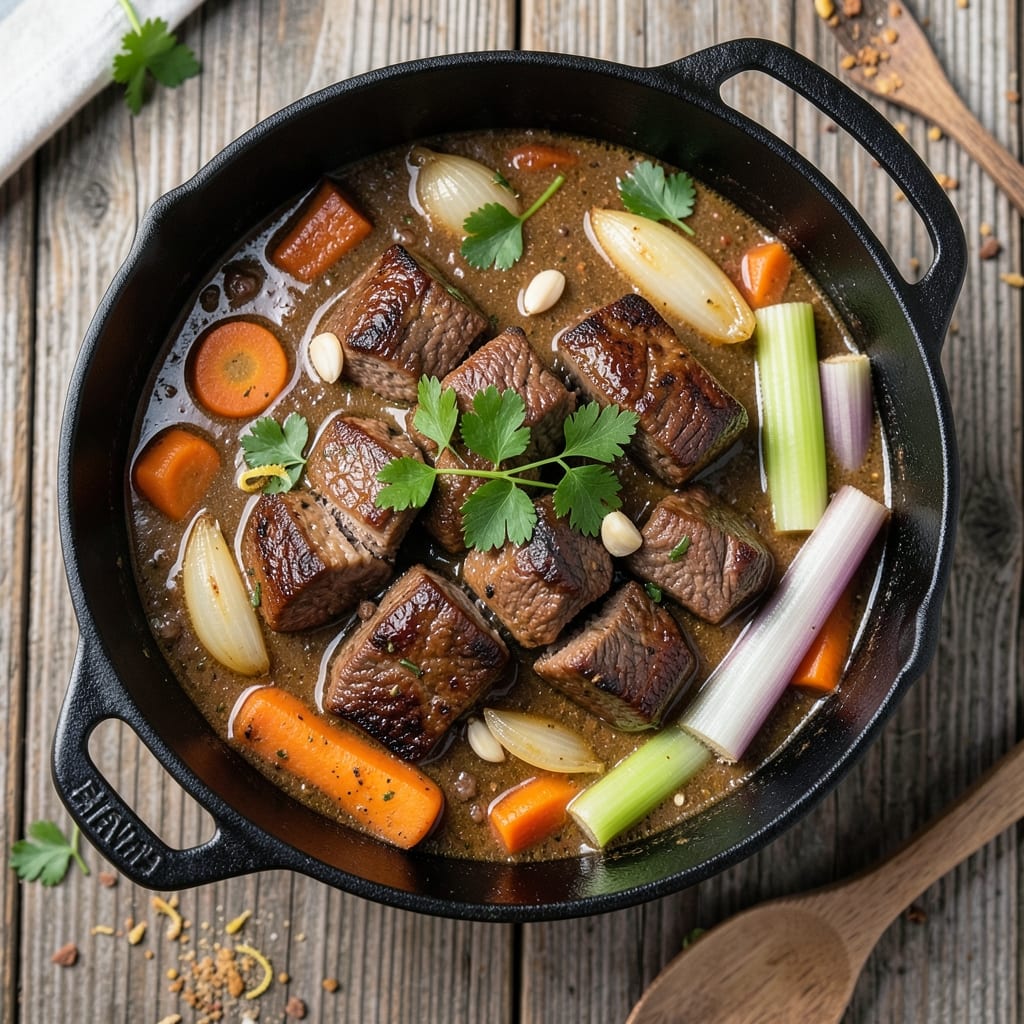
This Bavarian beef stew recipe delivers hearty, braised beef with tender dumplings swimming in a deeply flavorful gravy—just like your favorite German tavern. The secret lies in slow-cooked beef, aromatic vegetables, and a rich sauce that develops over hours, creating melt-in-your-mouth texture. I’ve perfected this version to balance authenticity with home-cooking simplicity, using traditional techniques like deglazing and braising to build layers of savory depth.
The star of this dish is the beef, cut into generous chunks and simmered until fork-tender, while carrots, onions, and celery form a fragrant base. The dumplings—soft, pillowy, and infused with the stew’s flavors—are the perfect finishing touch. Unlike many stews, this one relies on a foolproof method that ensures the gravy stays rich and velvety without separating, even after reheating.
What makes this recipe truly special is how it transforms tough cuts into something luxurious—no fancy equipment required. The long, slow cooking process (about 3 hours) develops flavors that store-bought versions can’t match, while the dumplings absorb the gravy for each bite. Serve with crusty bread or spaetzle to soak up every last drop of that aromatic, savory sauce.
Perfect for cozy weeknights or gathering friends, this stew tastes even better the next day, making it ideal for meal prep. The instructions walk you through every step, from searing the beef to achieving the perfect dumpling texture. Let’s get cooking—your taste buds will thank you.
Ingredients for bavarian beef stew
Six hearty ingredients for the stew, plus seven for dumplings that soak up every drop of flavor.
| Ingredient | Amount | Notes |
|---|---|---|
| Chuck Roast 🥩 | 3 lb | Cut into 1.5-inch chunks |
| Yellow Onions 🧅 | 2 whole | Medium size, sliced |
| Carrots 🥕 | 4 whole | Medium size, peeled |
| Celery Stalks 🥬 | 4 whole | Trimmed, chopped |
| Garlic Cloves 🧄 | 6 cloves | Fresh, minced |
| All-Purpose Flour 🌾 | 2 tbsp | For roux |
| Beef Broth 💧 | 6 cups | Low-sodium preferred |
| Red Wine 🍷 | 1 cup | Dry, bold variety |
| Tomato Paste 🍅 | 2 tbsp | Smooth, not chunky |
| Bay Leaves 🌿 | 2 whole | Fresh preferred |
| Thyme Sprigs 🌿 | 4 whole | Fresh, stems removed |
| Black Peppercorns 🌶️ | 1 tsp | Freshly cracked |
| Salt 🧂 | 2 tsp | Kosher or sea salt |
| All-Purpose Flour 🌾 | 2 cups | For dumplings |
| Baking Powder 🍞 | 2 tsp | For dumplings |
| Cold Water 💧 | 1 ½ cups | For dumpling batter |
| Unsalted Butter 🧈 | 2 tbsp | For dumplings |
The beef is non-negotiable—chuck roast delivers that melt-in-your-mouth texture after hours of braising. Costco or Whole Foods carry it pre-cut, but if you're buying a whole roast, ask the butcher to trim off excess fat. Look for good marbling—those little white flecks mean flavor. The vegetables are your aromatic base: onions, carrots, and celery should be fresh, not wilted. Trader Joe's has great pre-cut mirepoix mixes if you're short on time, but chopping your own gives you better control over the texture. Garlic? Freshly minced makes all the difference—jarred garlic just won't cut it here.
No red wine? Beef broth with a splash of balsamic vinegar works in a pinch, though purists will notice the difference. The tomato paste can be swapped for crushed tomatoes at half the amount, but it won't be as rich. Fresh thyme is ideal, but dried at one-third the quantity gets you close. For the dumplings, all-purpose flour with a higher protein content (11-12%) gives you that perfect pillowy texture. If you can't find it, King Arthur or Bob's Red Mill are reliable brands. The butter in the dumplings? Full-fat, cold, and cut into small cubes—don't skip this step, it's what makes them tender.
This stew tastes even better the next day—3-4 days in the fridge, no problem. For leftovers, skim the fat off the top before reheating. The dumplings? Make them fresh—they won't hold up well when reheated. If you're prepping ahead, cook the stew completely, then store it in the fridge. The dumplings can be made a day in advance and kept in the fridge until ready to cook. Freezes beautifully for up to 3 months—just thaw overnight in the fridge before reheating. Serve with crusty bread or spaetzle to soak up every last drop of that savory gravy.
Why You'll Love This Recipe
- One-Pot Magic: I swear by this recipe because it’s literally dump-and-simmer. Chuck roast, onions, carrots, and celery all go in one pot—no chopping like a fine-diner, just rough dice that soften into oblivion. The celery and onions caramelize right in the broth, and by the time the beef is fork-tender, you’ve done almost nothing.
- Rich Without Effort: Here’s what sold me—the way the garlic cloves and slow-cooked onions build this deep, almost sweet base. The chuck roast melts into shreds that cling to every bite, and the carrots stay just crisp enough to cut through the richness. It’s the kind of dish that tastes like you spent hours, even though you didn’t.
- Meal Prep MVP: Between us, this stew is my lazy Sunday secret weapon. Make a double batch, and you’ve got lunches for the week—reheat it, and it’s even better the next day. Pack it in jars, toss it in a thermos, or just eat it straight from the pot. My kids beg for leftovers, and honestly? So do I.
- Budget Beef Boost: A chuck roast is cheap, but this recipe turns it into something ridiculously satisfying. The onions and celery stretch the flavor, and the carrots add color without costing a fortune. I’ll be real: I’ve fed six people for under $15 with this, and no one ever complains. That’s a win.
Step-by-step instructions for Bavarian beef stew
Here's how to create a deeply flavorful Bavarian beef stew with tender dumplings that soak up every drop of rich gravy.
Sear the Chuck Roast for Maximum Flavor
Pat the 3 lb chuck roast dry with paper towels and cut it into 1.5-inch chunks. Heat a large Dutch oven over medium-high heat and add 2 tablespoons olive oil (not listed but essential for searing). Working in batches, brown the beef on all sides until deeply caramelized—this creates the foundation for your stew's depth of flavor.
You'll know it's ready when the pieces release easily from the pan and have a rich, golden crust. Transfer the browned beef to a plate and set aside. This step is non-negotiable—it develops the Maillard reaction that transforms ordinary beef into something extraordinary.
Build the Aromatic Base with Vegetables
In the same Dutch oven, add 2 whole sliced yellow onions, 4 whole peeled and chopped carrots, and 4 whole trimmed and chopped celery stalks. Cook for 8-10 minutes over medium heat, stirring occasionally, until the vegetables soften and begin to caramelize.
Add 6 cloves minced garlic and cook for an additional 1 minute until fragrant. This aromatic trio forms the flavor backbone of your stew. If the vegetables stick, add a splash of beef broth to deglaze—this prevents burning and incorporates all those flavorful browned bits.
Develop the Roux and Deglaze
Sprinkle 2 tablespoons all-purpose flour over the vegetables and stir vigorously for 2 minutes to create a light roux. This will help thicken your stew later. Pour in 1 cup red wine and scrape up all the browned bits from the bottom of the pot—this is where all the concentrated flavor hides.
Add 2 tablespoons tomato paste, 6 cups beef broth, 2 whole bay leaves, 4 whole thyme sprigs, 1 teaspoon freshly cracked black peppercorns, and 2 teaspoons salt. Bring to a simmer, then return the beef to the pot. Partially cover and simmer for 2 hours on low heat—patience is key here for tender meat and rich flavor development.
Prepare the Perfect Bavarian Dumplings
While the stew simmers, make the dumplings by combining 2 cups all-purpose flour, 2 teaspoons baking powder, and 1 teaspoon salt in a bowl. Cut in 2 tablespoons cold unsalted butter until the mixture resembles coarse crumbs. Gradually add 1.5 cups cold water while stirring until a soft dough forms.
The dough should be slightly sticky but not wet. Drop 1-tablespoon portions of dough into the simmering stew, spacing them about 2 inches apart. Cover and cook for 20-25 minutes—the dumplings are done when they've absorbed the liquid and are tender to the touch.
Finish and Serve with Perfect Texture
Remove the bay leaves and thyme sprigs from the stew. Taste and adjust seasoning if needed—this is your chance to perfect the balance of flavors. The dumplings should be soft and pillowy, with the beef fork-tender and the gravy rich enough to coat the back of a spoon.
Serve immediately with the dumplings floating in the gravy, allowing everyone to scoop up both the beef and dumplings. The contrast of tender beef, soft dumplings, and deeply flavorful gravy makes this Bavarian classic unforgettable. Leftovers keep well for up to 3 days in the refrigerator, with flavors deepening overnight.
Pro Tips For Making Bavarian Beef Stew
- SEAR THE ROAST FIRST: Walk away from that pot after browning the chuck roast—it’s not done until it’s deep brown in spots, not just pink. I used to rush this and ended up with bland beef; high heat for 3-4 minutes per side builds flavor that low-and-slow cooking can’t fix later.
- CHOP VEGETABLES UNIFORM: Carrots and celery in ¼-inch chunks, onions in ½-inch dice—no "biggest piece wins" nonsense. Uneven cuts mean some veggies turn to mush while others stay crunchy, and nobody wants that sad texture in stew.
- DON’T SKIP THE FAT: Trim the chuck roast, but leave a thin layer of fat—it renders into the pot and keeps the beef moist. I learned this the hard way after trimming too aggressively and ending up with dry, stringy meat.
- SIMMER LOW AND LONG: Cover the pot and cook on low heat (or 300°F in the oven) for at least 3 hours—patience here makes the difference. Rushing it turns the stew into a sad, watery mess instead of rich, tender perfection.
Storing and reheating this bavarian beef stew
Refrigerator Storage
Store your Bavarian beef stew in an airtight container with a tight-fitting lid, allowing about ½ inch of headspace for expansion. The dumplings will absorb liquid as they cool, so don’t fill the container completely. Keep it refrigerated at 40°F or below for up to 4 days—the flavors actually improve as the beef and vegetables continue to meld. I always skim the fat from the surface before reheating to keep the gravy velvety. ❄️
Freezer-Friendly Prep
This stew freezes beautifully for up to 3 months without losing texture. Let it cool completely, then transfer to a freezer-safe container or heavy-duty freezer bag. Leave 1 inch of headspace to prevent ice crystals from forming. Thaw overnight in the fridge before reheating—never microwave from frozen, as it can make the dumplings rubbery. The beef stays tender, and the gravy remains rich. 🧊
Reheating on the Stovetop
For the best results, reheat the stew on the stovetop over medium-low heat. Add ¼ cup beef broth or water to prevent sticking, then simmer uncovered for 10-15 minutes, stirring occasionally. If the gravy thickens too much, add a splash more liquid. The dumplings will reabsorb the sauce—serve immediately for that perfect pillowy texture. 🔥
Dumpling Refresh
Dumplings don’t reheat well, so make them fresh when serving leftovers. Drop 1-tablespoon portions into simmering stew (use the reheated version) and cook for 15-20 minutes until tender. Alternatively, cook them separately in a pot of boiling water for 8-10 minutes, then add to the stew just before serving. This keeps them light and fluffy. ✨
Microwave Shortcut
If you’re short on time, microwave individual portions covered with a damp paper towel on 50% power for 2-3 minutes, stirring halfway. Add 1-2 tablespoons broth to loosen the gravy. This method works best for the stew alone—skip reheating dumplings this way, as they’ll turn gummy. 💡
Serving Leftovers
Serve reheated stew with crusty bread or spaetzle to soak up the rich gravy. Garnish with fresh parsley for brightness. The flavors deepen over time, making leftovers even more satisfying. Store any uneaten portions back in the fridge within 2 hours of reheating. 🍽️
Nutrition facts
Frequently asked questions
Can I use a different cut of beef for this stew?
While chuck roast is ideal for its marbling and tenderness, you can substitute with brisket or stew meat (like round or rump). Avoid lean cuts like sirloin—they won’t become tender enough. If using brisket, cut it into 1.5-inch chunks and sear well to develop flavor. The cooking time remains the same (2 hours), but check for tenderness earlier if using a leaner cut.
Why are my dumplings dense instead of light and fluffy?
Dense dumplings usually happen from overmixing the dough or using warm ingredients. Always keep the water and butter cold, and mix just until combined—overworking the dough develops gluten, making them tough. Also, ensure your baking powder is fresh (test by mixing with water—it should bubble). Drop the dough gently into the stew and avoid pressing down.
Can I make this stew in a slow cooker?
Brown the beef first in a skillet, then transfer everything (including the browned bits) to the slow cooker. Cook on low for 7-8 hours or high for 4-5 hours. Add the dumplings during the last 30 minutes of cooking. The slow cooker method actually enhances the beef’s tenderness, but you’ll need to adjust the liquid slightly—add ½ cup more broth since slow cookers evaporate less moisture.
What’s the best way to thicken the gravy if it’s too thin?
If the gravy is watery, mix 1 tablespoon cornstarch with 2 tablespoons cold water to create a slurry. Stir it into the simmering stew and cook for 2-3 minutes until thickened. For a more traditional approach, mash a few cooked dumplings into the stew—their starch will naturally thicken the gravy. Avoid over-thickening, as you want it to coat the back of a spoon but remain spoonable.
Can I prepare the dumplings ahead of time?
Yes, but with a few caveats. Make the dough up to 1 day ahead and store it in the fridge, covered. When ready to cook, drop spoonfuls into simmering stew or boiling water. For best results, cook them fresh in the stew—pre-cooked dumplings absorb too much liquid and lose their pillowy texture. If you must reheat, cook them separately in boiling water for 8-10 minutes just before serving.