
Main Courses
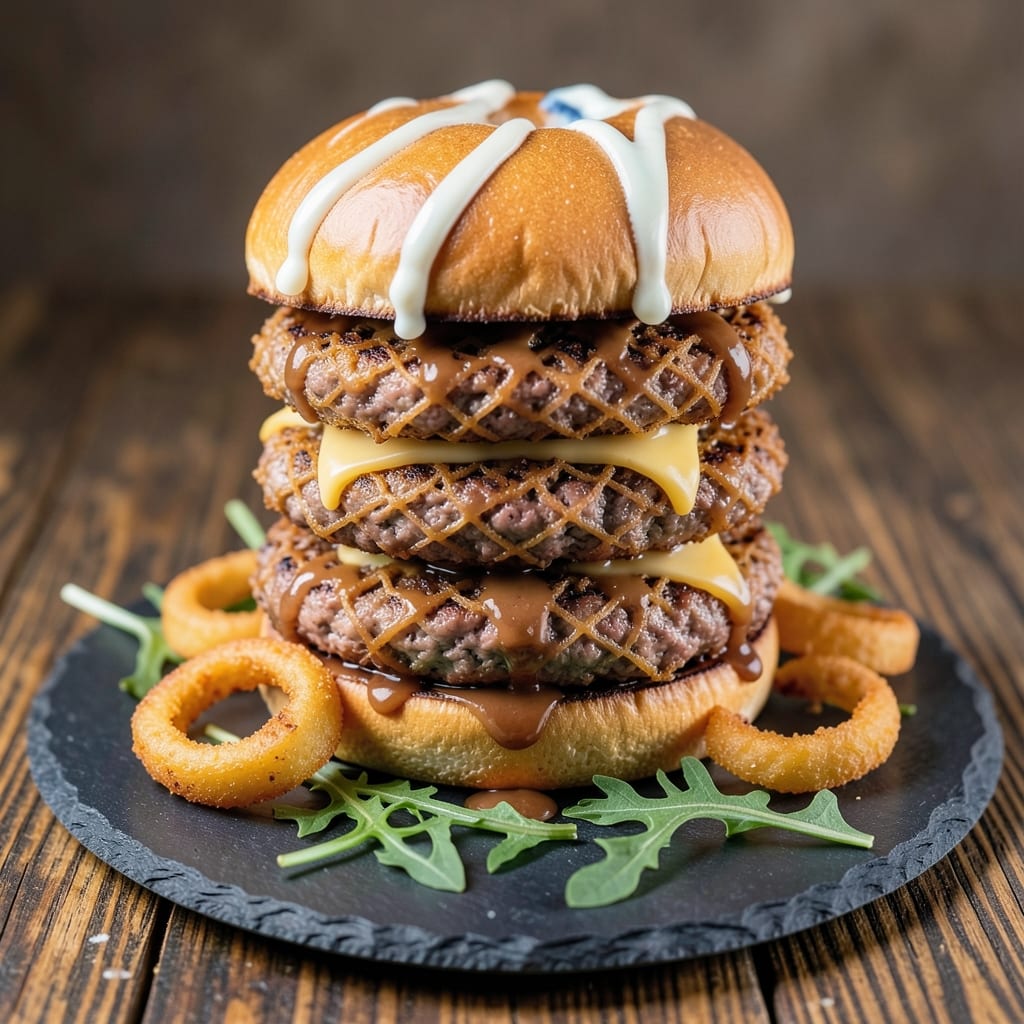
This battered beef burger recipe delivers the perfect balance of crispy golden shells and juicy centers—a technique that transforms ordinary burgers into something extraordinary. The secret lies in a light, airy batter that creates a satisfying crunch while keeping the beef tender inside, a method I've perfected after countless trials. This isn't your typical burger; it's a restaurant-worthy dish that brings that deep-fried satisfaction to every bite.
The process starts with a simple yet effective batter made from flour, a touch of cornstarch for extra crispiness, and a binder to ensure the coating stays intact. Once fried to a golden brown, the battered patties are piled high with your favorite toppings—think melted cheese, fresh lettuce, and tangy pickles—all nestled between soft, toasted buns. The key is maintaining the right heat in the oil to achieve that perfect crunch without compromising the juiciness inside.
What makes these burgers truly special is how they elevate the entire meal. The crispy exterior adds texture that complements the softness of the bun and the richness of the beef, while the juicy center ensures every bite is satisfying. Serve them with classic sides like crispy fries, a fresh coleslaw, or a simple green salad to round out the experience. The combination of textures and flavors creates a dish that's impossible to resist.
Whether you're hosting a backyard barbecue or craving something indulgent on a weeknight, these battered beef burgers deliver restaurant-quality results at home. The technique is straightforward once you understand the balance between batter thickness and frying temperature, and the payoff is a burger that stands out from the rest. Let's get started on creating this crowd-pleaser.
Ingredients for battered beef burger
Fourteen ingredients transform ordinary beef into restaurant-style battered burgers with crispy shells and juicy centers.
| Ingredient | Amount | Notes |
|---|---|---|
| Ground Beef (80/20) 🥩 | 1 ½ lb | Coarse texture preferred |
| All-Purpose Flour 🌾 | 1 ½ cups | For light, airy batter |
| Cornstarch 🌾 | ¼ cup | Extra crispiness secret |
| Large Eggs 🥚 | 2 whole | Room temperature preferred |
| Milk 🥛 | ½ cup | Whole milk for creaminess |
| Baking Powder 🍞 | 1 tsp | For extra lift |
| Salt 🧂 | 1 ½ tsp | Diamond Crystal preferred |
| Ground Black Pepper 🌶️ | ½ tsp | Freshly ground |
| Vegetable Oil 🫒 | 3 cups | For deep frying |
| Hamburger Buns 🍞 | 4 whole | Toasted for serving |
| American Cheese Slices 🧀 | 4 slices | Melted perfectly |
| Iceberg Lettuce 🥬 | 1 head | Crisp leaves only |
| Dill Pickle Slices 🥒 | ½ cup | Tangy crunch |
| Ketchup 🍅 | ¼ cup | Classic burger topping |
| Mayonnaise 🥫 | ¼ cup | For special sauce |
The beef is non-negotiable—80/20 ground chuck gives that perfect fat-to-lean ratio for juiciness. Costco or Trader Joe's usually have the best prices for bulk bags, but grab the pre-formed patties if you're short on time. The cornstarch is what makes this batter extra crispy—don't skip it. For the flour, King Arthur or Bob's Red Mill brands work perfectly. Eggs should be at room temperature for the batter to blend smoothly, so take them out 15 minutes before mixing. The milk? Whole milk makes the batter richer, but 2% works in a pinch.
No baking powder? Baking soda plus lemon juice (½ tsp each) works as a substitute, but the flavor won't be identical. Running low on vegetable oil? Peanut or canola oil both work, but vegetable oil has the highest smoke point for frying. For the buns, Potato buns from Kroger or Bimbo brands add that extra softness. Lettuce should be crisp—skip the wilted stuff from the back of the fridge. Pickles can be dill or bread-and-butter, but Heinz or Vlasic brands are the most reliable. The special sauce? Mix ketchup and mayo at a 1:1 ratio—Heinz ketchup and Hellmann's mayo are my go-tos.
Batter stays fresh for 24 hours in the fridge, but I recommend making it fresh day-of for the best texture. Store extra beef in an airtight container with a paper towel to absorb moisture—keeps for 3 days. The buns? Toast them just before serving to keep them soft. Leftover burgers reheat best in a skillet with a splash of oil—2 minutes per side brings back that crispy texture. Freeze patties without batter for 3 months—just thaw and re-batter when ready.
Why You'll Love This Recipe
- I swear by this combo: the cornstarch in that batter makes it crispier than takeout, while the 80/20 beef keeps it juicy. No fancy mix-ins—just pantry staples that actually work.
- Five-Ingredient Magic: I swear by this combo: the cornstarch in that batter makes it crispier than takeout, while the 80/20 beef keeps it juicy. No fancy mix-ins—just pantry staples that actually work.
- Crispy-Juicy Balance: That milk-egg batter clings perfectly, giving you a golden crust that shatters at the first bite, but the inside? Still tender and beefy. It’s the kind of contrast that makes you close your eyes mid-chew.
- Tailgate or Tray: Between us, these are my go-to for game days and lazy Sundays. Serve them on a slathered bun with pickles, or just pile them on a sheet pan with fries—no judgment. They handle crowds like a champ.
Step-by-step instructions for battered beef burgers
Here's how to make burgers with that perfect crunchy exterior and juicy interior—every time.
Prepare the Beef and Form Patties
Divide the 1.5 lb ground beef (80/20) into 4 equal portions (about 3.75 oz each). I use my hands to gently shape them into ½-inch thick patties—don't overwork the meat or they'll get tough. The 80/20 fat ratio is key here; it keeps the burgers juicy even after frying.
Place the patties on a plate and let them sit at room temperature for 10 minutes before battering. This ensures even cooking and prevents cold spots that can make the batter stick unevenly. While they rest, separate the 4 slices of American cheese and keep them handy for the final step.
Make the Light, Crispy Batter
In a large bowl, whisk together the 1.5 cups all-purpose flour, 0.25 cup cornstarch, 1 tsp baking powder, 1.5 tsp salt, and 0.5 tsp ground black pepper. The cornstarch is what gives these burgers that extra crunch—don't skip it. In a separate bowl, beat the 2 whole large eggs and 0.5 cup milk until smooth.
Slowly pour the egg mixture into the dry ingredients while whisking continuously. You want a thick, pourable batter—like heavy cream consistency. If it's too thick, add 1-2 tablespoons of milk to loosen it. Let the batter rest for 5 minutes so the flour can fully hydrate and the gluten can relax. This prevents gummy burgers and ensures that crispy shell we're after.
Heat the Oil and Fry the Burgers
Fill a deep skillet or Dutch oven with 3 cups vegetable oil and heat it over medium-high heat to 350°F. You'll know it's ready when a small piece of batter dropped in sizzles immediately and floats to the surface. The oil should be hot enough to create a golden crust but not so hot that it burns the batter.
Working in batches, dip each beef patty into the batter, letting any excess drip off before carefully sliding it into the hot oil. Fry for 3-4 minutes per side, turning only once, until the batter is deep golden brown and the internal temperature reaches 160°F. Real talk: don't overcrowd the pan or the oil temperature will drop, leading to greasy instead of crispy burgers.
Add Cheese and Assemble the Burgers
Transfer the fried patties to a wire rack set over a paper towel-lined plate to drain excess oil. Top each patty with 1 slice of American cheese and let it melt for 1 minute. The residual heat from the patty will work its magic—no need for extra time under a broiler.
Toast the 4 whole hamburger buns lightly in a dry skillet or under a broiler until they're just golden. Spread each bottom bun with 1 tablespoon of mayonnaise and 1 tablespoon of ketchup, then layer with crisp iceberg lettuce leaves and dill pickle slices. Place the cheese-topped patty on the bun, add the top bun, and press gently. Serve immediately while the cheese is still gooey and the batter is crisp.
Pro Tips For Making Battered Beef Burger
- CHILL THE MEAT: Take your ground beef out of the fridge and let it sit for 15-20 minutes before forming patties—cold meat shrinks more when cooking, and you’ll end up with a denser, less juicy burger. I learned this after making a batch where the centers stayed gray no matter how long I cooked them.
- WHISK THE BATTER: Mix your flour, cornstarch, and milk into a smooth batter with no lumps—use a whisk or fork to break up clumps before adding eggs. After burning through three batches with uneven crusts, I finally realized the batter needed to be silky, not gloppy.
- PRESS FIRM, NOT HARD: When shaping patties, press the beef gently but firmly—too light and they’ll fall apart; too hard and you’ll squeeze out juices. Aim for about ¾-inch thickness, and make a slight dimple in the center so they don’t puff up like meatballs.
- COOK IN BATCHES: Resist the urge to crowd the pan—cook patties in single layers with space between them. I used to pile them high, thinking it’d be faster, but they steamed instead of searing, leaving me with soggy, unevenly cooked burgers. A 3-4 minute gap between batches keeps the heat where it needs to be.
Make-ahead tips for leftovers
Prep Ahead
Make the batter the night before—it rests better and develops that perfect light texture. Store it in an airtight container in the fridge for up to 24 hours. Just whisk it briefly before using to break up any settled flour. I even prep the beef patties ahead, shaping them and storing them on a plate covered with plastic wrap in the fridge for 12 hours max. This saves time on cook day and keeps everything organized. 💡
Oil Prep Shortcut
Use a deep-fat thermometer to maintain 350°F oil temperature—this is non-negotiable for crispy results. I keep a separate pot of oil preheated on the stove while I assemble the burgers. For extra convenience, use a deep fryer (like the Cuisinart Deep Fryer)—it maintains consistent heat and handles batches better than a skillet. Just
Batter Refresh
If you're making multiple batches, keep the batter in a warm spot (like a proofing drawer or instant pot with yogurt setting) to maintain ideal consistency. Cold batter thickens and becomes harder to work with. I also recommend prepping the toppings—slice pickles, assemble sauce mixtures, and even toast the buns ahead of time. Store them separately in airtight containers until ready to assemble. This keeps everything fresh and ready for quick serving. ✨
Freezer-Friendly Patties
Shape and freeze the beef patties without batter on a baking sheet for 1 hour to prevent sticking, then transfer to a freezer bag with parchment paper between each. Thaw in the fridge overnight—this prevents moisture buildup that can make the batter soggy. When ready to cook, pat the thawed patties dry with paper towels before dipping in batter. This trick saves hours of prep time on busy days. ❄️
Batch Frying Strategy
Fry burgers in two batches to avoid overcrowding—this keeps the oil temperature stable. Use a slotted spatula to carefully transfer patties to a wire rack over a baking sheet lined with paper towels. This draining step is crucial for crispiness. I also recommend keeping a thermometer in the oil between batches to adjust heat as needed. The goal is golden brown in 3-4 minutes per side—no more, no less. 🌟
Cheese Melting Hack
Place the cheese slices on the hot patties right after frying—the residual heat melts them perfectly in 60 seconds. For extra gooeyness, use American cheese (it melts smoother than cheddar). Prep all toppings in small bowls for easy assembly. I even portion the special sauce into mini ramekins so guests can customize their burgers. This keeps everything tidy and speeds up serving time. 🧀
Nutrition facts
Frequently asked questions
Can I use ground turkey or chicken instead of beef?
While you can substitute ground turkey or chicken, the results won't be identical. Beef's fat content keeps the patties juicy during frying, while leaner meats like chicken can dry out. If using turkey, add 1 tablespoon of oil to the meat mixture to mimic the fat ratio. For chicken, consider using 93/7 ground chicken and reduce frying time to 2-3 minutes per side to avoid overcooking.
Why is my batter sticking to the oil instead of forming a crispy shell?
This usually happens when the oil isn't hot enough or the batter is too cold. Maintain 350°F oil temperature and let the batter rest for 5 minutes before using. If the batter is too thick, add 1 tablespoon of milk at a time until it reaches a pourable consistency. Also, pat the patties dry with paper towels before dipping to remove excess moisture.
How do I keep the burgers warm while frying multiple batches?
Place fried patties on a wire rack over a baking sheet lined with paper towels to drain oil, then transfer them to a 200°F oven while you finish frying. This keeps them warm without making them soggy. Alternatively, use a slow cooker on "warm" setting lined with a clean towel—just don't stack them too high. The key is to keep them out of direct contact with oil or steam.
Can I make this recipe gluten-free?
Yes, but you'll need to swap the all-purpose flour and cornstarch for gluten-free alternatives. Use a 1:1 gluten-free flour blend (like Bob's Red Mill) plus 2 tablespoons of cornstarch for crispiness. Add ½ teaspoon xanthan gum if your blend doesn't contain it—this helps bind the batter. The texture will be slightly different but still crispy when fried properly.
What's the best way to reheat leftover battered burgers?
Reheat in a skillet over medium heat for 2-3 minutes per side to restore crispiness. Avoid microwaving—they'll turn soggy. For extra crunch, place them in a 400°F oven for 5-6 minutes on a wire rack. To revive the batter, brush the patties lightly with oil before reheating. The cheese may not melt as dramatically, but the texture will be much improved.