
Main Courses
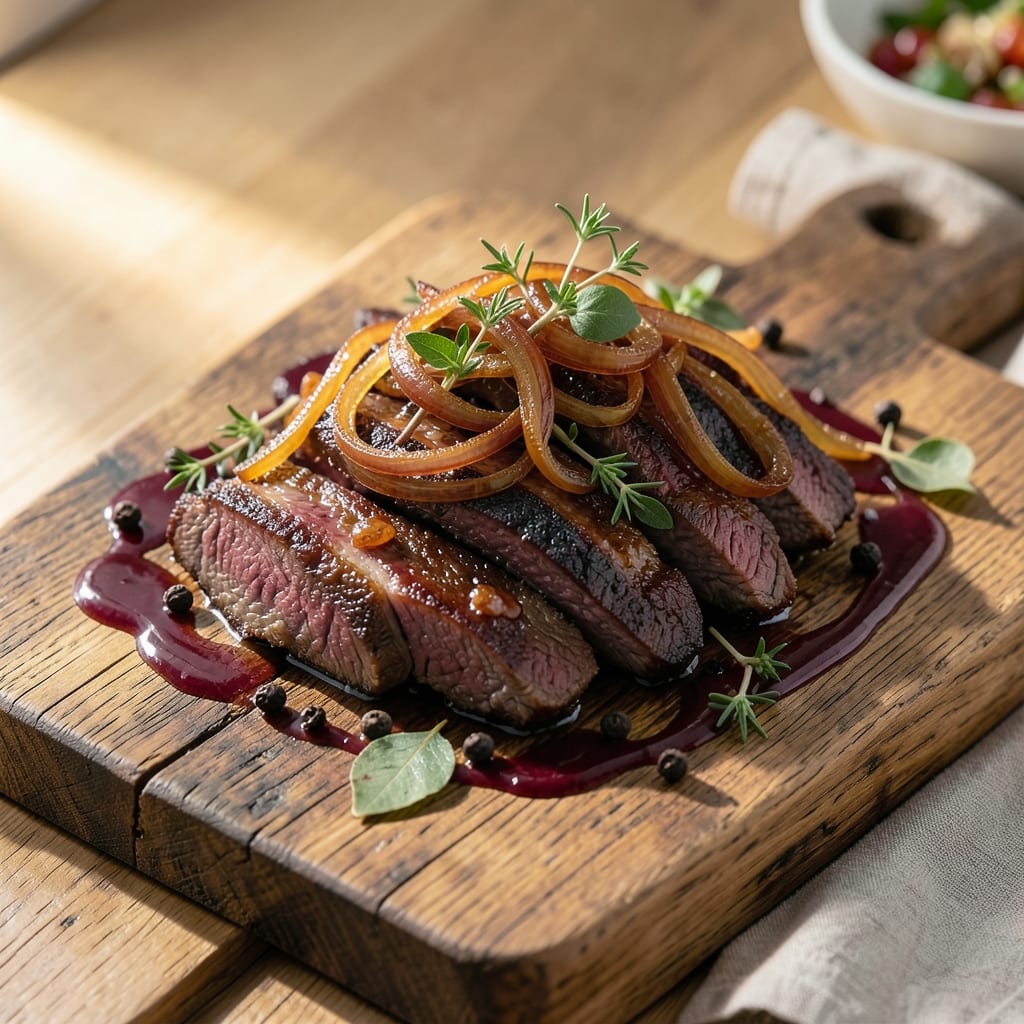
This Basque beef tongue recipe brings deep, slow-cooked richness to your table with a signature garlic-vinegar shine that transforms tough cuts into melt-in-your-mouth perfection. 🌟 The secret lies in hours of gentle braising, where the meat absorbs aromatic flavors while staying tender and juicy—a technique rooted in Basque txuleta tradition. What sets this dish apart is the balance of bold garlic, tangy vinegar, and just enough pepper to create that signature glossy finish.
Traditionally served with crisp roasted peppers and buttery potatoes, this dish delivers restaurant-quality results at home with minimal effort after the initial cooking time. The slow process breaks down collagen-rich connective tissue, yielding slices that practically fall apart with each bite. For an authentic touch, serve with a side of pintxos-style garlic aioli or a simple pil pil sauce to complement the rich beef.
The result is a dish that commands attention—deeply flavorful, visually striking with its glossy sheen, and satisfying enough to stand as the centerpiece of any meal. Whether you're hosting a special dinner or simply craving something hearty, this recipe delivers a taste of Basque country that feels both rustic and refined. The key is patience; the reward is unbeatable texture and flavor.
Pair it with crusty bread to soak up every last drop of the aromatic braising liquid, or serve alongside a fresh green salad to balance the richness. This isn't just a recipe—it's an experience that transforms an ordinary meal into something truly memorable. Let's get started on creating this Basque masterpiece.
Ingredients for basque beef tongue
Six aromatic ingredients transform tough beef tongue into melt-in-your-mouth Basque perfection.
| Ingredient | Amount | Notes |
|---|---|---|
| Beef Tongue 🥩 | 2 lb | Fresh, whole, trimmed of excess fat |
| Garlic Cloves 🧄 | 12 cloves | Peeled, smashed for maximum flavor |
| Red Wine Vinegar 🍷 | ½ cup | High-quality, aged variety |
| Black Peppercorns 🌶️ | 1 tbsp | Freshly cracked, not ground |
| Bay Leaves 🌿 | 2 whole | Dried, for aromatic depth |
| Fresh Thyme 🌿 | ¼ cup | Stems removed, chopped |
| Olive Oil 🫒 | ¼ cup | Extra-virgin, for glossy finish |
| Salt 🧂 | 2 tsp | Diamond Crystal kosher salt |
| White Wine 🍷 | 1 cup | Dry, for balanced acidity |
| Onion 🧅 | 1 whole | Yellow, peeled, halved |
| Carrot 🥕 | 2 whole | Medium, peeled, halved lengthwise |
| Celery Stalks 🥬 | 2 whole | Trimmed, cut into chunks |
| Fresh Parsley 🌿 | ¼ cup | Chopped, for garnish |
| Balsamic Vinegar 🍷 | 1 tbsp | For final glossy sheen |
The beef tongue is the star—look for fresh, whole cuts at specialty butchers or high-end grocery stores like Whole Foods or Eataly. A 2-pound tongue yields generous portions for six, with each slice practically falling apart. Trim any excess fat before cooking to ensure a clean, glossy finish. If your butcher doesn’t carry it, Costco occasionally stocks them in their frozen section, though fresh is ideal. The key is patience: slow-cooking is non-negotiable for tenderizing the collagen-rich meat. For authenticity, pair with Spanish or Basque olive oil—its fruity notes complement the garlic-vinegar shine.
No red wine vinegar? Apple cider vinegar works in a pinch, though it lacks the depth of aged red. Fresh thyme is non-negotiable here—dried thyme at half the amount won’t deliver the same aromatic punch. The white wine can be swapped for beef broth, but the acidity is crucial for balancing the richness. For the aromatic bundle, skip the celery if unavailable, but include the onion and carrot—they’re the backbone of the flavor. The balsamic vinegar at the end isn’t just for taste; it’s what creates that signature glossy sheen. If you’re short on time, pressure cook the tongue for 2 hours instead of braising, though texture will differ slightly.
Store the cooked tongue in its braising liquid for up to 5 days in the fridge—it actually tastes better the next day as flavors meld. For longer storage, freeze in portions for up to 3 months. Reheat gently in the braising liquid to maintain moisture. The aromatic vegetables can be removed after cooking and discarded, but save the braising liquid—it’s liquid gold for sauces or as a base for risotto. Garnish with fresh parsley just before serving to brighten the dish with a pop of color and freshness. Leftovers? Slice thinly and serve on crusty bread with the reduced braising liquid drizzled over the top.
Why You'll Love This Recipe
- One-Pot Magic: I swear by this recipe because it’s all about minimal effort—just simmer the tongue with garlic, vinegar, and peppercorns until it’s fall-off-the-bone tender. No chopping, no fuss, just hands-off cooking while you sip wine and pretend you’re in a Basque countryside kitchen.
- Umami Bomb: That slow-cooked beef tongue? It’s like a flavor explosion—rich, deep, and packed with garlic’s punch and vinegar’s tang. The bay leaves add a subtle earthiness that makes every bite ridiculously satisfying, especially when sliced thin.
- Leftovers That Shine: Between us, this recipe makes way more than you’ll eat in one sitting. The leftovers? Even better the next day—perfect for quick sandwiches, charcuterie boards, or tossing into salads. (Yes, even on a Tuesday night.)
- Budget Feast: Beef tongue is a secret weapon—it’s cheaper than steak but feels like a special occasion meal. A single cut feeds four, and the vinegar-infused broth? That’s free flavor you can repurpose for soups or braises. Smart, simple, and still impressive.
Step-by-step instructions for Basque beef tongue
Transform tough cuts into melt-in-your-mouth tenderness with this precise slow-cooking method.
🔥 Step 1: Prepare and Sear the Beef Tongue
Begin by trimming any excess fat from the 2 lb beef tongue using a sharp knife. I like to score the surface lightly in a diamond pattern—this helps the marinade penetrate deeper and creates beautiful texture when cooked. Pat the tongue completely dry with paper towels, then season generously with 2 tsp salt on all sides.
Heat a heavy Dutch oven over medium-high heat and add 0.25 cup olive oil. Once shimmering, place the tongue fat-side down and sear for 8-10 minutes until deeply golden brown. Flip carefully and sear the other side for another 5-7 minutes. This initial sear locks in juices and builds foundational flavor—don't rush this step or the exterior will toughen instead of caramelizing.
🍳 Step 2: Build the Garlic-Vinegar Marinade
While the tongue sears, combine 12 cloves garlic cloves (smashed), 0.5 cup red wine vinegar, 1 tbsp black peppercorns, 2 whole bay leaves, 0.25 cup fresh thyme, 1 cup white wine, 1 whole onion (halved), 2 whole carrot (halved), and 2 whole celery stalks (chopped) in the same Dutch oven. Bring to a simmer over medium heat for 5 minutes to bloom the aromatics.
Remove from heat and carefully transfer the seared tongue to the marinade, ensuring it's fully submerged. The liquid should cover the tongue by at least 1 inch—if not, add a splash of water. Cover the pot and let it come to room temperature, then refrigerate for 12-24 hours. This extended marinating breaks down collagen and infuses the meat with complex flavors. I know it seems long, but trust me—it's worth every minute.
🔥 Step 3: Slow-Cook Until Fork-Tender
After marinating, preheat your oven to 300°F. Transfer the tongue (with marinade) to a deep baking dish and cover tightly with foil. Place in the oven and cook for 3-4 hours, then increase temperature to 325°F and cook another 2-3 hours until the tongue is fork-tender. You'll know it's ready when a probe slides in with minimal resistance and the internal temperature reaches 195-200°F—this is where collagen fully converts to gelatin, creating that signature Basque texture.
Here's the thing—don't peek or lift the foil during cooking. Every time you open the oven, you lose heat and moisture. The tongue should be submerged in its marinade throughout the entire process. If the liquid reduces too much, add a splash of water or white wine to maintain coverage.
🍳 Step 4: Reduce and Glaze the Sauce
Once the tongue is tender, remove it from the oven and transfer it to a cutting board to rest. Strain the cooking liquid through a fine-mesh sieve into a saucepan, pressing on the solids to extract maximum flavor. Return the liquid to the stove over medium-high heat and reduce by half, stirring occasionally, until it thickens to a glossy consistency.
In the final 2 minutes of reduction, whisk in 1 tbsp balsamic vinegar. This adds depth and a subtle sweetness that balances the acidity. The sauce should coat the back of a spoon and cling beautifully to the tongue when served. If it's too thick, add a splash of water or reserved marinade to reach your desired consistency.
🍽️ Step 5: Rest and Serve with Garnish
Let the beef tongue rest for 15-20 minutes before slicing. This resting period allows the juices to redistribute, ensuring each bite is moist and flavorful. When ready, slice the tongue against the grain into ¼-inch thick pieces. The meat should be so tender it practically melts in your mouth with just slight resistance.
Serve immediately, drizzled with the reduced sauce and garnished with 0.25 cup fresh parsley. The contrast between the silky, gelatinous texture and the bright, tangy sauce is what makes this dish truly special. For an authentic Basque presentation, serve with crusty bread to soak up every last drop of that glorious sauce.
Pro Tips For Making Basque Beef Tongue
- SCORE THE TONGUE: Start by scoring the surface of the beef tongue with a sharp knife—about ¼-inch deep, in a crosshatch pattern. This isn’t just for looks; it lets the marinade and flavors sink in properly, so every bite gets that rich, tender payoff. (Yes, it looks brutal, but your guests won’t care once they taste it.)
- SIMMER LOW AND SLOW: After the initial sear, drop the heat to a bare simmer—no boiling, no rushing. A gentle roll of bubbles at the edges of the pot is all you need. I learned this the hard way: boiling makes the tongue tough and stringy. Cover it loosely and let it cook for 2–2.5 hours, checking occasionally to keep the liquid at a whisper.
- PEPPERCORNS WHOLE ONLY: Crush the black peppercorns just enough to release their aroma, but leave them whole. Whole peppercorns stay intact during simmering, infusing the liquid without turning it into a gritty mess. I used to grind them fine, and the dish ended up tasting like pepper-flavored broth instead of a balanced, aromatic bite.
- VINEGAR FIRST, THEN WINE: Add the red wine vinegar to the pot before the wine or broth. It cuts through the richness of the tongue and brightens the flavors early in the cooking process. I was skeptical—sounds weird, but it works—but now I swear by it. The acidity also helps tenderize the meat over time, so don’t skip this step. (Your future self will thank you.)
Flavor customization for this dish
Garlic Intensity
For a milder garlic flavor, reduce the smashed cloves to 6-8 and add 1 tsp granulated garlic for depth without overpowering. If you love bold garlic, increase to 16 cloves and add 1 tbsp garlic paste during the final reduction for an intense punch. I’ve found that roasting the garlic cloves at 400°F for 10 minutes before smashing adds a sweet, caramelized depth that pairs beautifully with the vinegar. 🧄
Vinegar Variations
Swap the red wine vinegar for sherry vinegar for a more traditional Basque touch—it’s sweeter and less acidic, balancing the richness perfectly. For a tangier profile, use apple cider vinegar, but reduce it to ¼ cup and add ½ cup white wine to maintain acidity. If you prefer a smoky twist, replace ½ cup of vinegar with ½ cup smoked paprika-infused vinegar (simmer vinegar with 1 tsp smoked paprika for 5 minutes).
Spice Level Boost
For heat lovers, add 1 tsp crushed red pepper flakes to the marinade or ½ tsp cayenne pepper during the final sauce reduction. I like to finish with a drizzle of hot honey (mix 2 tbsp honey with ½ tsp cayenne) for a sweet-spicy contrast. For a smoky kick, add 1 tsp chipotle powder to the braising liquid during the slow cook. 🌶️
Herb Swaps
Replace fresh thyme with rosemary for an earthier profile—use 1 sprig per 2 tbsp chopped leaves. For a citrusy twist, add 1 tbsp lemon zest to the marinade and garnish with lemon slices instead of parsley. If you prefer floral notes, swap in 1 tbsp fresh tarragon (reduce thyme to ¼ cup). The herbs should complement the garlic and vinegar, not compete with them.
Umami Enhancers
Boost depth with 1 tbsp soy sauce or 1 tsp fish sauce in the marinade for an umami-rich base. For a meatier flavor, add 1 cup beef broth to the braising liquid. I’ve also had great success with 1 tsp miso paste (dissolved in the white wine) for a subtle fermented complexity. These additions work especially well if your beef tongue is leaner than average.
Sweet-Savory Balance
Add 1 tbsp brown sugar to the marinade for a caramelized depth, or finish with a drizzle of fig jam (about 1 tsp) for a luxurious sweetness. For a fruity contrast, reduce ¼ cup orange juice with the sauce and finish with zest. The key is to balance the acidity—sweetness should enhance, not overpower, the garlic-vinegar shine. 🍯
Nutrition facts
Frequently asked questions
Why does Basque beef tongue need such a long marinating time? The extended 12-24 hour marinade
is essential because beef tongue contains tough connective tissue that requires time to break down. The garlic-vinegar blend works like a natural tenderizer, while the white wine and herbs infuse deep flavor. This slow process transforms the texture from chewy to silky, creating that signature Basque melt-in-your-mouth quality.Can I substitute beef tongue with another cut of meat?
While beef tongue is ideal, you could try pork tongue (cook for 2-3 hours less) or beef cheek (similar texture but milder flavor). For a completely different experience, shank or brisket could work with adjusted cooking times, but the gelatinous texture won't be the same. The dish loses its authentic Basque character without the tongue's unique collagen content.
How do I know when the beef tongue is fully cooked?
Use a meat thermometer to check for an internal temperature of 195-200°F. The tongue should be fork-tender with no resistance when pierced. If you don't have a thermometer, cut into a small section - it should be completely opaque with no pink remaining. The sauce should also thicken noticeably as the collagen converts to gelatin during cooking.
What's the best way to serve leftover Basque beef tongue?
Slice thinly and serve on toasted baguette with the reduced sauce as a sandwich. For a heartier meal, arrange on a platter with roasted potatoes and grilled peppers. You can also shred it into tacos with avocado and lime, or chop finely for pasta sauce with the braising liquid. The texture holds up well when reheated gently in its cooking liquid.
Can I make this recipe in a slow cooker instead of oven?
Yes! After marinating, transfer everything to a 6-quart slow cooker and cook on low for 8-10 hours or high for 5-6 hours. The texture will be slightly different (more gelatinous), but the flavor will be excellent. Just ensure the tongue is fully submerged and add liquid as needed. The sauce reduction step remains the same after cooking.