
Main Courses
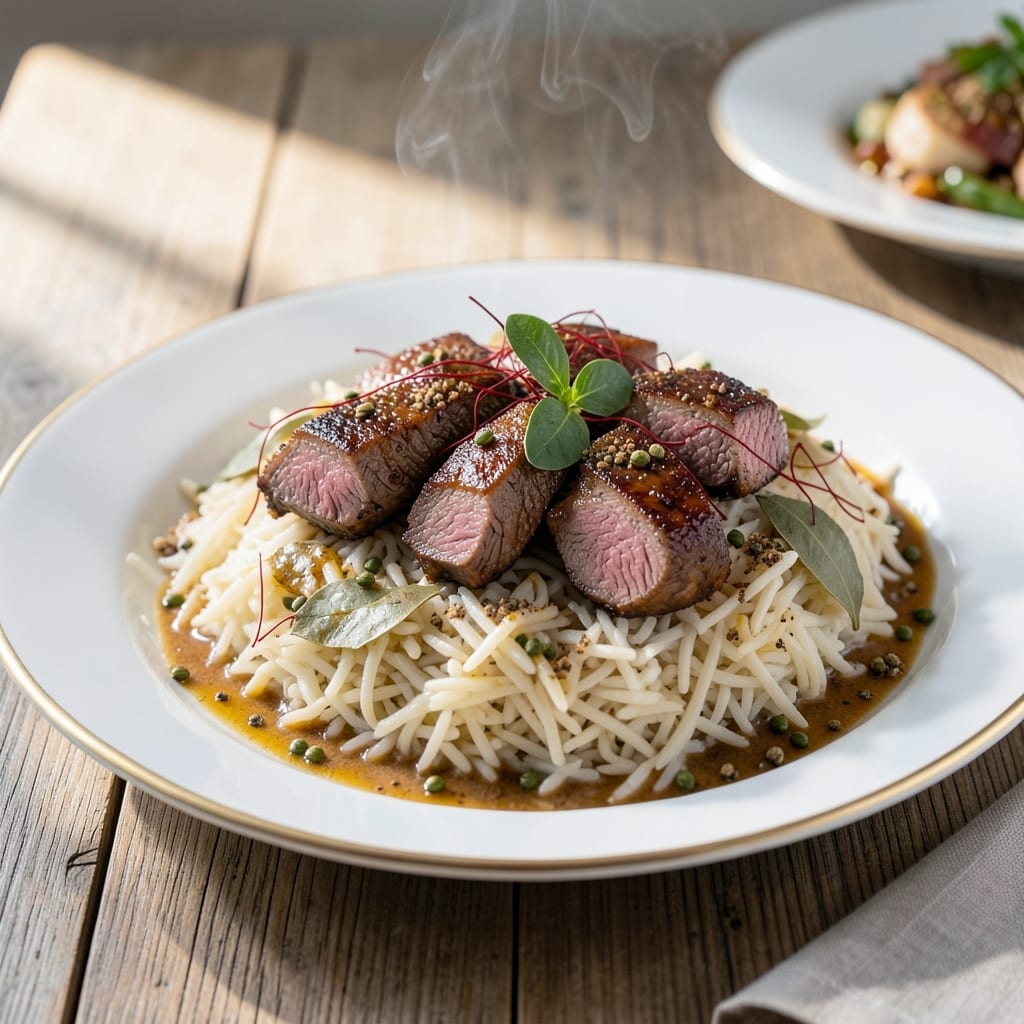
This fragrant saffron basmati rice hugging spiced beef bites transforms a simple weeknight meal into a restaurant-worthy experience—where each grain of rice cradles tender, aromatic beef in a symphony of warm spices. The secret lies in perfectly searing the beef before it braises in a rich, golden sauce, while the basmati rice absorbs layers of flavor from toasted spices and saffron-infused broth. I developed this recipe after years of experimenting with Indian-inspired dishes, and it’s now a staple in my rotation for both casual dinners and special occasions.
The beauty of this dish is its balance: bold yet refined, hands-off yet impressive. You’ll start by searing beef cubes until deeply caramelized, then simmer them in a fragrant blend of cumin, coriander, and garam masala until tender. Meanwhile, the basmati rice cooks in a fragrant broth infused with saffron and bay leaves, emerging separate yet clinging to the beef like a perfect embrace. The result is a dish that’s equally at home on a weeknight table or a holiday spread.
What makes this recipe stand out is the harmony of textures and flavors—crisp edges on the beef, fluffy basmati rice, and a sauce that’s rich yet bright. The saffron adds a luxurious golden hue and subtle floral note, while the spices deliver warmth without overpowering. This isn’t just a meal; it’s an experience that turns simple ingredients into something extraordinary with minimal effort.
Whether you’re serving it with a side of raita or a sprinkle of fresh cilantro, this dish delivers restaurant-quality results with a fraction of the fuss. Let’s get started—your taste buds will thank you.
Ingredients for basmati rice with beef
Fourteen ingredients that transform into a fragrant, restaurant-worthy meal with minimal effort.
| Ingredient | Amount | Notes |
|---|---|---|
| Basmati Rice 🍚 | 1 ½ cups | Uncooked, long-grain preferred |
| Beef Chuck Roast 🥩 | 1 ½ lb | Cubed into 1-inch pieces |
| Saffron Threads 🌼 | ¼ tsp | High-quality, for infusion |
| Bay Leaves 🌿 | 2 whole | Fresh or dried |
| Ground Cumin 🌿 | 1 tbsp | Toasted for deeper flavor |
| Ground Coriander 🌿 | 1 tbsp | Freshly ground preferred |
| Garam Masala 🌶️ | 1 ½ tsp | Store-bought or homemade blend |
| Onion Powder 🧅 | 1 tsp | For aromatic depth |
| Garlic Cloves 🧄 | 4 cloves | Minced for sauce |
| Fresh Ginger 🌿 | 1 tbsp | Grated, for zing |
| Tomato Paste 🍅 | 2 tbsp | Smooth texture preferred |
| Beef Broth 💧 | 2 cups | Low-sodium preferred |
| Unsalted Butter 🧈 | 2 tbsp | For rice richness |
| Fresh Cilantro 🌿 | ¼ cup | Chopped, for garnish |
| Salt 🧂 | 1 ½ tsp | Kosher or sea salt |
| Black Pepper 🌶️ | ½ tsp | Freshly ground |
The beef and rice are the stars here. For the beef, chuck roast is ideal—it stays tender and absorbs flavors beautifully. Look for well-marbled cuts at Whole Foods or your local butcher; the extra fat keeps the meat juicy. As for the rice, long-grain basmati is non-negotiable—it stays separate and fluffy. I always grab the Tilda brand from the international aisle; it’s worth the extra penny for the quality. The saffron? Buy it whole—those pre-ground crumbles are usually fake. Toast the spices lightly in a dry pan for 30 seconds before adding them to the beef; this wakes up their flavors.
No beef broth? Chicken broth works in a pinch, but add a splash of soy sauce for depth. Fresh ginger missing? Ground ginger at half the amount gets you close, though it’s not the same. Pre-minced garlic from a jar? Fresh is better, but if that’s all you’ve got, drain and rinse it first. The tomato paste can be swapped for crushed tomatoes or tomato sauce, but reduce the liquid slightly since they’re waterier. For the rice, if you’re short on butter, olive oil works too—just know it’ll have a slightly different flavor profile. And if you can’t find garam masala, mix equal parts cumin, coriander, and cinnamon for a DIY version.
This dish tastes even better the next day—make extra if you can. Store the beef and rice separately in airtight containers for up to 4 days in the fridge. The rice reheats beautifully with a splash of water or broth. For longer storage, freeze portions for up to 3 months. I like to pack the beef and rice in separate containers so I can reheat just what I need. Fresh cilantro wilts fast, so store it in a damp paper towel in a sealed bag for up to 5 days—or skip it entirely if you’re prepping ahead.
Why You'll Love This Recipe
- One-Pot Wonder: I swear by this—just brown the beef, toss in the spices (cumin, bay leaves), add rice and broth, then let it simmer. No separate pots, no fuss. The saffron steeps right into the rice, turning it golden without extra effort.
- Rich, Earthy Depth: That beef chuck roast gets tender and melts in your mouth, while the cumin and saffron give it a warm, aromatic punch. Honestly, it’s the kind of flavor that makes you slow down and savor every bite—no sad, dry rice here.
- Meal Prep Gold: Between us, this is my go-to for lunches all week. The rice stays fluffy, the beef stays juicy, and it reheats like a dream. Pack it in containers, and you’ve got a satisfying, restaurant-style meal without the takeout cost.
- Budget-Friendly Feast: Chuck roast is affordable, and a pound stretches across three meals—leftovers taste just as good the next day. I’ll be real: it’s the kind of dish that makes you feel like you’re treating yourself, even when you’re pinching pennies.
Step-by-step instructions for fragrant saffron basmati with spiced beef bites
Here's how to create a luxurious one-pot dish where fragrant basmati rice absorbs rich beef flavors.
Sear the Beef Chuck for Deep Flavor
Heat a large, heavy-bottomed pot over medium-high heat until hot. Add the 1.5 lb beef chuck roast cut into 1-inch pieces and sear undisturbed for 3-4 minutes until deeply browned on all sides. This step develops the meat's natural flavors through the Maillard reaction.
Work in batches if needed to avoid crowding the pot. Once all beef is browned, remove it with a slotted spoon and set aside. You'll notice the beef releases its juices into the pot—don't drain these, as they'll form the base of your sauce.
Build the Spiced Base
In the same pot, reduce heat to medium and add 2 tablespoons unsalted butter. Let it melt completely, then add the 4 cloves minced garlic and 1 tablespoon grated fresh ginger. Sauté for 30 seconds until fragrant—this releases their aromatic oils.
Add the 1 tablespoon ground cumin, 1 tablespoon ground coriander, 1.5 teaspoons garam masala, 1 teaspoon onion powder, 1.5 teaspoons salt, and 0.5 teaspoon black pepper. Stir for 1 minute until the spices bloom and fill your kitchen with their warm, earthy aroma.
Develop the Sauce and Infuse the Rice
Return the seared beef to the pot and stir to coat in the spices. Add the 2 tablespoons tomato paste and cook for 2 minutes until it darkens slightly. Pour in the 2 cups beef broth and scrape up any browned bits from the bottom—these contain concentrated flavor.
Add the 1.5 cups basmati rice and stir to combine. The rice should be fully coated with the spiced beef mixture. Bring to a gentle boil, then immediately reduce heat to low. Cover the pot with a tight-fitting lid and simmer for 15 minutes without disturbing it.
Infuse with Saffron and Finish Cooking
After 15 minutes, carefully remove the lid and stir in the 0.25 teaspoon saffron threads and 2 whole bay leaves. The saffron will release its vibrant color and delicate floral aroma—this is what makes this dish truly special. Return to a simmer and cook uncovered for another 10 minutes.
Check for doneness by tasting a grain of rice—it should be tender with a slight bite. If the rice is still firm, cover and cook for another 5 minutes. The beef should be fork-tender at this point, falling apart easily when pierced.
Rest and Garnish
Once the rice is perfectly tender and the liquid has been absorbed, remove from heat. Let the dish rest covered for 5 minutes—this allows the flavors to meld and the rice to finish steaming in its own moisture.
Discard the bay leaves and garnish with 0.25 cup chopped fresh cilantro. The bright green color contrasts beautifully with the golden rice and beef. Serve immediately while hot, with extra cilantro sprinkled on top for freshness.
Pro Tips For Making Basmati Rice With Beef
- CRISP THE BEEF FIRST: I learned this the hard way—skipping the sear means flavorless rice. Brown that chuck roast on high heat until it’s deep mahogany, then deglaze with a splash of water or broth. The crust locks in juices and carries the cumin’s warmth straight to your rice.
- SOAK THE RICE, NOT THE SAFFRON: Basmati needs a quick 15-minute soak in warm water to plump up, but saffron? Steep those threads in 2 tablespoons hot water for 10 minutes first—then strain and add to the rice. Cold water dulls the saffron’s punch, and you don’t want that.
- DON’T OVERCROWDLE THE BAY LEAVES: Toss in 2 whole bay leaves, but remove them before serving. I used to leave them in, and they’d turn the rice bitter—like chewing a tree branch. If you forget, strain the rice through a fine-mesh sieve before plating.
- USE THE BEEF JUICES FOR RICE: After removing the beef from its cooking liquid, pour that golden, herb-infused broth over the rice as it simmers. The fat and spices in that liquid are the real MVP—don’t waste it. (Yes, even if you’re impatient like me.)
Pro cooking tips for basmati rice with beef
Sear Like a Pro
Don’t rush the searing step—this is where the beef develops its deep, caramelized crust through the Maillard reaction. Use a heavy-bottomed pot (like a Lodge cast iron skillet) to ensure even heat distribution. Work in small batches if needed to avoid crowding, and let each piece develop a deep golden-brown crust before moving it to the side. I like to use beef chuck roast because its fat content keeps it juicy during the long simmer. 🔥
Toast Your Spices
Before adding spices to the beef, toast them in the pot for 30 seconds over medium heat. This simple step awakens their flavors and prevents them from tasting raw. Ground cumin and coriander should smell warm and earthy, while garam masala releases a complex, slightly sweet aroma. If you’re short on time, a spice toaster (like the Bamboo Spice Toaster) works wonders for this step. 🌶️
Don’t Skip the Bay Leaves
The bay leaves in this recipe aren’t just for flavor—they infuse the broth with a subtle, herbal depth that elevates the entire dish. Add them after the rice has simmered for 15 minutes, so they don’t overpower the spices. Remove them before serving to avoid a bitter bite. If you’re using dried bay leaves, they’ll work fine, but fresh leaves add a brighter, more aromatic touch. 🌿
Saffron Infusion Trick
Saffron is expensive, so use it wisely! To maximize its flavor and color, bloom it in warm broth for 5 minutes before adding it to the rice. I like to crush the threads lightly between my fingers to release the oils, then steep them in 2 tablespoons of warm beef broth for a few minutes. Stir this infused broth into the rice just before the final 10-minute simmer for the most vibrant color and delicate floral note. 🌼
Low and Slow Rice
Once the rice is added, reduce heat to low and keep it covered to maintain steady steam. Disturbing the pot too early can release steam and prevent even cooking. After 15 minutes, remove the lid and let the rice absorb any remaining liquid for the final 10 minutes. If the rice feels undercooked, add 2 tablespoons of hot broth and cover for another 5 minutes. The goal is fluffy, separate grains that cling to the beef. ⏰
Rest for Perfect Texture
After cooking, let the dish rest for 5 minutes before serving. This allows the rice to finish steaming in its own juices and the beef to reabsorb any released moisture. Skipping this step can leave the rice dry or the beef tough. I also like to tent the pot loosely with foil if I’m prepping ahead—this keeps the dish warm without trapping steam. Garnish with fresh cilantro right before serving to keep it vibrant. 💫
Nutrition facts
Frequently asked questions
Can I use a different cut of beef instead of chuck roast?
Yes, but choose wisely! Sirloin or flank steak work well for quick cooking (cut into ½-inch strips), while brisket or short ribs need longer simmering (up to 2-3 hours). Avoid lean cuts like eye of round—they dry out during the slow cooking process. For best results, stick with marbled cuts that stay tender.
How do I make this dish ahead of time?
Prepare it 1-2 days ahead for even better flavor! Store the cooked beef and rice separately in airtight containers in the fridge. Reheat the beef with 1 tablespoon broth** covered on low heat, then mix with the rice. For longer storage, freeze for up to 3 months. The rice reheats beautifully with a splash of water or broth—just cover and steam for 5-10 minutes.
What if my rice turns out mushy?
Mushy rice usually means too much liquid or stirring too early. For next time, use 1:1.5 rice-to-liquid ratio (like in this recipe) and avoid lifting the lid while cooking. If it's already mushy, spread it on a baking sheet and bake at 350°F for 10 minutes to dry it out slightly. For future attempts, try the absorption method: cook the rice uncovered for the last 5 minutes to let excess moisture evaporate.
Can I make this dish in an Instant Pot?
Sear the beef first in a separate pan, then add it to the Instant Pot with all other ingredients except saffron. Cook on high pressure for 10 minutes, then quick-release. Stir in the saffron and bay leaves, then cook on low heat for 5 minutes to infuse flavors. The pressure cooker reduces cooking time while keeping the beef tender and rice fluffy. Use the steam function if you have it for the final saffron infusion.
Is there a way to make this dish gluten-free?
Yes, just check your ingredients! Ensure your beef broth is gluten-free (many contain wheat), and use certified gluten-free garam masala (some blends contain flour). The rest of the ingredients are naturally gluten-free. For extra safety, toast your spices in a clean dry pan to avoid cross-contamination. This dish is already naturally gluten-free except for those two potential sources.