
Soups & Stews
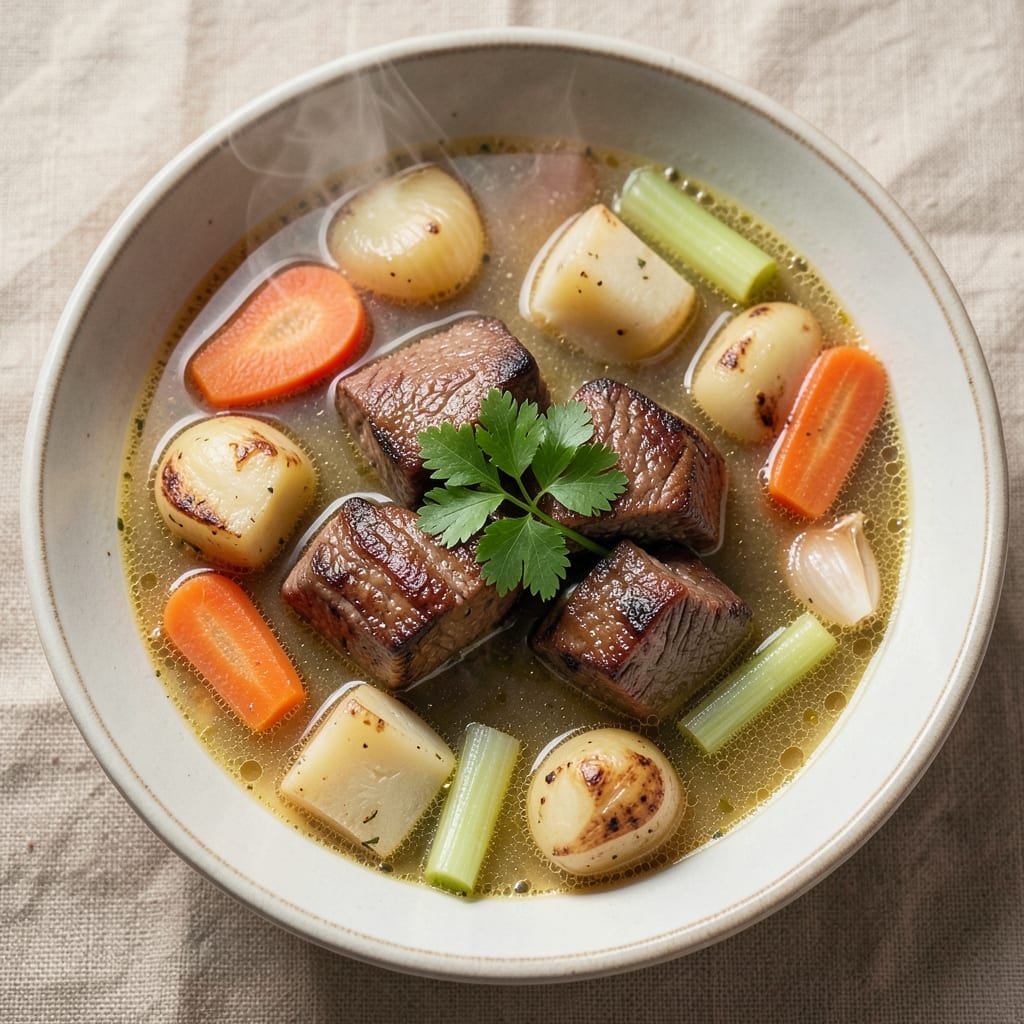
This basic vegetable beef soup recipe delivers the kind of homestyle warmth that transforms a simple weeknight into a cozy meal. The secret lies in building flavor through slow simmering—caramelized onions and beef create a rich foundation, while seasonal vegetables add natural sweetness and texture. What starts as a one-pot meal evolves into something heartier than takeout, proving that comfort food doesn’t require complicated techniques.
The beauty of this recipe is its flexibility: use whatever vegetables you have on hand, from carrots and celery to potatoes and green beans. A simple sear of beef chunks and onions develops deep, savory notes that infuse the broth, while herbs like thyme and bay leaves add aromatic complexity. The result is a soup that tastes even better the next day, when flavors have fully melded together.
What makes this one-pot recipe truly special is how it balances simplicity with depth—no fancy ingredients, just thoughtful preparation. The beef simmers until tender, vegetables soften just enough to release their natural sweetness, and the broth reduces to a perfect consistency. It’s the kind of meal that feels both nostalgic and satisfying, with every spoonful offering a mix of hearty textures and comforting flavors.
Serve it with crusty bread to soak up every last drop of that flavorful broth, or pair it with a simple green salad for balance. The leftovers reheat beautifully, making this an ideal make-ahead dish for busy weeks. Let’s get cooking—this soup is simpler than it tastes.
Ingredients for basic vegetable beef soup
Pantry staples meet homestyle comfort in this one-pot beef soup's essential ingredient lineup.
| Ingredient | Amount | Notes |
|---|---|---|
| Beef Chuck Roast 🥩 | 1 ½ lb | Cut into 1-inch cubes |
| Yellow Onions 🧅 | 2 whole | Medium size, sliced |
| Carrots 🥕 | 4 whole | Medium size, peeled |
| Celery Stalks 🌿 | 4 whole | Medium size, chopped |
| Russet Potatoes 🥔 | 2 lb | Peeled, cut into chunks |
| Garlic Cloves 🧄 | 4 cloves | Minced for depth |
| Beef Broth 💧 | 6 cups | Low-sodium preferred |
| Tomato Paste 🍅 | 2 tbsp | Smooth texture preferred |
| Dried Thyme 🌿 | 1 tsp | Or 1 tbsp fresh |
| Bay Leaves 🍃 | 2 whole | Standard size |
| Salt 🧂 | 1 ½ tsp | Adjust to taste |
| Black Peppercorns 🌶️ | ½ tsp | Freshly cracked |
| Olive Oil 🫒 | 2 tbsp | For searing |
The beef is the flavor anchor here—chuck roast delivers that melt-in-your-mouth texture after slow simmering. Costco or Walmart usually carry it pre-cut, but if buying whole, look for good marbling. Onions and carrots should be firm with no soft spots—Trader Joe's has great organic options if you want to splurge. Celery? The fresher the better, but even slightly wilted stalks work if you trim the ends. Potatoes are the only vegetable that benefits from peeling—it keeps them from turning mushy during cooking. For the broth, low-sodium is key so you control the seasoning.
No chuck roast? Stew beef or even ground beef will work in a pinch, though texture differs. Swap dried thyme for 1 tbsp fresh if you've got it—just remove stems first. The tomato paste can be omitted entirely if you prefer a cleaner broth, but it adds great depth. Diamond Crystal kosher salt dissolves better than table salt, so if you have it, use that. For extra richness, stir in 1 tbsp Worcestershire sauce at the end (check for vegetarian version if needed). The bay leaves? Don't skip them—they're aromatic magic in slow-cooked dishes.
This soup tastes even better the next day once flavors meld. Store in an airtight container for up to 5 days in the fridge, or freeze portions for 3 months. I always double the recipe and freeze half—perfect for lazy weeknights. For reheating, add 1-2 tbsp broth first to prevent drying out. The broth reduces as it cooks, so if you want leftovers to be soupier, start with 7 cups broth instead of 6.
Why You'll Love This Recipe
- Foolproof Prep: I swear by this—just dice the onions, carrots, and celery (no fancy knife skills needed) while the beef slows in the pot. The chuck roast practically melts into tender shreds with minimal effort, and honestly? That’s where the magic happens.
- Deep, Savory Payoff: The beef chuck roast turns into rich, melt-in-your-mouth strands that cling to every bite, while the potatoes soak up all the broth like little flavor sponges. Between us, this isn’t your basic "tastes like beef" soup—it’s got that hearty, restaurant-quality depth that makes you slow down and savor it.
- Leftovers That Don’t Suck: I make a double batch on Sundays because reheating this? Zero fuss. The potatoes stay creamy, the beef stays tender, and the broth doesn’t turn watery. My kids actually ask for it the next day—yes, even on a Tuesday night.
- Budget Stretch: A single chuck roast feeds four for two meals, and the veggies (onions, carrots, celery) are the kind of cheap staples you already have. I’ll be real: this is my go-to when money’s tight, but no one ever guesses it’s "frugal." It just works.
Step-by-step instructions for vegetable beef soup
This one-pot method builds rich flavor layer by layer—no shortcuts, just homestyle depth.
Sear the Beef Chuck Roast
Heat a large Dutch oven over medium-high heat until hot. Add the 2 tablespoons olive oil and swirl to coat the bottom. Working in batches if needed, add the 1.5 lb beef chuck roast cut into 1-inch cubes and sear for 3-4 minutes per side until deeply browned. This caramelization forms the flavor foundation.
Don't crowd the pan—leave space between pieces so they develop a proper crust. As each batch browns, transfer the beef to a plate and set aside. You'll know it's ready when the edges are deep golden brown and the meat releases easily from the pan. Any accumulated juices in the pot are pure flavor—don't wipe them out.
Sauté the Vegetable Base
In the same Dutch oven, add the 2 whole yellow onions sliced, 4 whole carrots peeled and chopped into ½-inch pieces, and 4 whole celery stalks chopped into ½-inch pieces. Cook over medium heat for 8-10 minutes, stirring occasionally, until the vegetables soften slightly and the onions become translucent.
Here's where the flavor really develops—don't rush this step. You're looking for the vegetables to release their natural juices and begin to caramelize at the edges. Add the 4 cloves garlic cloves minced and cook for another 30 seconds until fragrant. The garlic should sizzle gently but not burn—watch it closely as it can go from perfect to bitter in seconds.
Build the Soup Foundation
Stir in the 2 tablespoons tomato paste and cook for 1 minute to toast the edges slightly. This step deepens the umami flavor and prevents the soup from becoming too acidic. Pour in the 6 cups beef broth and bring to a boil. Add the 1.5 teaspoons salt, 0.5 teaspoons black peppercorns, 1 teaspoon dried thyme, and 2 whole bay leaves.
Return the seared beef to the pot along with any accumulated juices. The broth should nearly cover the beef—if not, add ½ cup water. Bring to a full boil, then reduce heat to medium-low and let it simmer uncovered for 45 minutes. This initial simmer allows the beef to tenderize and the flavors to meld together. You'll know it's ready when the beef is fork-tender and pulls apart easily.
Add Potatoes and Simmer
Add the 2 lb russet potatoes cut into 1-inch chunks to the pot. Stir gently to distribute the potatoes evenly. Increase heat to medium-high and bring the soup back to a boil. Once boiling, reduce heat to low and let it simmer uncovered for 25-30 minutes, stirring occasionally, until the potatoes are tender and the soup has thickened slightly.
This is where the soup transforms from basic to comforting. The potatoes should be soft enough to pierce with a fork but still hold their shape slightly. Taste the soup and adjust seasoning with additional salt or pepper if needed. The broth should be rich and flavorful, with the vegetables infused with all the caramelized goodness from earlier steps.
Finish and Serve
Remove the 2 whole bay leaves and discard them. Taste the soup one final time and adjust seasoning if necessary. Ladle the soup into bowls and serve immediately. Each serving should be hearty with tender beef, soft vegetables, and a rich, flavorful broth that coats the back of your throat.
For extra comfort, serve with crusty bread to soak up the delicious broth. The soup will continue to thicken slightly as it sits, so don't be surprised if it looks even more substantial when you return for seconds. This one-pot method ensures every bite delivers the perfect balance of meaty richness and vegetable sweetness—just like grandma used to make.
Pro Tips For Making Basic Vegetable Beef Soup
- SEAR THE CHUCK ROAST: After browning the beef, don’t just dump it in the pot—let it sit on the stovetop for 2-3 minutes after removing from heat. That residual heat keeps it from turning to mush when you add the broth. (Yes, it’ll look weird, but your soup won’t taste like it.)
- CUT POTATOES UNEVENLY: Russets break apart in soup, so slice them into 1.5-inch chunks—but cut some pieces wider than others. The larger pieces stay intact longer, while the smaller ones soften faster. No one wants a soup full of potato ghosts.
- DON’T BOIL THE VEGETABLES: After adding onions, carrots, and celery, bring the soup to a gentle simmer, not a rolling boil. High heat turns carrots mushy and celery to sludge. Keep it at a low simmer—you’re cooking, not sterilizing.
- SALT THE POTATOES FIRST: Toss diced Russets with ½ teaspoon salt before adding them to the pot. It seasons them directly and prevents bland, waterlogged potatoes. (I learned this the hard way after a soup that tasted like nothing.)
Essential equipment for this dish
Dutch Oven Essentials
A 6-8 quart Dutch oven is your secret weapon for this recipe—it retains heat beautifully while allowing room for all ingredients to simmer together. I recommend a Lodge cast iron Dutch oven for its even heat distribution and durability. If you don’t own one, a heavy-bottomed stainless steel pot (like All-Clad) works well too. The deep sides prevent spills when stirring, and the tight lid keeps steam circulating for even cooking. 🔥
Knife & Cutting Board
Invest in a sharp chef’s knife (8-inch or larger) for consistent vegetable chopping—your carrots, celery, and onions should be uniformly sized for even cooking. A sturdy cutting board (like a Maple or bamboo board) prevents slipping. For the beef, a meat cleaver makes quick work of the 1-inch cubes—just be sure to keep your knife sharp to avoid tearing the meat.
Measuring Tools
Precision matters with broth and seasonings, so use a liquid measuring cup for the 6 cups beef broth and a spoon rest to keep your measuring spoons clean. A digital kitchen scale (like the OXO Good Grips) helps when measuring the 1.5 lb beef chuck roast for consistency. For herbs, a fine-mesh strainer makes it easy to measure out the 1 teaspoon dried thyme without clumping.
Wooden Spoon & Ladle
A heat-resistant wooden spoon (like Oxo Good Grips) is perfect for stirring the soup without scratching your Dutch oven. For serving, a stainless steel ladle (with a 1-cup capacity) ensures even portions. Pro tip: Keep a small bowl nearby to catch any drips when removing the bay leaves—they’re easy to overlook but add critical flavor!
Optional Upgrades
For extra flavor control, a meat thermometer (like Thermoworks Smoke) helps track the beef’s internal temp—aim for 165°F for tender results. If you love fresh herbs, a microplane makes quick work of garlic cloves for finer texture. And for reheating leftovers, a slow cooker (like Hamilton Beach) keeps the soup creamy without overcooking the beef.
Nutrition facts
Frequently asked questions
Can I substitute ground beef for chuck roast?
Yes, but expect a different texture. Ground beef will cook faster (15-20 minutes) and create a thicker, meatier soup. Use 1 lb ground beef and brown it thoroughly before adding other ingredients. For extra richness, try a mix of 50% ground beef and 50% chuck roast cubes—you get both tender chunks and ground meat texture.
What vegetables can I swap in if I don't have carrots or celery?
This soup is incredibly flexible! Try zucchini or mushrooms for extra moisture, green beans for crunch, or corn kernels for sweetness. For heartier options, add turnips or parsnips—they hold up well to long simmering. Just adjust cooking time: softer veggies (zucchini) need 15 minutes while denser ones (turnips) may need 30 minutes.
Why does my soup taste bland after simmering? Most likely, you need more umami depth. Try adding 1 tbsp soy sauce or 1 tsp Worcestershire sauce at the end, or stir in ½ cup tomato paste during cooking. Another trick: roast your vegetables first (400°F for 20 minutes) before adding to the pot—this caramelizes their natural sugars.
How can I make this soup thicker or thinner?
For thicker soup: Simmer uncovered for 10-15 extra minutes to reduce the broth, or mash ½ of the potatoes with a potato masher. For thinner soup: Add ½ cup hot water or broth at the end. Pro tip: If using potatoes, add them 15 minutes before serving—they'll absorb more liquid as they cook. The ideal consistency should coat the back of a spoon but still be ladle-friendly.
Can I make this soup in an Instant Pot?
Sauté the beef and vegetables as directed, then add all remaining ingredients and cook on high pressure for 25 minutes (natural release). For extra tenderness, use 30 minutes on high pressure. The Instant Pot version cooks 40% faster but requires less simmering time. Just be sure to check the beef's doneness—it should reach 165°F internally. The potatoes will soften quickly, so add them 5 minutes before pressure release.