
Soups & Stews
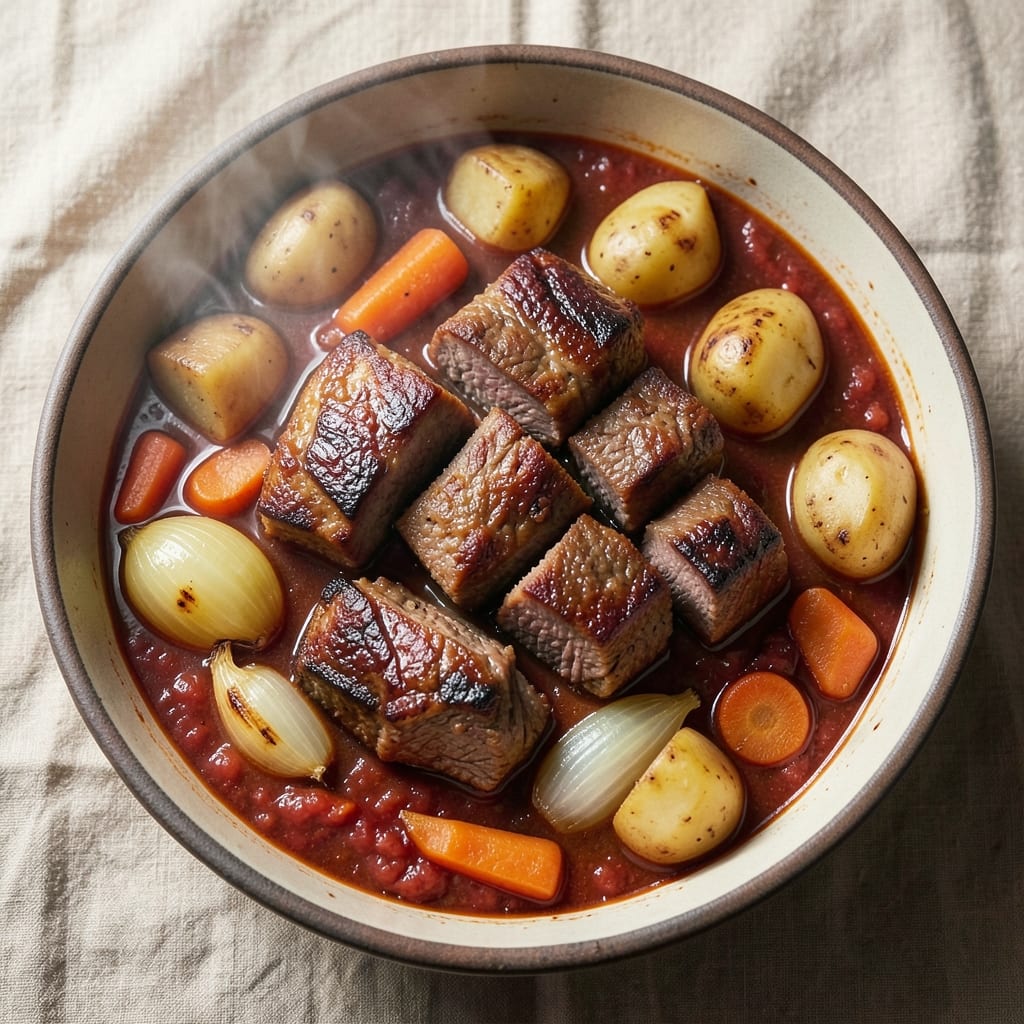
This basic beef stew recipe without wine delivers deep, rich flavor that builds with every simmer. The secret lies in proper browning and caramelized vegetables—technique that transforms tough beef into melt-in-your-mouth perfection. No wine needed when you focus on fundamental building blocks like tomato paste and aromatics.
What makes this recipe work is the slow cooking process that develops complex flavors naturally. You'll start with a well-browned beef chuck roast, which creates a flavorful crust that releases into the broth. The vegetables—carrots, potatoes, and onions—caramelize beautifully as they simmer, adding natural sweetness to balance the savory meat.
By the time it's done, you'll have tender beef that falls apart easily, vegetables that are perfectly soft yet still hold their shape, and a rich, velvety broth that coats every spoonful. The aroma alone will have everyone gathering around the table, and the first bite delivers that satisfying combination of tender meat and hearty vegetables.
This stew is hearty enough for a family dinner but simple enough for a weeknight meal. The recipe scales easily to feed a crowd, and leftovers taste even better the next day as the flavors continue to meld. Here's how to make it with professional results at home.
Ingredients for basic beef stew recipe without wine
Rich, caramelized flavors start with these 13 essential ingredients—no wine needed.
| Ingredient | Amount | Notes |
|---|---|---|
| Beef Chuck Roast 🥩 | 2 lb | Well-marbled, cut into 1.5-inch cubes |
| Yellow Onions 🧅 | 2 whole | Medium size, sliced into half-moons |
| Carrots 🥕 | 4 whole | Medium size, peeled and cut into chunks |
| Russet Potatoes 🍠 | 2 lb | Cut into 1-inch cubes, peeled |
| Tomato Paste 🍅 | 2 tbsp | Smooth, not chunky |
| Beef Broth 💧 | 4 cups | Low-sodium preferred |
| Garlic Cloves 🧄 | 4 cloves | Minced or finely chopped |
| Fresh Thyme 🌿 | 2 tbsp | Leaves only, chopped |
| Bay Leaves 🌿 | 2 whole | Dried or fresh |
| Olive Oil 🫒 | 2 tbsp | Extra-virgin for richness |
| Salt 🧂 | 1 ½ tsp | Kosher or sea salt |
| Ground Black Pepper 🌶️ | ½ tsp | Freshly ground preferred |
| All-Purpose Flour 🌾 | 2 tbsp | For thickening (optional) |
The beef chuck roast is your foundation—look for good marbling at the butcher counter or grocery store meat section. Costco or local butchers often carry high-quality cuts, but the regular supermarket chuck works too. If you can't find chuck, chuck-eye roast is a close second. Cut it into even 1.5-inch cubes for consistent cooking. The onions and carrots should be firm and vibrant—avoid wilted or soft produce. For the potatoes, Russets or Yukon Golds hold up best during long simmering. Fresh thyme and bay leaves add depth, so grab them from the grocery store's produce section if possible—they're usually fresher than dried.
No beef broth? Chicken broth with 1 tbsp soy sauce works in a pinch, though the flavor won't be identical. Fresh thyme unavailable? Dried thyme at one-third the amount gets you close, but the aroma won't be as bright. The tomato paste can be swapped for 1 cup crushed tomatoes if you prefer a slightly tangier stew. For extra richness, 1 tbsp Worcestershire sauce (ensure it's vegetarian if needed) adds umami depth. The flour is optional—only use it if you want a slightly thicker stew at the end. If you're making this ahead, skip the flour until reheating to avoid clumping.
This stew tastes even better the next day as flavors meld. Store leftovers in an airtight container in the fridge for up to 5 days or freeze for 3 months. For reheating, add a splash of water or broth to prevent drying out. The vegetables will soften further—add a few extra potatoes or carrots when reheating if you prefer them tender. The broth reduces as it sits, so you may need to add liquid when reheating. Portion into individual containers for easy lunches—pair with crusty bread or over rice for a complete meal.
Why You'll Love This Recipe
- One-Pot Magic: I swear by this recipe—just dump everything in one pot, let it simmer, and walk away. No fancy techniques, no last-minute grocery runs for obscure herbs. The chuck roast practically melts into tender perfection while I’m scrolling through my phone.
- Tomato Paste Trick: Here’s what sold me—tomato paste isn’t just a flavor booster; it’s the secret weapon. A couple of spoonfuls deepen the sauce so much, you’d think it came from a slow-cooked masterpiece. The potatoes soak up that rich, umami goodness like sponges.
- Leftovers for Days: Between us, this stew tastes better the next day. I make a double batch on Sundays, freeze half, and thank myself when I’m reheating a steaming bowl on a cold Wednesday. The potatoes get even creamier, and the beef? Fall-apart glorious.
- Budget Hero: A chuck roast on sale and a bag of carrots last forever. This recipe stretches every ingredient without skimping on flavor—honestly, I’ve fed six people for under $15 before. Plus, the leftovers mean less takeout guilt (and more money saved).
Step-by-step instructions for hearty beef stew
This method delivers rich, flavorful beef stew with tender meat and caramelized vegetables.
Sear the Beef Chuck Roast
Heat a large Dutch oven over medium-high heat. Add the 2 tablespoons olive oil and swirl to coat the bottom evenly. Working in batches if needed, add the 2 lb beef chuck roast cut into 1.5-inch cubes, ensuring they don't overcrowd the pan. Sear for 3-4 minutes per side until deeply browned and developing a crust.
This step is crucial—it creates the Maillard reaction that forms the stew's deep, savory foundation. Don't rush it; you'll know the beef is ready when it releases easily from the pan. Transfer the seared beef to a plate and set aside.
Build the Vegetable Base
In the same Dutch oven, add the 2 whole yellow onions sliced into half-moons and the 4 whole carrots cut into chunks. Cook for 5-6 minutes, stirring occasionally, until the onions soften and begin to caramelize. Add the 4 cloves garlic cloves and cook for 30 seconds until fragrant.
Here's the thing—letting the vegetables caramelize before adding liquids develops their natural sweetness. If they start to stick, add a splash of beef broth to deglaze, scraping up any browned bits from the bottom. This step forms the flavor backbone of your stew.
Develop the Flavor Foundation
Stir in the 2 tablespoons tomato paste and cook for 1 minute until it darkens slightly. Sprinkle the 2 tablespoons all-purpose flour over the vegetables and stir vigorously for 1-2 minutes to create a roux. This will help thicken the stew later.
Next, pour in the 4 cups beef broth, scraping up any browned bits from the bottom. Add the 2 whole bay leaves, 2 tablespoons fresh thyme, 1.5 teaspoons salt, and 0.5 teaspoon ground black pepper. Bring to a gentle boil, then reduce heat to medium-low.
Simmer Until Tender
Return the seared beef to the Dutch oven. Add the 2 lb russet potatoes cut into 1-inch cubes. Partially cover and simmer for 1.5 hours on medium-low heat. The stew should bubble gently but not vigorously—this ensures even cooking without boiling off the liquid too quickly.
Check the seasoning after 45 minutes and adjust if needed. The potatoes should be fork-tender and the beef should pull apart easily with a fork. If the stew is too thin, uncover and simmer for 10-15 minutes to thicken. The vegetables should be soft but still hold their shape.
Finish and Serve
Remove the 2 whole bay leaves and discard. Taste and adjust seasoning if needed. The stew should be rich, savory, and well-balanced. Serve immediately with crusty bread or over mashed potatoes to soak up every delicious bite.
This stew improves even more the next day as flavors meld further. Store leftovers in the refrigerator for up to 4 days or freeze for 3 months. The key to a perfect beef stew lies in patience and proper searing—don't skip these steps!
Pro Tips For Making Basic Beef Stew Recipe Without Wine
- Brown the Chuck Twice: I learned this the hard way—skipping the second sear after removing the beef leaves you with a stew that tastes more like a broth. Once the meat’s browned and pulled out, crank the heat back to medium-high, add a splash of water, and scrape the fond off the pot. That caramelized bit is where the flavor hides.
- Cut Potatoes Small: Russets break apart when they’re done, and you’ll end up with a mushy mess if you chuck in chunks. Quarter them first, then halve those quarters—aim for 1-inch pieces. They’ll cook evenly without falling apart, and the texture stays firm. (Yes, it looks like baby food, but trust me.)
- Deglaze with Tomato Paste: After browning the onions and carrots, don’t just splash in water—mix 2 tablespoons of tomato paste into a little broth or water first. Stir it in and let it bubble for 2 minutes before adding the rest of the liquid. This thickens the base and deepens the color, making the stew taste richer without wine.
- Add Potatoes Last: I used to toss them in with everything else, and they’d turn to mush while the beef stayed tough. Instead, cook the beef, onions, and carrots until tender, then add the potatoes for the final 15–20 minutes. They’ll soak up flavor without falling apart. (Your future self will thank you.)
Essential equipment for great basic beef stew recipe without wine
Dutch Oven
A 5-6 quart Dutch oven is my go-to for this recipe because it handles high heat for searing while also distributing heat evenly during simmering. I recommend the Le Creuset Signature Dutch Oven—it retains heat beautifully and has a tight-fitting lid that locks in moisture. For budget-friendly options, All-Clad Stainless Steel or Cuisinart MultiClad work well too. The key is choosing one with a heavy base to prevent warping and ensure even cooking. 🔥
Measuring Tools
Precision matters when balancing flavors in stew. A stainless steel measuring spoons set (like OXO Good Grips) ensures accurate measurements for tomato paste, flour, and spices. For liquids, a clear glass measuring cup (I use Pyrex) lets you check broth levels easily. A kitchen scale comes in handy if you prefer weighing ingredients like beef instead of eyeballing pounds. 📏
Knives & Cutting Board
Invest in a sharp 8-inch chef's knife (I love Wüsthof Classic) for consistent 1.5-inch beef cubes and even vegetable chunks. Pair it with a non-slip cutting board—I use Teakhaus Bamboo—to prevent slipping while chopping. A vegetable peeler (like Mercer Culinary) speeds up carrot and potato prep. Sharp knives make prep safer and more efficient, so don’t skip honing them regularly. ✨
Deglazing Tools
A wooden spoon (I prefer OXO Good Grips) is ideal for scraping up browned bits during deglazing—it won’t scratch your Dutch oven like metal utensils. Keep a small whisk (like Cuisinart Stainless Steel) handy for stirring the roux smoothly. A fine-mesh strainer (for broth prep) and tongs (to remove bay leaves) complete my essential toolkit. These tools ensure you capture every flavorful bit from the pan. 🍲
Thermometer
While not mandatory, a meat thermometer (I use ThermoWorks Thermapen ONE) helps track beef internal temp—aim for 195°F for fork-tender results. For simmering, a candy thermometer (like OXO Good Grips) monitors broth temp to keep it at a gentle 180-190°F. These tools take guesswork out of timing and ensure perfect doneness every time. 🌡️
Storage Containers
For leftovers, glass airtight containers (I recommend Pyrex Simply Store) preserve flavor and texture better than plastic. Use quart-size containers for individual portions or a gallon-size container for family servings. Label with dates to track freshness—this stew stays delicious for 4 days refrigerated or 3 months frozen. Stackable containers save fridge space too! ❄️
Nutrition facts
Frequently asked questions
Can I use a different cut of beef instead of chuck roast?
Yes! For this recipe, chuck-eye roast or stew meat work perfectly—they're similarly tender when slow-cooked. Avoid lean cuts like sirloin or flank steak, as they'll dry out. If using a tougher cut like brisket, increase simmering time to 2-2.5 hours for maximum tenderness.
How do I make this stew thicker without flour?
Simmer the stew uncovered for 10-15 minutes to reduce the liquid naturally. For extra thickness, mash 1-2 cooked potatoes directly into the stew or stir in 1 tablespoon cornstarch mixed with 2 tablespoons cold water. The cornstarch method works instantly without altering flavor.
What vegetables can I substitute if I don't have carrots or potatoes?
Swap carrots for celery or turnips (both add earthy flavor), and replace potatoes with parsnips or sweet potatoes. For a heartier stew, add 1 cup frozen peas at the end of cooking. Keep total vegetable weight similar to maintain balance.
Why does my beef stew taste bland after simmering?
Bland flavor usually means insufficient browning or seasoning. First, ensure you seared the beef until deeply browned—this creates flavor. Second, taste as you go and adjust with salt, pepper, or extra tomato paste (adds umami). For depth, try adding 1 teaspoon soy sauce or 1/2 teaspoon smoked paprika during simmering.
Can I make this stew in an Instant Pot or slow cooker?
For the Instant Pot: Sear beef first, then cook on High Pressure for 45 minutes with natural release. For slow cooker: Use Low for 7-8 hours or High for 4-5 hours. Add potatoes halfway through cooking to prevent overcooking. The Instant Pot version will have slightly firmer vegetables.