
Main Courses
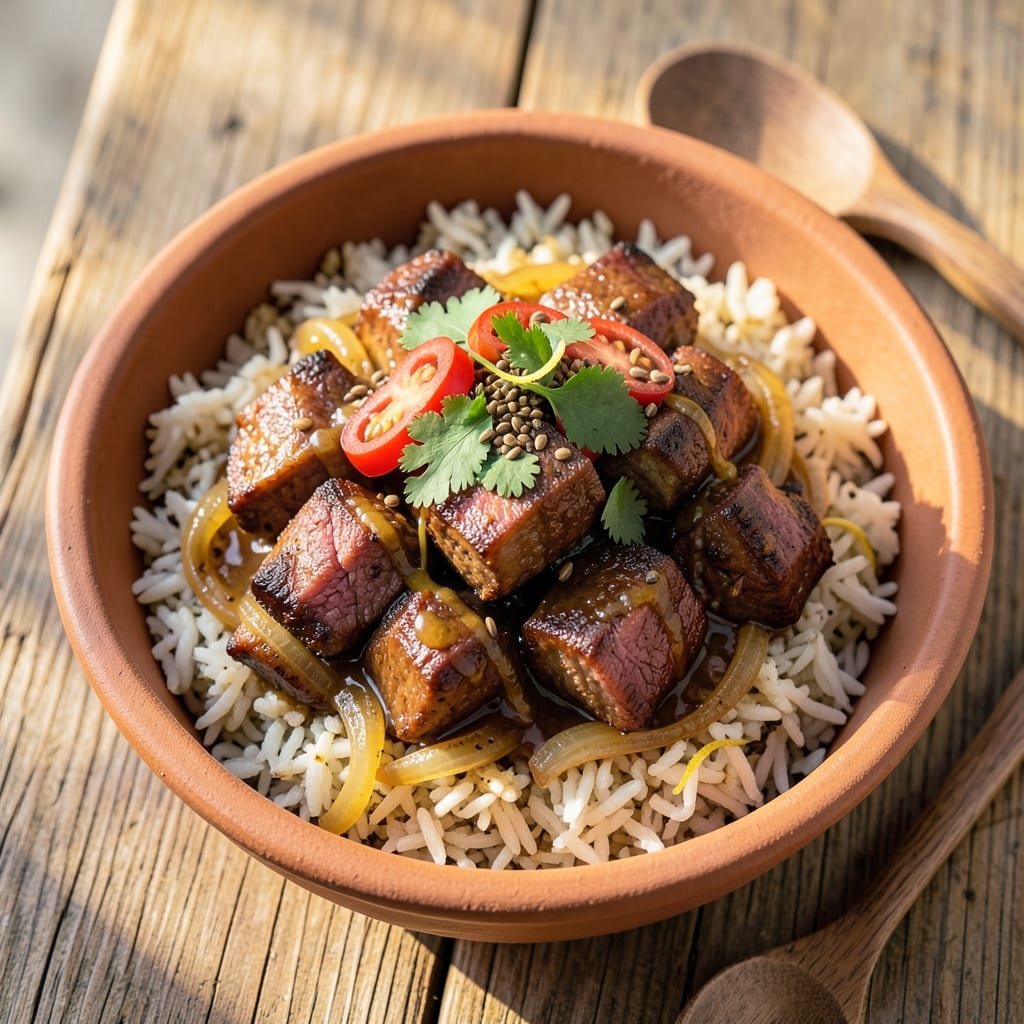
This Bannu Beef Pulao recipe delivers the rich, fragrant flavors of Pakistan’s culinary heartland, where tender beef and aromatic basmati rice come together in perfect harmony. The secret lies in slow-cooking the beef until it’s melt-in-your-mouth tender, then layering it with perfectly spiced rice infused with cardamom and cumin. I’ve perfected this dish over years of testing, ensuring every bite captures the essence of traditional Bannu cooking.
The dish begins with a rich gravy base where beef simmers until fall-apart tender, absorbing layers of warm spices like cinnamon, cloves, and bay leaves. Meanwhile, the rice is cooked separately with fragrant whole spices, then gently folded with the beef and its flavorful juices. This method preserves the rice’s delicate texture while ensuring the beef remains juicy and infused with deep, savory notes.
What sets this recipe apart is the balance of textures and flavors—crisp fried onions on top add a satisfying crunch, while fresh cilantro and lemon wedges brighten each bite. The result is a dish that’s hearty enough for a family feast but elegant enough for special occasions. Each component plays its part, creating a symphony of spices and tender meat that’s impossible to resist.
Whether you're serving this for a weekend gathering or a cozy family dinner, the aroma alone will have everyone gathering around the table. The slow-cooked beef and fragrant rice make this more than just a meal—it’s an experience that transports you straight to the streets of Bannu. Let’s get started on creating this classic dish.
Ingredients for bannu beef pulao
Sixteen ingredients for a dish that’s all about rich spices and tender beef.
| Ingredient | Amount | Notes |
|---|---|---|
| Beef Chuck Roast 🥩 | 2 ½ lb | Cut into 1.5-inch cubes |
| Basmati Rice 🍚 | 2 cups | Uncooked, long-grain preferred |
| Yellow Onions 🧅 | 2 whole | 1 whole for frying, 1 chopped |
| Garlic Cloves 🧄 | 8 cloves | Minced for marinade and rice |
| Fresh Ginger 🌿 | 1 ½ tbsp | Grated, aromatic variety |
| Ground Cumin 🌿 | 1 ½ tbsp | Toasted for deeper flavor |
| Ground Coriander 🌶️ | 1 ½ tbsp | Freshly ground preferred |
| Whole Cinnamon Sticks 🌿 | 2 pieces | Broken into 1-inch pieces |
| Green Cardamom Pods 🌿 | 10 whole | Lightly crushed, seeds only |
| Bay Leaves 🌿 | 4 whole | Fresh or dried |
| Cloves 🌶️ | 4 whole | Lightly crushed |
| Tomatoes 🍅 | 1 lb | Ripe, chopped for gravy |
| Fresh Cilantro 🌿 | ½ cup | Chopped for garnish |
| Lemon 🍋 | 1 whole | Juiced for brightness |
| Ghee or Vegetable Oil 🫒 | ½ cup | For frying onions |
| Salt 🧂 | 1 ½ tsp | Adjust to taste |
| Black Pepper 🌶️ | ½ tsp | Freshly ground |
| Water 💧 | 4 cups | For rice cooking |
The beef is everything here—chuck roast is your best bet for that melt-in-your-mouth texture. Grab it from the butcher section if possible; they’ll cut it for you. Costco or Walmart usually have it pre-cubed, which saves time. For the basmati rice, look for the long-grain variety—it stays separate and fragrant. I always buy a 5-pound bag from Indian grocers for this kind of dish, but any good-quality basmati works. The spices? Penzeys or Spicewalla if you want to splurge, but the bulk bins at Whole Foods are solid too—just check the 'best by' date.
No fresh ginger? Substitute with 1 tbsp ground ginger, but it won’t be as bright. Running low on cardamom? Cinnamon sticks alone can cover, but the flavor’s different—think more Christmas spice. The tomatoes can be canned (drained) in a pinch, but fresh is better. For the onions, yellow or red work, but yellow caramelizes better. The ghee adds richness, but vegetable oil works too—just don’t skimp on the amount. And if you’re short on time, pre-chopped onions from the store are fine, but they won’t crisp up as nicely.
This dish tastes even better the next day, so make extra. Store the beef and rice separately in airtight containers for up to 4 days—just reheat with a splash of water. The spices keep their punch for 6 months in a cool, dark spot. For serving, I like to keep the fried onions and cilantro separate until the last minute so they stay crisp. Double the recipe if you’re feeding a crowd—it’s worth the effort.
Why You'll Love This Recipe
- One-Pot Magic: I swear by this recipe when I’m too tired to wash a million dishes—just brown the beef, toss in the onions and garlic, layer the rice, and let it steam. The beef practically melts into the rice, so you’re left with one pot, one spatula, and zero guilt.
- Beef So Tender: That chuck roast? Slow-cooked until it’s falling apart with just a whisper of ginger and garlic—no tough bites here. Honestly, the first time I made it, I nearly licked the plate clean (and my kids did).
- Weeknight Wonder: Between us, this is my go-to when I’m feeding a crowd or just need something hearty. Double the batch, reheat for lunch, and still have leftovers for days. My husband’s favorite, and he’s the hardest critic.
- Budget-Friendly Feast: A whole roast feeds six for less than takeout, and the rice stretches further than you’d think. I’ll be real: it’s not fancy, but it’s solid, filling, and my wallet thanks me every time.
Step-by-step instructions for Bannu beef pulao
Here's how to make this aromatic, tender beef dish with perfectly spiced rice.
Marinate and Cook the Beef
Cut the 2.5 lb beef chuck roast into 1.5-inch cubes and place them in a large bowl. Add the 8 minced garlic cloves, 1.5 tbsp grated fresh ginger, 1.5 tbsp ground cumin, 1.5 tbsp ground coriander, 1.5 tsp salt, and 0.5 tsp black pepper. Mix gently to coat the beef evenly.
Let the beef marinate for at least 30 minutes (or up to 4 hours for deeper flavor). After marinating, heat 0.25 cup of the ghee or vegetable oil in a heavy pot over medium-high heat. Add the beef in batches, ensuring not to overcrowd the pan, and sear for 3-4 minutes per side until golden brown. Remove the beef and set aside.
Fry the Onions and Prepare the Spices
In the same pot, add the remaining 0.25 cup ghee or vegetable oil and place the whole yellow onion (unpeeled) in the pot. Cook over low heat for 20-25 minutes, stirring occasionally, until the onion turns deep golden brown and caramelized. Remove and discard the onion skin, but keep the caramelized onion in the pot.
Add the 2 broken cinnamon sticks, 10 lightly crushed green cardamom pods, 4 whole bay leaves, and 4 lightly crushed cloves to the pot. Stir for 30 seconds until the spices release their aroma. This step is crucial—it forms the aromatic base of the pulao.
Cook the Rice and Beef Together
Add the 2 cups basmati rice to the pot and stir to coat it evenly with the caramelized onions and spices. Pour in 4 cups water and bring the mixture to a boil. Once boiling, reduce the heat to low, cover the pot with a tight lid, and let it simmer for 15 minutes.
After 15 minutes, gently stir the rice to check for doneness. If the water has absorbed, add 0.5 cup water and let it cook for another 5 minutes. Then, add the seared beef back into the pot, ensuring it's evenly distributed. Cover and cook for another 10 minutes on low heat. The beef should be tender and the rice should be fluffy and cooked through.
Prepare the Tomato Gravy
In a separate pan, heat 1 tbsp ghee or vegetable oil over medium heat. Add the 1 chopped yellow onion, 8 minced garlic cloves, and 1.5 tbsp grated fresh ginger. Sauté for 3-4 minutes until the onions turn translucent and the garlic is fragrant.
Add the 1 lb chopped tomatoes and cook until they soften and turn into a thick paste, about 8-10 minutes. Stir in 1.5 tbsp ground cumin, 1.5 tbsp ground coriander, 1.5 tsp salt, and 0.5 tsp black pepper. Cook for another 5 minutes until the gravy thickens. Remove from heat and set aside.
Combine and Garnish
Gently fold the tomato gravy into the rice and beef mixture. Be careful not to overmix—just enough to combine. Stir in the juice of 1 whole lemon and 0.5 cup chopped fresh cilantro. Taste and adjust the seasoning if needed.
Let the pulao rest for 5 minutes before serving. Garnish with extra chopped fresh cilantro and serve hot with a side of raita or a simple salad. The dish should have a perfect balance of tender beef, fragrant spices, and fluffy rice. Enjoy your Bannu Beef Pulao!
Pro Tips For Making Bannu Beef Pulao
- Sear the Beef Properly: After slicing the beef chuck roast into thin strips, don’t just toss them in—pat them very dry with paper towels first. Then, work in batches over high heat with about 2 tablespoons of oil until every piece gets a deep caramel crust. I used to rush this, and the beef ended up bland and gray. That crust? It’s what carries the flavor through the whole dish.
- Bloom the Spices Slowly: When frying the whole spices (cinnamon, cardamom, cloves) with the onions, keep the heat moderate—not smoking, not lazy. Let them sizzle gently for 2-3 minutes until the oil smells rich and aromatic. After burning three batches, I finally figured out that patience here means the difference between a background spice note and a bold, layered punch in every bite.
- Rinse Rice Twice: Basmati rice for pulao isn’t just about soaking—rinse it twice under cold water until the water runs almost clear (a little starch is fine). Drain it well in a fine-mesh strainer for 5 minutes. I skip this when I’m lazy, but the dish is noticeably better when I don’t: the grains stay separate, and the beef doesn’t turn mushy from excess starch.
- Layer the Onions Last: Save the finely sliced onions for the very end—after the beef has cooked and the rice is halfway done. Stir them in just until they’re just wilted, not browned. Sounds weird, but it works: the onions stay crisp, brighten the dish, and cut through the richness of the beef fat. My grandmother swore by this, and she was right: it’s the freshness that keeps the pulao from feeling heavy.
Pro cooking tips for this recipe
Slow-Cooking Secrets
The key to melt-in-your-mouth beef lies in patience. After searing, I recommend transferring the beef to a slow cooker on low heat for 6-8 hours before combining with rice. This method ensures the beef becomes fork-tender while absorbing all those aromatic spices. If using a Dutch oven, maintain a gentle simmer—never boil—to prevent toughening the meat. 🌡️
Spice Bloom Mastery
Never skip the 30-second spice bloom when adding whole spices to the caramelized onions. This step releases their essential oils, creating that signature Bannu aroma. I like to use a mortar and pestle to lightly crush cardamom pods—just enough to expose the seeds without turning them into powder. Fresh spices make all the difference here.
Rice Texture Control
For perfectly fluffy rice, use a heavy-bottomed pot and maintain low heat after boiling. If your rice absorbs water too quickly, add 2 tbsp ghee when combining with beef—this creates a subtle barrier that keeps grains separate. I also recommend parboiling the rice for 2 minutes before adding to the beef mixture for even better texture.
Onion Caramelization
That whole onion needs to develop deep golden brown color—don't rush this step! I use a heavy stainless steel pot and stir every 5 minutes to prevent burning. The result should be so sweet and jammy it practically melts in your mouth. Pro tip: Add a pinch of salt to the onions while caramelizing to enhance their flavor development.
Gravy Thickening
For the tomato gravy, let it reduce until it reaches a syrup-like consistency. I like to add 1 tsp sugar when cooking tomatoes to balance their acidity and help thicken the sauce. This step is where the dish's depth of flavor really shines—don't be tempted to rush it. The gravy should coat the back of a spoon when finished. 💫
Final Resting Period
Letting the pulao rest for 5-10 minutes before serving allows all the flavors to meld together. This is especially important when combining hot rice with cold gravy. I cover the pot with a clean kitchen towel during resting to keep it warm while preventing condensation from steaming the rice. The result is a dish where every bite is perfectly balanced.
Nutrition facts
Frequently asked questions
Can I substitute beef with chicken or lamb in this recipe?
While beef is traditional for Bannu-style pulao, you can adapt it for chicken or lamb. For chicken, use 3-4 boneless thighs and reduce cooking time to 45 minutes after adding to rice. For lamb, use 2.5 lb shoulder and cook for 15 minutes longer. Adjust spices slightly—lamb benefits from extra ground cumin (2 tbsp) and chicken from turmeric (1 tsp).
How do I make this dish less spicy for kids?
Reduce the ground spices by half (0.75 tbsp each of cumin and coriander) and omit the whole spices (bay leaves, cloves, cardamom). For extra mildness, prepare the rice separately with just salt and 1 tsp ghee, then mix in the beef sauce at the end. Always keep a side of plain yogurt (raita) for dipping—it helps balance any lingering spice.
What's the best way to reheat leftovers?
Reheat gently in a steamer basket over simmering water for 10-12 minutes to preserve moisture. Alternatively, place in a microwave-safe dish with 2 tbsp water, cover with a damp paper towel, and heat in 1-minute intervals on medium power. Never reheat in the oven—it dries out the beef. The dish tastes even better the next day!
Can I make this in an Instant Pot?
Yes! Sear the beef first, then add all ingredients except tomatoes. Cook on high pressure for 20 minutes, then quick-release. Prepare the tomato gravy separately and stir it in at the end. For rice texture, use 1.5 cups water instead of 4 cups—the Instant Pot's pressure will do the work. The beef will be tender but slightly less fall-apart than slow-cooked.
Why does my rice turn mushy?
Mushy rice usually means overcooking or insufficient liquid. Use a heavy-bottomed pot and maintain low heat after boiling. For 2 cups basmati, 4 cups water is correct—but if your rice absorbs too quickly, reduce to 3.5 cups. Always stir once during cooking to prevent sticking. Pro tip: Add 1 tbsp ghee when combining with beef to create a protective layer.