
Soups & Stews
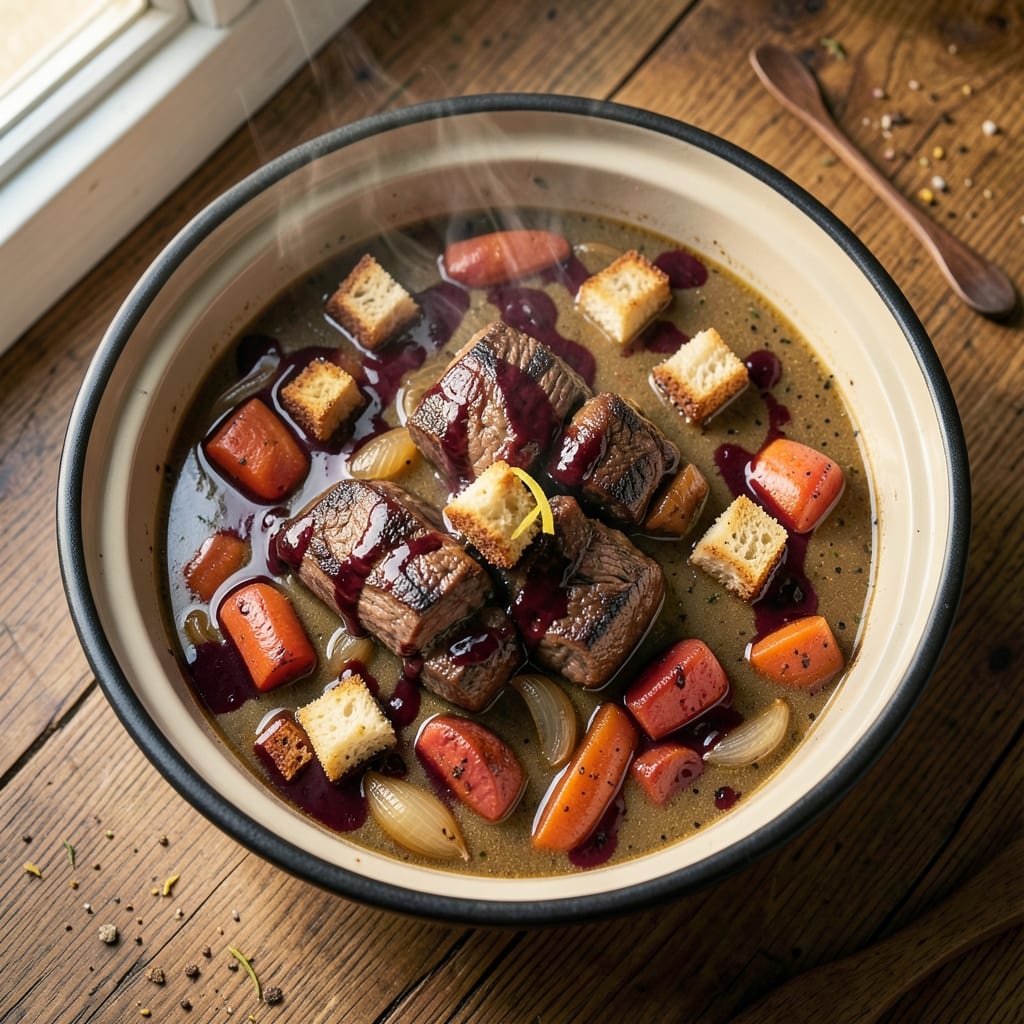
This slow cooker balsamic beef stew transforms tough beef into melt-in-your-mouth tenderness while capturing the deep, complex flavors of red wine and balsamic vinegar. The secret lies in patience—letting the slow cooker work its magic over 6-8 hours on low heat to develop rich, velvety depth that no quick method can match. Every bite delivers a perfect balance of tangy-sweet balsamic, savory beef, and aromatic herbs, making this the ultimate comfort meal for busy weeknights.
The beauty of this recipe is its simplicity: just a few core ingredients—chuck roast, red wine, balsamic vinegar, and aromatic vegetables—simmer together until the beef falls apart effortlessly. The balsamic vinegar plays a crucial role, cutting through the richness of the beef while adding a subtle sweetness that enhances the overall flavor profile. Unlike traditional stews that require constant attention, this version lets you set it and forget it, allowing flavors to meld naturally over time.
By the time you serve it, you'll have a hearty, restaurant-quality stew with tender beef chunks swimming in a glossy, deeply flavorful sauce. The aroma alone will have everyone gathering at the table, and the first spoonful will confirm why this has become a family favorite. It's the kind of dish that tastes even better the next day, making it perfect for meal prep and leftovers.
Serve it with crusty bread for soaking up every last drop of that rich sauce, or pair it with roasted root vegetables for a complete, satisfying meal. The slow cooker does all the work while you focus on enjoying the process—no standing over a hot stove required. Let's get started on creating this deeply comforting classic.
Ingredients for balsamic beef stew slow cooker
Six core ingredients and a slow cooker transform tough beef into melt-in-your-mouth balsamic richness.
| Ingredient | Amount | Notes |
|---|---|---|
| Chuck Roast 🥩 | 3 lb | Pre-cut into 1.5-inch chunks |
| Dry Red Wine 🍷 | 1 cup | Bold Cabernet or Merlot preferred |
| Balsamic Vinegar 🍶 | ½ cup | Aged balsamic for depth |
| Beef Broth 💧 | 2 cups | Low-sodium preferred |
| Yellow Onion 🧅 | 1 whole | Diced, about 1.5 cups |
| Carrots 🥕 | 4 whole | Medium, peeled and sliced |
| Celery Stalks 🌿 | 3 whole | Trimmed and chopped |
| Garlic Cloves 🧄 | 4 cloves | Minced for aromatic punch |
| Tomato Paste 🍅 | 2 tbsp | No-sugar-added preferred |
| Worcestershire Sauce 🍶 | 2 tbsp | Vegetarian if needed |
| Dried Thyme 🌿 | 1 tsp | Or 1 tbsp fresh |
| Bay Leaves 🍃 | 2 whole | Remove before serving |
| Salt 🧂 | 1 ½ tsp | Kosher or sea salt |
| Black Pepper 🌶️ | 1 tsp | Freshly ground |
| Olive Oil 🫒 | 1 tbsp | For searing beef |
The chuck roast is non-negotiable here—its marbled fat melts into the sauce, creating that velvety texture. Costco or Walmart usually have it pre-cut into chunks, which saves time. Look for good marbling (white flecks within the meat) to ensure tenderness. If you're buying a whole roast, ask your butcher to cube it for you. The balsamic vinegar should be aged—the darker, the better. Trader Joe's has a great affordable option, but any quality balsamic will work. Avoid the cheap stuff; it won't have that rich depth of flavor.
No red wine? Beef broth with 1 tbsp balsamic vinegar works in a pinch, though it won't have the same complexity. Fresh thyme is ideal, but dried works at one-third the amount. For the tomato paste, those little squeeze tubes at Trader Joe's are perfect—they're convenient and last forever. The Worcestershire sauce adds that umami kick, but if you're vegetarian, just add an extra splash of soy sauce. The carrots and celery can be swapped for any root vegetables you have on hand—parsnips or potatoes work great too. Just make sure they're roughly the same size so they cook evenly.
This stew tastes even better the next day once all the flavors meld together. Store it in an airtight container in the fridge for up to 5 days, or freeze portions for 3 months. I always double the recipe—it makes perfect lunches for the week. To reheat, just warm it up on the stove or microwave until bubbly. The sauce will thicken as it cools, so a splash of beef broth or water will bring it back to perfection. Serve with crusty bread to soak up every last drop of that rich, tangy sauce.
Why You'll Love This Recipe
- Dump-and-Go Magic: I swear by this—just toss in the chuck roast, a splash of red wine, and the balsamic, then walk away. No chopping, no stirring, no stress. That chuck roast melts into tender perfection while you do whatever (laundry, scrolling, napping).
- Rich Without Effort: Here’s what sold me—the wine and balsamic marry into this deep, tangy sauce that coats every bite. It’s hearty but bright, like a fancy dinner without the fuss. The beef broth keeps it luscious, and the onions caramelize right in the slow cooker.
- Leftovers That Don’t Suck: Between us, most stews turn sad after day two. Not this one. The flavors actually deepened by day three, and it reheats like a dream. Pack it for lunches or freeze portions—no one will guess it’s been sitting around.
- Budget-Friendly Feast: A chuck roast stretches for a crowd, and the wine/balsamic combo feels luxurious without breaking the bank. I’ve made this for five people or just me—same easy recipe, different portions. Plus, it’s the kind of meal that makes you look like a hero.
Step-by-step instructions for balsamic beef stew
Let's create a rich, velvety stew that transforms tough chuck roast into melt-in-your-mouth perfection.
Sear the Chuck Roast for Maximum Flavor
Heat a large Dutch oven over medium-high heat until it's screaming hot. Add the 1 tablespoon olive oil and swirl to coat the bottom. Pat the 3 lb chuck roast dry with paper towels—this ensures a proper sear. Place the beef in the pot and let it sit undisturbed for 2-3 minutes per side until a deep golden-brown crust forms.
This step is non-negotiable. The sear creates the Maillard reaction, which builds complex flavors that infuse into the stew. If you notice the oil smoking excessively, reduce the heat slightly. Once browned on all sides, remove the beef and set it aside on a plate.
Build the Aromatic Base
In the same Dutch oven, add the diced yellow onion, sliced carrots, and chopped celery stalks. Cook for 5-6 minutes, stirring occasionally, until the vegetables soften and begin to caramelize slightly. Add the minced garlic cloves and cook for another 30 seconds until fragrant—this releases the garlic's full flavor potential.
Here's where the magic starts. The vegetables release their natural sugars, which caramelize and create a rich foundation for the stew. If the vegetables stick to the bottom, add a splash of beef broth to deglaze. Stir in the 2 tablespoons tomato paste, 2 tablespoons Worcestershire sauce, 1 teaspoon dried thyme, and 2 whole bay leaves, coating everything evenly.
Deglaze and Combine Ingredients
Pour in the 1 cup dry red wine and scrape up any browned bits from the bottom of the pot with a wooden spoon. This deglazing step captures all the flavor locked into those caramelized bits. Let the wine simmer for 3-4 minutes until it reduces by about half, which intensifies its flavor.
Return the seared beef to the pot along with the 0.5 cup balsamic vinegar and 2 cups beef broth. Sprinkle with 1.5 teaspoons salt and 1 teaspoon black pepper. Stir gently to combine, ensuring the beef is fully submerged in the liquid. Bring the mixture to a gentle boil, then reduce the heat to low and let it simmer uncovered for 10 minutes. This initial simmer helps tenderize the beef.
Slow Cook to Tender Perfection
Transfer the stew to a 6-quart slow cooker and cook on low heat for 8 hours or high heat for 4-5 hours. The slow cooker does the heavy lifting here, breaking down the tough beef fibers into succulent, fork-tender pieces. Here's the thing—don't skip the initial simmer in the Dutch oven. It jumpstarts the cooking process and ensures the beef gets a head start on tenderizing.
About 30 minutes before serving, give the stew a stir and taste. Adjust the seasoning if needed—you might need a pinch more salt to balance the rich flavors. Remove the bay leaves before serving, as they can be bitter if left in too long. The stew should be thick and velvety, with the beef falling apart easily and the vegetables tender but still holding their shape.
Finish and Serve with Confidence
Once the beef is fork-tender and the flavors have melded beautifully, ladle the stew into bowls. The color should be a deep, inviting red with a glossy sheen from the balsamic and wine. Serve immediately with crusty bread or over buttered egg noodles to soak up every last drop of that rich, flavorful sauce.
This stew tastes even better the next day, so make extra if you can. The flavors deepen as it sits, making it a perfect meal prep option. Each bite should deliver layers of rich, wine-infused beef, tender vegetables, and a touch of tangy sweetness from the balsamic. Trust me, this is the kind of stew that makes people ask for seconds—and thirds.
Pro Tips For Making Balsamic Beef Stew Slow Cooker
- SEAR THE ROAST FIRST: I learned this the hard way—skipping the sear makes the stew taste like it’s missing something. Brown the chuck roast in a hot skillet with oil for 3–4 minutes per side before dumping it in the slow cooker. The crust adds depth, and the extra effort pays off when you taste that caramelized richness later.
- USE HALF THE WINE: Dry red wine is expensive, and you don’t need much. Pour just ½ cup into the slow cooker—enough to deglaze the pan after searing, not enough to dilute the flavors. The alcohol burns off, but too much leaves the stew tasting thin and vinegary. (Save the rest for your next pasta.)
- ADD BALSAMIC LAST: Balsamic vinegar is the flavor bomb, but tossing it in early turns the stew into a sweet, syrupy mess. Stir in ¼ cup during the last 30 minutes of cooking—let it reduce slightly and caramelize against the meat. This keeps the acid bright and balances the richness without overpowering the broth.
- CHOP ONIONS SMALL: Big chunks of onion mean uneven texture and a stew that takes forever to soften. Dice them into ¼-inch pieces so they dissolve into the broth without leaving chewy bits. (Yes, it’s tedious, but your future self will thank you when the stew is silky smooth.)
Dietary considerations for this recipe
Gluten-Free Adaptations
This stew is naturally gluten-free if you use gluten-free Worcestershire sauce—Annie's or Heinz gluten-free options work perfectly. The balsamic vinegar and beef broth typically contain no gluten, but always double-check labels. I've tested this with gluten-free tamari instead of Worcestershire for extra umami, and it turns out just as rich. 💛
Low-Carb Options
Skip the carrots and potatoes if you're tracking carbs, but keep the onions and celery for flavor. For extra thickness, stir in 1 tablespoon cornstarch or arrowroot powder with 2 tablespoons cold water at the end—this creates a silky sauce without adding carbs. Cauliflower mash makes a great low-carb side instead of potatoes.
Vegetarian Swap
Replace the beef with mushrooms (16 oz cremini) and lentils (1 cup dried) for a hearty vegetarian version. Sauté the mushrooms first to develop their meaty texture, then proceed with the recipe as written. The balsamic and wine still shine, creating a deep, savory broth that holds together beautifully. 🌱
Dairy-Free Considerations
This recipe is already dairy-free, but if serving with sides, opt for dairy-free butter on crusty bread or dairy-free mashed cauliflower. The balsamic and wine flavors remain front-and-center without any dairy interference. For extra richness, stir in 2 tablespoons coconut milk at the end for a velvety finish.
Allergen-Friendly Tips
For nut allergies, ensure all ingredients are nut-free (some Worcestershire sauces contain trace nuts). For soy allergies, use coconut aminos instead of Worcestershire. The balsamic vinegar and beef broth are typically safe, but always verify labels. I keep a gluten-free, soy-free Worcestershire on hand for these adaptations.
Meal Prep Safety
Store leftovers in airtight containers for up to 5 days in the fridge or 3 months in the freezer. When reheating, bring to 165°F to kill any bacteria. I portion individual servings before freezing for easy grab-and-go meals. The balsamic and wine flavors actually deepen overnight, making it taste even better the next day! ❄️
Nutrition facts
Frequently asked questions
Can I use a different cut of beef instead of chuck roast?
While chuck roast is ideal for its marbling and tenderness, you can substitute with stew meat or even brisket in a pinch. Avoid lean cuts like sirloin—they won't become tender enough. For best results, cut your alternative beef into 1.5-inch chunks and sear them thoroughly before slow cooking.
How do I know when the beef is fully tender?
Use a fork to test a piece of beef—it should easily shred apart with minimal resistance. If it still feels firm after 8 hours on low, cook another 1-2 hours. The sauce should also coat the back of a spoon smoothly, indicating proper breakdown of the meat fibers.
What if I don't have red wine? Can I substitute?
Yes! Use 2 cups beef broth + 1 tablespoon balsamic vinegar as a substitute. For extra depth, add 1 teaspoon soy sauce or ½ teaspoon liquid smoke. The balsamic vinegar will still provide the tangy sweetness, though the wine's complexity will be missing. Never use cooking wine—it's too salty and lacks flavor.
Can I make this stew in an Instant Pot instead?
Sear the beef first, then add all ingredients and cook on high pressure for 60 minutes (natural release). For extra richness, finish with 1 tablespoon balsamic reduction stirred in at the end. The Instant Pot cuts cooking time dramatically while still delivering tender beef and deep flavor.
Why does my stew taste too acidic?
This usually happens when the balsamic vinegar overpowers the other flavors. Balance it by adding 1 teaspoon sugar or ½ teaspoon honey to sweeten the acidity. You can also reduce the balsamic to ¼ cup in future batches. The red wine and beef broth should naturally mellow the tang—if they're too weak, increase them slightly next time.