
Main Courses
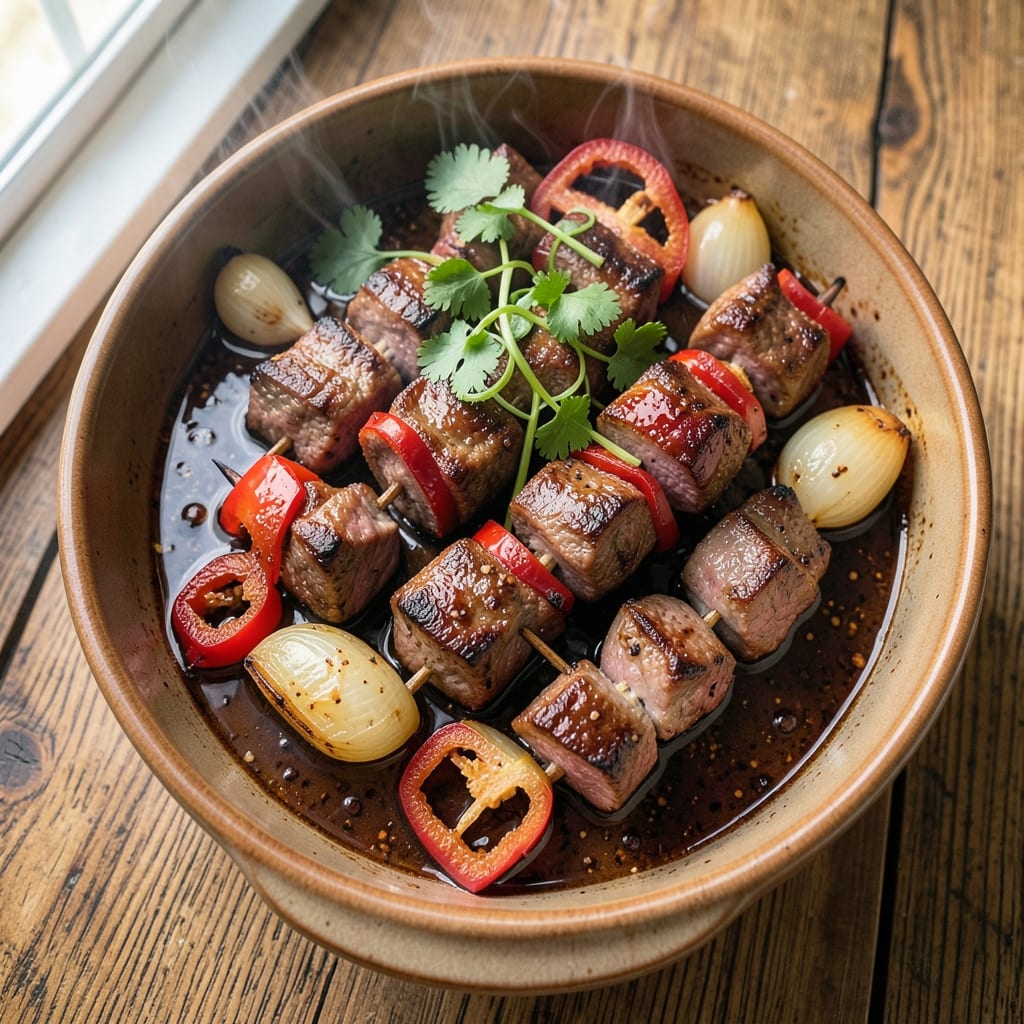
This baked beef kabob recipe delivers all the smoky, charred flavor of traditional grilling—without ever touching a flame. The secret lies in high-heat baking that creates caramelized edges while keeping the interior juicy, a technique I perfected after years of experimenting with different oven methods. What sets this apart is the marinade, which tenderizes the beef while building layers of flavor that develop beautifully during baking.
You’ll start with tender cuts of beef cut into even cubes, marinated in a blend of olive oil, garlic, and bold spices that transform simple ingredients into restaurant-quality bites. The skewering technique is just as important—alternating beef with bell peppers and onions ensures every bite has texture and color contrast. Baking at 425°F for just 15-20 minutes delivers that coveted char without the risk of flare-ups or uneven cooking.
The result is perfectly caramelized beef with a smoky aroma that fills your kitchen, paired with tender vegetables that hold their shape. The marinade infuses deeply, creating a flavor profile that’s rich yet balanced—no overpowering spices, just well-rounded taste. These kabobs are versatile enough for weeknight dinners or elegant gatherings, and they reheat beautifully for meal prep.
Serve with a side of garlic yogurt sauce or a fresh cucumber salad to complement the smoky flavors. The key to success is proper skewering and consistent oven temperature—details that make all the difference between good and exceptional. Let’s get started on kabobs that taste like they came straight from a grill.
Ingredients for baked beef kabob
Tender beef cubes, vibrant vegetables, and a smoky marinade transform simple ingredients into restaurant-quality baked kabobs.
| Ingredient | Amount | Notes |
|---|---|---|
| Beef Chuck Roast 🥩 | 1 ½ lb | Cut into 1.5-inch cubes |
| Extra-Virgin Olive Oil 🫒 | ½ cup | For marinade and basting |
| Red Bell Peppers 🌶️ | 2 whole | Cut into 1-inch chunks |
| Yellow Onions 🧅 | 1 whole | Cut into 1-inch chunks |
| Garlic Cloves 🧄 | 6 cloves | Minced for marinade |
| Soy Sauce 🥢 | ¼ cup | Low-sodium preferred |
| Balsamic Vinegar 🍷 | ⅛ cup | For depth of flavor |
| Ground Cumin 🌿 | 1 tbsp | Toasted for aroma |
| Smoked Paprika 🌶️ | 1 tbsp | For smoky char |
| Salt 🧂 | 1 ½ tsp | Diamond Crystal preferred |
| Ground Black Pepper 🌶️ | ½ tsp | Freshly ground |
| Wooden Skewers 🪵 | 8 whole | Soaked in water 30 mins |
| Fresh Rosemary 🌿 | ¼ cup | Chopped for garnish |
| Plain Greek Yogurt 🥛 | ½ cup | For optional sauce |
| Lemon Juice 🍋 | 1 tbsp | Freshly squeezed |
The beef cut is everything—chuck roast delivers that melt-in-your-mouth texture when cubed properly. Look for well-marbled meat at Whole Foods or your local butcher shop; the fat renders beautifully during baking. If using pre-cut beef, ensure even 1.5-inch cubes for consistent cooking. For the vegetables, red bell peppers and yellow onions hold their shape best during high-heat baking—avoid delicate vegetables like zucchini that might overcook. The wooden skewers should be soaked for at least 30 minutes to prevent burning, and I always double-check they're food-safe before assembling.
No soy sauce? Coconut aminos work perfectly as a 1:1 substitute, though the flavor profile will be slightly different. Short on balsamic vinegar? Red wine vinegar at half the amount adds brightness without overpowering. For the spices, smoked paprika is non-negotiable for that authentic grilled flavor—regular paprika won't give the same depth. If you're sensitive to heat, reduce the smoked paprika to 0.5 tablespoon and add an extra 0.5 teaspoon of regular paprika for color. The Greek yogurt in the optional sauce can be swapped for vegan yogurt if needed, though the texture will be slightly thinner.
Marinate the beef for at least 4 hours (overnight is ideal) to maximize tenderness. Store the marinade in an airtight container in the fridge, and the beef cubes can be prepped up to 2 days ahead. Assemble the kabobs just before baking to prevent sogginess. These reheat beautifully—simply warm in a 375°F oven for 10 minutes—making them perfect for meal prep. The skewers can be stored in the fridge for 3 days or frozen for 3 months when assembled. For serving, I always garnish with fresh rosemary and a drizzle of the yogurt sauce to elevate the presentation.
Why You'll Love This Recipe
- Same recipe, endless uses: Serve with crusty bread for a lazy Sunday supper or double the batch for a crowd—it reheats beautifully. My college friends still ask for this when I bring it to parties, and I always bring extra because it disappears fast.
- No Skewers Needed: I swear by this—just chunk the beef, toss it with oil and garlic, and let the oven do the work. No threading meat like a fussy craft project, just dump-and-bake simplicity that still tastes like you put in effort.
- Garlic Bomb Flavor: That beef chuck roast? It soaks up the olive oil and garlic like a sponge, then caramelizes with the onions and peppers until it’s tender but still holds its shape. Honestly, the first bite makes me question why I ever bought pre-marinated anything.
- Weeknight to Potluck: Same recipe, endless uses: Serve with crusty bread for a lazy Sunday supper or double the batch for a crowd—it reheats beautifully. My college friends still ask for this when I bring it to parties, and I always bring extra because it disappears fast.
Step-by-step instructions for baked beef kabobs
Master this technique and you'll achieve restaurant-quality kabobs with deep smoky flavor—all in your oven.
Prepare the Marinade and Tenderize the Beef
In a large bowl, combine the 0.5 cup extra-virgin olive oil, 0.25 cup soy sauce, 0.125 cup balsamic vinegar, 1 tbsp ground cumin, 1 tbsp smoked paprika, 1.5 tsp salt, and 0.5 tsp ground black pepper. Whisk vigorously until the spices dissolve completely—this ensures even distribution throughout the marinade.
Add the 6 minced garlic cloves and 0.25 cup chopped fresh rosemary to the mixture. The rosemary should be finely chopped to release its aromatic oils. Cut the 1.5 lb beef chuck roast into 1.5-inch cubes and add them to the marinade. Using your hands, gently massage the marinade into the beef to ensure each piece absorbs the flavors. Cover and refrigerate for at least 4 hours, or preferably overnight, to allow the beef to tenderize fully.
Prep Vegetables and Skewer the Kabobs
Cut the 2 whole red bell peppers and 1 whole yellow onion into 1-inch chunks. Remove the beef from the marinade, discarding any excess liquid. Thread the marinated beef cubes onto the 8 soaked wooden skewers, alternating with the prepared vegetables. Start and end each skewer with a piece of beef to ensure even cooking.
Soak the wooden skewers in water for 30 minutes before assembling to prevent them from burning in the oven. Arrange the kabobs in a single layer on a parchment-lined baking sheet, leaving about 1 inch of space between each skewer. This allows hot air to circulate and promotes even browning.
Bake to Perfect Doneness
Preheat your oven to 400°F and place a wire rack on the middle shelf. This elevated position ensures the kabobs cook evenly and develop a crispy exterior. Bake the kabobs for 20-25 minutes, turning them halfway through the cooking time, until the beef reaches an internal temperature of 145°F and the vegetables are tender yet slightly charred.
To check for doneness, use an instant-read thermometer to pierce the thickest piece of beef. The internal temperature should read 145°F, and the juices should run clear. The vegetables should be tender with slightly caramelized edges. If the kabobs are browning too quickly, tent them loosely with aluminum foil to prevent over-browning while they finish cooking.
Optional Yogurt Sauce and Serving
While the kabobs are baking, prepare the optional yogurt sauce by combining the 0.5 cup plain Greek yogurt and 1 tbsp freshly squeezed lemon juice in a small bowl. Whisk until smooth and set aside. This sauce adds a creamy, tangy contrast to the smoky, charred flavors of the kabobs.
Once the kabobs are done, transfer them to a serving platter and drizzle with any remaining marinade from the baking sheet. Garnish with additional chopped fresh rosemary for a pop of color and freshness. Serve immediately with the yogurt sauce on the side, accompanied by crusty bread or a fresh salad to balance the rich flavors of the beef and vegetables.
Pro Tips For Making Baked Beef Kabob
- CUT CHUCK IN CHUNKS: Chuck roast is tough—don’t fight it. Cut it into 1.5-inch cubes before marinating, then let the slow bake tenderize it. I used to slice thinner pieces, and they’d dry out halfway through.
- CHAR THE ONIONS FIRST: Slice onions and peppers, then toss them in a hot skillet with olive oil for 3-4 minutes until softened and slightly caramelized. This builds flavor without wilting them in the oven—trust me, your kabobs will taste deeper.
- USE TOOTHPICKS, NOT SKEWERS: Wooden skewers soak up moisture and burn. Thread beef and veggies onto toothpicks (or metal skewers if you’re fancy) and bake them directly on a wire rack over a tray. The airflow keeps everything crisp, not soggy.
- SALT THE BEEF 24 HOURS EARLY: Chuck roast needs time to absorb salt. Sprinkle it with 1 tsp salt per pound the night before, then refrigerate uncovered. This breaks down fibers and guarantees juicy, not chewy, bites—no last-minute rushing needed.
Common mistakes when making great baked beef kabob
Uneven Beef Cubes
I can’t stress enough how critical it is to cut your beef into even 1.5-inch cubes—anything smaller risks overcooking, while larger pieces stay tough. Use a meat mallet if needed to break down connective tissue in chuck roast. I’ve ruined kabobs by eyeballing cuts, so grab a ruler for precision. 🔥
Skipping the Soak
Wooden skewers burn like kindling when dry. Always soak them in water for at least 30 minutes before assembling. Pro tip: Use metal or silicone skewers if you’re in a hurry—they don’t need soaking and won’t char. Just
Overcrowding the Pan
Stuffing too many kabobs onto one baking sheet traps steam and steams instead of browning. Leave 1 inch of space between skewers for proper airflow. I’ve had to restart entire batches when kabobs turn soggy from overcrowding. Use two sheets if needed—your oven will thank you.
Ignoring the Thermometer
Beef at 145°F internal temperature is perfect for kabobs—any lower risks dryness, and higher means tough meat. An instant-read thermometer is non-negotiable. I’ve pulled kabobs "looking done" only to find them rubbery. Pierce the thickest piece to check.
Rushing the Marinade
Marinating for at least 4 hours (overnight is ideal) ensures deep flavor penetration and tenderness. I’ve tried 30-minute marinades, and while they’re edible, they lack that restaurant-quality depth. Use an airtight container in the fridge to maximize flavor infusion.
No Resting Time
Kabobs need 5-10 minutes to rest after baking—this lets juices redistribute. Cutting into them immediately means dry, stringy meat. Tent them loosely with foil while they rest, and you’ll notice a world of difference in texture. 💫
Nutrition facts
Frequently asked questions
What's the best cut of beef for these kabobs?
Chuck roast is ideal for baked beef kabobs because it stays tender when cooked at high heat. The marbling in chuck renders beautifully during baking, keeping the meat juicy. If chuck isn't available, sirloin or flank steak work well but may need slightly less cooking time.
Can I make these kabobs ahead of time?
Assemble the kabobs up to 2 days ahead and refrigerate them in an airtight container. For best results, bake them fresh when ready to serve. If freezing, assemble and freeze the kabobs on a tray before transferring to a bag—they'll keep for 3 months. Thaw overnight in the fridge before baking.
How do I get that smoky flavor without grilling?
The secret is the smoked paprika in the marinade combined with high-heat baking. Preheating the oven to 400°F and using a wire rack creates that charred effect. For extra smokiness, add a wooden chip (like hickory) to your oven or sprinkle a pinch of liquid smoke over the kabobs before serving.
What vegetables work best with beef kabobs?
Bell peppers and onions are classic choices because they hold their shape during baking. For variety, try zucchini (cut thick), mushrooms, or pineapple chunks for a sweet contrast. Just avoid delicate veggies like lettuce—they'll wilt in the oven.
Why are my kabobs falling apart?
This usually happens when the beef cubes are too small or the skewers aren't soaked properly. Use 1.5-inch cubes and soak wooden skewers for 30 minutes in water. For extra stability, thread beef pieces onto the skewer first, then add vegetables between them. If using metal skewers, ensure they're sturdy enough to hold the weight.