
Main Courses
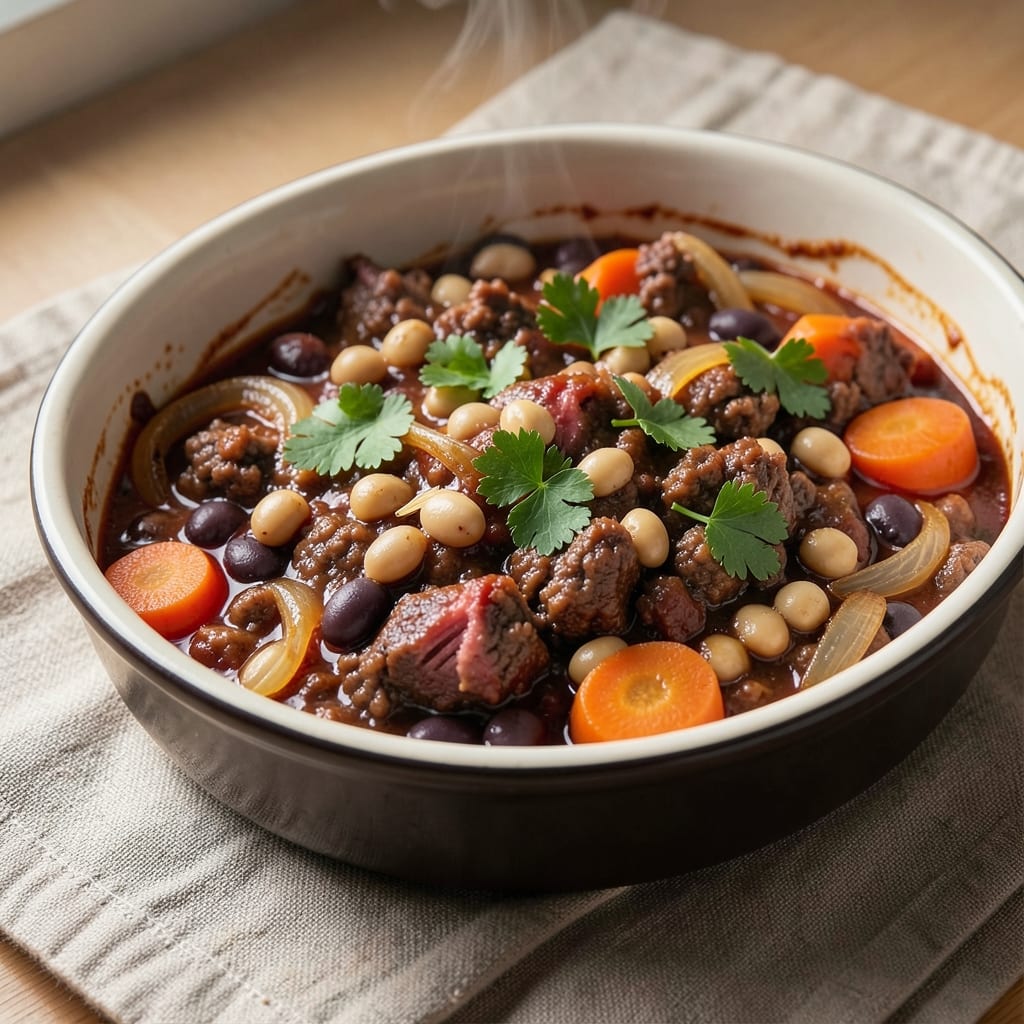
This baked beans with minced beef recipe transforms humble ingredients into a hearty, slow-simmered masterpiece with layers of smoky depth and tender texture. 🔥 The secret lies in browning the beef first—creating a rich, caramelized foundation that infuses every spoonful with umami richness. I developed this version after years of testing, balancing traditional British techniques with modern twists that elevate the dish beyond its classic roots.
What sets this recipe apart is the two-stage cooking process: first simmering the beans and beef together to build flavor, then finishing with a slow bake that develops that signature tender, saucy texture. The minced beef adds protein and a satisfying bite, while spices like smoked paprika and a touch of brown sugar create a perfect balance of sweet and savory. This isn't just comfort food—it's a restaurant-quality dish that comes together in one pot.
By the time you're done, you'll have a deeply flavorful, melt-in-your-mouth baked bean dish that's perfect for weeknight dinners or Sunday suppers. The sauce clings to every bean, creating that irresistible pull-apart texture, while the beef stays tender and juicy. Serve it with crusty bread to soak up every last drop, or pair it with roasted vegetables for a complete meal.
The beauty of this recipe is its versatility—it works equally well as a main course or side dish, and the leftovers reheat beautifully. Whether you're recreating childhood memories or introducing this classic to new generations, this version delivers on tradition with a modern twist. Let's get started on creating your own slow-simmered masterpiece.
Ingredients for baked beans minced beef
The perfect blend of smoky, sweet, and savory ingredients for a restaurant-quality baked bean masterpiece.
| Ingredient | Amount | Notes |
|---|---|---|
| Minced Beef 🥩 | 1 lb | 80% lean for best texture |
| Dried Navy Beans 🫘 | 1 ½ cups | Unsoaked, rinsed thoroughly |
| Onion 🧅 | 1 whole | Yellow, diced medium-fine |
| Carrots 🥕 | 2 medium | Peeled, chopped small |
| Garlic Cloves 🧄 | 4 cloves | Minced, fresh preferred |
| Tomato Paste 🍅 | ½ cup | Smooth, not chunky |
| Smoked Paprika 🌶️ | 1 tbsp | High quality, not dusty |
| Brown Sugar 🍯 | 2 tbsp | Light or dark works |
| Mustard 🍯 | 2 tbsp | Dijon or yellow preferred |
| Beef Stock 💧 | 2 cups | Homemade or quality store-bought |
| Apple Cider Vinegar 🍎 | 1 tbsp | For tangy depth |
| Salt 🧂 | 1 ½ tsp | Diamond Crystal preferred |
| Black Pepper 🌶️ | ½ tsp | Freshly ground |
| Olive Oil 🫒 | 2 tbsp | Extra-virgin for richness |
| Bay Leaves 🌿 | 2 whole | Fresh if available |
The minced beef is where the magic starts. Look for 80% lean ground beef at the meat counter—it stays juicy and develops that rich, caramelized crust when browned. Costco or local butchers often have better quality than supermarket pre-packaged. If you can't find 80% lean, 85% works too, but you might need to adjust cooking time slightly. The beans? Dried navy beans are traditional, but you can swap for kidney beans if that's what you've got. Just make sure they're rinsed well before soaking—removes any dust or debris that can make the final dish taste off.
No smoked paprika? Regular paprika plus a pinch of liquid smoke gets you close. The brown sugar can be swapped for maple syrup if you're avoiding refined sugar, but trust me on the full-fat version—it balances the acidity beautifully. For the mustard, Dijon adds complexity, while yellow mustard keeps it classic. The tomato paste is non-negotiable though—it's what gives that deep, concentrated flavor. If you're using a squeeze tube, measure by weight (about 3 oz) since volume can vary wildly. The beef stock? Homemade is ideal, but even the basic cans from Kitchen Basics or Pacific Foods work in a pinch.
This dish tastes even better the next day, so make a double batch if you can—freezes beautifully for up to 3 months. Store leftovers in airtight containers with a splash of water to keep them moist. The bay leaves should be removed before serving (they're not for eating, just for flavor). For reheating, add a splash of water or stock to loosen the sauce. And if you're prepping ahead, brown the beef and sauté the aromatics first—they'll keep in the fridge for 2 days before assembling the full dish.
Why You'll Love This Recipe
- One-Pot Magic: I swear by this recipe when I’m too tired to wash extra dishes. Toss everything—minced beef, soaked beans, onions, carrots, and garlic—into one baking dish, cover it, and let the oven do the work. No pots, no pans, just pure ease.
- Deep Umami Bomb: That slow-cooked minced beef turns tender and rich, while the navy beans soak up all the savory juices. The caramelized onions and garlic? They’re the secret—sweet, smoky, and impossible to resist.
- Leftover Goldmine: This dish actually improves the next day. The flavors meld even more, and it reheats perfectly for lunches or quick dinners. Honestly, I make double batches just to have it on hand.
- Budget-Friendly Feast: Dried beans and ground beef stretch this recipe into a hearty meal without breaking the bank. It’s the kind of dish that feeds a family for days while keeping costs low—no fancy ingredients, just good, honest flavor.
Step-by-step instructions for slow-simmered baked beans with minced beef
Here's how to create restaurant-quality baked beans with tender beef and deep umami flavors.
🍳 Step 1: Sauté the Aromatics Until Fragrant
Heat the 2 tablespoons olive oil in a large Dutch oven over medium heat until shimmering. Add the diced onion and cook for 5-6 minutes until softened and translucent. Stir occasionally to prevent browning.
Add the chopped carrots and cook for another 4-5 minutes until they begin to soften slightly. Here's the thing—you want them to stay firm enough to hold their shape but lose their raw edge. Toss in the minced garlic and cook for just 30 seconds until fragrant. Don't let it brown or it'll turn bitter.
Sprinkle in the 1 tablespoon smoked paprika and stir for 10 seconds to toast the spices. This step develops their flavor before we add liquids. The paprika should smell rich and earthy—this is your signal that it's ready for the next ingredients.
🍳 Step 2: Brown the Beef and Build the Base
Push the vegetable mixture to one side of the Dutch oven and add the 1 pound minced beef to the empty space. Cook over medium-high heat for 5-6 minutes, breaking up the beef with a wooden spoon until it's deep brown and mostly cooked through.
Return the vegetables to the beef and stir everything together. Add the ½ cup tomato paste and cook for 2 minutes until it darkens slightly and combines with the beef. The paste will thicken and deepen the color—this is where the rich umami foundation forms.
Pour in the 2 cups beef stock and scrape up any browned bits from the bottom of the pot. These bits are packed with flavor—don't miss this step! Add the 2 tablespoons brown sugar, 2 tablespoons mustard, 1 tablespoon apple cider vinegar, 1.5 teaspoons salt, and ½ teaspoon black pepper. Stir well to combine all ingredients.
⏰ Step 3: Simmer the Beans Until Tender
Add the 1.5 cups dried navy beans (rinsed thoroughly) and the 2 whole bay leaves to the Dutch oven. Bring everything to a gentle boil, then reduce heat to low and cover partially. Let it simmer for 1 hour, stirring occasionally to prevent sticking.
After the initial hour, check the beans. They should be mostly tender but still slightly firm. If they're not quite soft enough, continue simmering uncovered for another 30-45 minutes, adding ¼ cup water if the mixture gets too thick. The beans should be fork-tender with a slight bite—this texture is perfect for baked beans.
Here's where patience pays off. The longer they simmer, the deeper the flavors develop. I like to taste-test occasionally—you're looking for that perfect balance of sweetness from the sugar, tang from the vinegar, and rich umami from the beef and tomato paste.
🔥 Step 4: Finish and Rest for Maximum Flavor
Once the beans are tender, increase heat to medium and simmer uncovered for 10-15 minutes to thicken the sauce slightly. The liquid should reduce enough to coat the back of a spoon. Remove the bay leaves at this point—they've done their job.
Taste and adjust seasoning if needed. You might need a touch more salt or vinegar to balance the flavors. The sauce should be rich, slightly sweet, and deeply savory with a hint of smokiness from the paprika. Let the beans rest for 10 minutes off the heat—this allows the flavors to meld completely.
Serve warm with crusty bread or over mashed potatoes. The beans will continue to thicken slightly as they cool, but they'll maintain that perfect balance of textures and flavors you've worked so hard to achieve.
Pro Tips For Making Baked Beans Minced Beef
- SOAK BEANS OVERNIGHT: I learned this the hard way—skipping the soak leaves your beans tough as boot leather. Toss dried navy beans in cold water (about 3 cups per cup of beans) and let them sit 12+ hours. Drain before cooking, and they’ll soften perfectly without splitting into mush.
- BROWN THE MINCE FIRST: Don’t just toss raw beef into the pot—that’s how you end up with gray, rubbery meat. Cook the minced beef in a dry pan over medium-high heat until it loses its raw smell and turns golden, breaking it up with a spoon. This step makes all the difference for flavor and texture.
- CHOP CARROTS SMALL: Big chunks of carrot turn into mushy, sad bits by the end. Dice them into ¼-inch pieces so they cook through evenly without turning into a watery pulp. Trust me, your future self will notice the difference when every bite has proper texture.
- USE A LITTLE SUGAR: Sounds weird, but it works: add 1 teaspoon of brown sugar to the sauce when you combine everything. It caramelizes slightly during baking, balancing the richness of the beef and giving the beans that classic sweet-savory depth. Skip this, and you’ll miss the full flavor profile.
Storing and reheating this recipe
Refrigerator Storage
Transfer your baked beans to an airtight container within 2 hours of cooking while still warm. I use glass Pyrex containers with tight-sealing lids—they preserve texture and prevent drying. Store at 40°F or below for up to 5 days, but trust me, they taste even better the next day as flavors meld. The sauce thickens slightly when chilled, which is perfect for reheating. 💫
Freezer Prep Tips
For long-term storage, freeze in portioned batches (1-2 servings per container) to avoid thawing more than needed. Use quart-sized freezer bags—they're space-efficient and prevent freezer burn. Leave 1-inch headspace since liquids expand when frozen. Label with the date—this dish keeps for 3 months with no quality loss. I always freeze the sauce separately if making a double batch for flexibility. ❄️
Stovetop Reheating
My preferred method is low-and-slow reheating on the stovetop. Transfer beans to a pot and add 2-3 tablespoons of water or beef stock to prevent sticking. Heat over medium-low heat for 10-12 minutes, stirring occasionally. The sauce should loosen naturally—if it's too thick, add another splash of liquid. Taste and adjust seasoning; you might need a pinch of salt or vinegar to restore balance. 🔥
Microwave Method
For quick meals, use the microwave with caution. Transfer to a microwave-safe dish and cover loosely with a damp paper towel. Heat on 50% power in 2-minute intervals, stirring between each, until reaching 165°F internal temperature. Add 1 tablespoon of water if the beans look dry. The texture won't be identical to stovetop reheating, but it's a decent option for busy weeknights. 💡
Oven Refresh
For a restaurant-style finish, preheat oven to 350°F and transfer beans to an oven-safe dish. Cover with foil and bake for 20-25 minutes, then uncover and bake 5 more minutes to thicken the sauce. This method reactivates the smoky flavors beautifully—ideal for serving with fresh bread. The oven's dry heat helps restore that perfect pull-apart texture. 🍞
Reheating Leftovers
Always reheat thoroughly to 165°F to ensure food safety. If storing for more than 3 days, freeze instead of refrigerating. The minced beef stays tender when reheated properly, while the beans maintain their creamy texture. Pro tip: Add a splash of apple cider vinegar during reheating if the flavors seem muted—it brightens everything up. 💛
Nutrition facts
Frequently asked questions
Can I use ground turkey or chicken instead of minced beef?
Yes, but with adjustments! Ground turkey (especially dark meat) works well and keeps the dish lighter. For chicken, use 1.25 lbs since it's leaner, and add 1 tablespoon olive oil to prevent drying. Both need slightly less cooking time—check for doneness at 165°F. The flavor will be milder, so boost with extra smoked paprika (1.5 tbsp) or a pinch of liquid smoke.
Why do my baked beans turn out too watery?
This usually happens from over-soaking beans or not reducing the sauce enough. For dried beans, skip pre-soaking and use the 1-hour simmer time exactly. If still watery, simmer uncovered for 10-15 extra minutes to thicken. For canned beans, drain and rinse thoroughly before adding. The tomato paste is key—it helps bind the sauce, so don't skip it!
How can I make this dish smokier without a smoker?
Try these tricks: Add ½ teaspoon chipotle powder or ¼ teaspoon cayenne to the spices. For a smoky aroma, toast the smoked paprika in a dry pan for 1 minute before adding. If you have liquid smoke, use ¼ teaspoon—but sparingly, as too much can overpower. A small piece of beef bouillon cube dissolved in the stock also adds depth.
Can I make this in a slow cooker? Brown the beef and sauté the aromatics first, then transfer everything to the slow cooker. Cook on low for 6-7 hours or high for 3-4 hours, adding ¼ cup water if needed. The slow cooker's gentle heat enhances the flavors beautifully. Just
What's the best way to serve these baked beans?
This dish shines as a hearty main with crusty sourdough bread or garlic mashed potatoes. For a complete meal, pair with roasted Brussels sprouts or a simple green salad. The rich sauce makes it perfect for sliders—just spoon over toasted buns. Leftovers reheat well for sandwiches too! For a modern twist, serve with cornbread or over rice for extra texture.