
Main Courses
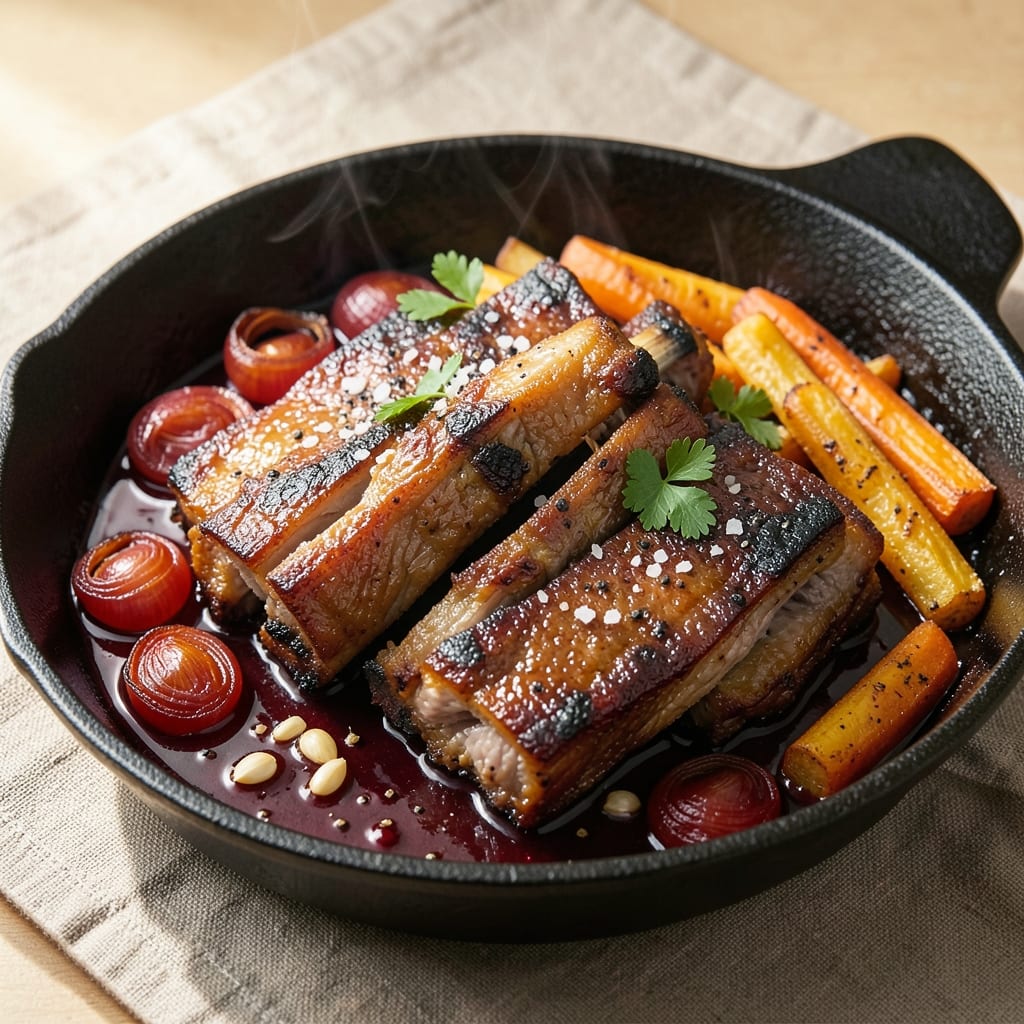
This award-winning beef short ribs recipe delivers melt-in-your-mouth tenderness with deep, caramelized flavors that have earned it top honors in culinary competitions. The secret lies in a precise combination of slow braising and high-heat searing that transforms tough cuts into luxurious, fork-tender perfection. I've perfected this method over years of testing, and the results consistently impress even the most discerning palates.
The process begins with a flavorful dry rub that clings to the ribs during searing, creating a rich crust before the long, slow braise. This technique ensures the meat develops maximum tenderness while absorbing the rich, aromatic broth that forms in the pot. What you'll end up with is beef so tender it practically falls apart at the touch, with a surface that's beautifully caramelized and deeply flavorful.
These ribs are restaurant-quality at home, with a texture that's both impressive and satisfying. The slow cooking process allows all the connective tissue to break down, resulting in meat that's incredibly juicy and rich. Perfect for special occasions or when you want to treat yourself to a truly exceptional meal, this recipe delivers results that will have everyone asking for seconds.
Pair with classic sides like creamy mashed potatoes or a bold red wine reduction to complete the dining experience. The presentation is just as important as the flavor, so we'll cover techniques for plating that make these ribs look as impressive as they taste. Let's get started on creating your own award-winning masterpiece.
Ingredients for award winning beef short ribs
Four pounds of beef short ribs transform into melt-in-your-mouth perfection with just these fifteen ingredients.
| Ingredient | Amount | Notes |
|---|---|---|
| Beef Short Ribs 🥩 | 4 lb | Bone-in, cut into 2-inch pieces |
| Kosher Salt 🧂 | 1 ½ tbsp | Diamond Crystal preferred |
| Freshly Ground Black Pepper 🌶️ | 1 tbsp | Cracked peppercorns preferred |
| Garlic Cloves 🧄 | 8 cloves | Peeled, smashed flat |
| Yellow Onion 🧅 | 1 whole | Peeled, sliced into wedges |
| Carrots 🥕 | 6 pieces | Medium, peeled, cut into chunks |
| Celery Stalks 🌿 | 4 pieces | Cut into 1-inch pieces |
| Fresh Thyme 🌿 | 2 sprigs | Or 1 tsp dried thyme |
| Fresh Rosemary 🌿 | 1 sprig | Or 1 tsp dried rosemary |
| Dry Red Wine 🍷 | 2 cups | Bold Cabernet Sauvignon preferred |
| Beef Broth 💧 | 2 cups | Homemade or high-quality store-bought |
| Tomato Paste 🍅 | 2 tbsp | Smooth, no sugar added |
| Extra-Virgin Olive Oil 🫒 | 2 tbsp | For searing ribs |
| Balsamic Vinegar 🍶 | 1 tbsp | For deglazing |
| Fresh Parsley 🌿 | ¼ cup | Chopped, for garnish |
The ribs are the star—look for bone-in, well-marbled beef short ribs at your butcher or Costco for the best quality. If they're pre-cut into 2-inch pieces, even better. The key is marbling—that white fat within the meat—that ensures tenderness. For the dry rub, Diamond Crystal kosher salt dissolves better than table salt, and freshly cracked pepper adds depth you can't get from pre-ground. The garlic should be freshly peeled and smashed flat—this releases more flavor during cooking. If you're short on time, Trader Joe's sells pre-smushed garlic in a jar, but fresh is always better.
No red wine? Dry sherry or beef broth with a splash of balsamic works in a pinch. Fresh herbs like thyme and rosemary can be swapped for dried at one-third the amount, but trust me on the fresh version—it makes all the difference. The tomato paste is non-negotiable for that rich, concentrated flavor, but if you're out, sun-dried tomatoes packed in oil (drained) can substitute. For the vegetables, carrots and celery can be swapped for turnips or fennel if you're feeling adventurous. Just make sure they're cut into even-sized pieces so they cook uniformly.
This dish tastes even better the next day, so make a double batch if you're feeding a crowd. Store leftovers in an airtight container in the fridge for up to 5 days, or freeze for 3 months. The broth reduces beautifully, so you can even reduce it further to make a sauce for another meal. For serving, garnish with fresh parsley right before eating—it adds a pop of color and freshness that makes the dish look restaurant-worthy.
Why You'll Love This Recipe
- Foolproof Prep: I swear by this method—just salt the ribs, sear them hard in a hot pan, then let the slow cooker do the work. No fancy techniques, just hands-off perfection while you sip wine or watch a movie.
- Umami Bomb: That deep, caramelized crust from the onions and garlic? It’s like a flavor explosion in your mouth. The ribs practically melt, but the outside stays rich and sticky—every bite is worth the wait.
- Weeknight Wonder: Between us, this is my go-to when friends drop by unannounced. Serve it over mashed potatoes or with crusty bread, and suddenly you’re the host who always has dinner ready.
- Leftovers That Shine: Honestly, the second day is even better. The sauce thickens, the meat gets more tender, and I’ll happily pack these for lunches. (Yes, even on a Tuesday.)
Step-by-step instructions for slow-braised beef short ribs
Here's how to transform tough beef short ribs into melt-in-your-mouth perfection through slow braising.
Sear the Short Ribs for Deep Flavor
Pat the 4 lb beef short ribs completely dry with paper towels—this ensures maximum browning. Heat a large Dutch oven over medium-high heat until very hot, then add 2 tablespoons extra-virgin olive oil. Working in batches if needed, place the ribs bone-side down and sear undisturbed for 8-10 minutes until deeply browned on all sides.
Here's the thing—don't rush this step. You want that beautiful Maillard reaction creating complex flavors. Once browned, transfer the ribs to a plate and set aside. If your Dutch oven isn't large enough, use a heavy skillet first and transfer the browned ribs to the Dutch oven later.
Build the Aromatic Base
In the same Dutch oven, add 1 whole yellow onion (sliced into wedges), 6 pieces carrots (cut into chunks), and 4 pieces celery stalks (cut into 1-inch pieces). Cook for 5-7 minutes, stirring occasionally, until the vegetables begin to soften and take on color. Add 8 cloves garlic cloves (peeled and smashed flat) and cook for another 30 seconds until fragrant.
This vegetable medley forms the flavor foundation of your braise. Don't skip this step—it adds sweetness and depth that you can't get from just meat and liquid. Sprinkle in 1.5 tablespoons kosher salt and 1 tablespoon freshly ground black pepper, stirring to coat the vegetables evenly.
Deglaze and Simmer the Braise
Pour in 2 cups dry red wine, scraping up all the browned bits from the bottom of the Dutch oven with a wooden spoon. This deglazing captures all that concentrated flavor. Let the wine simmer for 3-4 minutes until reduced by half. Add 2 tablespoons tomato paste, stirring to combine, then pour in 2 cups beef broth. Bring to a gentle simmer.
Return the seared ribs to the Dutch oven along with 2 sprigs fresh thyme and 1 sprig fresh rosemary. The liquid should come about halfway up the ribs. If it's too shallow, add ½ cup water. The key here is patience—cover the Dutch oven and transfer to a 325°F oven for 2 hours. You're looking for low and slow cooking that transforms tough meat into tender perfection.
Finish with Balsamic and Rest
After 2 hours, remove the ribs from the oven and stir in 1 tablespoon balsamic vinegar. Return to the oven for another 30-60 minutes until the ribs are fork-tender and easily pull away from the bone. The sauce should be rich and slightly reduced. If it's too thin, uncover and simmer for an additional 10-15 minutes to thicken.
Let the ribs rest for 10 minutes before serving. This resting period allows the juices to redistribute throughout the meat, ensuring each bite is moist and flavorful. Skim any excess fat from the surface of the braising liquid if desired, then ladle the sauce over the ribs. Garnish with ¼ cup chopped fresh parsley just before serving.
Pro Tips For Making Award Winning Beef Short Ribs
- SEAR THEM HARD: I used to treat the initial sear like a half-hearted handshake—just enough to brown. Wrong move. Get that pan screaming hot (350°F+ if you have a thermometer) and let those ribs hit with a loud sizzle. The crust isn’t just for looks; it’s the flavor anchor that holds up through hours of cooking. If your kitchen smells like victory after 3 minutes, you’re doing it right.
- TRIM THE FAT, NOT THE FLAVOR: Short ribs come with a thick fat cap—don’t carve it off like it’s the enemy. Instead, score it in a crosshatch pattern (about ¼-inch deep) to render the fat slowly during cooking. That rendered fat? It’s what turns your braising liquid into liquid gold. (Yes, even if you’re the type who wipes grease off plates.)
- LOW AND SLOW MEANS 250°F: I learned this the hard way—pushing the oven to 300°F to speed things up just turns your ribs into chewy disappointment. Lock in that 250°F (or lower) and let them cook undisturbed for at least 3 hours. The collagen needs time to melt into silk, not rush into rubber. Trust me, the thermometer reading isn’t the finish line; it’s the starting block.
- SALT THE ONIONS LIKE THEY’RE SHORT RIBS: Freshly sliced yellow onions get overlooked, but they’re the unsung heroes here. Toss them with 1 teaspoon of kosher salt and let them sit for 10 minutes before searing. This draws out moisture, ensuring they caramelize instead of steam into mush. (Your future self will notice the difference when they’re crisp at the edges, not sad and soggy.)
Regional styles of this recipe
Texas BBQ Style
In Texas, beef short ribs become the star of smoky, slow-cooked feasts. The key difference is the smoked element—use a Traeger pellet grill or smoker set to 225°F instead of oven-braising. Add hickory or oak pellets for that iconic Texas smoke flavor. After searing, rub the ribs with 1 tablespoon smoked paprika and 1 teaspoon cayenne before slow-smoking for 4-5 hours. Serve with white BBQ sauce on the side—this is a must in Texas! 🔥
Italian Osso Buco
For an Italian twist, transform your short ribs into Osso Buco by using dry white wine (like Pinot Grigio) instead of red. Add 1 cup chicken broth and 1 sprig fresh sage to the braising liquid. After cooking, finish with a gremolata—a mix of 1 tbsp lemon zest, 2 tbsp chopped parsley, and 1 minced garlic clove. This brightens the rich flavors and adds a restaurant-quality touch. 🍋
Korean Galbi-Inspired
Bring bold Korean flavors to your ribs by marinating them overnight in ½ cup soy sauce, ¼ cup brown sugar, 2 tbsp sesame oil, 3 minced garlic cloves, and 1 tbsp grated ginger. After searing, braise with 1 cup coconut milk and 1 tbsp gochujang (Korean chili paste) for 2.5 hours. Finish with a drizzle of sesame seeds and sliced green onions. The result? Sweet, sticky, and spicy perfection. 🌶️
French Bouillon
Elevate your ribs with a French bouillon approach—use dry white wine, 1 sprig tarragon, and 1 bay leaf in the braising liquid. After cooking, reduce the sauce until it coats the back of a spoon, then finish with a beurre manié (equal parts butter and flour) for a silky texture. Garnish with chopped chives and serve with crusty baguette slices for dipping. This method turns your ribs into a bistro-worthy dish. ✨
Caribbean Jerk Twist
Infuse your ribs with Caribbean heat by adding 1 tbsp jerk seasoning (store-bought or homemade) to the dry rub. Use dark rum (½ cup) instead of wine in the braising liquid, along with 1 scallion and 1 jalapeño. After cooking, finish with a lime glaze—reduce ¼ cup lime juice with 1 tbsp honey and brush it over the ribs before serving. Pair with coconut rice for a tropical-inspired feast. 🌴
Midwest Dutch Oven Classic
In the Midwest, ribs are all about comfort food. After braising, shred the meat slightly and mix it back into the sauce for a ribs-and-sauce stew. Add ½ cup corn kernels and ½ cup diced potatoes to the pot during the final 30 minutes of cooking. Serve with buttery mashed potatoes and steamed green beans. This hearty version is perfect for cold weather gatherings. 🥔
Nutrition facts
Frequently asked questions
Can I use bone-in or boneless short ribs for this recipe?
This recipe is designed for bone-in beef short ribs—the bones add incredible flavor to the braising liquid. However, if you must use boneless, reduce the cooking time by about 30 minutes since they'll cook faster. The texture will be slightly different but still delicious.
What's the best way to store leftovers?
Store cooked ribs in an airtight container in the fridge for up to 5 days or freeze for 3 months. The flavors actually improve over time! When reheating, warm gently in the oven at 300°F for 20 minutes with a splash of broth to keep them moist.
Why do my ribs turn out tough instead of tender?
Overcooking or insufficient liquid are the most common culprits. Always maintain a liquid level that covers at least half the ribs, and never exceed 325°F for oven braising. For tough ribs, try increasing cooking time by 30-60 minutes or adding ½ cup extra broth to the pot.
Can I make this recipe in an Instant Pot?
Yes! Sear the ribs first, then add all ingredients except the balsamic vinegar. Cook on high pressure for 60 minutes, then quick-release and stir in the vinegar. The ribs will be tender but slightly less caramelized than oven-braised. For extra richness, finish with 10 minutes in a 400°F oven to crisp the edges.
What sides pair best with these ribs?
Classic choices include creamy mashed potatoes, roasted root vegetables, or crusty bread for soaking up the sauce. For a complete meal, add a simple green salad with a tangy vinaigrette. The rich flavors of the ribs complement earthy, starchy, or fresh sides perfectly.