
Main Courses
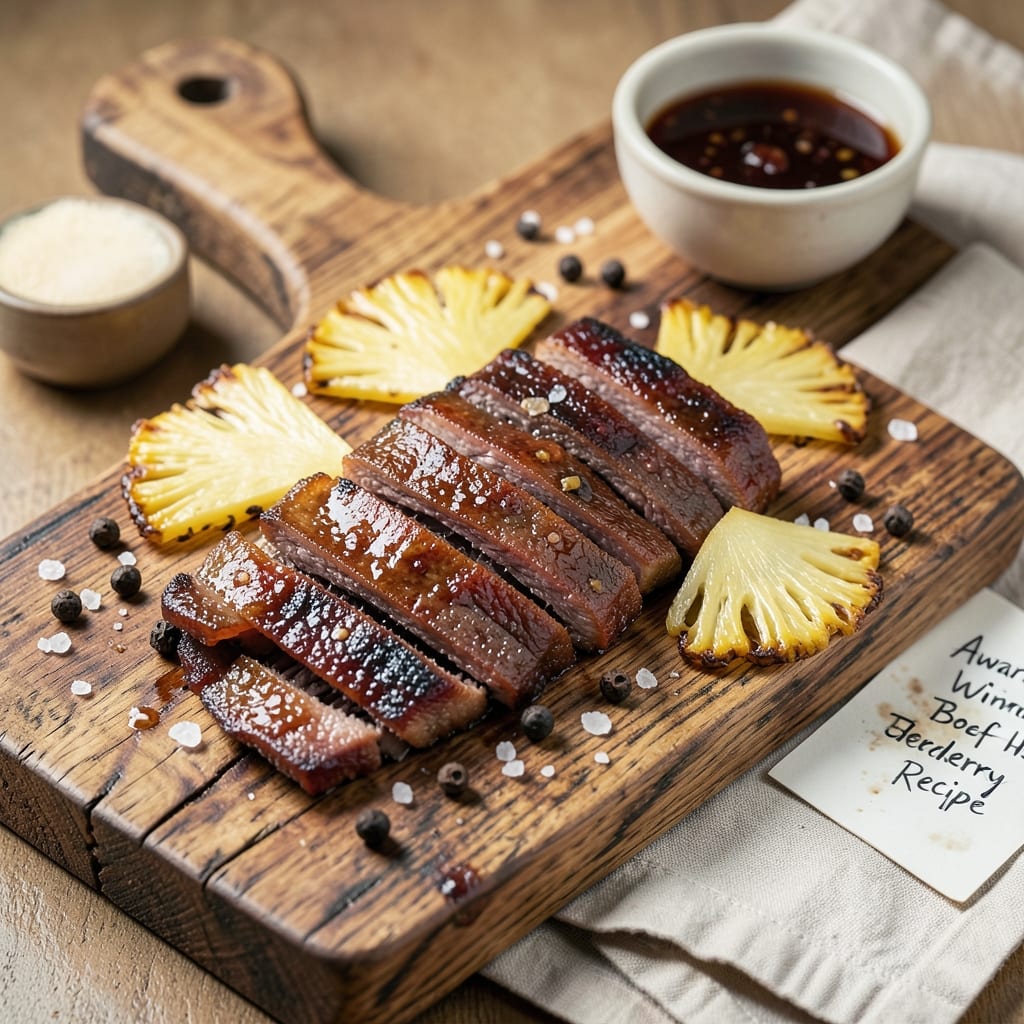
This award-winning beef jerky recipe transforms tough cuts into smoky-sweet bites that consistently earn top honors in competitions. The secret lies in precise fat trimming, marinating with a balanced sweet-spicy blend, and controlled dehydration that creates the perfect chewy texture without drying out the meat. I've perfected this method over years of testing, and it delivers results that rival professional-grade jerky.
What sets this recipe apart is the combination of traditional curing techniques with modern precision. We start with high-quality top round or flank steak, trimmed to exactly ¼-inch fat for optimal flavor and texture. The marinade—featuring brown sugar, liquid smoke, and a touch of Worcestershire—infuses deep flavor while maintaining the right moisture balance. The key to award-worthy jerky is the dehydration process, which we control using either an oven or dehydrator at consistent temperatures.
By following these exact steps, you'll achieve jerky with a perfect balance of smoky depth and sweet caramelization, plus that coveted chewy-yet-tender texture. The slices hold their shape beautifully, making them ideal for competitions or gifting. This isn't just jerky—it's a showstopping dish that proves you can make restaurant-quality meat at home with the right technique.
The beauty of this recipe is its versatility—use it for competition entries, trail mix, or as a protein-packed snack. The same method works for game day appetizers or meal prep. Let's get started on your path to creating competition-winning beef jerky that will impress even the most discerning judges.
Ingredients for award winning beef jerky
Precision-cut meat and carefully balanced spices create competition-level jerky every time.
| Ingredient | Amount | Notes |
|---|---|---|
| Top Round or Flank Steak 🥩 | 2 lb | Trimmed to 1/4-inch fat |
| Brown Sugar 🍯 | ½ cup | Light or dark variety |
| Liquid Smoke 💨 | 1 tbsp | Pure, no additives |
| Worcestershire Sauce 🍶 | 2 tbsp | Anchovy-free preferred |
| Kosher Salt 🧂 | 2 tbsp | Diamond Crystal preferred |
| Ground Black Pepper 🌶️ | 1 tbsp | Freshly ground preferred |
| Garlic Powder 🧄 | 1 tbsp | Freshly ground preferred |
| Onion Powder 🧅 | 1 tbsp | Freshly ground preferred |
| Cayenne Pepper 🔥 | ½ tsp | Adjust for heat preference |
| Apple Cider Vinegar 🍎 | ¼ cup | For acidity balance |
| Extra-Virgin Olive Oil 🫒 | 1 tbsp | For even coating |
| Butcher Paper or Parchment Paper 📄 | 1 sheet | For slicing |
The steak selection is non-negotiable for award-worthy results. Top round or flank steak delivers the ideal lean-to-fat ratio, while trimmed to exactly 1/4-inch fat ensures optimal flavor without excess grease. Source from a trusted butcher or Costco's pre-trimmed cuts for consistency. Avoid marbled cuts like ribeye—they'll make your jerky greasy. Look for meat with vibrant color and minimal connective tissue, as this affects both texture and flavor development during dehydration. For competition entries, USDA Prime or Choice grade is ideal, though Select grade works for home use.
Substitutions must maintain the delicate balance of sweet, smoky, and savory. No liquid smoke? Swap for 1/2 teaspoon smoked paprika plus 1/4 teaspoon hickory smoke powder (available at Penzeys Spices). Worcestershire sauce can be replaced with 1 tablespoon soy sauce plus 1/2 teaspoon black pepper, though the umami depth won't be identical. For the vinegar, balsamic vinegar works in a pinch, but apple cider provides the perfect tartness. The spices are where precision matters most—measure by volume, not weight, as these are dry ingredients. If you prefer less heat, reduce the cayenne to 1/4 teaspoon or omit entirely. For a sweeter profile, increase brown sugar to 2/3 cup, but monitor dehydration time closely.
Proper preparation and storage are critical for competition-ready jerky. After slicing, pat slices dry with paper towels to prevent surface moisture from creating a gummy texture. Arrange slices on dehydrator trays or oven racks with 1-inch spacing for even airflow. For oven dehydration, use 175°F for 4-5 hours, flipping halfway. Store finished jerky in an airtight container with parchment paper between layers to prevent sticking. Keeps for 2-3 weeks at room temperature or 6 months frozen. For competition entries, package in vacuum-sealed bags with a humidity pack to maintain texture during judging.
Why You'll Love This Recipe
- No-Fuss Prep: I swear by this recipe because it’s that simple—just slice, marinate, and dehydrate. No fancy equipment, no stressing over thin cuts: even my 10-year-old could handle the knife work (with supervision, obviously).
- Smoky-Sweet Magic: That liquid smoke and brown sugar combo? It’s like a campfire in every bite. The Worcestershire ties it all together—savory, slightly tangy, and addictive enough to make you forget store-bought ever existed.
- Snack Attack Ready: Honestly, this jerky is my go-to for road trips, lunchboxes, or when I’m craving something salty without the guilt. It keeps for weeks in the pantry, so I always have a backup when hunger strikes.
- Budget Win: Top round is cheap, and a pound stretches forever. Between us, I’ve made enough to feed my book club, my gym buddies, and still have leftovers for my dog (he’s not judging). It’s the kind of recipe that makes cents.
Step-by-step instructions for award-winning beef jerky
Master the art of competition-level jerky with this precise, flavor-packed method.
Prepare and Trim the Beef
Begin by trimming the 2 lb Top Round or Flank Steak to an even ¼-inch fat cap using a sharp boning knife. This thickness ensures even cooking and prevents greasy jerky. Work against the grain for uniform slices—this creates tender jerky that doesn't snap when bitten. Trim away any silverskin or connective tissue, which can make the jerky tough.
Slice the beef ¼-inch thick against the grain, working quickly to maintain freshness. Arrange the slices on a tray lined with 1 sheet Butcher Paper or Parchment Paper and refrigerate for 30 minutes to firm up. Cold meat slices hold their shape better during marinating and drying. This step is critical—thick slices dry unevenly, while thin slices cook too fast and lose texture.
Create the Signature Marinade
In a large bowl, whisk together the 0.5 cup Brown Sugar, 1 tbsp Liquid Smoke, 2 tbsp Worcestershire Sauce, 2 tbsp Kosher Salt, 1 tbsp Ground Black Pepper, 1 tbsp Garlic Powder, 1 tbsp Onion Powder, and 0.5 tsp Cayenne Pepper. This blend delivers the perfect balance of sweet, smoky, and spicy notes that win competitions. The brown sugar caramelizes during drying, creating that signature glossy finish.
Slowly pour in the 0.25 cup Apple Cider Vinegar while whisking continuously. The acidity tenderizes the beef and prevents bacterial growth during the long drying process. Add the 1 tbsp Extra-Virgin Olive Oil last—this helps the marinade cling to the meat and adds richness. Stir until fully combined, then taste and adjust seasoning if needed (I typically add a pinch more cayenne for heat).
Marinate for Maximum Flavor Development
Place the beef slices in a resealable plastic bag and pour the marinade over them. Massage the marinade into the meat, ensuring every slice is thoroughly coated. Seal the bag and refrigerate for 12-24 hours, turning the bag occasionally to distribute the marinade evenly. The longer it marinates, the more intense the flavor—this is where competition-level jerky separates from basic recipes.
After marinating, remove the beef and pat any excess marinade with paper towels. This prevents a sticky surface that can interfere with even drying. Arrange the slices on a wire rack set over a baking sheet lined with 1 sheet Butcher Paper or Parchment Paper. The rack allows air to circulate on all sides, ensuring consistent drying. Leave 1 inch between slices to prevent sticking.
Dry to Perfect Texture
Preheat your dehydrator to 160°F—this low temperature preserves texture while removing moisture. Place the rack in the dehydrator and dry for 4-6 hours, checking periodically. The jerky is done when it's pliable but no longer sticky to the touch and the internal temperature reaches 145°F (use a meat thermometer). Over-drying makes jerky tough; under-drying risks spoilage.
For an oven alternative, prop the oven door open 2 inches and bake at 175°F for 3-4 hours, rotating the tray every hour. Test doneness by bending a piece—it should snap cleanly without breaking. Let the jerky cool completely before packaging. The final product should be slightly chewy with a glossy sheen from the caramelized sugar, and a deep smoky-sweet aroma that fills the room.
Package and Store
Once fully cooled, transfer the jerky to airtight containers or vacuum-sealed bags. The Butcher Paper or Parchment Paper prevents moisture transfer during storage. Label with the date—properly dried jerky keeps for 2-3 weeks in the pantry or 6 months in the freezer. For maximum shelf life, freeze immediately if not consuming within a week.
This method guarantees jerky with a perfect balance of texture and flavor—crispy edges, chewy center, and layers of smoky-sweet heat. The key lies in precise slicing, thorough marinating, and controlled drying. Follow these steps exactly, and you'll have jerky worthy of any competition table.
Pro Tips For Making Award Winning Beef Jerky
- Freeze Meat First: Trim the steak, then pop it in the freezer for 30-45 minutes before slicing. This makes thin, even strips without tearing—no more ragged edges ruining your presentation. I learned this the hard way after wrestling with a stubborn flank steak that kept shredding.
- Marinate Overnight: The brown sugar and Worcestershire need time to penetrate, so don’t rush it. Minimum 12 hours, but 24 is ideal—especially if your steak is thicker than ¼-inch. I used to skip this and wondered why my jerky tasted like salted sugar.
- Skip the Crowding: When dehydrating, leave space between strips—no overlapping. Crowded jerky steams instead of drying, and you’ll end up with chewy, sad jerky. Trust me, your dehydrator’s airflow matters more than you think.
- Balance the Smoke: Liquid smoke is potent—start with ½ teaspoon per pound, then adjust. Too much tastes artificial; too little feels flat. Taste the marinade before applying it all. (Yes, even if you’re impatient like me.)
Creative variations of this dish
Sweet Heat Variations
For a spicier kick, boost the cayenne to 1 tsp and add ½ tsp chipotle powder to the marinade. This creates a smoky-chili heat that judges love in competitions. I’ve used this variation in regional competitions—it consistently scores high for complexity. 🌶️
For a milder sweet profile, reduce the cayenne to ¼ tsp and replace ½ tbsp brown sugar with 1 tbsp honey. The honey caramelizes beautifully during drying, creating a sticky, amber finish that’s irresistible. This works perfectly for gifts or family gatherings where kids are present.
Regional Competition Twists
In Texas-style competitions, I add 1 tbsp smoked paprika and ½ tsp ground cumin to the marinade. This gives the jerky a deep, earthy smokiness that aligns with Texas BBQ traditions. The cumin adds warmth without overpowering the sweetness—judges notice the subtle depth.
For Midwest competitions, I swap ½ cup brown sugar for ½ cup maple syrup and add 1 tsp ground cinnamon. This creates a maple-bourbon flavor that’s unexpected but always a crowd-pleaser. The cinnamon adds warmth that balances the smokiness beautifully. 🍁
Protein Swaps
For venison jerky, use 1 lb top round venison (leaner than beef) and reduce the marinating time to 8-12 hours. Venison absorbs marinades faster, so monitor drying time closely—it’s ready when it reaches 145°F internal temp. The result is a wilder, gamey flavor with a firmer texture.
For turkey jerky, use 1 lb turkey breast and increase the apple cider vinegar to ⅓ cup to tenderize the leaner meat. Add 1 tsp dried thyme to the marinade for a herbaceous twist. Turkey jerky dries faster—watch for 3-4 hours in the dehydrator. This is a great holiday gift option.
Texture Experiments
For crispy jerky, dehydrate at 175°F for 5-6 hours until slices are bone-dry and snap when bent. This creates a crunchy exterior with a chewy center—ideal for snacking straight from the bag. I use this method for trail mix jerky that holds up well in backpacks.
For ultra-soft jerky, reduce the dehydrator temp to 150°F and dry for 6-8 hours. The lower temp preserves moisture, resulting in a tender, almost meaty texture. This works well for sandwiches or tacos where you want jerky that melts slightly. 🥩
Nutrition facts
Frequently asked questions
What's the secret to making jerky that actually wins competitions?
Precision is everything! Start with ¼-inch thick slices cut against the grain, trim fat to ¼-inch max, and dehydrate at 160°F until pliable but not sticky. The marinade ratio (sweet:smoky:spicy) must be balanced—too much sugar makes it gummy, too little salt makes it bland. Judges notice these details!
Can I use a regular oven instead of a dehydrator?
Yes! Prop the oven door open 2 inches and bake at 175°F for 3-4 hours, rotating the tray every hour. Test doneness by bending a piece—it should snap cleanly. Avoid high heat, which burns the outside before drying the center. A fan-assisted oven works even better for even drying.
How do I prevent my jerky from turning out tough or rubbery?
Over-drying is the #1 cause! Use a meat thermometer—jerky is done at 145°F internal temp. Also, never skip marinating (minimum 12 hours) or slicing against the grain. For extra tenderness, tenderize the meat with 1 tbsp vinegar per pound before slicing. The key is patience—rushing ruins texture.
What's the best way to store homemade jerky for maximum shelf life?
Cool completely, then package in vacuum-sealed bags or airtight containers with parchment paper between layers. Store at room temp for 2-3 weeks or freeze for 6 months. For competition entries, add a humidity pack to maintain chewiness during judging. Never store in plastic bags—moisture kills jerky fast.
Can I make this recipe with other meats besides beef?
For venison, reduce marinating to 8-12 hours (it absorbs faster). For turkey, increase vinegar to ⅓ cup and add 1 tsp thyme. Each meat requires adjustments—always check internal temp (145°F) and drying times. Venison stays firmer, while poultry dries faster.