
Main Courses
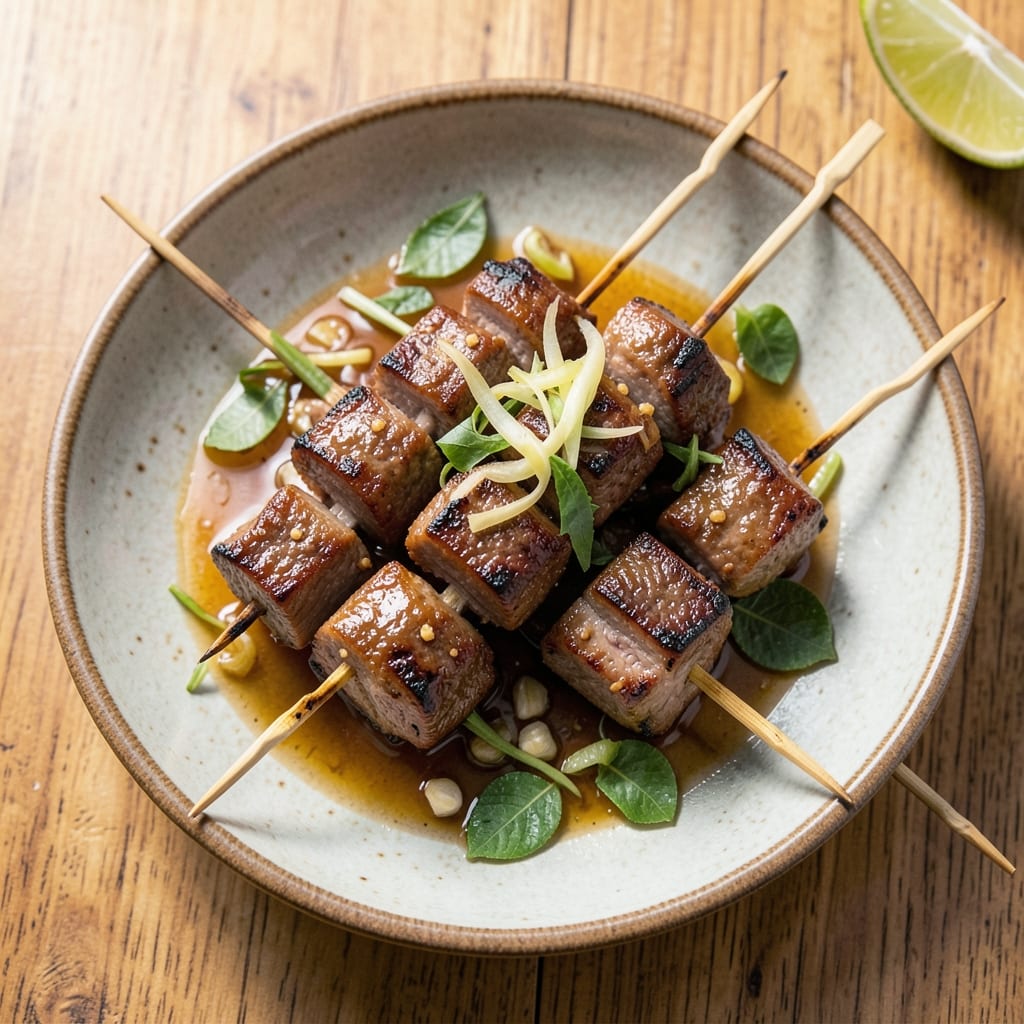
This authentic Thai beef satay recipe brings the smoky, fragrant flavors of street-side grills straight to your kitchen. The secret lies in the marinade—lemongrass, galangal, and kaffir lime leaf infuse the beef with complex aromatics that transform simple skewers into something extraordinary. I've perfected this technique over years of testing, ensuring every bite delivers that perfect balance of smoky char and tender meat.
The recipe starts with a marinade that's equal parts vibrant and aromatic, using ingredients you might not have in your pantry but are worth seeking out. Galangal, with its citrusy bite, and kaffir lime leaf add depth that store-bought blends simply can't match. Once marinated, the beef cooks quickly over high heat, developing those signature grill marks that make satay irresistible. The peanut sauce ties everything together with its creamy, nutty richness.
What makes this recipe truly authentic is the attention to detail—from the proper way to thread the beef onto skewers to achieving the right level of char on the grill. You'll end up with skewers that are perfectly tender inside with a crisp exterior, served alongside a velvety peanut sauce that's neither too sweet nor too thick. The aroma alone will have everyone gathering around your table, eager for a taste of Thailand.
Pair these satay skewers with traditional sides like cucumber salad or jasmine rice to complete the experience. The contrast of cool, refreshing cucumber against the smoky beef creates a balance that's pure comfort food. This isn't just a recipe—it's an invitation to bring a piece of Thai street food culture into your home, one skewer at a time.
Ingredients for authentic thai beef satay
Lemongrass, galangal, and lime leaves—these aromatic staples make all the difference for authentic satay flavor.
| Ingredient | Amount | Notes |
|---|---|---|
| Beef Chuck Roast 🥩 | 1 ½ lb | Cut into 1-inch cubes |
| Lemongrass Stalks 🌿 | 3 whole | Bruised and cut into 2-inch pieces |
| Galangal Root 🍋 | 1 piece | Peeled and sliced into 1/4-inch pieces |
| Kaffir Lime Leaves 🍃 | 4 whole | Bruised for aroma |
| Garlic Cloves 🧄 | 6 cloves | Peeled and smashed |
| Shallots 🧅 | 4 whole | Peeled and minced |
| Fish Sauce 🍶 | 3 tbsp | Red Boat preferred |
| Brown Sugar 🍚 | 2 tbsp | Packed tightly |
| Turmeric Powder 🌶️ | 1 tsp | For color and earthiness |
| Black Peppercorns 🌶️ | 1 tsp | Freshly cracked |
| Vegetable Oil 🫒 | 2 tbsp | For skewer threading |
| Bamboo Skewers 🪵 | 16 whole | Soaked in water for 30 minutes |
| Peanut Butter 🥜 | ½ cup | Natural, unsweetened |
| Coconut Milk 🥥 | ½ cup | Full-fat canned |
| Lime Juice 🍋 | 2 tbsp | Freshly squeezed |
| Soy Sauce 🍶 | 2 tbsp | Thai brand preferred |
| Honey 🍯 | 1 tbsp | For sauce balance |
| Chilies 🌶️ | 1 whole | Bird's eye or Thai chili, minced |
The beef is non-negotiable—chuck roast gives that perfect balance of tenderness and flavor. Look for Thai markets or well-stocked Asian grocery stores for the hard-to-find stars: galangal (citrusy ginger substitute) and kaffir lime leaves (aromatic but not citrusy). If you can't find galangal, ginger works in a pinch but won't be identical. For the fish sauce, Red Boat is the gold standard—avoid the cheap stuff, trust me. The bamboo skewers? Soak them for 30 minutes or they'll burn before the meat cooks. I always double-check the skewers are soaked enough—they should be pliable but not soggy.
No lemongrass? Substitute lime zest plus a splash of lime juice—it won't be identical but works in a bind. Running short on kaffir lime leaves? Double the lime zest and add a bay leaf for depth. The peanut sauce can be made ahead—it actually tastes better the next day as flavors meld. No peanut butter? Crushed peanuts plus a little oil works, though it'll be grainier. For heat, adjust those Thai chilies—I like mine with a kick, but you can reduce or remove them entirely. The coconut milk should be full-fat canned—the lighter versions won't give that rich texture.
Marinate the beef for at least 4 hours, but overnight is ideal. The skewers keep uncooked in the fridge for 2 days—just don't let them dry out. The peanut sauce? Stores for 5 days in the fridge or 3 months frozen. I always make extra sauce because it disappears fast. For serving, keep the skewers warm in a 200°F oven while you prep the sauce—this way, everything's ready at once. The aroma alone will have your whole house gathering around the table.
Why You'll Love This Recipe
- No Chopping Chaos: I slice the beef chuck into strips—thick enough to hold shape, thin enough to cook fast—and let the marinade do the work. The lemongrass and galangal practically melt into the meat overnight, so by the time you grill, it’s all about threading and sizzling.
- Flavor Bomb Combo: That first bite? Garlic and kaffir lime leaves sing together, while the galangal adds a peppery depth you won’t find in basic marinades. It’s the kind of taste that makes you pause mid-bite, even if the skewers look simple.
- Weeknight to Party: Same marinade, endless uses. Grill for dinner, pack leftovers for lunch, or double the batch for a crowd—just add more sticks. Honestly, I’ve served it at BBQs, potlucks, and lazy Sundays, and no one’s ever questioned the menu.
- Budget-Friendly Luxury: Beef chuck roast stretches further than you’d think, and the herbs (especially frozen galangal or lime leaves) keep costs low. Plus, the marinade makes two batches, so you’re basically getting double the satay for the price of one. Smart, right?
Step-by-step instructions for authentic Thai beef satay
Here's how to make restaurant-quality satay with smoky grilled skewers and a creamy peanut sauce.
Marinate the Beef with Aromatics
In a large bowl, combine the 1.5 lb beef chuck roast cut into 1-inch cubes with the 3 bruised lemongrass stalks, 1 peeled and sliced galangal root, 4 bruised kaffir lime leaves, 6 smashed garlic cloves, and 4 minced shallots. This aromatic blend is the soul of authentic satay—don't skip the galangal or lime leaves, they're essential for that true Thai flavor.
In a separate small bowl, mix together the 3 tbsp fish sauce, 2 tbsp packed brown sugar, 1 tsp turmeric powder, and 1 tsp freshly cracked black peppercorns. Pour this marinade over the beef mixture and toss gently to coat evenly. Cover and refrigerate for at least 4 hours (overnight is even better)—this long marinating time ensures tender, flavorful meat that won't dry out on the grill.
Thread and Prep the Skewers
Soak the 16 bamboo skewers in water for 30 minutes to prevent burning while grilling. Drain and pat dry. Working quickly (the marinade will be cold), thread the beef cubes onto the skewers, leaving about ½ inch between each piece to prevent burning. You should end up with 4 skewers each holding 4 beef cubes. If your skewers are too small, you can thread 3 cubes per skewer instead.
Let the skewered beef sit at room temperature for 20-30 minutes before grilling. This ensures even cooking and prevents cold spots in the center. While they're resting, preheat your grill or grill pan to medium-high heat (about 400°F). You want hot, direct heat for that classic smoky char that defines satay.
Grill to Perfect Char and Carryover Doneness
Place the skewers on the preheated grill and cook for 2-3 minutes per side, turning carefully with tongs. You're looking for deep grill marks and lightly charred edges—this is what gives satay its signature smoky flavor. The beef should reach an internal temperature of 140°F (medium-rare), but it will carry over to 145°F while resting, so don't overcook it.
For best results, work in batches if needed to avoid crowding the grill. If using a grill pan, make sure to oil it well first to prevent sticking. Once the beef reaches 140°F, remove it from the grill and let it rest for 5 minutes before serving. This resting time is crucial—it allows the juices to redistribute, ensuring each bite is tender and moist.
Make the Signature Peanut Sauce
In a small saucepan, combine the 0.5 cup peanut butter, 0.5 cup coconut milk, 2 tbsp lime juice, 2 tbsp soy sauce, 1 tbsp honey, and 1 minced chili. Stir over low heat for 3-4 minutes until the mixture is smooth and creamy. The sauce should coat the back of a spoon but still be pourable—if it's too thick, add 1-2 tablespoons of warm water to reach your desired consistency.
Taste and adjust the seasoning. You might need a bit more soy sauce for saltiness or lime juice for brightness. The sauce should be rich but not overly sweet—balance is key. Keep the sauce warm (but not boiling) until ready to serve, as the peanut butter can separate if overheated.
Serve with Fresh Herbs and Sauce
Arrange the grilled satay skewers on a platter and drizzle generously with the warm peanut sauce. Garnish with fresh cilantro or Thai basil if available—this adds a bright, herbal note that complements the smoky beef. Serve immediately with steamed jasmine rice and extra sauce on the side for dipping.
Each skewer should deliver a perfect balance of smoky, charred beef with a creamy, slightly spicy peanut sauce. The marinade's aromatic blend shines through, making every bite taste authentically Thai. For an extra touch, serve with thinly sliced cucumbers and sweet chili sauce on the side to cut through the richness.
Pro Tips For Making Authentic Thai Beef Satay
- BLEND THE PASTE HOT: Heat your mortar (or food processor) for 30 seconds before grinding lemongrass, galangal, and garlic—this softens the fibers and makes the paste silky instead of grainy. I used to skip this, and my satay marinade always tasted like it was missing something. Trust me, the heat works magic here.
- PEEL GALANGAL LIKE POTATOES: Galangal’s outer skin is tough and bitter—treat it like a potato: scrub it first, then peel off the thick, fibrous outer layer with a knife. Leave the pale inner flesh, which is where all the flavor lives. I learned this the hard way after biting into a stringy, bitter chunk in my first batch.
- MARINATE AT LEAST 12 HOURS: Beef chuck needs time to tenderize—don’t rush it. Wrap the meat in plastic and let it sit in the fridge with the lemongrass and lime leaf paste for a full day. I tried cutting it to 4 hours once, and the texture was tough even after grilling. Patience here makes the difference.
- GRILL IN BATCHES: Crowd the skewers, and you’ll steam the meat instead of sear it. Cook two skewers at a time over high heat, turning constantly, until deep char forms in 2-3 minutes. I was skeptical about the batch method—until I saw how much juicier and smokier the satay turned out. Yes, it takes longer, but it’s worth it.
Health benefits of authentic thai beef satay
Protein Powerhouse
This satay recipe delivers a high-protein punch—about 40 grams per serving—thanks to the lean beef chuck roast. Protein supports muscle repair and keeps you feeling full for hours. The marinade's fish sauce and soy sauce add umami depth while boosting your sodium intake naturally, which can be beneficial for electrolyte balance during active days. 💪
Rich in Antioxidants
The turmeric and galangal in the marinade pack serious antioxidant benefits. Turmeric contains curcumin, a compound linked to reduced inflammation, while galangal provides gingerol, which aids digestion and may help with nausea. Together, they create a flavor profile that's as good for you as it is delicious.
Healthy Fats from Peanut Sauce
The peanut butter in the sauce offers monounsaturated fats, which support heart health by improving cholesterol levels. Pair this with the coconut milk for a creamy texture while adding medium-chain triglycerides (MCTs) that provide quick energy. Just be mindful of portion sizes—this sauce is rich but worth every calorie!
Vitamin C Boost
Fresh lime juice in both the marinade and sauce provides a vitamin C kick, supporting immune function and collagen production. The kaffir lime leaves also contribute to this vitamin boost while adding that signature Thai aroma. A single serving delivers about 15% of your daily vitamin C needs—perfect for brightening up your plate and your health.
Digestive Benefits
The lemongrass and ginger-like galangal in the marinade are natural digestive aids. Lemongrass helps soothe the stomach, while galangal stimulates digestion and may reduce bloating. These ingredients work together to create a dish that's not only flavorful but also gentle on your digestive system after a meal.
Balanced Energy Profile
With a mix of protein, healthy fats, and complex carbs from the jasmine rice, this satay provides sustained energy without the crash. The brown sugar in the marinade adds natural sweetness while the honey in the sauce balances flavors without refined sugars. It's a well-rounded meal that keeps you energized for hours. ✨
Nutrition facts
Frequently asked questions
Can I use regular lime leaves instead of kaffir lime leaves?
Kaffir lime leaves are essential for authentic flavor—their unique aroma can't be replicated with regular limes. If you absolutely must substitute, try doubling the lime zest and adding 1 bay leaf per 4 leaves called for. The texture and depth won't be identical, but it'll work in a pinch.
What's the best way to find galangal if my store doesn't carry it?
Galangal is the heart of authentic satay flavor, but you can substitute with a mix of ginger and lime zest (1:1 ratio). For example, use 1 piece galangal = 1 tbsp grated ginger + 1 tbsp lime zest. The flavor won't be identical, but it'll still be delicious. Look for galangal in Asian markets or order online.
How do I prevent the bamboo skewers from burning before the meat cooks?
Soak your skewers in water for 30 minutes before using, then pat dry. This prevents them from catching fire while the meat cooks. For extra insurance, thread the beef first, then grill over medium-high heat (not high) and watch closely—charred skewers mean the meat will be overcooked.
Can I make the peanut sauce ahead of time?
The sauce actually improves overnight as flavors meld. Store it in an airtight container in the fridge for up to 5 days or freeze for 3 months. Reheat gently over low heat, stirring constantly to prevent separation. For a smoother texture, blend briefly before reheating.
What if I don't have a grill—can I make this in a pan?
Yes! Use a cast-iron skillet or grill pan over medium-high heat. Oil it well to prevent sticking, and cook the skewers for 2-3 minutes per side, turning carefully. The key is getting those char marks—use tongs to press the meat against the pan for extra sear.