
Main Courses
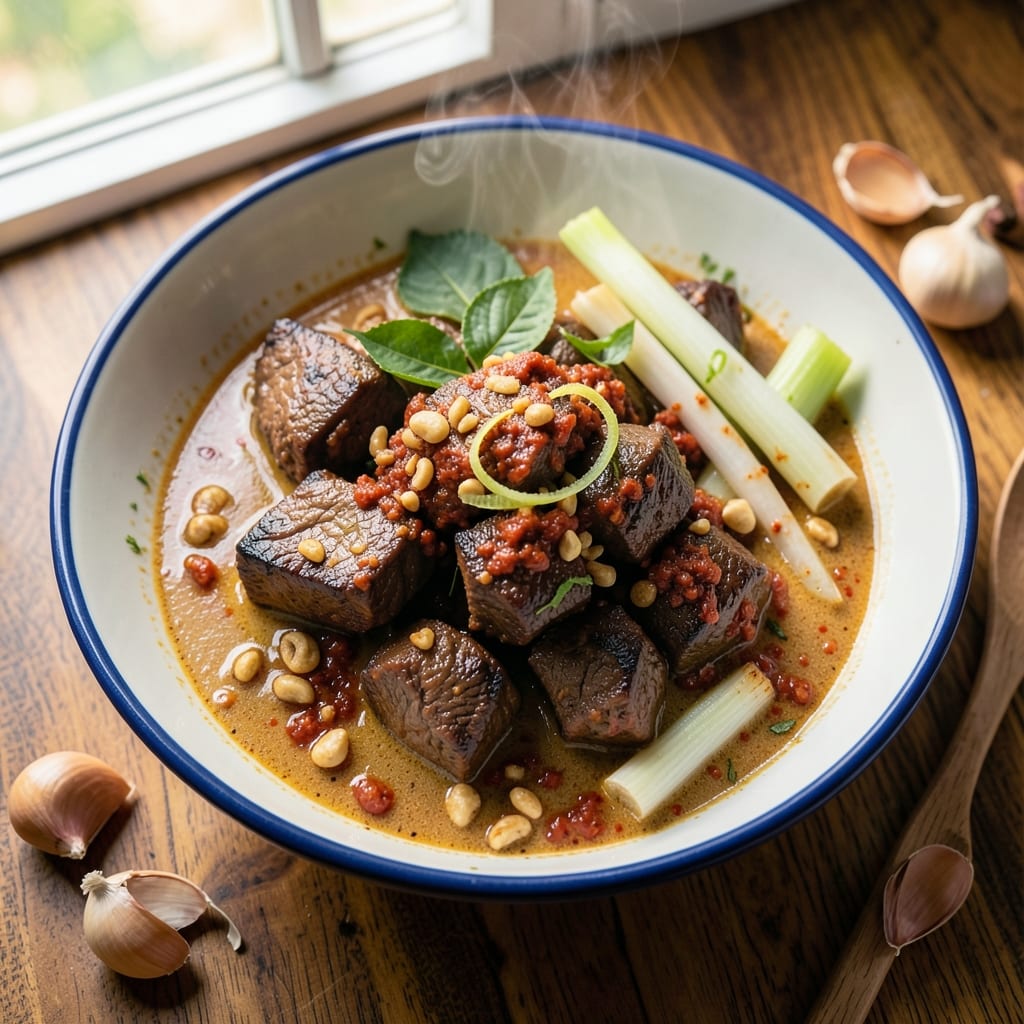
This authentic Thai beef curry recipe brings the aromatic soul of street-side Thai kitchens into your home, where fragrant galangal and kaffir lime leaves create the signature balance of heat, sourness, and umami. The secret lies in the curry paste—ground from fresh ingredients like lemongrass, garlic, and chili—and the slow simmer that develops deep, complex flavors. I've perfected this version after years of testing, ensuring every bite delivers that perfect harmony of textures and tastes.
The dish starts with a vibrant red curry paste that's toasted until fragrant, releasing its full potential before being simmered with rich coconut milk and tender beef. Galangal, often mistaken for ginger, adds a piney, citrusy depth that's essential to authentic Thai curry. Kaffir lime leaves contribute a floral aroma, while Thai eggplant and bamboo shoots add texture and subtle sweetness. The result is a dish that's rich yet balanced, creamy yet not heavy.
What you'll achieve is a restaurant-quality curry with tender beef that falls apart easily, a velvety sauce that clings to every bite, and a fragrant aroma that fills your kitchen. The key is patience—letting the flavors meld over 45 minutes of simmering transforms simple ingredients into something extraordinary. Serve it over steamed jasmine rice, garnished with fresh cilantro and lime wedges, for the full Thai dining experience.
This recipe delivers authenticity without compromise, using traditional techniques and ingredients that create that signature Thai flavor profile. The beauty of this dish is its versatility—adjust the heat level to your preference, or add your favorite vegetables like bell peppers or snap peas. Once you taste the difference between this and store-bought versions, you'll never go back to the jarred curry paste again.
Ingredients for authentic thai beef curry
These aromatic ingredients transform simple beef into a restaurant-quality Thai curry.
| Ingredient | Amount | Notes |
|---|---|---|
| Beef Chuck Roast 🥩 | 1 ½ lb | Cut into 1-inch cubes |
| Galangal (Fresh) 🌿 | ½ cup | Peeled and sliced thin (about 3 inches) |
| Kaffir Lime Leaves 🍋 | 4 whole | Torn into quarters |
| Red Curry Paste 🌶️ | ¼ cup | Homemade or high-quality store-bought |
| Lemongrass 🌿 | 1 whole | White parts only, cut into 2-inch pieces |
| Garlic Cloves 🧄 | 6 cloves | Minced |
| Thai Eggplant 🍆 | 1 whole | Cut into 1-inch chunks |
| Bamboo Shoots 🌱 | 1 cup | Canned, drained and rinsed |
| Coconut Milk 🥥 | 1 can (13.5 oz) | Full-fat for creaminess |
| Fish Sauce 🍶 | 2 tbsp | Red Boat preferred |
| Palm Sugar 🍯 | 2 tbsp | Or substitute brown sugar |
| Fresh Thai Chilies 🌶️ | 2 whole | Seeds removed for less heat |
| Cilantro 🌿 | ¼ cup | Chopped, for garnish |
| Lime 🍋 | 1 whole | Juiced, for finishing |
| Jasmine Rice 🍚 | 1 ½ cups | Uncooked, for serving |
Galangal is the heart of this dish—it's that piney, citrusy root that makes authentic Thai curry sing. Asian markets usually carry it fresh, but if you can't find it, ginger plus a dash of lemon zest gets you close. Look for firm, smooth roots with no mold. The kaffir lime leaves? Thai markets or specialty stores stock them fresh or frozen. Don't use regular lime leaves—they're completely different. For the curry paste, Maesri or Thai Kitchen brands are solid if you're not making your own. The beef should be chuck roast—it stays tender while absorbing all those amazing flavors.
No galangal? Ginger plus 1 tsp lemon zest works in a pinch (though it won't be identical). Fresh lemongrass is ideal, but substitute 1 tbsp lemongrass paste if that's what you've got. The Thai eggplant can be swapped for regular eggplant, but it's sweeter and holds up better. Bamboo shoots? Canned works fine—just drain and rinse well. For heat control, remove chili seeds before adding. The palm sugar adds that perfect balance—brown sugar is fine if you can't find it, but it'll taste slightly different. Fish sauce is non-negotiable for authentic flavor—Red Boat is the gold standard, but any good brand works.
This curry tastes even better the next day as flavors meld. Store leftovers in an airtight container for up to 5 days in the fridge. For longer storage, freeze portions for 3 months. I like to make extra because it reheats beautifully—just warm gently on the stove with a splash of coconut milk. The rice? Cook it in advance and keep warm in a rice cooker. Garnish with fresh cilantro and lime wedges right before serving—that bright pop of color makes it look restaurant-worthy. Serve with extra lime wedges on the side for squeezing.
Why You'll Love This Recipe
- One-Pot Magic: I swear by this recipe when I’m too tired to scrub pots—just brown the beef, toss in the red curry paste with lemongrass and galangal, then simmer. The flavors meld together while I’m doing laundry or scrolling through my phone.
- Deep Umami Bomb: That beef chuck roast? It turns ridiculously tender, soaking up the earthy galangal and the bright, citrusy kaffir lime leaves like a sponge. Honestly, the first time I made it, I forgot to add the lime leaves, and my husband still asked for seconds.
- Leftovers That Shine: This curry actually improves the next day—better than takeout, I’m not joking. I’ll make a big batch on Sunday, freeze half, and reheat it for lazy nights when I don’t want to cook. The galangal’s sharpness mellows, leaving behind a cozy, aromatic punch.
- Budget-Friendly Feast: Beef chuck roast is cheaper than steak but packs just as much flavor, and the rest of the ingredients—like lemongrass and kaffir lime—stretch for multiple meals. Between us, this is my go-to for feeding a crowd without breaking the bank, and no one ever guesses it’s not from a fancy restaurant.
Step-by-step instructions for authentic Thai beef curry
Here's how to craft a deeply flavorful Thai beef curry that balances galangal's citrusy bite with coconut milk's richness.
Prepare the Aromatics and Protein
Begin by cutting the 1.5 lb Beef Chuck Roast into 1-inch cubes—this size ensures even cooking and tender meat. Pat the pieces dry with paper towels, which helps develop a better sear later. In a separate bowl, combine the 0.5 cup Galangal (peeled and sliced thin), 4 whole Kaffir Lime Leaves (torn into quarters), 1 whole Lemongrass (white parts only, cut into 2-inch pieces), 6 cloves Garlic (minced), and 2 whole Fresh Thai Chilies (seeds removed). This aromatic bundle will infuse the curry with its signature complexity.
Next, cut the 1 whole Thai Eggplant into 1-inch chunks and drain the 1 cup Bamboo Shoots thoroughly. These vegetables will add texture and subtle sweetness to balance the rich beef. Keep all prepped ingredients within easy reach—you'll be working quickly once the curry starts cooking.
Build the Curry Base
Heat a large, heavy-bottomed pot or Dutch oven over medium-high heat. Add 2 tablespoons of oil (not listed in ingredients but essential for searing) and let it shimmer. Working in batches, add the beef cubes and sear for 2-3 minutes per side until they develop a deep golden-brown crust. This step is critical—it locks in flavor and prevents dry meat. Remove the beef and set aside temporarily.
In the same pot, reduce heat to medium and add 0.25 cup Red Curry Paste. Stir continuously for 1-2 minutes until the paste darkens and releases its oils—this activates its flavors. Immediately add the galangal, kaffir lime leaves, lemongrass, garlic, and chilies. Cook for 2 minutes until the aromatics sizzle and fill your kitchen with their fragrant steam. This is where the curry's soul develops.
Simmer the Curry
Pour in the 1 can (13.5 oz) Coconut Milk, scraping up any browned bits from the bottom of the pot. Add 2 tbsp Fish Sauce and 2 tbsp Palm Sugar, then return the beef to the pot. Bring to a gentle simmer, then reduce heat to low. Partially cover the pot and let it cook for 45-50 minutes, stirring occasionally. You're looking for the beef to become fork-tender while the sauce thickens slightly—it should coat the back of a spoon but still be silky, not gluey.
After 30 minutes, add the Thai Eggplant and Bamboo Shoots to the curry. These vegetables cook quickly and absorb the rich flavors beautifully. Taste the sauce and adjust seasoning if needed—add a splash more fish sauce for saltiness or palm sugar for sweetness. The curry should balance all five tastes: sweet, sour, salty, bitter, and umami.
Finish and Serve
Once the beef is tender and the sauce has thickened, remove the pot from heat. Stir in the juice of 1 whole Lime—this brightens the curry and cuts through the richness. Let the curry rest for 5 minutes to allow the flavors to meld. Just before serving, sprinkle with 0.25 cup chopped Cilantro for freshness and garnish with additional lime wedges.
Serve the curry immediately over 1.5 cups cooked Jasmine Rice—the fragrant, slightly sticky rice soaks up the rich sauce perfectly. Each bite should deliver tender beef, aromatic vegetables, and a velvety sauce that sings with galangal's citrusy warmth and coconut's creamy depth. The balance of these elements is what makes this curry authentically Thai.
Pro Tips For Making Authentic Thai Beef Curry
- Bloom the Galangal: Fresh galangal’s tough fibers need a good pounding—wrap it in plastic and smash it with a rolling pin or heavy pan until it’s bruised and releasing its oils. I used to just slice it thinly, but this step makes the curry’s citrusy, ginger-like depth sing without overpowering.
- Sear the Chuck Low and Slow: Cut the beef chuck into 1-inch chunks, then sear them in batches over medium-low heat until deeply browned (not rushed). High heat makes them tough; medium-low builds flavor and keeps them tender. Trust me, this isn’t the time to speed up.
- Toast the Kaffir Lime Leaves: Tear the leaves in half and lightly toast them in the same pot where you’re blooming the curry paste—just until fragrant (about 30 seconds). This releases their floral notes and prevents them from turning bitter. Sounds minor, but it’s the thing that matters most for that bright, aromatic finish.
- Use Coconut Milk in Two Stages: Start with 1 cup of full-fat coconut milk to deglaze the pot, then add the rest later—after the beef has cooked through. The initial splash helps lift all the stuck-on paste flavors, while the later addition keeps the curry from splitting. I learned this the hard way after a curdled disaster.
Creative variations of these flavors
Green Curry Twist
Swap the red curry paste for green curry paste (about ¼ cup) and add 1 stalk lemongrass, 2 kaffir lime leaves, and 1 tbsp Thai basil for a brighter, herbal profile. Use chicken or shrimp instead of beef for a lighter version, and stir in bell peppers and bamboo shoots for extra crunch. The green curry's grassy notes pair beautifully with coconut milk's creaminess, creating a refreshing contrast to the original. 🌿
Massaman Fusion
Transform this curry into a Massaman-inspired dish by adding 1 tbsp ground coriander, ½ tsp cinnamon, and ½ cup crushed peanuts for garnish. Use potatoes (diced) and onions (sliced) as the base vegetables, and swap beef for lamb or chicken thighs. The Massaman style balances sweet, spicy, and savory flavors with a touch of Middle Eastern influence. Serve with extra lime wedges to cut through the richness. 🍛
Spicy Tom Yum Fusion
Infuse this curry with Tom Yum flavors by adding 1 cup tomato juice, 1 tbsp fish sauce, and 1 tbsp lime juice at the end. Stir in mushrooms (sliced) and lemongrass stalks for depth. The tangy, spicy-sour profile of Tom Yum complements the creamy coconut milk beautifully. Garnish with Thai basil and chili slices for an authentic touch. This fusion creates a bold, balanced curry with layers of complexity. 🌶️
Vegetarian Adaptation
Replace the beef with firm tofu (pressed and cubed) or mushrooms (shiitake or oyster) for a hearty vegetarian version. Boost umami with 1 tbsp soy sauce and 1 tsp miso paste, and add Thai eggplant and bamboo shoots for texture. The galangal and kaffir lime leaves remain essential for authentic flavor. Serve with a side of crispy fried tofu for extra protein and crunch. 💚
Coconut Milk Variations
For a lighter curry, use ½ coconut milk and ½ light coconut milk to reduce richness while keeping creaminess. For a luxurious version, stir in 1 tbsp coconut cream at the end for extra decadence. If you prefer dairy-free, use full-fat coconut milk and thicken the sauce with 1 tsp cornstarch mixed with water. Each variation maintains the dish's balance while adapting to dietary preferences. 🥥
Heat Level Control
Adjust the heat by removing chili seeds for mild, or keeping them for spicy. For extra kick, add 1 tbsp chili paste or 2-3 sliced Thai chilies at the end. If you love heat, stir in ½ tsp cayenne pepper or 1 tbsp sambal oelek. For a milder version, reduce the curry paste to 2 tbsp and add 1 tbsp palm sugar to balance the flavors. 🔥
Nutrition facts
Frequently asked questions
What's the secret to making this Thai beef curry taste authentic?
The magic lies in three key elements: fresh galangal (not ginger!), kaffir lime leaves, and proper simmering time. Galangal provides that signature piney-citrus flavor, while kaffir lime leaves add floral aroma. The 45-minute simmer lets all flavors meld perfectly—rushing this step results in a flat-tasting curry. Also, use real fish sauce (like Red Boat) instead of soy sauce substitutes.
Can I make this curry less spicy?
Start by removing seeds from Thai chilies before adding them. For a milder version, reduce the curry paste to 2 tablespoons instead of ¼ cup, and add 1 extra tablespoon of palm sugar to balance the heat. If you love heat but want control, serve with extra lime wedges—citrus helps cut through spiciness.
What's the best way to store leftovers?
Store in an airtight container in the fridge for up to 5 days, or freeze for 3 months. Reheat gently on low heat with a splash of coconut milk to restore creaminess. The flavors actually improve overnight as the galangal and kaffir lime infuse deeper! Pro tip: Keep the rice separate until reheating to prevent sogginess.
Why does my curry taste too salty?
This usually happens from overusing fish sauce or salted bamboo shoots. Taste as you go—start with 1 tablespoon fish sauce and add more gradually. If it's too salty, balance with 1 extra tablespoon of lime juice or palm sugar. The curry should have all five Thai flavors: sweet, sour, salty, bitter, and umami working together.
What's the best rice to serve with this?
Jasmine rice is ideal—its fragrant, slightly sticky texture soaks up the rich sauce beautifully. Cook 1.5 cups uncooked rice (about 3 cups cooked) to serve with the curry. For extra authenticity, try Thai sticky rice or basmati rice. Always cook rice fresh for the best texture—leftover rice becomes too dry when reheated.